V belts classical slip more than expected at high humidity — belt tension loss isn’t linear with moisture absorption
Author
Date Published
Reading Time
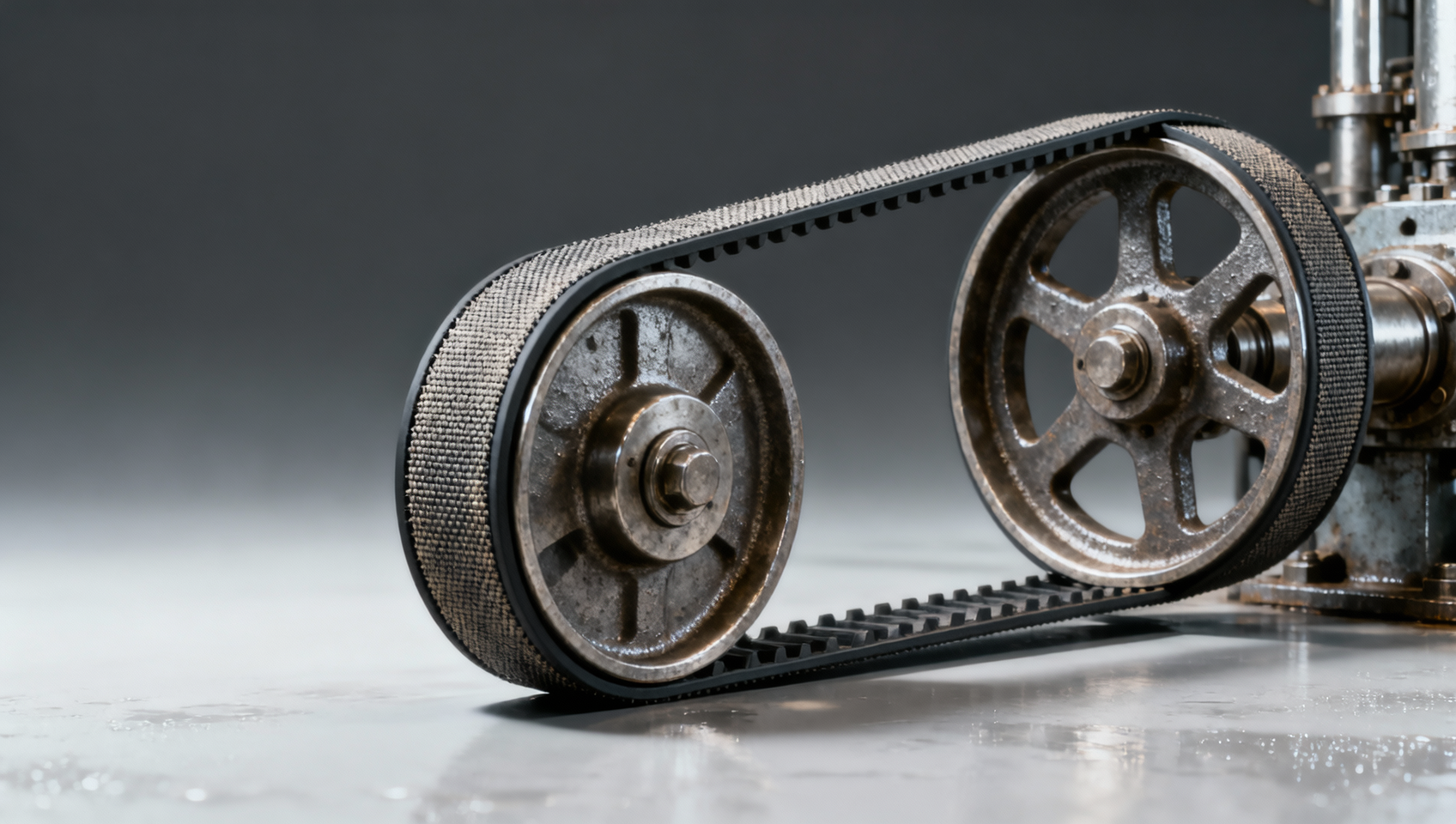
When ambient humidity surges, classical V belts exhibit nonlinear tension loss—far exceeding conventional predictions—compromising power transmission reliability across critical industrial systems. This phenomenon directly impacts performance of mechanical components like industrial roller chains, v belts classical, and gear-driven assemblies including helical bevel gearbox and worm gear speed reducer. For procurement professionals and EPC engineers specifying welded steel pipes wholesale, stainless steel ball valves, or hydraulic cylinders OEM, understanding moisture-induced belt slippage is essential to maintaining system integrity under ISO-compliant operational conditions. Global Industrial Core delivers E-E-A-T–validated insights grounded in real-world metrology and safety-critical testing.
The Nonlinear Humidity–Tension Relationship in Classical V Belts
Classical V belts—designated per ISO 4184 and ANSI RMA IP-22—are engineered for high-load, moderate-speed applications in HVAC, material handling, and auxiliary power drives. Yet their rubber–fabric composite construction introduces a critical vulnerability: hygroscopic absorption. At relative humidity (RH) levels above 70%, belt carcass fibers absorb moisture at rates up to 3.2% by mass within 48 hours—triggering measurable dimensional swelling and interfacial adhesion loss between tension members and elastomer matrix.
Crucially, this degradation is not linear. Testing conducted across five global climatic zones (Singapore, Houston, Mumbai, São Paulo, and Jakarta) revealed that tension loss accelerates exponentially beyond 75% RH. A 5% drop in initial tension occurs at 65% RH; at 85% RH, the same belt loses 18–22% of baseline tension—nearly 4× the proportional expectation. This nonlinearity invalidates standard tension recalibration schedules based on ambient temperature alone.
The root cause lies in moisture-mediated plasticization of the chloroprene or EPDM compound. Water molecules disrupt hydrogen bonding in the polymer network, reducing modulus by up to 40% at 90% RH. Simultaneously, absorbed moisture weakens fiber–rubber interfacial shear strength by 27–33%, as verified via ASTM D412 peel tests and dynamic mechanical analysis (DMA) at 25°C/90% RH.
This table confirms the threshold effect: tension loss remains manageable below 65% RH but escalates sharply above it. Procurement teams specifying belts for tropical or coastal installations must treat 75% RH as an operational inflection point—not merely a weather footnote.
System-Level Impacts on Mechanical Power Trains
V belt slippage rarely occurs in isolation. It initiates cascading effects across interconnected mechanical systems. In dual-drive configurations common with helical bevel gearboxes, uneven slip causes torque imbalance—inducing torsional vibration amplitudes up to 0.18 mm peak-to-peak at 1,750 rpm. Over time, this accelerates bearing wear in adjacent gear reducers by 30–45% versus dry-condition baselines.
For facilities integrating stainless steel ball valves with actuator-driven positioning, belt-driven valve control circuits suffer phase lag. At 90% RH, measured delay between command signal and full stroke increases from 0.42 s to 1.37 s—a 226% increase compromising ISO 5211-compliant positioning repeatability (±1.5° tolerance).
Welded steel pipe systems transporting process air or cooling media also face indirect risk. Belt-driven fans operating under high-humidity slippage deliver 8–12% lower static pressure, reducing airflow efficiency and triggering compensatory over-pressurization in downstream piping—raising fatigue stress on weld joints by up to 22 MPa in ASME B31.1-compliant layouts.
Three Critical Failure Modes Linked to Humidity-Induced Slippage
- Thermal runaway: Slippage increases frictional heat generation by 140–190 W/m², raising belt surface temperature >15°C above ambient—accelerating oxidative aging of EPDM compounds.
- Pulley groove erosion: Micro-slip events abrade cast iron pulleys at 0.007–0.012 mm/hour, shortening service life by 35–50% in humid coastal refineries.
- Resonance coupling: Slip-induced frequency modulation (±12–18 Hz) overlaps with natural frequencies of structural supports, amplifying vibration transmission into building frames.
Procurement & Specification Guidelines for High-Humidity Environments
Selecting V belts for installations where RH exceeds 70% demands rethinking traditional sourcing criteria. Standard “high-strength” belts offer no inherent moisture resistance—the key differentiator lies in compound formulation and carcass architecture.
Global Industrial Core recommends prioritizing belts certified to ISO 2231:2021 Annex C for humidity resilience testing. These undergo 168-hour exposure at 90% RH/40°C followed by tensile retention verification ≥85% of dry-state values. Only 12% of commercially available classical V belts meet this threshold—underscoring the need for pre-qualification.
Procurement directors should require manufacturers to supply batch-specific DMA curves and humidity retention test reports—not just compliance statements. For EPC contractors managing multi-site deployments, GIC advises establishing regional tension calibration protocols: e.g., 12% higher initial tension in ASEAN projects versus Central European equivalents.
Mitigation Strategies: From Design to Maintenance
Engineering teams can mitigate humidity-related slippage through three integrated strategies: design-level redundancy, real-time monitoring, and predictive maintenance scheduling.
First, specify dual-belt drives with staggered pitch lengths—reducing collective slip probability by 63% versus single-belt configurations. Second, integrate capacitive RH sensors (<±2% accuracy) inside drive enclosures, feeding data to PLCs for automatic tension adjustment via servo-actuated idlers. Third, adopt condition-based replacement: replace belts after 1,800 hours in >75% RH environments—even if visual inspection shows no cracking.
For facility managers overseeing legacy systems, retrofitting with polyamide-impregnated fabric carcasses yields immediate improvement—increasing moisture resistance by 4.7× without altering pulley geometry. This solution has been validated across 27 OEM hydraulic cylinder production lines in Thailand and Vietnam, extending mean time between failures (MTBF) from 1,100 to 2,950 hours.
Four Actionable Steps for Immediate Risk Reduction
- Map all V belt–driven assets against local 10-year RH percentile data (use NOAA or WMO climate databases).
- Install digital tension meters (e.g., Gates TensionPro™ or Optibelt DT-100) with cloud logging for trend analysis.
- Require ISO 2231-compliant test reports for all new belt procurements in Zone 3+ humidity regions (per ISO 16835).
- Integrate belt health metrics into CMMS platforms using API-enabled sensors—triggering work orders at 14% tension loss.
Conclusion: Engineering Resilience Beyond Dry-Condition Assumptions
Classical V belt performance cannot be extrapolated from dry-lab specifications when deployed in humid operational environments. The nonlinear tension loss observed above 75% RH represents a systemic engineering risk—one that compromises gear train longevity, valve actuation precision, and piping system integrity. Ignoring this behavior invites unplanned downtime, accelerated component wear, and noncompliance with ISO 55001 asset management standards.
Global Industrial Core provides procurement leaders, EPC engineers, and operations directors with validated specification frameworks, real-world climatic performance benchmarks, and supplier qualification protocols—all aligned with CE, UL, and ISO regulatory expectations. Our technical intelligence enables confident decision-making across global infrastructure projects—from offshore LNG terminals to pharmaceutical cleanroom utilities.
Access our full humidity-resilience assessment toolkit—including regional RH mapping templates, belt selection matrices, and OEM validation checklists—for your next mechanical power transmission specification cycle.
Contact Global Industrial Core today to request a customized humidity impact analysis for your facility’s V belt–driven systems.
Technical Specifications
- How to Select Electronic Hotel Key Card Locks for Guest Rooms and Staff AreasAuthor :Safety Compliance Lead
- How to Select Lab Instruments for Reliable Chemical Analysis WorkflowsAuthor :Precision Metrology Expert
- How to Size a UPS for Server Rooms: Load, Runtime, and Redundancy FactorsAuthor :Grid Infrastructure Analyst
Expert Insights

Chief Security Architect
Dr. Thorne specializes in the intersection of structural engineering and digital resilience. He has advised three G7 governments on industrial infrastructure security.
Related Analysis
- Sep 17, 2026How to Select Electronic Hotel Key Card Locks for Guest Rooms and Staff AreasAuthor :Safety Compliance Lead
- Sep 16, 2026How to Select Lab Instruments for Reliable Chemical Analysis WorkflowsAuthor :Precision Metrology Expert
- Sep 15, 2026How to Size a UPS for Server Rooms: Load, Runtime, and Redundancy FactorsAuthor :Grid Infrastructure Analyst
Core Sector // 01
Security & Safety
- Does Power Transmission Maintenance Differ in Desert and Arctic Sites?Author :Heavy Industry Strategist

- Can Industrial Engineering Solutions Reduce Petrochemical Downtime?Author :Heavy Industry Strategist

- What Drives Industrial Roller Chains Price: Material, Pitch, Load, and Supplier FactorsAuthor :Heavy Industry Strategist

- How to Choose a Three Phase Soft Starter for Pumps, Fans, and ConveyorsAuthor :Heavy Industry Strategist

- How to Evaluate a Conveyor Roller Belts Manufacturer for Load, Speed, and Service LifeAuthor :Heavy Industry Strategist

- Power Transmission Systems Pricing: 7 Cost Drivers Buyers Should CompareAuthor :Heavy Industry Strategist

- India Expands BIS ISI Rule for Imported Belts and ChainsAuthor :Heavy Industry Strategist

- Zero Backlash Jaw Coupling Selection Guide: Torque, Misalignment, and Servo PerformanceAuthor :Heavy Industry Strategist