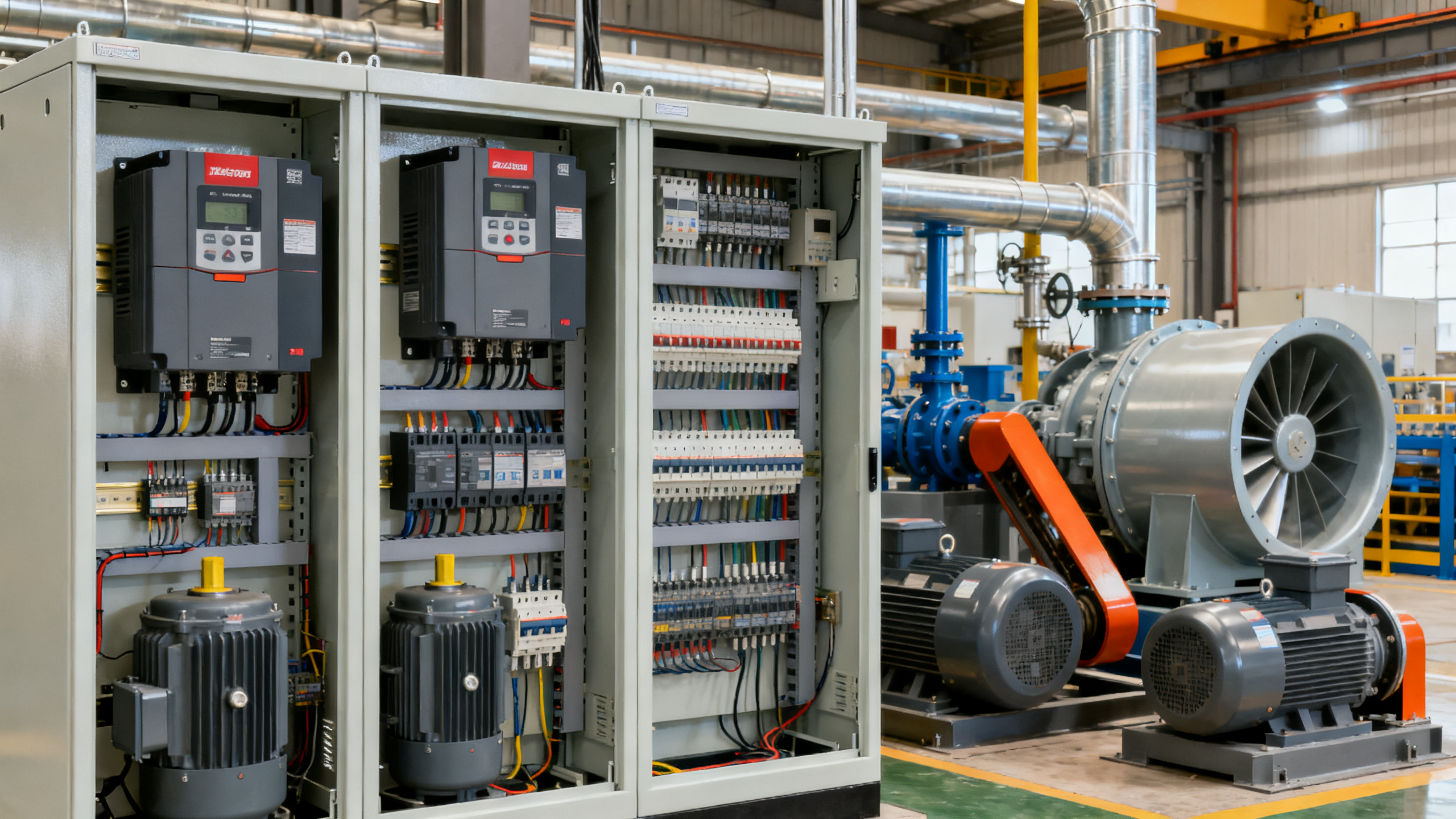
Choosing a Motor Control Supplier: Lead Times, Support and Compatibility
Author
Date Published
Reading Time
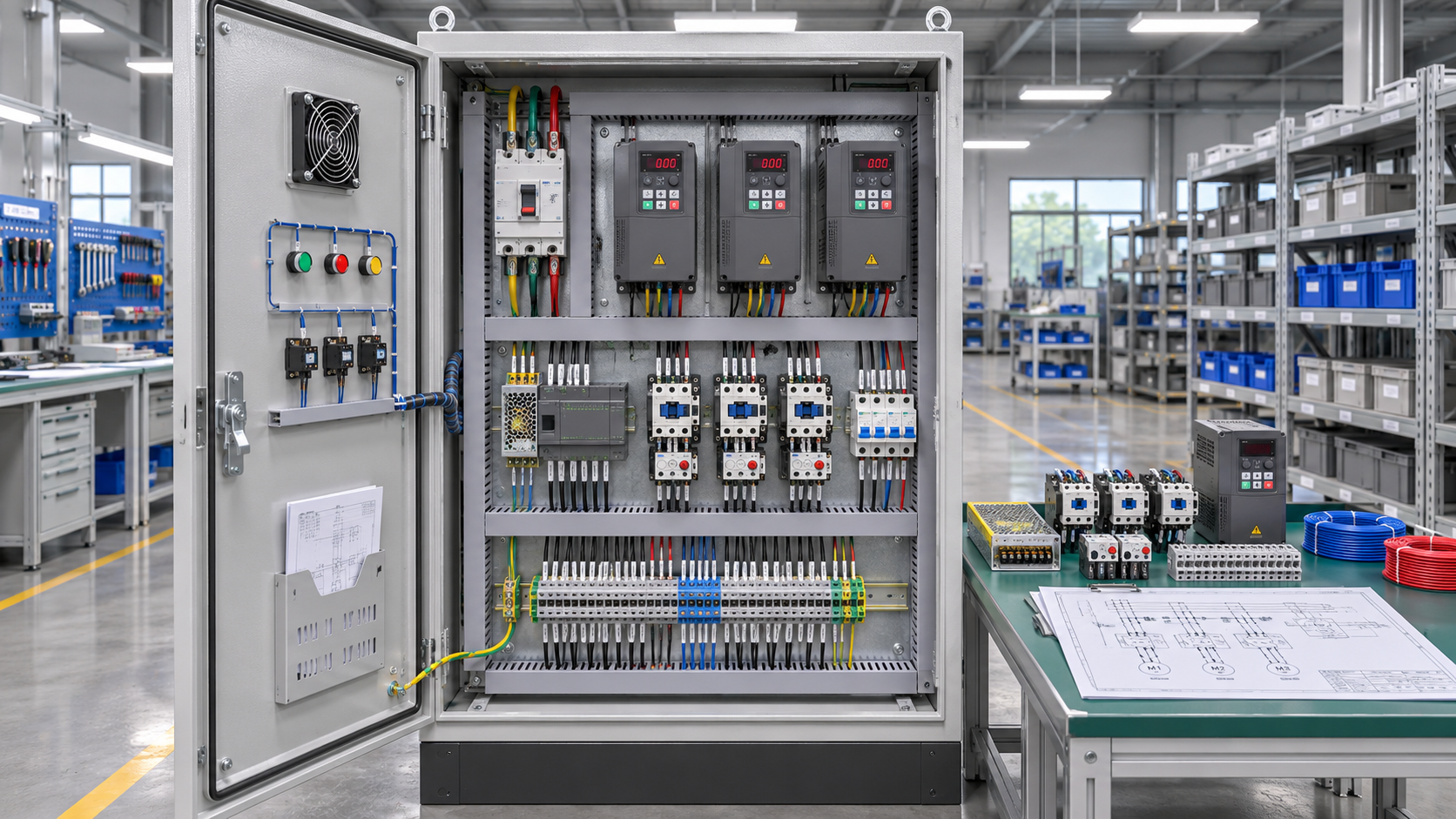
The right motor control supplier can provide the specified equipment when it is needed, demonstrate that it will work with the surrounding system, and support it after installation. A low initial quote has limited value if a drive arrives too late for commissioning, a replacement contactor requires panel modifications, or a failed unit cannot be supported locally.
Start by comparing suppliers against the application and project schedule, then examine the commercial offer. Ask for evidence behind availability, compatibility and service commitments. Those details make it easier to distinguish a competitive quote from one that leaves costs and risks outside the purchase price.
Define the scope before comparing quotations
“Motor control” can mean anything from an individual starter or contactor to a variable frequency drive (VFD), a soft starter, a motor control center or a complete control panel. The supply scope changes what the supplier must engineer, document, test and support. Two offers are difficult to compare if one includes an assembled panel and commissioning while another covers only loose components.
Give each bidder the same equipment list, required delivery locations, project milestones and available technical information. Identify who is responsible for the enclosure, protective devices, wiring, programming, testing and installation. For a replacement purchase, include photographs, existing part numbers and drawings where available, but do not assume the old part number alone describes the operating conditions.
Separate mandatory requirements from preferences. For example, an existing plant may need a particular communication interface to retain its control system, while a new installation may allow a wider choice. This distinction gives suppliers room to offer alternatives without obscuring requirements that cannot be compromised.
Lead time: ask when the complete order can be used
A quoted lead time may refer to factory production, dispatch or delivery. It may also apply only to the main component, while an accessory, enclosure or communication module follows later. Ask for a schedule tied to the purchase order and covering the complete scope: engineering approval, manufacture or allocation, testing where applicable, shipment and delivery.
For equipment described as “in stock,” ask whether the exact part numbers and quantities are available and when they can be allocated to your order. Availability can differ between a standard drive and the combination of options, filters, protection devices or accessories needed for the application. For an assembled panel, component stock alone does not establish when the finished assembly will be ready.
Build the schedule around the date the equipment is needed for installation or commissioning, allowing for the project’s transport, site access and inspection requirements. If drawings require approval before manufacturing starts, agree on who must approve them and how changes affect the delivery date. A short production estimate has little practical value if the approval process is undefined.
For a critical outage or a remote site, discuss a recovery plan before placing the order: partial shipments, an agreed substitute, local stock or a spare unit may be useful. Any substitute still needs engineering approval; a faster delivery does not compensate for an unsuitable rating or interface.
Compatibility starts with the application, not the catalog description
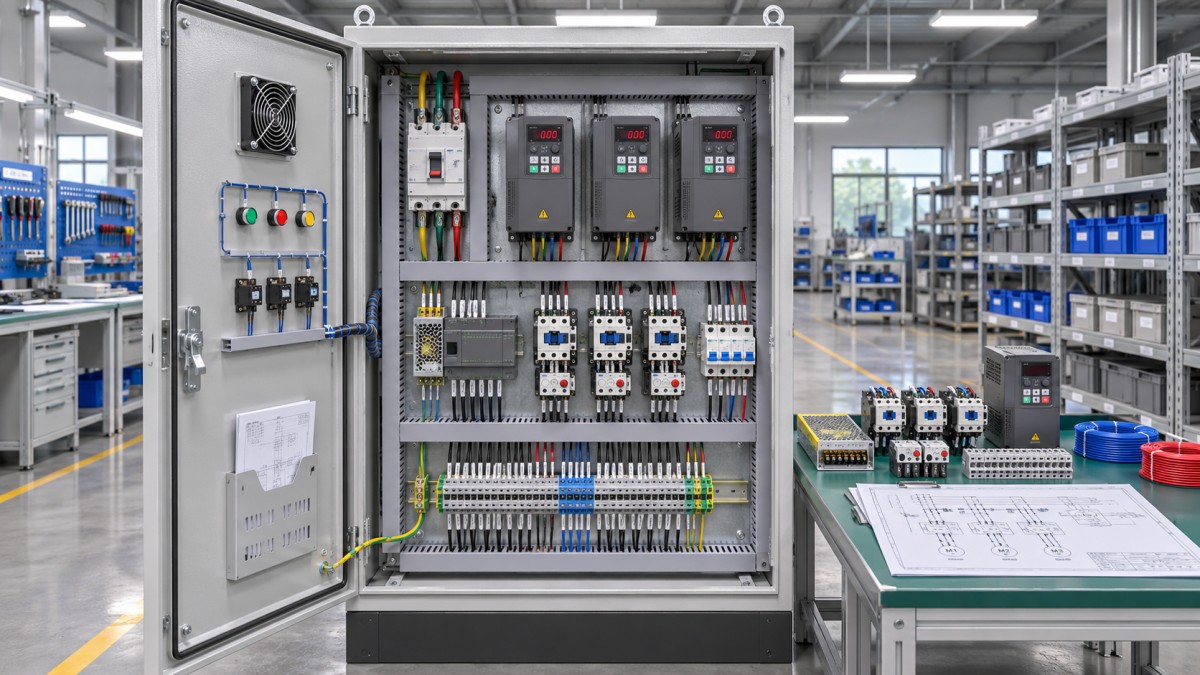
Ask the supplier to explain how the proposed equipment fits the motor, power supply, load and control system as a complete arrangement. A device with a matching power rating may still be unsuitable because of current, starting conditions, enclosure requirements or the way the machine is controlled.
The operating environment matters as well. Ambient temperature, ventilation, dust, moisture, altitude and enclosure space can affect equipment selection and installation. A supplier should identify any conditions that require a different enclosure, cooling arrangement or adjustment to the equipment’s usable rating.
For a VFD, discuss the intended motor and cable arrangement, electromagnetic interference considerations and any requirements for filters or output components. For a motor starter, confirm the coordination of the switching and protective devices for the proposed application. These details can change both the bill of materials and the space required in the panel.
When replacing an obsolete component, request a written comparison between the existing and proposed devices. It should identify differences in dimensions, connections, auxiliary contacts, settings and control behavior, as applicable. A newer model from the same manufacturer may still require wiring changes or updated parameters.
Look at support as part of the supply
Technical support has different value at different stages. Before purchase, it helps resolve selection and integration questions. During commissioning, it can shorten the time needed to diagnose wiring, configuration or communication problems. After handover, access to parts and documentation affects how quickly the equipment can be maintained or restored.
Ask who will provide support: the manufacturer, a distributor, a panel builder or a third-party service provider. A distributor may be well placed to supply standard components quickly, while a panel builder may be better positioned to explain an engineered assembly. What matters is whether the responsible party has access to the necessary product knowledge, drawings and escalation route.
Make the service offer specific. Establish the support location and hours, contact method, language, expected response arrangements and whether remote assistance or site attendance is included. Distinguish between acknowledging a request and resolving a fault; they are different commitments. For projects in more than one country, check that support and spare parts will be available where the equipment operates, not only where it is purchased.
For a complete panel or motor control center, agree on handover documents such as final drawings, component lists, settings, operating instructions and test records relevant to the scope. Without an accurate record of what was installed, even a readily available replacement component can take longer to fit and configure.
Certifications and documentation: match the evidence to the scope
Provide the destination, applicable project specifications and any required conformity or certification criteria in the request for quotation. Ask suppliers to identify which documents cover individual components and which cover the completed assembly. Component documentation does not automatically establish that an entire panel satisfies the project’s requirements.
Depending on the equipment and destination, relevant evidence may include a declaration of conformity, certification or listing information, applicable test records and a rating label. A CE marking and a UL listing serve different purposes; neither should be treated as a universal substitute for the other. The required evidence depends on the product, installation and applicable rules.
Also establish who owns the final configuration and who supplies revised drawings after approved changes. This is especially useful when a manufacturer supplies drives to a separate panel builder: both parties may have valid documents, but the buyer still needs a coherent record of the finished system.
Compare the cost of getting a working system
Use the same scope to compare quotations, then add the costs each offer leaves with the project. A lower equipment price may be offset by separate engineering, missing accessories, freight, import charges, commissioning or panel modifications. A higher-priced offer may include some of these items, but the inclusion should be explicit.
Review the following alongside the purchase price:
- Delivery and payment terms: destination, freight, duties where applicable, payment milestones, quote validity and the treatment of schedule changes.
- Engineering and site work: drawings, programming, factory testing if specified, commissioning, training and travel expenses.
- Ownership costs: recommended spares, replacement parts, service access and any software or tools needed to maintain the equipment.
- Warranty and remedy: start date, duration, exclusions, claim process, shipping responsibilities and whether the remedy is repair, replacement or another agreed action.
Cost the alternatives against the same operating need. A standard off-the-shelf component may be economical when the application is straightforward and the maintenance team can configure it. An engineered assembly may cost more upfront but reduce integration work when several motors, control interfaces or project-specific requirements must be coordinated. Neither option is cheaper until the excluded work is accounted for.
When to favor availability, an established supplier or a new source
For an urgent like-for-like repair, an established supplier with the correct item and access to technical information may be the strongest choice, even if its unit price is higher. The comparison changes if an alternative requires an outage extension, rewiring or a change to the control program. Include those consequences in the decision where they can be reasonably estimated.
For a planned new installation, there may be more time to compare architectures and qualify an alternative. A new supplier can be a practical option if it provides clear compatibility evidence, documentation and a credible service arrangement. Qualification should include the people responsible for engineering and maintenance, since a procurement saving may introduce different tools, spare parts or training needs at the site.
If continuity of supply is important, ask about product lifecycle status, replacement options and access to spares. A second source can reduce dependence, but only if the proposed alternative has been assessed for the actual application and any required changes are documented. Buying an unapproved substitute in advance can simply move the compatibility problem to a future outage.
Turn the comparison into a purchase decision
Before award, prepare a side-by-side comparison that records each offer’s exact scope, delivery commitment, technical exceptions, support terms and total evaluated cost. Have engineering resolve compatibility exceptions and operations or maintenance review the proposed support and spare-parts arrangements. This keeps an attractive price from masking an unresolved technical condition.
Put the agreed part numbers, documents, delivery milestones and service commitments into the purchase order or its referenced specifications. Where a substitute is allowed, identify the approval process before the supplier ships it. The best offer is the one that meets the application and schedule with responsibilities clear enough for the equipment to be installed, operated and maintained as intended.
Expert Insights

Chief Security Architect
Dr. Thorne specializes in the intersection of structural engineering and digital resilience. He has advised three G7 governments on industrial infrastructure security.
Related Analysis
- Nov 22, 2026McKinsey: India Needs Up to $400 Billion to Meet Steel Capacity Growth GoalAuthor :
- Nov 22, 2026Choosing Geotextile Fabric for Landfill Drainage and Liner ProtectionAuthor :Environmental Engineering Director
- Nov 21, 2026Japan's Steel Exports Could Fall to Lowest Level Since 1999 in 2026Author :
Core Sector // 01
Security & Safety
- Choosing a Motor Control Supplier: Lead Times, Support and CompatibilityAuthor :Heavy Industry Strategist

- Selecting Overhead Line Hardware Fittings for Load and Corrosion ConditionsAuthor :Heavy Industry Strategist

- Buying Low-RPM Alternators in Bulk: What Output Data Should Suppliers Provide?Author :Heavy Industry Strategist

- Does Power Transmission Maintenance Differ in Desert and Arctic Sites?Author :Heavy Industry Strategist

- Can Industrial Engineering Solutions Reduce Petrochemical Downtime?Author :Heavy Industry Strategist

- What Drives Industrial Roller Chains Price: Material, Pitch, Load, and Supplier FactorsAuthor :Heavy Industry Strategist

- How to Choose a Three Phase Soft Starter for Pumps, Fans, and ConveyorsAuthor :Heavy Industry Strategist

- How to Evaluate a Conveyor Roller Belts Manufacturer for Load, Speed, and Service LifeAuthor :Heavy Industry Strategist