Road Stud Reflectors: Which Type Lasts Longer
Author
Date Published
Reading Time
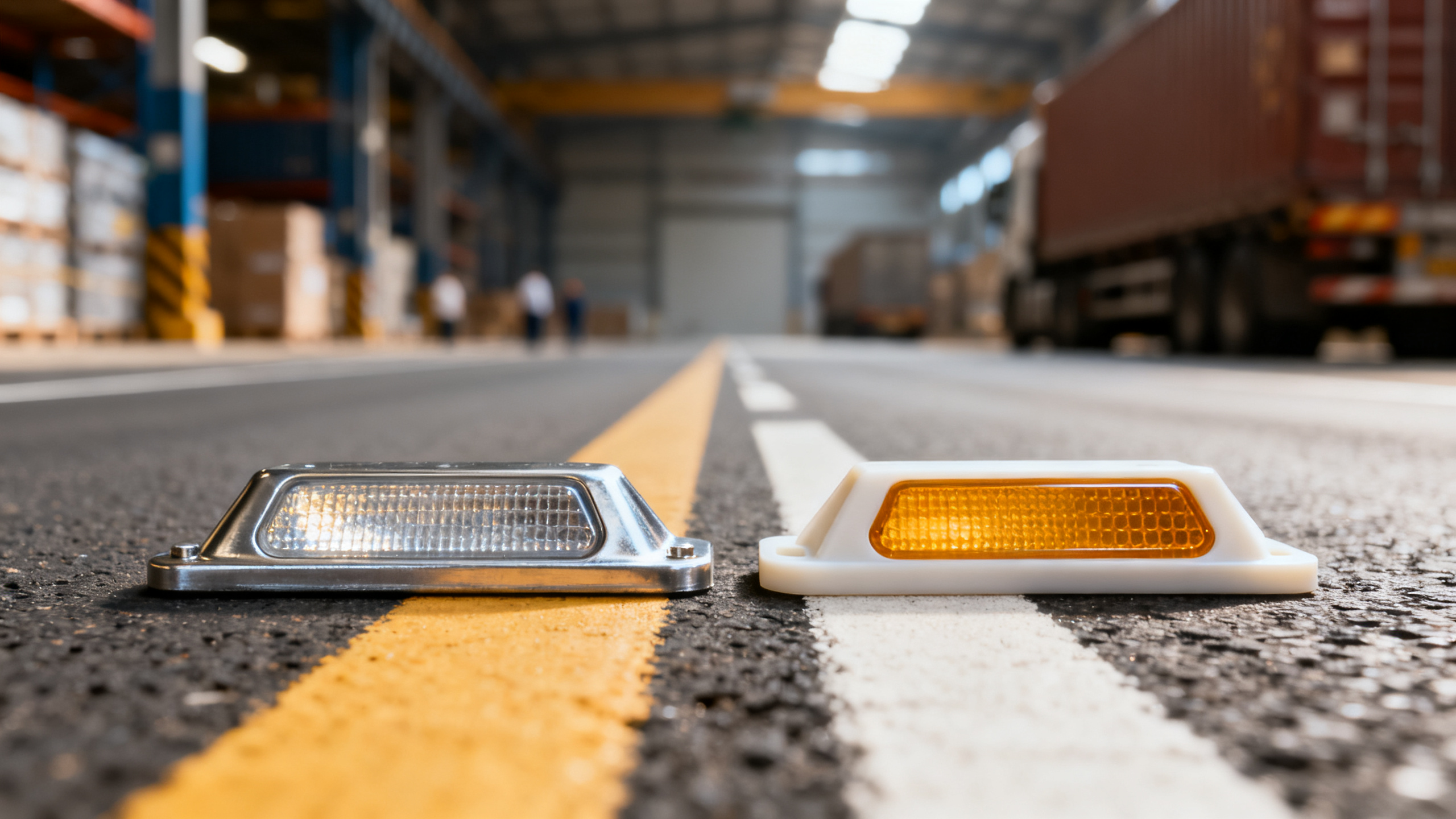
When durability is the priority, the short answer is this: aluminum road stud reflectors typically last longer than plastic models in high-traffic, heavy-load environments, while premium engineered plastic or polycarbonate studs can perform well in lighter-duty applications with lower installation and replacement costs. For highways, logistics yards, industrial parks, and warehouse routes, the longest-lasting option is not decided by material alone. Service life depends on load class, reflector quality, anchoring method, weather exposure, road surface condition, and maintenance practices.
For procurement teams, facility managers, and project decision-makers, the real question is not simply which road stud reflector lasts longer on paper, but which type delivers the best usable life in your operating conditions. That means balancing upfront cost against replacement frequency, downtime, visibility performance, and safety risk.
Which road stud reflector type usually lasts the longest?
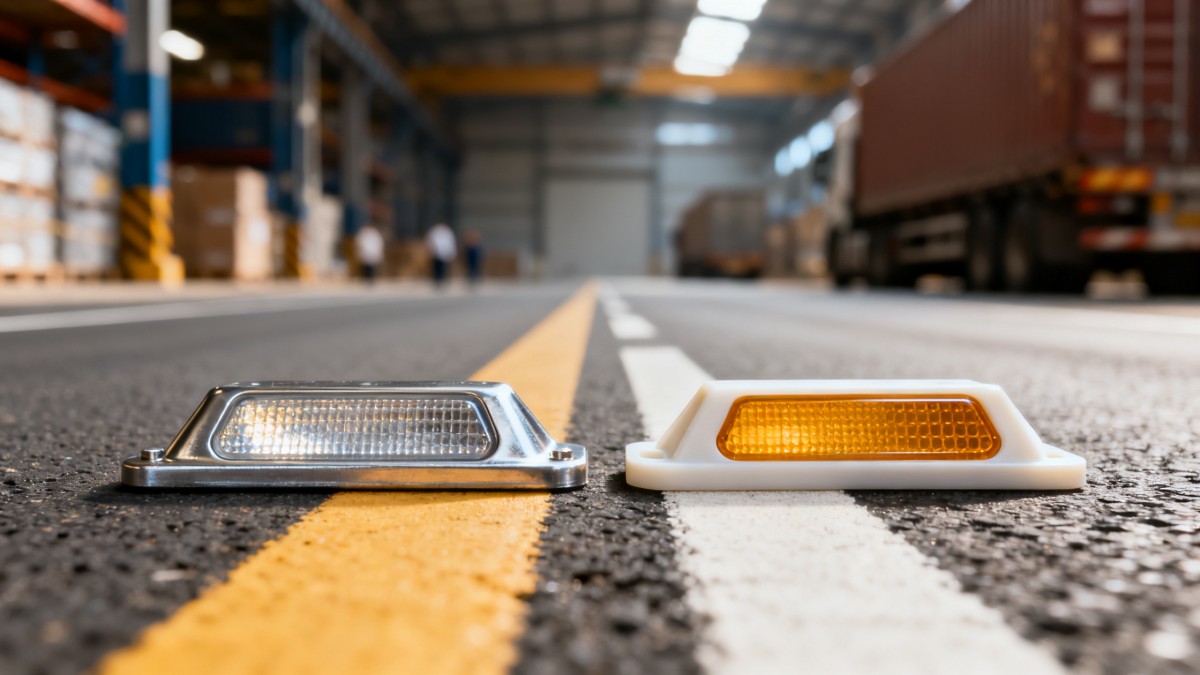
In most demanding outdoor applications, the durability ranking often looks like this:
- Cast aluminum road stud reflectors — generally the best choice for long-term durability under repeated vehicle loading
- High-quality polycarbonate or ABS plastic studs — suitable for moderate traffic and controlled environments
- Solar road studs — can be durable structurally, but battery and electronic lifespan may limit total service life
- Ceramic or glass-based variants — highly visible in some conditions, but application-specific and not always the best for impact-heavy areas
If your site involves trucks, forklifts, container handling vehicles, or constant highway traffic, aluminum models usually outlast plastic ones because they resist crushing, deformation, and repeated compression better. However, if the installation area is a low-speed lane, parking area, warehouse guidance route, or temporary traffic management zone, a well-made plastic reflector may offer sufficient lifespan at a lower total installed cost.
What actually determines service life more than the product label?
Many buyers assume material alone determines longevity, but field performance depends on several combined factors.
1. Traffic load and wheel impact
The biggest cause of premature failure is repeated mechanical loading. Heavy trucks, industrial vehicles, and forklifts create concentrated force that can crack lenses, loosen anchoring, or shear the stud body from the pavement. In these conditions, load-bearing metal housings usually perform better.
2. Installation quality
A durable road stud reflector can still fail early if it is installed on an uneven surface, bonded with unsuitable adhesive, or placed where tires strike it directly at an aggressive angle. Poor installation often leads to detachment before body failure occurs.
3. Reflector lens quality
Some studs remain physically intact but lose practical value because the reflective element fades, cracks, or fills with dirt. Buyers should assess not only body durability, but also retained visibility over time.
4. Weather and environmental exposure
UV radiation, freeze-thaw cycles, standing water, de-icing chemicals, oils, dust, and industrial contaminants all shorten product life. In coastal or chemically exposed environments, corrosion resistance becomes especially important.
5. Surface and location conditions
Road studs installed on smooth, stable, well-drained pavement usually last longer than those installed on cracked concrete, worn asphalt, or surfaces with frequent vibration and water ingress.
Aluminum vs plastic road stud reflectors: which one is better for your use case?
This is the comparison most buyers care about.
Aluminum road stud reflectors
Best for: highways, industrial roads, logistics hubs, loading zones, toll roads, ports, and heavy-vehicle corridors
Main durability advantages:
- Higher compressive strength
- Better resistance to vehicle impact
- Lower risk of body cracking under load
- Longer service life in harsh outdoor use
Limitations:
- Higher upfront cost
- Heavier product and sometimes more demanding installation
- Corrosion performance depends on alloy quality and finish
Plastic or polycarbonate road stud reflectors
Best for: parking facilities, low-speed roads, warehouses, internal traffic routes, and budget-sensitive projects
Main durability advantages:
- Lower purchase cost
- Good chemical resistance in some indoor environments
- Easier handling and fast deployment
Limitations:
- More vulnerable to crushing and cracking under heavy loads
- Can become brittle with prolonged UV exposure if material quality is poor
- Often shorter replacement cycle in demanding conditions
For most industrial and infrastructure procurement scenarios, the better question is not aluminum or plastic in isolation, but whether the stud matches the traffic class and maintenance model of the site.
Do solar road stud reflectors last longer than conventional reflectors?
Not necessarily. Solar road studs improve nighttime visibility and can be highly useful in low-light or remote areas, but they introduce additional failure points:
- Battery degradation
- LED failure
- Moisture ingress into electronics
- Reduced charging efficiency over time
In structural terms, some solar studs are robust, especially when housed in metal shells. But from a full lifecycle perspective, conventional passive reflectors often outlast solar versions because they have fewer components that can fail.
If your priority is maximum lifespan with minimal maintenance complexity, passive aluminum reflectors are often the safer choice. If your priority is enhanced visibility in high-risk locations, solar options may still justify the tradeoff.
How should buyers evaluate long-term value instead of only purchase price?
For procurement professionals and decision-makers, the lowest unit price rarely means the lowest lifecycle cost. A more useful evaluation framework includes:
- Expected service life under real traffic conditions
- Replacement frequency and labor cost
- Downtime or traffic disruption during maintenance
- Visibility retention over time
- Failure risk in safety-critical zones
- Compliance with project or local standards
For example, a cheaper plastic road stud reflector replaced every 12 to 18 months may cost more over five years than an aluminum model that remains serviceable for several years with less intervention. This is particularly true in highways, industrial estates, and facilities where maintenance access is disruptive or hazardous.
What specifications should you check before buying road stud reflectors?
To avoid underperforming products, buyers should review technical and quality criteria before issuing purchase orders.
Material and body construction
- Cast aluminum, aluminum alloy, ABS, polycarbonate, or composite build
- Impact resistance and compressive strength
- UV stability for outdoor use
Reflective performance
- Lens material quality
- Retroreflective intensity
- Single-sided or double-sided reflector design
Load and environmental suitability
- Traffic category the stud is designed for
- Resistance to rain, heat, cold, and chemical exposure
- Waterproof sealing, especially for solar units
Installation method
- Adhesive bonding requirements
- Embedded or surface-mounted design
- Compatibility with asphalt or concrete substrates
Supplier credibility
- Testing data and certification support
- Production consistency
- Warranty terms
- Track record in similar infrastructure projects
For industrial buyers already assessing related infrastructure categories such as wholesale electrical cables, surge protective device SPD, or integrated security systems, the same procurement principle applies here: choose based on operational reliability, compliance confidence, and total lifecycle performance, not just a low quoted price.
Which type is best for highways, warehouses, and industrial zones?
For highways: choose heavy-duty aluminum road stud reflectors with strong reflective inserts and proven weather resistance. This is usually the best fit for speed, traffic volume, and maintenance risk.
For warehouses: if traffic is mostly forklifts and light industrial vehicles, high-quality plastic or polycarbonate units may be acceptable indoors. For outdoor loading routes or impact-prone areas, metal-bodied units are safer.
For industrial zones: aluminum models are generally preferred when there is mixed traffic, exposure to oils or chemicals, and a need for lower replacement frequency.
For temporary or budget-sensitive projects: plastic road stud reflectors can make sense when service life expectations are shorter and replacement is easy.
Final verdict: which road stud reflector lasts longer?
Aluminum road stud reflectors usually last longer than plastic alternatives in demanding real-world conditions, especially on highways and industrial traffic routes. However, the longest-lasting solution is the one correctly matched to traffic load, environment, installation quality, and maintenance capability.
If you are buying for critical infrastructure, do not evaluate road stud reflectors as simple low-cost accessories. Treat them as safety components. A durable, well-specified stud can reduce replacement labor, improve route visibility, lower operational risk, and deliver better lifecycle value.
In practical terms:
- Choose aluminum for heavy-duty, long-life performance
- Choose plastic or polycarbonate for lighter-duty and lower-cost applications
- Choose solar studs when enhanced visibility matters more than maximum maintenance simplicity
For most professional buyers, the best decision comes from matching product strength and reflective performance to the real conditions on site.
Technical Specifications
- China’s Steel Industry Posts 1.7% Growth in Industrial Value Added in First Three QuartersAuthor :
- Choosing an Industrial Optical Components Manufacturer: Tolerances and Quality ChecksAuthor :Precision Metrology Expert
- Steel Dynamics Reports Q3 2026 Results: Record Shipments and Strong EarningsAuthor :
Expert Insights

Chief Security Architect
Dr. Thorne specializes in the intersection of structural engineering and digital resilience. He has advised three G7 governments on industrial infrastructure security.
Related Analysis
- Oct 21, 2026China’s Steel Industry Posts 1.7% Growth in Industrial Value Added in First Three QuartersAuthor :
- Oct 21, 2026Choosing an Industrial Optical Components Manufacturer: Tolerances and Quality ChecksAuthor :Precision Metrology Expert
- Oct 20, 2026Steel Dynamics Reports Q3 2026 Results: Record Shipments and Strong EarningsAuthor :
Core Sector // 01
Security & Safety
- How to Specify Steel Heavy-Duty Corner Guards for Loading Bays and High-Traffic AreasAuthor :Heavy Industry Strategist

- Selecting Non-Ferrous Metal Plates for Corrosion, Weight, and Formability RequirementsAuthor :Heavy Industry Strategist

- Stainless Steel Welded Tube Applications: Matching Tube Supply to Fabrication NeedsAuthor :Heavy Industry Strategist

- What Maintenance Do Furnace Components Need After 18 Months?Author :Heavy Industry Strategist

- How to Assess Metal Materials for Thermal Cycling in Power BoilersAuthor :Heavy Industry Strategist

- How to Evaluate Aluminum Extrusion Suppliers for Tight-Tolerance Components?Author :Heavy Industry Strategist

- How to Evaluate a Weld Neck Flange Manufacturer for High-Pressure Pipe ProjectsAuthor :Heavy Industry Strategist

- EU REACH Ban Hits Cr(VI)-Coated Steel ImportsAuthor :Heavy Industry Strategist
-Coated Steel Imports")