Pump Shaft Seals Leaking? Common Causes, Failure Signs, and Fixes
Author
Date Published
Reading Time
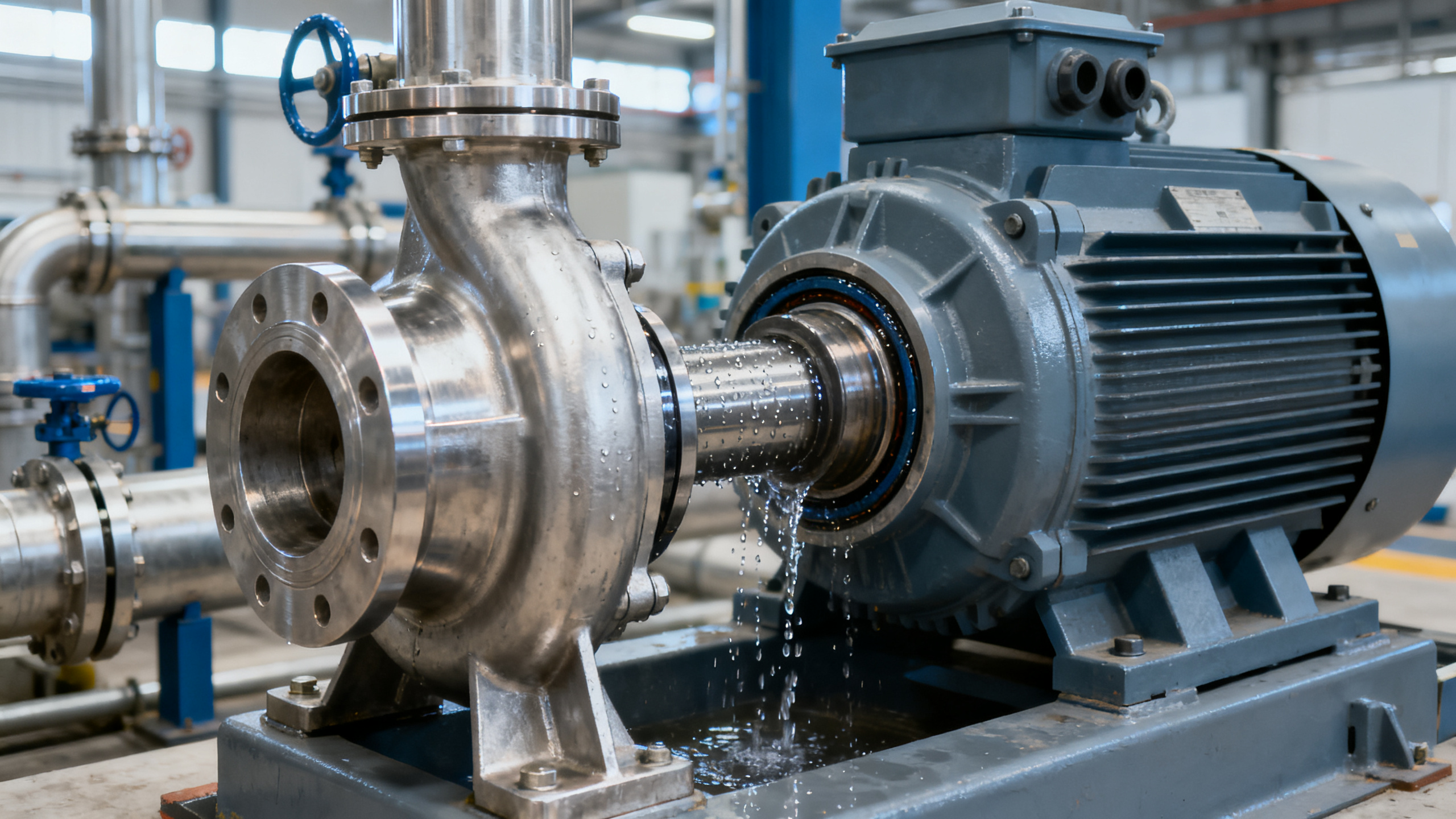
When a Small Leak Means a Bigger System Risk
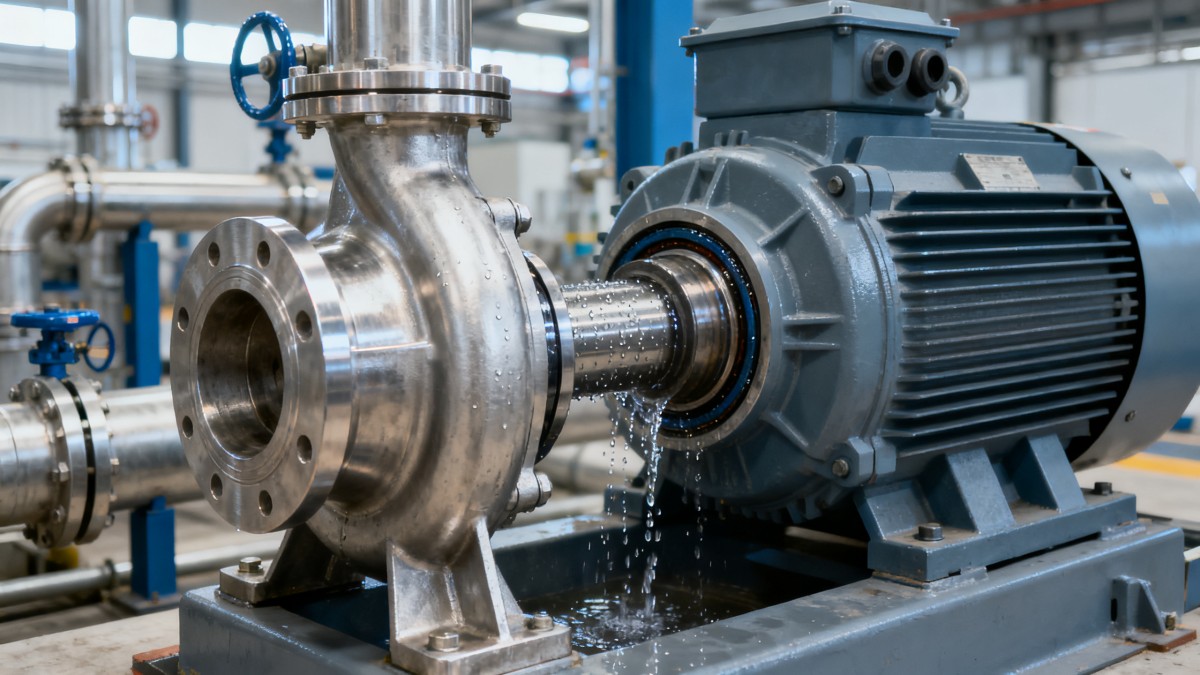
Leaking pump shaft seals rarely stay a minor issue for long. In industrial service, a slow drip can become contamination, bearing damage, unplanned shutdowns, or a safety event.
That is why pump shaft seals deserve the same disciplined review applied to motors, couplings, and control instrumentation. The seal sits at a narrow interface, but it reflects the condition of the whole pumping system.
In practice, the failure pattern changes with duty. A seal leaking on a clean water booster behaves differently from one on a slurry line, a chemical transfer skid, or a hot condensate circuit.
The useful question is not only why pump shaft seals fail. It is also which operating conditions made that failure more likely, and which corrective action fits the real service environment.
Across heavy industry, this approach matters because reliability is tied to compliance, environmental control, and asset protection. GIC-style technical review always starts with operating evidence, not isolated part replacement.
Actual Service Conditions Change the Diagnosis
Different applications place different loads on pump shaft seals. Pressure, shaft speed, fluid chemistry, solids content, temperature swings, and start-stop frequency all change the sealing challenge.
A seal that survives for years in stable cooling water may fail quickly in wastewater, mining slurry, or solvent duty. The material may be correct on paper, yet wrong in the field.
Another common difference is operating discipline. Some systems run continuously with steady suction conditions. Others face dry starts, cavitation, frequent flushing, or misalignment after repeated maintenance interventions.
This is why pump shaft seals should be reviewed as part of the equipment context. Looking only at seal size or catalog compatibility often misses the real failure driver.
What changes from one site to another
- Fluid type: clean, abrasive, corrosive, viscous, or crystallizing
- Mechanical loading: shaft runout, vibration, coupling alignment, bearing condition
- Thermal stress: cold start, hot standby, thermal shock, inadequate cooling
- System behavior: suction instability, pressure spikes, deadhead events, dry running
- Maintenance quality: installation handling, seal face cleanliness, flush plan execution
The Most Common Pump Shaft Seals Failure Patterns
In many plants, leaking pump shaft seals trace back to a short list of recurring causes. The visible leak is only the last symptom in a chain that usually started earlier.
Misalignment is one of the most frequent causes. Even slight shaft movement can disturb the seal faces, increase heat, and create uneven wear. This is especially common after motor replacement or coupling adjustment.
Dry running is another major trigger. Pump shaft seals depend on a thin lubricating film. If that film disappears during startup or low-flow operation, friction rises fast and face damage follows.
Abrasive media creates a different failure path. Solids score the faces, clog secondary sealing elements, and attack the shaft sleeve. In these cases, replacing the seal without changing the flush or material is rarely enough.
Chemical incompatibility also appears more often than expected. Elastomers may swell, harden, or crack. Seal face combinations can lose flatness or resist fewer thermal cycles than the process demands.
Then there is pressure. Some pump shaft seals leak because the seal chamber sees conditions beyond its practical design range during transients, even if normal operation seems acceptable.
Failure signs worth separating early
Where the Root Cause Changes by Application
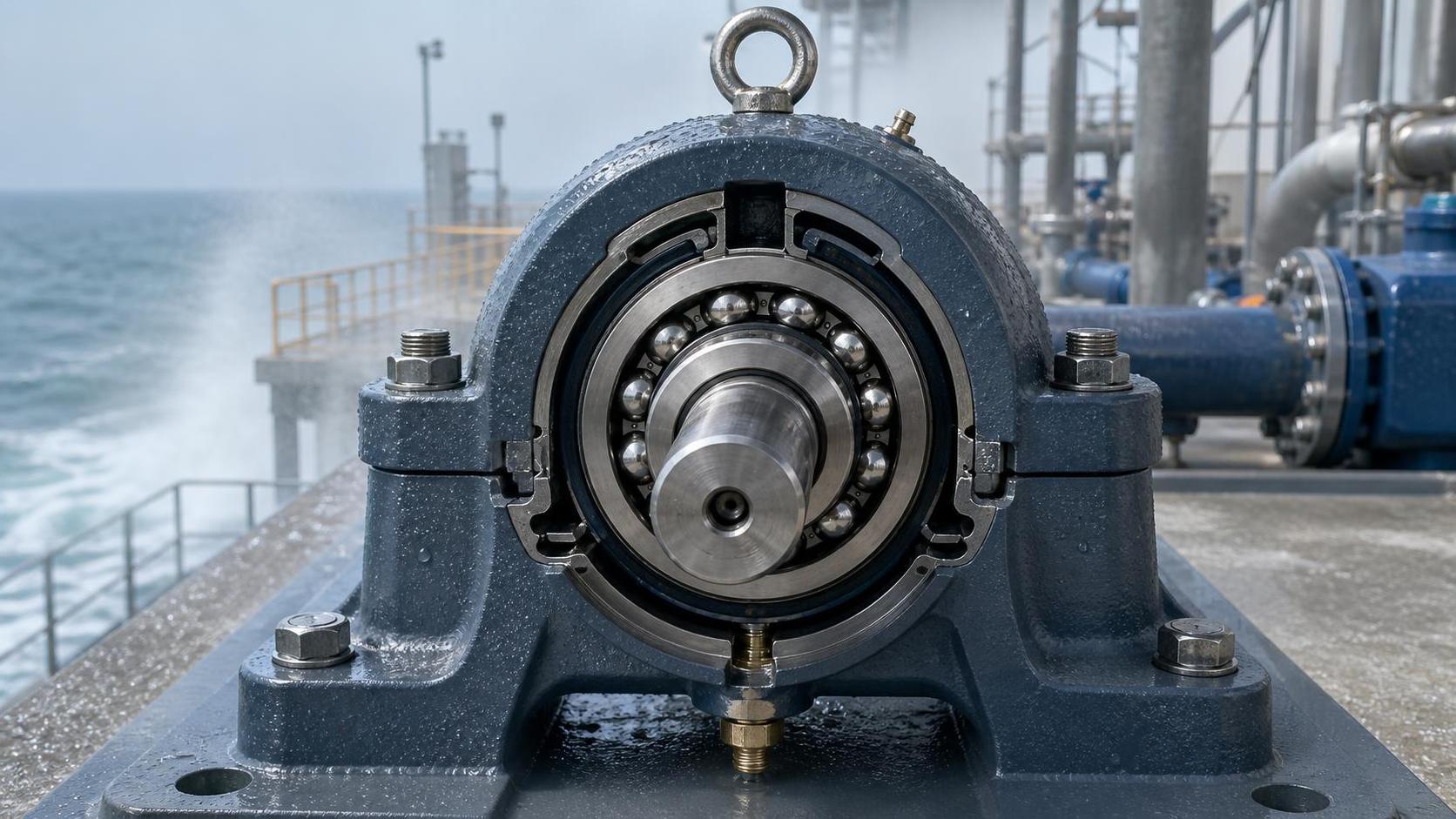
Clean utility water systems usually expose installation errors first. When pump shaft seals leak in these services, the cause is often alignment, sleeve damage, or poor handling during assembly rather than chemical attack.
In wastewater and slurry handling, the priorities shift. Here, solids management, flush reliability, and face material become central. A standard seal may fit dimensionally but still fail early because solids are constantly entering the interface.
Chemical transfer systems create another profile. Small leaks may carry environmental or personnel risk, so the acceptable leakage threshold is lower. Material compatibility and secondary containment deserve more attention than in benign fluids.
Hot process loops, condensate service, and thermal oil circulation add thermal cycling to the picture. Pump shaft seals in these duties need stable face geometry, controlled cooling, and startup procedures that avoid thermal shock.
The important point is that similar leakage does not always mean the same fix. A drip pattern can look identical while the failure physics differ completely.
Different operating scenes, different priorities
Fixes That Work Better Than Replacing the Same Seal Again
The fastest repair is not always the most effective one. Reinstalling the same pump shaft seals without correcting the operating cause usually leads to repeat leakage within the next maintenance cycle.
Start with mechanical checks. Measure shaft runout, confirm bearing condition, inspect the sleeve, and verify coupling alignment under real operating tolerances. Visual inspection alone often misses the problem.
Then review the process side. Confirm suction stability, actual flow range, flush condition, and temperature behavior during startup and shutdown. Many pump shaft seals fail during transitions, not steady-state operation.
Material changes can help, but they should follow evidence. Hard faces may solve abrasion. Different elastomers may solve swelling. A cartridge arrangement may reduce installation error. Each fix should match the failure mechanism.
Where environmental control is strict, it may be worth reviewing dual seal arrangements, buffer systems, or upgraded flush plans. That decision depends on leakage consequence, not only leak frequency.
A practical fix sequence
- Document the leak pattern: startup, steady run, shutdown, or intermittent spikes
- Inspect seal faces, elastomers, sleeve, and springs for wear signatures
- Measure alignment, runout, and bearing looseness before reassembly
- Verify flush flow, venting, cooling, and suction condition
- Change material or seal configuration only after confirming the likely cause
- Track seal life against process events, not just calendar intervals
What Often Gets Misread During Seal Trouble
One common mistake is treating all pump shaft seals as interchangeable if the dimensions match. In reality, face materials, elastomers, spring design, and balance features strongly affect field performance.
Another mistake is blaming the seal when the pump is cavitating or operating far from its best efficiency point. The seal may be the visible victim, not the original source of failure.
Cost-only decisions also create repeat failures. A lower-priced seal may look acceptable until installation labor, cleanup, production loss, and secondary damage are included in the total maintenance burden.
It is also easy to overlook standards and site controls. In regulated environments, leakage tolerance, material traceability, and compatibility with CE, UL, or ISO-driven maintenance procedures may influence the final seal choice.
This broader view is especially relevant in infrastructure and process industries, where pump shaft seals affect safety systems, environmental performance, and plant uptime together.
A Better Next Step Than Trial-and-Error Repairs
When pump shaft seals leak repeatedly, the next step should be a structured field review. Map the service fluid, pressure range, temperature profile, shaft condition, and startup behavior before choosing the replacement path.
In practical terms, compare similar pumps that run well against the failing unit. Differences in flush setup, alignment quality, or operating point often reveal more than the seal part number alone.
It also helps to define application-based seal standards internally. Group duties by clean fluid, abrasive service, chemical exposure, and thermal stress, then align materials and inspection steps to each group.
That approach reduces repeat failures, shortens troubleshooting time, and supports the reliability expectations seen across modern industrial infrastructure. Pump shaft seals perform best when the repair decision is tied to real service evidence.
From there, the most useful action is straightforward: confirm the operating scene, isolate the true failure mode, and match the fix to the conditions that caused the leak in the first place.
Technical Specifications
- Air Handling Unit Supplier Checklist: Performance Data, Lead Times, and SupportAuthor :Environmental Engineering Director
- Buying Fiberglass Water Tanks Wholesale: Compare Quotes and Delivery CostsAuthor :Environmental Engineering Director
- Choosing an XLPE Power Cable Supplier: Test Reports, Traceability, and Lead TimesAuthor :Grid Infrastructure Analyst
Expert Insights

Chief Security Architect
Dr. Thorne specializes in the intersection of structural engineering and digital resilience. He has advised three G7 governments on industrial infrastructure security.
Related Analysis
- Oct 19, 2026Air Handling Unit Supplier Checklist: Performance Data, Lead Times, and SupportAuthor :Environmental Engineering Director
- Oct 18, 2026Buying Fiberglass Water Tanks Wholesale: Compare Quotes and Delivery CostsAuthor :Environmental Engineering Director
- Oct 17, 2026Choosing an XLPE Power Cable Supplier: Test Reports, Traceability, and Lead TimesAuthor :Grid Infrastructure Analyst
Core Sector // 01
Security & Safety
- How to Select Flange Gaskets for Pressure, Temperature, and Media CompatibilityAuthor :Heavy Industry Strategist

- Selecting High-Temperature Gaskets for Steam, Flanges, and Thermal CyclingAuthor :Heavy Industry Strategist

- Selecting Low-Friction Pneumatic Seals for High-Cycle, Low-Pressure CylindersAuthor :Heavy Industry Strategist

- Selecting Spherical Roller Bearings for Mining: Load, Contamination, and Service LifeAuthor :Heavy Industry Strategist

- Do Deep Groove Ball Bearings Need Special Seals in Coastal Humidity?Author :Heavy Industry Strategist

- How to Select Anti Vibration Rubber Shock Absorbers for Machinery and EquipmentAuthor :Heavy Industry Strategist

- When to Specify Induction Hardened Slewing Ring Bearings for Heavy-Duty EquipmentAuthor :Heavy Industry Strategist

- How to Evaluate Weather Resistant EPDM Extrusion for Outdoor Sealing ApplicationsAuthor :Heavy Industry Strategist