Explosion Proof Enclosures Explained: Ratings, Materials, and Hazardous Area Use
Author
Date Published
Reading Time
Why are explosion proof enclosures still a critical topic in hazardous areas?
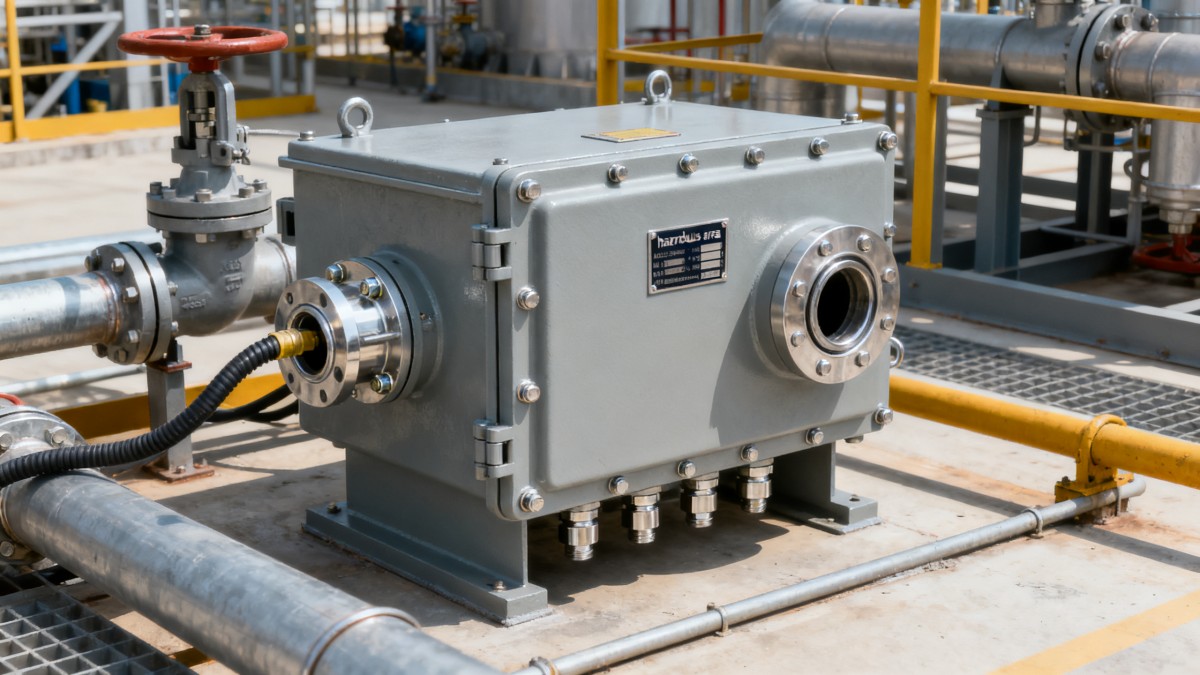
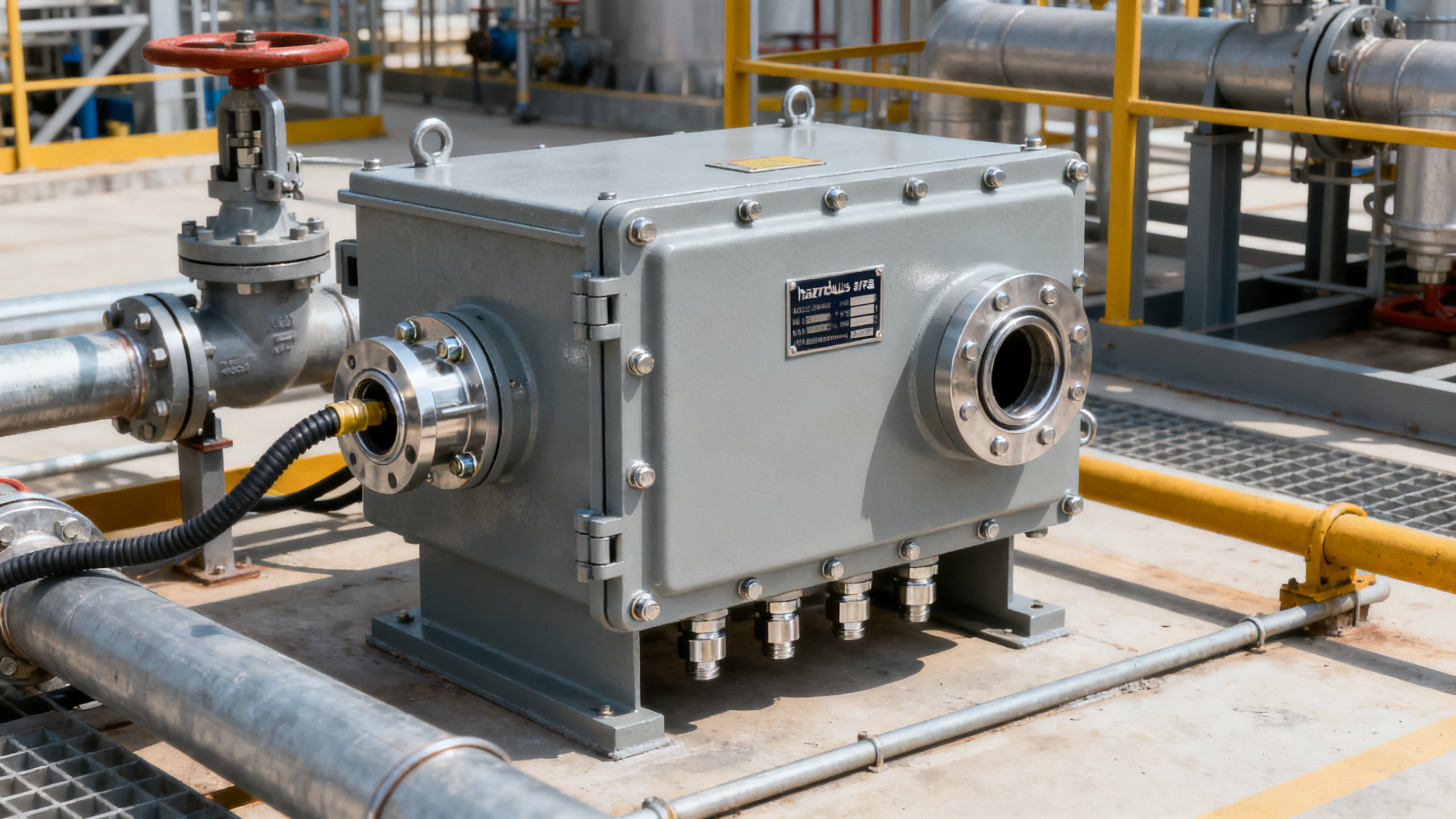
Explosion proof enclosures remain essential because hazardous locations still depend on energized equipment, switching devices, and instrumentation working near ignitable atmospheres.
In simple terms, these enclosures are built to contain an internal ignition and prevent flames from reaching the surrounding environment.
That distinction matters. They do not make the atmosphere safe. They help stop one equipment fault from becoming a wider plant event.
Across oil and gas, chemical processing, grain handling, wastewater, and power infrastructure, the same question appears repeatedly: is the enclosure matched to the actual hazard?
This is where many evaluations go wrong. Teams may focus on box strength, but overlook gas group, temperature class, ingress protection, or installation details.
A sound review usually connects safety, compliance, and lifecycle reliability. That aligns with the industrial approach often emphasized by Global Industrial Core, where performance data and standards are treated together.
For explosion proof enclosures, that means reading the nameplate, the certificate, and the application conditions as one system, not as separate documents.
What exactly makes an enclosure “explosion proof”?
The term usually refers to a housing designed to withstand an internal explosion of flammable gas or vapor and cool escaping gases through flame paths.
Those flame paths are not cosmetic machining features. Their dimensions, thread engagement, and surface condition are central to certification.
This is also why unauthorized drilling, sanding, repainting flange joints, or replacing fasteners with non-approved parts can invalidate protection.
Many people also confuse explosion proof with related concepts such as flameproof, dust-ignition-proof, or increased safety.
Regional terminology varies. North American systems often use Class and Division. IEC and ATEX systems often use Zone classifications and Ex marking.
The practical takeaway is straightforward: the label must match the classified area, the ignition risk, and the installed equipment inside the enclosure.
A quick comparison helps clarify the language
That final line is especially important. Water resistance and corrosion resistance do not equal hazardous area compliance.
Which ratings matter most when selecting explosion proof enclosures?
The most useful way to judge explosion proof enclosures is to start from the area classification, then work outward to equipment and environment.
A strong enclosure can still be the wrong enclosure if the certified rating does not match the hazardous substance or ignition profile.
In actual projects, the following checks carry the most weight:
- Area classification: Class I, II, III or Zone 1, Zone 2, Zone 21, Zone 22.
- Gas or dust group: for example Groups B, C, D or IIB, IIC, IIIA, IIIB, IIIC.
- Temperature class: the enclosure and internal components must stay below the ignition temperature of the atmosphere.
- Ingress and environmental rating: IP and NEMA still matter for washdown, outdoor exposure, and dust loading.
- Ambient temperature range: many failures trace back to heat buildup or cold-weather sealing issues.
- Certification path: UL, ATEX, IECEx, CE, or local approval requirements for the project region.
A recurring mistake is checking only the enclosure shell. Internal terminals, operators, windows, drains, and cable entries must also remain within the certified assembly rules.
If the enclosure is field-modified, the responsibility for compliance can shift quickly. That should be reviewed before installation, not after inspection findings appear.
Does material choice really change safety and service life?
Yes, and often more than expected. Material selection affects corrosion resistance, weight, thermal behavior, maintenance effort, and long-term sealing performance.
Aluminum explosion proof enclosures are common because they are lighter and easier to machine. They can also reduce installation load on supports.
However, aluminum may be less suitable in highly corrosive coastal, chloride, or chemical splash environments unless coatings and maintenance are tightly controlled.
Stainless steel is often preferred where washdown, aggressive chemicals, or long outdoor exposure are expected. The tradeoff is higher cost and greater weight.
Cast iron still appears in demanding applications because of its durability and mass, but installation handling becomes more difficult.
Engineered polymers may be suitable in some hazardous dust or corrosive settings, but only when the exact certification and mechanical limitations are clearly verified.
More common than material failure is coating neglect. If corrosion reaches flame paths, bolts, or threads, explosion proof enclosures can lose their intended protection.
A practical material judgment table
Where do explosion proof enclosures get misapplied most often?
Misapplication usually happens at the boundaries between engineering, installation, and maintenance. The enclosure may be correct on paper, but wrong in assembled service.
One frequent issue is using explosion proof enclosures in dust environments without checking dust-specific certification, temperature rise, and sealing performance.
Another is mixing certified and non-certified accessories. A window kit, operator, breather drain, or cable gland can change the compliance status of the whole assembly.
There is also a maintenance trap. If covers are reopened repeatedly, threads wear, flame paths get contaminated, and fastener torque may drift.
In facilities with vibration, thermal cycling, or corrosive cleaning regimes, inspection intervals should be based on actual exposure, not generic yearly routines.
- Confirm area classification before enclosure selection, not after layout completion.
- Check every entry device, gland, and stopping plug against the certificate conditions.
- Review internal heat load from drives, power supplies, or terminals.
- Protect machined flame paths during storage, coating repair, and servicing.
- Keep documentation traceable, including certificates, revisions, and field modifications.
That documentation discipline is not bureaucracy. It is often the only clear line between compliant installation and unverified assumption.
How should compliance, cost, and lead time be balanced in a real project?
The practical answer is to treat explosion proof enclosures as a risk-control decision first, then optimize cost within certified options.
Low purchase price can disappear quickly if the enclosure requires rework, special coating repair, additional support steel, or replacement due to local approval gaps.
Lead time also deserves closer attention than many specifications give it. Stainless steel custom builds, larger junction boxes, or multi-door assemblies often move slower.
A stronger approach is to compare options through a short qualification matrix that includes certification scope, material fit, accessory compatibility, inspection burden, and maintenance access.
This is where an evidence-led sourcing method helps. In heavy industry, reliable selection depends on test records, standards alignment, and real operating context, not catalog shorthand.
When the next review cycle begins, start with five checks: hazardous area classification, enclosure certificate, material exposure, internal heat load, and approved field modifications.
If those five points are documented clearly, explosion proof enclosures become easier to compare, easier to inspect, and less likely to create hidden compliance risk.
That is usually the most useful next step: build a site-specific evaluation standard, then align enclosure selection, installation practice, and maintenance records to it.
Technical Specifications
- Air Handling Unit Supplier Checklist: Performance Data, Lead Times, and SupportAuthor :Environmental Engineering Director
- Buying Fiberglass Water Tanks Wholesale: Compare Quotes and Delivery CostsAuthor :Environmental Engineering Director
- Choosing an XLPE Power Cable Supplier: Test Reports, Traceability, and Lead TimesAuthor :Grid Infrastructure Analyst
Expert Insights

Chief Security Architect
Dr. Thorne specializes in the intersection of structural engineering and digital resilience. He has advised three G7 governments on industrial infrastructure security.
Related Analysis
- Oct 19, 2026Air Handling Unit Supplier Checklist: Performance Data, Lead Times, and SupportAuthor :Environmental Engineering Director
- Oct 18, 2026Buying Fiberglass Water Tanks Wholesale: Compare Quotes and Delivery CostsAuthor :Environmental Engineering Director
- Oct 17, 2026Choosing an XLPE Power Cable Supplier: Test Reports, Traceability, and Lead TimesAuthor :Grid Infrastructure Analyst
Core Sector // 01
Security & Safety
- Can SPDs Handle Repeated Voltage Spikes in Tropical Grids?Author :Grid Infrastructure Analyst

- How to Evaluate IEC-Compliant Power Protection Devices for Industrial PanelsAuthor :Grid Infrastructure Analyst

- How to Choose Smart Industrial Control Equipment for Harsh Plant EnvironmentsAuthor :Grid Infrastructure Analyst

- EU EMC Update Triggers Re-Certification for BreakersAuthor :Grid Infrastructure Analyst

- How to Select the Right SPD for Solar Inverter Protection in PV Systems?Author :Grid Infrastructure Analyst

- Industrial Valve Systems Factory Checklist: What Buyers Should Verify Before OrderingAuthor :Grid Infrastructure Analyst

- Breaker and Relay Lead Times Hit 24 WeeksAuthor :Grid Infrastructure Analyst

- IEC 61850-10-3 Sets Cybersecurity Bar for Grid DevicesAuthor :Grid Infrastructure Analyst