GCC Mandates QR Code Labeling for Industrial Metal Profiles from Sep 2026
Author
Date Published
Reading Time
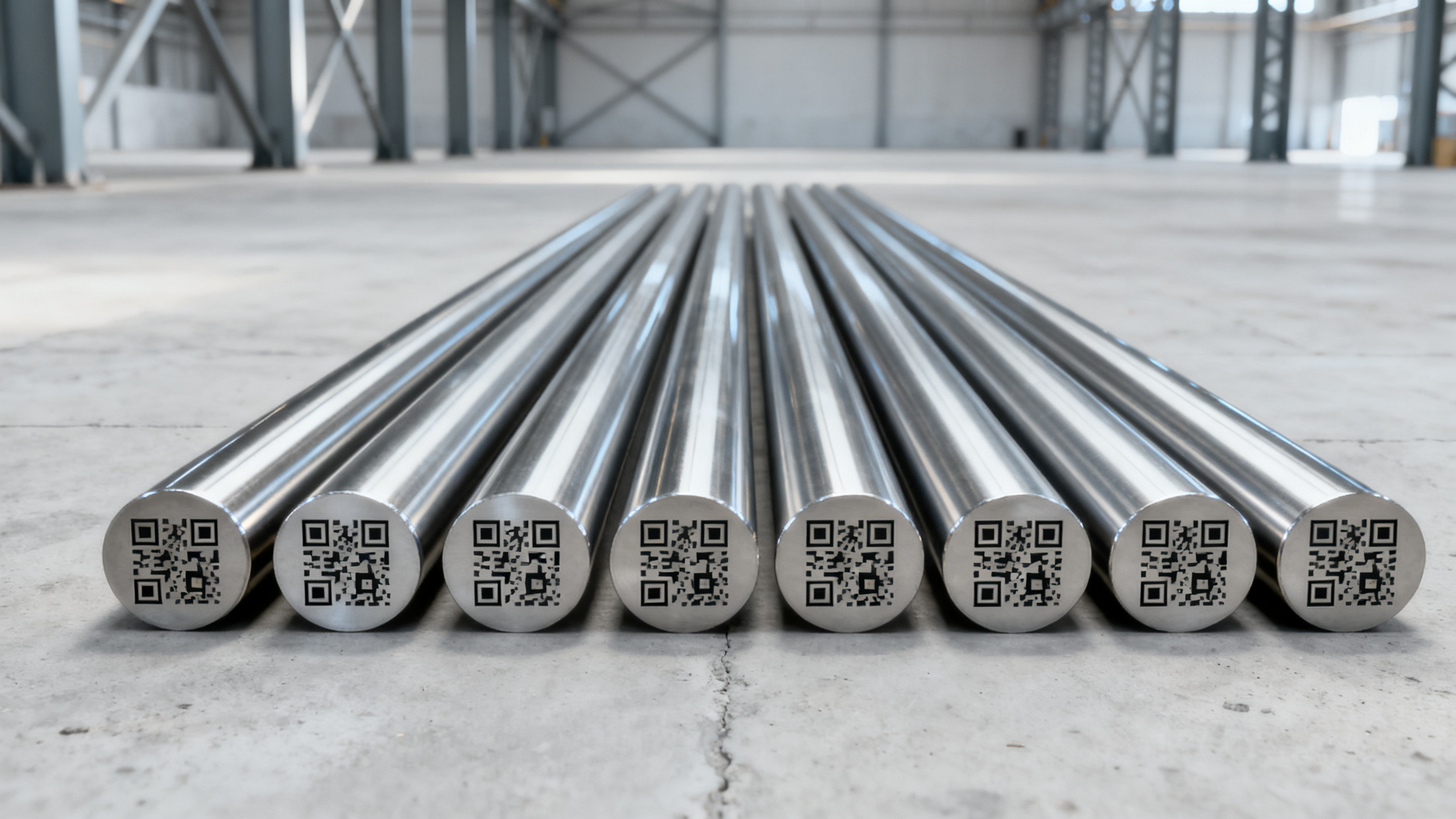
On May 7, 2026, the Gulf Cooperation Council Standardization Organization (GSO) issued Technical Regulation GSO TR 2026/08, requiring machine-readable QR codes on industrial steel and metal profiles imported into GCC member states — Saudi Arabia, UAE, Kuwait, Qatar, Bahrain, and Oman — effective September 1, 2026. This regulation directly impacts exporters and suppliers of structural steel, stainless steel pipes, and aluminum extrusions, particularly those based in China and other major manufacturing hubs.
Event Overview
The Gulf Cooperation Council Standardization Organization (GSO) published Technical Regulation GSO TR 2026/08 on May 7, 2026. The regulation mandates that, starting September 1, 2026, all industrial-grade steel and metal profiles — including structural steel, stainless steel pipes, and aluminum extrusions — imported into the six GCC countries must bear a permanent, machine-readable QR code affixed to each profile end. The QR code must comply with ISO/IEC 15459-3:2025 and encode the material certificate number, heat treatment batch number, and a link to the third-party test report. Chinese exporters of steel and metal profiles are required to implement laser marking production lines to meet this requirement.
Which Subsectors Are Affected
Direct Exporters (e.g., Chinese Steel & Metal Profiles Manufacturers)
These companies face immediate compliance obligations. Each exported profile unit must carry a durable, standardized QR code containing traceability data — a shift from conventional paper-based or batch-level certification. Impact includes capital expenditure on laser marking equipment, revalidation of quality documentation workflows, and potential delays in customs clearance if labeling fails verification.
Downstream Fabricators and Assemblers (e.g., Construction Steel Fabricators in GCC)
Fabricators sourcing raw profiles from external suppliers must now verify QR code readability and data integrity upon receipt. Non-compliant materials may be rejected at port or construction site level. This increases incoming inspection workload and introduces new dependencies on upstream supplier traceability systems.
Third-Party Testing and Certification Bodies
The regulation explicitly requires QR codes to link to third-party test reports. Certification providers serving GCC-bound metal products must ensure their digital reporting platforms support stable, publicly accessible URLs with long-term validity — and align reporting fields (e.g., heat treatment batch ID format) with GSO TR 2026/08 requirements.
Logistics and Customs Service Providers
While not directly regulated, logistics operators handling GCC-bound metal shipments must adapt documentation handling protocols. Customs brokers and freight forwarders may need to cross-check QR code metadata against declared shipment records during pre-clearance audits — especially as GSO signals phased enforcement via port inspections.
What Relevant Companies or Practitioners Should Focus On Now
Monitor official GSO implementation guidance and national adoption timelines
GSO TR 2026/08 is a regional standard; individual GCC members may issue country-specific enforcement notices or transitional provisions. Exporters should track national regulatory portals (e.g., SASO in Saudi Arabia, ESMA in UAE) for updates on testing protocols, QR code validation tools, and grace period announcements — even though the effective date is fixed at September 1, 2026.
Prioritize laser marking capability for high-volume export SKUs
Analysis shows that retrofitting existing extrusion or cutting lines with integrated laser marking is more cost-effective than post-production manual labeling — especially for standardized lengths and high-turnover items like 6-m aluminum profiles or ASTM A500 structural tubes. Companies should assess marking speed, substrate compatibility (e.g., anodized vs. mill-finished aluminum), and environmental durability before procurement.
Distinguish between regulatory signal and operational readiness
Observably, the requirement for ISO/IEC 15459-3:2025–compliant identifiers signals a broader shift toward digital product passports in GCC industrial imports — but current scope remains limited to specific metal profile categories. Companies should avoid overextending compliance efforts beyond GSO TR 2026/08’s defined scope (e.g., no requirement yet for fasteners, sheets, or coils).
Validate QR code data structure and hosting infrastructure early
Material certificate numbers and heat treatment batch IDs must follow consistent formatting across batches. Third-party report links must resolve reliably without authentication or session expiry. Current more suitable practice is to conduct internal end-to-end scans using commercial QR readers and validate URL uptime, redirect chains, and PDF report accessibility — ideally before first trial shipment.
Editorial Perspective / Industry Observation
This regulation is better understood as a traceability enforcement milestone rather than a standalone technical update. From an industry perspective, it reflects GSO’s move toward harmonizing physical product identification with digital verification — aligning with global trends such as the EU Construction Products Regulation (CPR) digital declaration framework. However, its immediate effect remains narrowly scoped: it applies only to discrete, linear metal profiles entering GCC markets, not to downstream fabricated assemblies or non-metallic building materials. Analysis suggests it serves both quality assurance and anti-counterfeiting objectives — but actual impact hinges on field-level verification capacity at GCC ports and local inspection agencies, which remains under observation.
It is not yet a de facto market access barrier — but it is becoming a prerequisite for predictable customs processing. Industry stakeholders should treat it as an operational checkpoint, not a strategic pivot.
Conclusion
GSO TR 2026/08 marks a concrete step toward mandatory digital traceability for select industrial metal products in the GCC region. Its significance lies not in novelty — QR-based labeling is already common in automotive and electronics supply chains — but in its binding application to bulk construction materials. For affected exporters and fabricators, the regulation is best interpreted as a near-term compliance requirement with measurable implementation steps, rather than a broad policy shift or long-term strategic inflection point.
Information Sources
- Gulf Cooperation Council Standardization Organization (GSO), Technical Regulation GSO TR 2026/08, issued May 7, 2026
- ISO/IEC 15459-3:2025 — Information technology — Unique identifiers — Part 3: Registration rules for issuer identifiers
- Note: National implementation details (e.g., port inspection procedures, penalty frameworks) remain pending publication by individual GCC member authorities and are subject to ongoing monitoring.
Technical Specifications
- How to Select an Emissions Monitoring System Analyzer for Compliance ReportingAuthor :Precision Metrology Expert
- How to Select an Access Control Management System for Multi-Site FacilitiesAuthor :Safety Compliance Lead
- Portable Gas Monitor Calibration: How Often Is It Needed for Safe Confined-Space Work?Author :Precision Metrology Expert
Expert Insights

Chief Security Architect
Dr. Thorne specializes in the intersection of structural engineering and digital resilience. He has advised three G7 governments on industrial infrastructure security.
Related Analysis
- Sep 21, 2026How to Select an Emissions Monitoring System Analyzer for Compliance ReportingAuthor :Precision Metrology Expert
- Sep 20, 2026How to Select an Access Control Management System for Multi-Site FacilitiesAuthor :Safety Compliance Lead
- Sep 19, 2026Portable Gas Monitor Calibration: How Often Is It Needed for Safe Confined-Space Work?Author :Precision Metrology Expert
Core Sector // 01
Security & Safety
- Stainless Steel Welded Tube Applications: Matching Tube Supply to Fabrication NeedsAuthor :Heavy Industry Strategist

- What Maintenance Do Furnace Components Need After 18 Months?Author :Heavy Industry Strategist

- How to Assess Metal Materials for Thermal Cycling in Power BoilersAuthor :Heavy Industry Strategist

- How to Evaluate Aluminum Extrusion Suppliers for Tight-Tolerance Components?Author :Heavy Industry Strategist

- How to Evaluate a Weld Neck Flange Manufacturer for High-Pressure Pipe ProjectsAuthor :Heavy Industry Strategist

- EU REACH Ban Hits Cr(VI)-Coated Steel ImportsAuthor :Heavy Industry Strategist
-Coated Steel Imports")
- How to Evaluate a Heat Sink Aluminum Profile Supplier for Custom Thermal ProjectsAuthor :Heavy Industry Strategist

- Industrial Metal Fabrication Components Price: What Drives Cost and How to Compare QuotesAuthor :Heavy Industry Strategist