Powder Metallurgy Materials: Properties, Common Grades, and Best-Fit Applications
Author
Date Published
Reading Time
Selecting powder metallurgy materials is rarely a narrow material choice. It shapes strength, wear life, dimensional control, porosity behavior, and total production cost across the full service life of a part.
That is why powder metallurgy materials remain highly relevant in industrial supply chains serving automotive systems, power equipment, fluid handling, tools, and precision mechanical assemblies.
For organizations working in critical infrastructure, the decision also affects compliance confidence, maintenance intervals, and sourcing resilience. In the GIC view, material selection has to connect performance data with real operating conditions.
Why powder metallurgy materials matter in modern industry
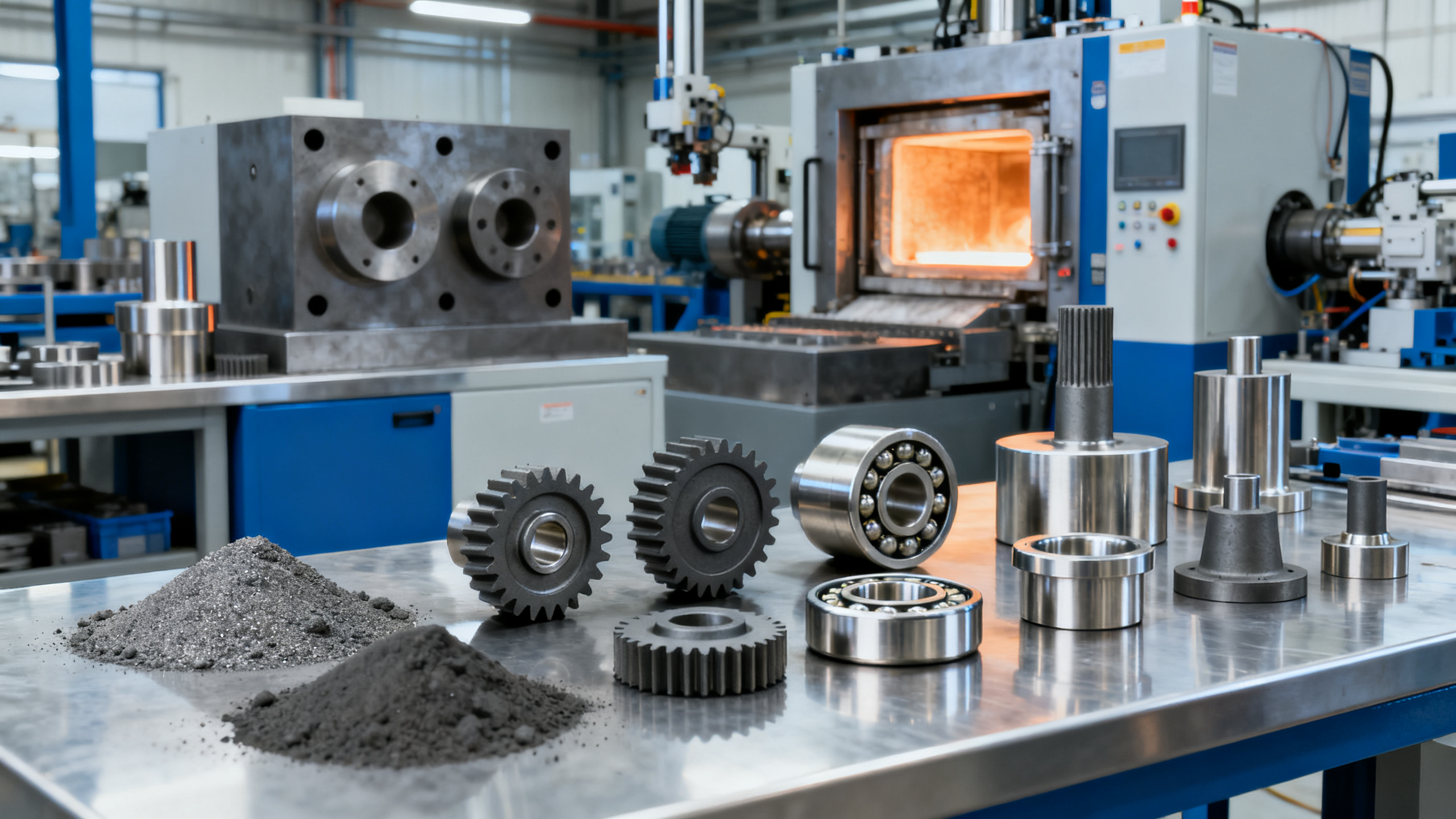
Powder metallurgy materials are engineered from metal powders that are compacted and sintered into near-net-shape components. The route reduces machining waste and supports consistent production at scale.
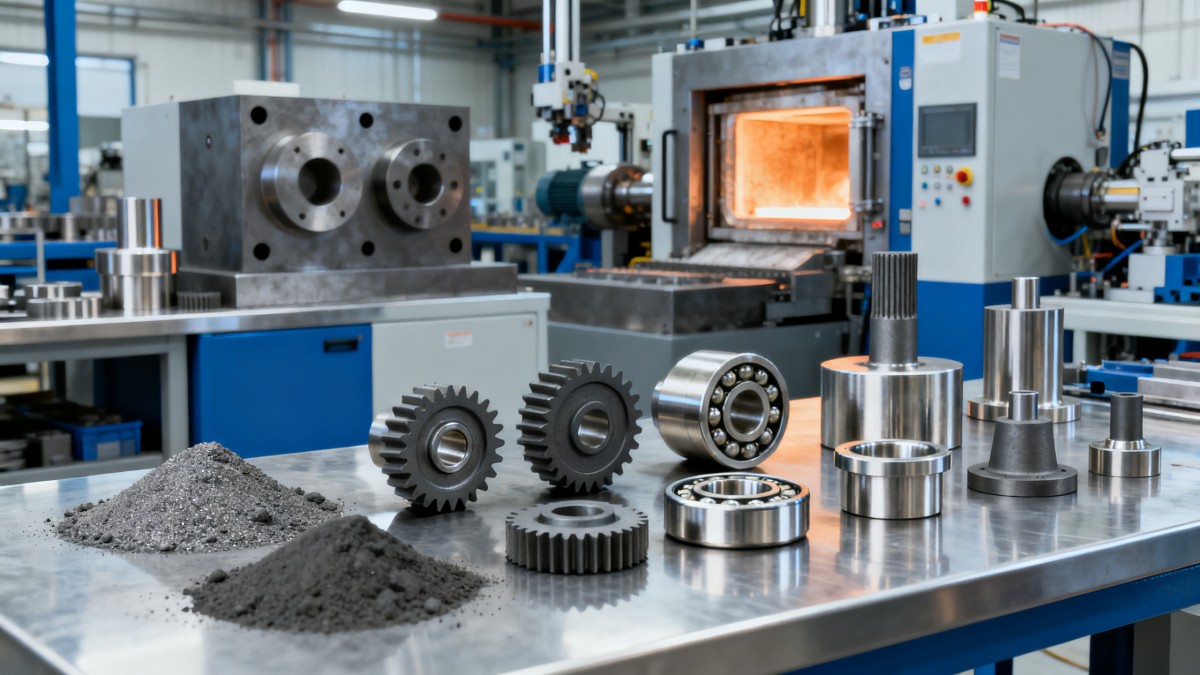
The process is especially valuable when parts require tight dimensional repeatability, controlled density, or self-lubricating behavior. It also supports complex shapes that would be expensive to machine from bar or cast stock.
More importantly, powder metallurgy materials can be tailored. Composition, particle size, compaction pressure, sintering temperature, and secondary operations all influence the final result.
This makes powder metallurgy a practical bridge between design intent and manufacturing efficiency, especially when large production volumes and stable quality are both required.
The core properties that drive material selection
The first screening step is usually performance under load. Tensile strength, transverse rupture strength, hardness, and fatigue response vary widely between grades and density levels.
Wear resistance is another priority. Gears, bushings, valve components, and pump parts often fail from friction, abrasion, or inadequate lubrication rather than simple overload.
Density deserves close attention because it affects both mechanical performance and dimensional behavior. Higher density generally improves strength, but it may also change cost and process complexity.
Corrosion resistance matters where humidity, chemicals, condensate, or outdoor exposure are present. Stainless powder metallurgy materials are often chosen for this reason, even when they cost more.
Thermal and magnetic properties can also be decisive. Soft magnetic components, heat-resistant parts, and thermal management elements each require different evaluation criteria.
- Mechanical strength and fatigue life under real load cycles
- Hardness and wear resistance at contact surfaces
- Density level and residual porosity
- Corrosion behavior in the service environment
- Dimensional accuracy after sintering and secondary finishing
- Cost stability across production volumes
Common grades and where they fit best
Not all powder metallurgy materials serve the same job. Some grades prioritize strength, some support oil retention, and others are chosen for corrosion resistance or magnetic response.
Iron-copper and iron-carbon systems remain among the most common choices because they offer a balanced mix of strength, machinability, and manageable cost.
Alloyed steels with nickel, molybdenum, or copper are often selected when higher fatigue strength or improved hardenability is needed in transmission or drive components.
Bronze grades are different. Their value often comes from controlled porosity, which allows lubricant retention and steady bearing performance without external oil supply.
Where evaluation gets more demanding
In real projects, powder metallurgy materials are rarely judged by datasheet values alone. Application success depends on how the part is loaded, assembled, and maintained in service.
A gear in an enclosed drive sees different risks than a porous bearing in a dusty pump room. A stainless sintered part in a washdown environment has different priorities again.
Current industry attention is moving toward three issues. One is traceable quality. Another is stable performance under harsher duty cycles. The third is supply continuity across regions.
That wider view aligns with how GIC frames industrial sourcing. Material grade, certification path, process capability, and long-term reliability should be reviewed together, not as separate checkboxes.
Secondary processing often changes the decision
Sizing, impregnation, steam treatment, infiltration, machining, and heat treatment can significantly shift the final performance of powder metallurgy materials.
This matters because two similar base grades may perform very differently after post-processing. Comparison should therefore include the full route, not just nominal composition.
Best-fit applications across industrial sectors
Powder metallurgy materials appear in many sectors because they suit repetitive parts with consistent geometry and measurable functional demands.
In transport and mobile equipment, common applications include synchronizer hubs, gears, lock parts, cams, and sensor components where precision and volume efficiency are both important.
In plant equipment, sintered bearings, filters, and small structural parts benefit from the process when compact form, repeatable tolerances, and service stability are required.
Electrical and power-grid related systems also use powder metallurgy materials in magnetic parts, contact-related elements, and thermal management components with controlled material behavior.
For valves, pumps, and fluid systems, stainless and bronze grades often provide the best fit where corrosion, lubrication, and operating cleanliness all affect uptime.
When powder metallurgy is usually a strong choice
- Annual volume is high enough to justify tooling
- Part geometry is complex but stable over time
- Near-net-shape manufacturing can cut waste
- Controlled porosity is useful, not harmful
- Tight repeatability matters more than extreme ductility
Practical checkpoints before approving a grade
A good review starts with the functional failure mode. Is the real risk wear, cracking, corrosion, distortion, seizure, leakage, or magnetic loss?
From there, the material shortlist becomes more disciplined. Powder metallurgy materials should be compared against the actual contact pressure, speed, temperature, contamination, and lubrication conditions.
Supplier capability is equally important. Density control, furnace atmosphere, powder consistency, inspection methods, and batch traceability all influence whether the grade performs as expected.
Usually, the best decision is not the strongest grade on paper. It is the grade that stays stable within the part design, process window, duty cycle, and compliance framework.
How to move from comparison to confident selection
A useful next step is to build a comparison matrix for candidate powder metallurgy materials using only application-relevant criteria. That keeps evaluation grounded and avoids overvaluing generic datasheet claims.
It also helps to request evidence beyond nominal grade names. Process controls, test reports, dimensional capability, and field-use references often reveal more than a basic specification sheet.
For critical infrastructure components, selection should connect metallurgy, operating risk, and sourcing discipline in one review path. That is where powder metallurgy materials shift from commodity inputs to strategic design decisions.
When the shortlist is clear, the most reliable path is to validate the grade against the exact service environment, post-processing route, and inspection standard expected in production.
Technical Specifications
- Air Handling Unit Supplier Checklist: Performance Data, Lead Times, and SupportAuthor :Environmental Engineering Director
- Buying Fiberglass Water Tanks Wholesale: Compare Quotes and Delivery CostsAuthor :Environmental Engineering Director
- Choosing an XLPE Power Cable Supplier: Test Reports, Traceability, and Lead TimesAuthor :Grid Infrastructure Analyst
Expert Insights

Chief Security Architect
Dr. Thorne specializes in the intersection of structural engineering and digital resilience. He has advised three G7 governments on industrial infrastructure security.
Related Analysis
- Oct 19, 2026Air Handling Unit Supplier Checklist: Performance Data, Lead Times, and SupportAuthor :Environmental Engineering Director
- Oct 18, 2026Buying Fiberglass Water Tanks Wholesale: Compare Quotes and Delivery CostsAuthor :Environmental Engineering Director
- Oct 17, 2026Choosing an XLPE Power Cable Supplier: Test Reports, Traceability, and Lead TimesAuthor :Grid Infrastructure Analyst
Core Sector // 01
Security & Safety
- How to Specify Steel Heavy-Duty Corner Guards for Loading Bays and High-Traffic AreasAuthor :Heavy Industry Strategist

- Selecting Non-Ferrous Metal Plates for Corrosion, Weight, and Formability RequirementsAuthor :Heavy Industry Strategist

- Stainless Steel Welded Tube Applications: Matching Tube Supply to Fabrication NeedsAuthor :Heavy Industry Strategist

- What Maintenance Do Furnace Components Need After 18 Months?Author :Heavy Industry Strategist

- How to Assess Metal Materials for Thermal Cycling in Power BoilersAuthor :Heavy Industry Strategist

- How to Evaluate Aluminum Extrusion Suppliers for Tight-Tolerance Components?Author :Heavy Industry Strategist

- How to Evaluate a Weld Neck Flange Manufacturer for High-Pressure Pipe ProjectsAuthor :Heavy Industry Strategist

- EU REACH Ban Hits Cr(VI)-Coated Steel ImportsAuthor :Heavy Industry Strategist
-Coated Steel Imports")