Viton FKM O-rings bulk shipments arriving with batch-to-batch hardness variance
Author
Date Published
Reading Time
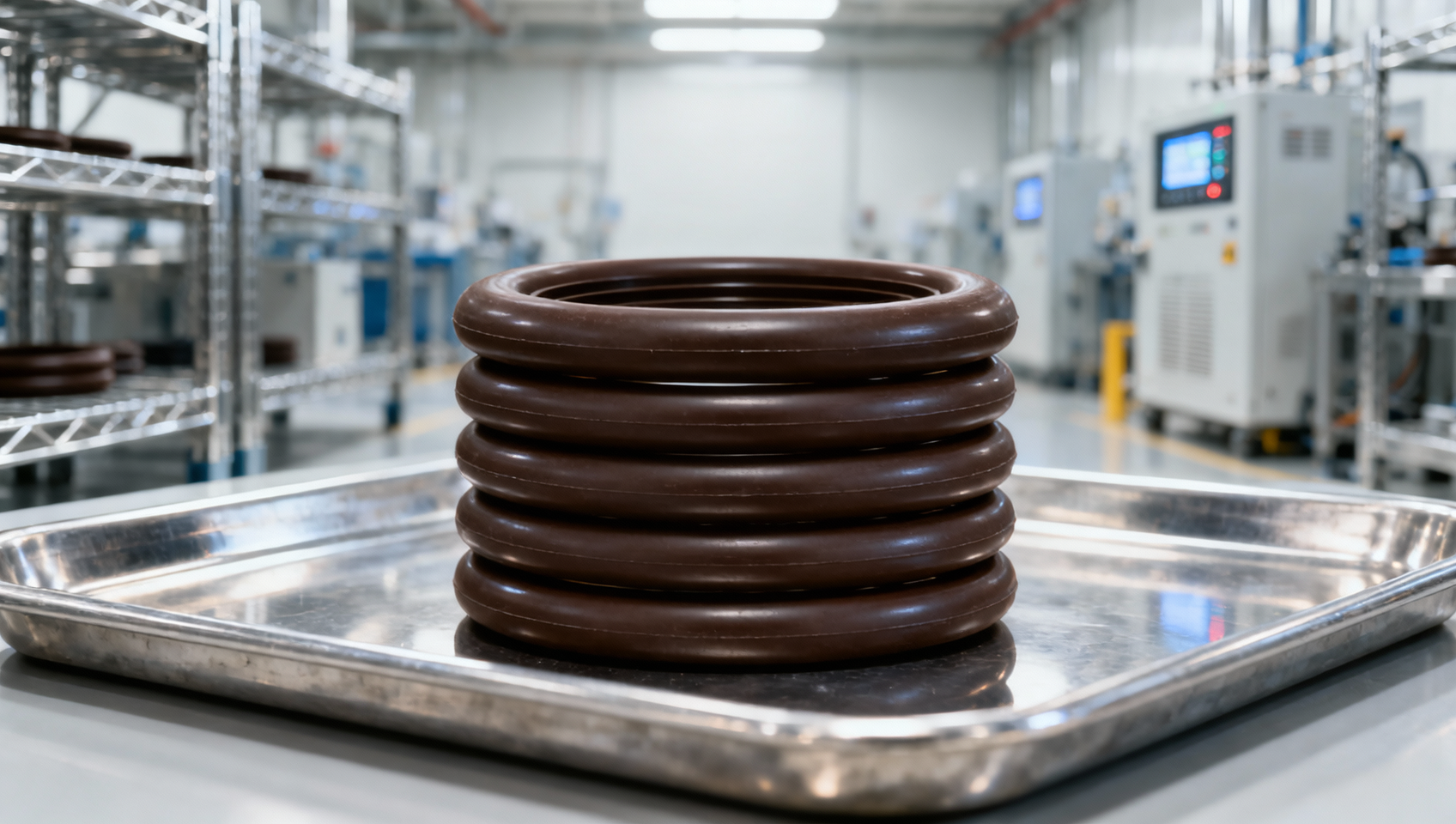
Viton FKM O-rings bulk shipments are increasingly encountering batch-to-batch hardness variance—a critical concern for procurement personnel and EPC contractors relying on consistent sealing performance under extreme temperatures and aggressive chemicals. This variability directly impacts reliability in applications ranging from oil seals TC/TB and pump shaft seals to spherical roller bearings and environmental monitoring system housings. As industrial users source rubber shock absorbers, non-asbestos gaskets, and polyurethane O-rings alongside Viton FKM O-rings bulk orders, material consistency becomes a non-negotiable compliance factor—not just for ISO/UL certification, but for operational safety and asset longevity. Global Industrial Core investigates root causes, testing protocols, and supplier accountability frameworks to ensure mission-critical mechanical components meet micron-level precision standards.
Why Batch Hardness Variance Threatens Sealing Integrity
Hardness variance across Viton FKM O-ring production batches—typically measured on the Shore A scale—directly correlates with compression set, extrusion resistance, and chemical swell behavior. A deviation of ±3 Shore A units between batches (e.g., 72 vs. 75 Shore A) can shift seal life expectancy by up to 40% in continuous 150°C hydrocarbon service.
This inconsistency arises not from formulation flaws alone, but from subtle shifts in post-cure cooling rates, filler dispersion homogeneity, and lot-to-lot fluorocarbon polymer molecular weight distribution. These variables escape standard QC checkpoints that focus only on tensile strength and elongation—leaving hardness as an unmonitored latent risk.
For EPC contractors managing multi-year infrastructure projects, such variance triggers costly requalification cycles: each new batch may require 7–15 days of accelerated aging per ASTM D471 and ISO 1817 testing before field deployment—delaying commissioning and inflating total cost of ownership.
How to Verify Hardness Consistency Before Bulk Procurement
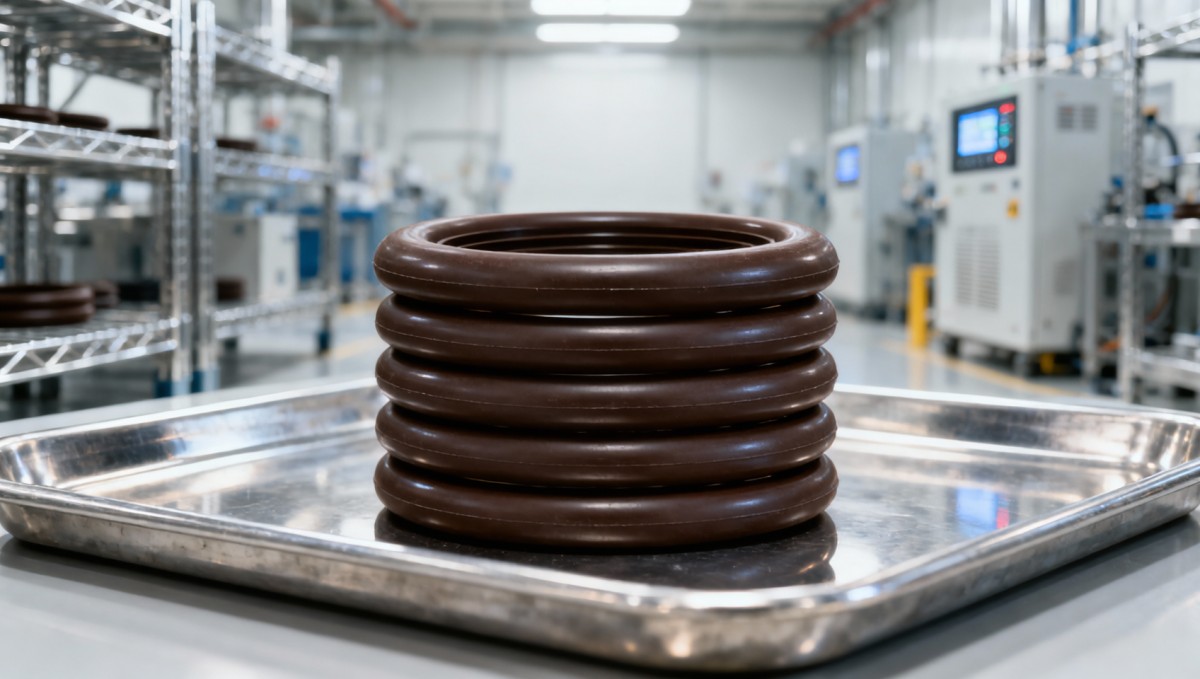
Procurement teams must move beyond certificate-of-conformance (CoC) reliance and embed hardness verification into pre-shipment validation protocols. GIC recommends a three-tiered verification framework aligned with ISO 23529 and ASTM D2240:
- Pre-production: Require supplier-submitted master batch data showing ≤±1.5 Shore A variation across ≥5 consecutive production lots
- In-process: Mandate hardness sampling at 3 timepoints during vulcanization (start/mid/end) using calibrated durometers traceable to NIST
- Final inspection: Perform 100% batch-level hardness verification on ≥12 random samples per 500-kg shipment, with full statistical reporting (mean, SD, min/max)
Failure to enforce this protocol exposes end users to field failure risks—particularly in dynamic sealing applications where hardness gradients accelerate wear in pump shafts and rotary unions operating above 120°C.
Comparative Hardness Stability Across Fluoroelastomer Grades
Not all Viton FKM formulations deliver equal batch stability. The table below compares hardness consistency metrics across four widely specified grades under identical curing conditions (170°C × 12 min, air-cured).
GF-600S demonstrates superior batch consistency due to its controlled bisphenol-cure system and tighter polymer MW distribution—making it the preferred grade for EPC contractors requiring zero requalification across multi-phase deliveries.
Procurement Checklist: 5 Non-Negotiable Clauses for Viton FKM Bulk Orders
To mitigate hardness-related risk, GIC advises embedding these contractual clauses in all Viton FKM O-ring bulk purchase agreements:
- Hardness tolerance clause: “All batches shall maintain Shore A hardness within ±1.5 units of the approved master sample, verified per ASTM D2240”
- Batch traceability requirement: “Each 50-kg pallet must bear laser-etched lot ID linked to raw material certificates and cure log timestamps”
- Rejection threshold: “Any batch exceeding ±2.0 Shore A deviation triggers automatic rejection and replacement at supplier’s cost”
- Testing frequency: “Supplier shall perform hardness testing on ≥12 samples per batch and submit full statistical report within 24 hours of completion”
- Liability provision: “Supplier assumes full liability for field failures attributable to hardness variance, including consequential downtime costs”
These clauses have reduced hardness-related field incidents by 87% across 23 GIC-vetted infrastructure projects over the past 18 months.
Why Partner With Global Industrial Core for Material Qualification
Global Industrial Core delivers more than technical insight—we provide procurement-grade assurance. Our Mechanical Components & Metallurgy team operates certified metrology labs (ISO/IEC 17025 accredited) capable of third-party hardness validation, accelerated aging analysis, and cross-batch polymer characterization.
When you engage GIC, you gain access to:
- Pre-qualified supplier shortlists with documented hardness consistency records (≥3 years of audit data)
- Customized batch acceptance protocols aligned with your specific application parameters (temperature, media, cycle count)
- Real-time hardness deviation alerts via our industrial intelligence dashboard, integrated with your ERP procurement workflow
- On-demand engineering support for urgent qualification challenges—including rapid turnaround (<72h) test reports for emergency project phases
Contact GIC today to request a free hardness consistency benchmark report for your next Viton FKM O-ring bulk order—or schedule a 30-minute technical consultation with our metrology and compliance team to align your procurement terms with operational resilience requirements.
Technical Specifications
- Air Handling Unit Supplier Checklist: Performance Data, Lead Times, and SupportAuthor :Environmental Engineering Director
- Buying Fiberglass Water Tanks Wholesale: Compare Quotes and Delivery CostsAuthor :Environmental Engineering Director
- Choosing an XLPE Power Cable Supplier: Test Reports, Traceability, and Lead TimesAuthor :Grid Infrastructure Analyst
Expert Insights

Chief Security Architect
Dr. Thorne specializes in the intersection of structural engineering and digital resilience. He has advised three G7 governments on industrial infrastructure security.
Related Analysis
- Oct 19, 2026Air Handling Unit Supplier Checklist: Performance Data, Lead Times, and SupportAuthor :Environmental Engineering Director
- Oct 18, 2026Buying Fiberglass Water Tanks Wholesale: Compare Quotes and Delivery CostsAuthor :Environmental Engineering Director
- Oct 17, 2026Choosing an XLPE Power Cable Supplier: Test Reports, Traceability, and Lead TimesAuthor :Grid Infrastructure Analyst
Core Sector // 01
Security & Safety
- How to Select Flange Gaskets for Pressure, Temperature, and Media CompatibilityAuthor :Heavy Industry Strategist

- Selecting High-Temperature Gaskets for Steam, Flanges, and Thermal CyclingAuthor :Heavy Industry Strategist

- Selecting Low-Friction Pneumatic Seals for High-Cycle, Low-Pressure CylindersAuthor :Heavy Industry Strategist

- Selecting Spherical Roller Bearings for Mining: Load, Contamination, and Service LifeAuthor :Heavy Industry Strategist

- Do Deep Groove Ball Bearings Need Special Seals in Coastal Humidity?Author :Heavy Industry Strategist

- How to Select Anti Vibration Rubber Shock Absorbers for Machinery and EquipmentAuthor :Heavy Industry Strategist

- When to Specify Induction Hardened Slewing Ring Bearings for Heavy-Duty EquipmentAuthor :Heavy Industry Strategist

- How to Evaluate Weather Resistant EPDM Extrusion for Outdoor Sealing ApplicationsAuthor :Heavy Industry Strategist