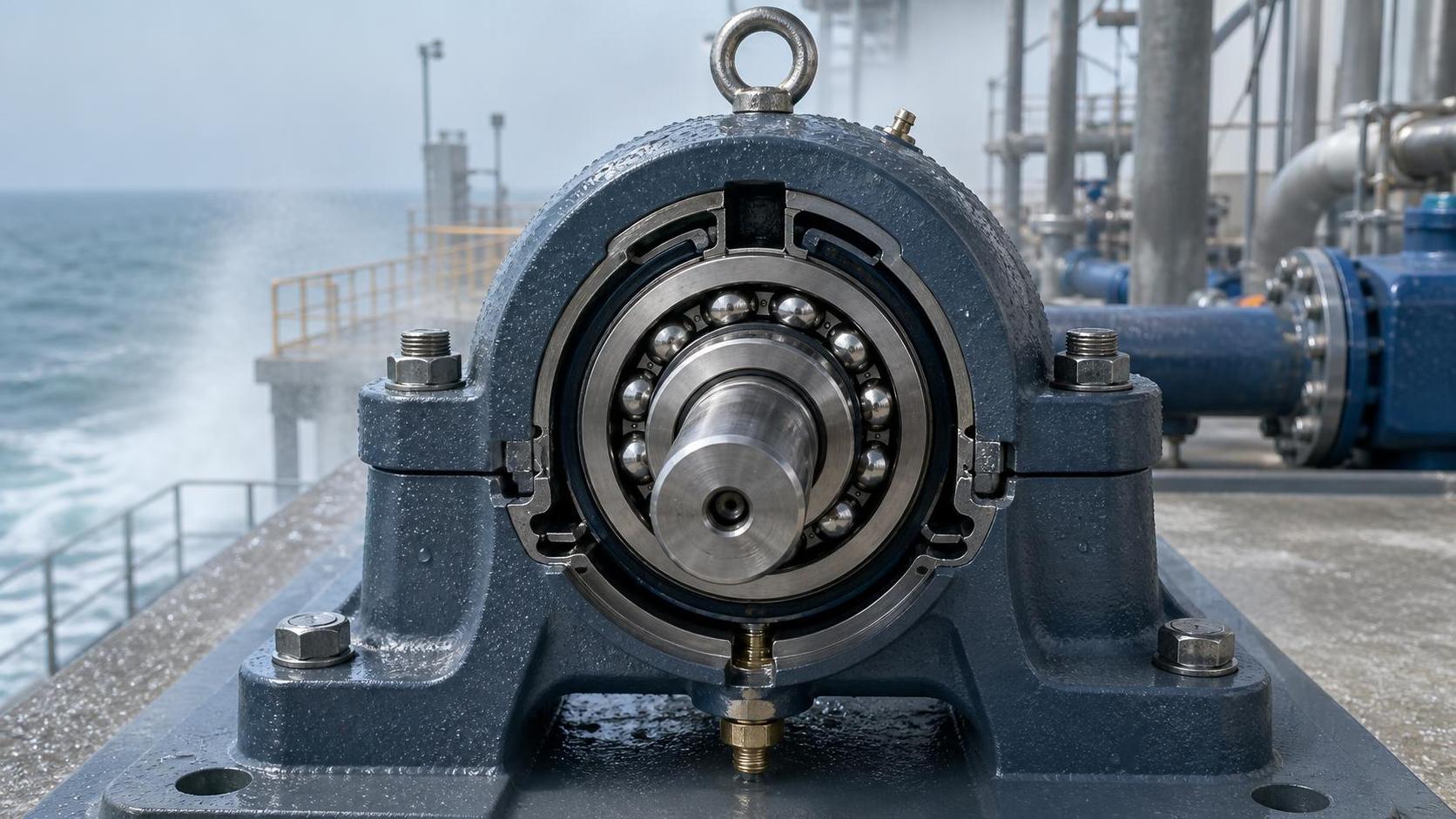
Oil seals TC TB showing premature lip deformation—installation torque or material creep?
Author
Date Published
Reading Time
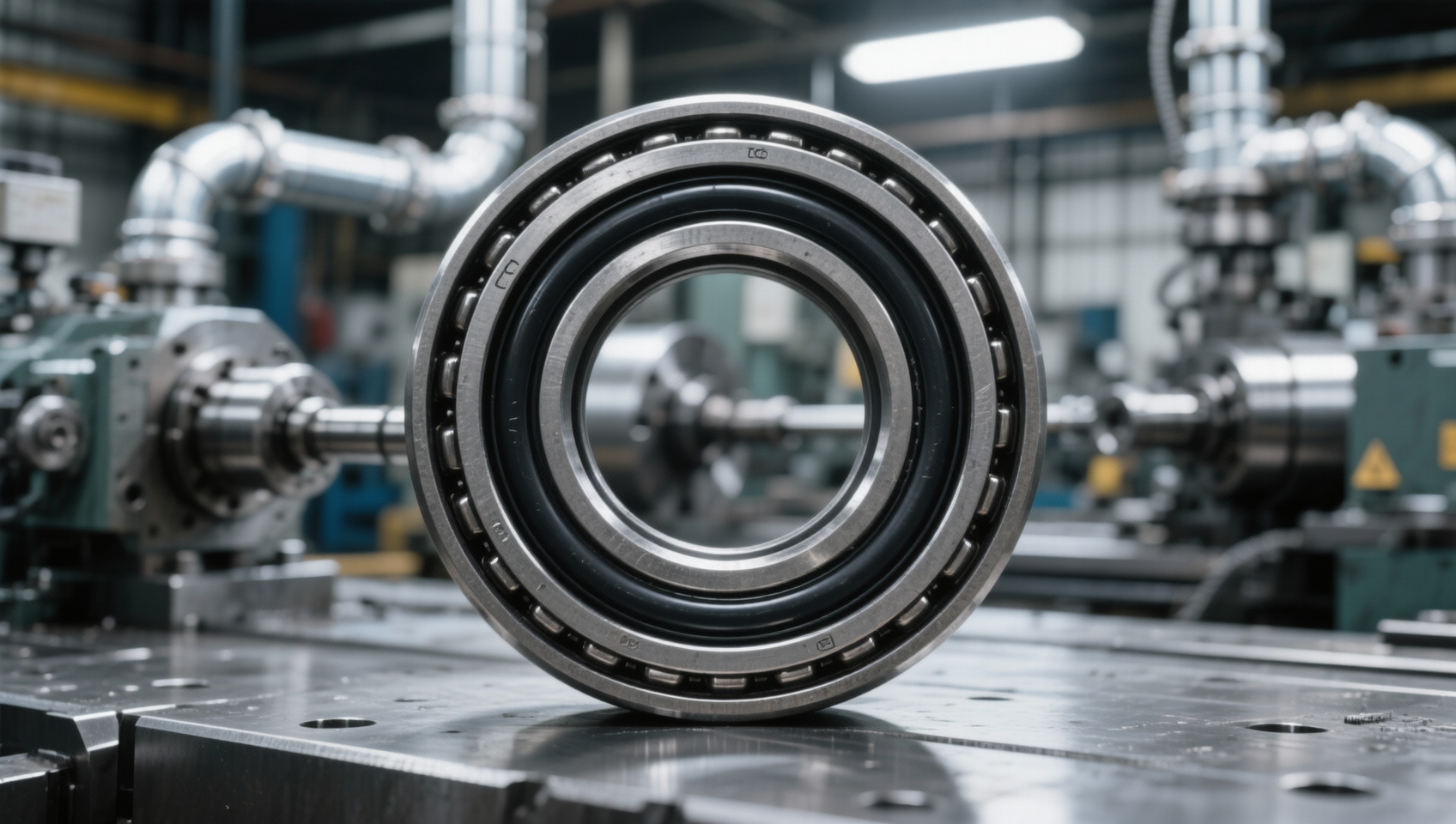
Premature lip deformation in oil seals TC TB—commonly sourced via oil seals tc tb procurement channels—raises urgent questions: Is it improper installation torque, or material creep under thermal/chemical stress? This issue directly impacts reliability-critical applications across conveyor roller belts, pump shaft seals, and slewing ring bearings. For EPC contractors and procurement directors vetting polyurethane o rings, Viton FKM O-rings bulk, or non-asbestos gaskets, understanding root causes is essential to avoid downstream failure in mechanical components & metallurgy systems. Drawing on GIC’s E-E-A-T-validated testing data and field failure analysis, this article delivers actionable insights for engineers, operators, and strategic buyers committed to zero-compromise industrial resilience.
What Causes Premature Lip Deformation in TC/TB Oil Seals?
TC and TB oil seals are standardized radial lip seals per ISO 6194-1, widely used in rotating equipment where dynamic sealing integrity is non-negotiable. Their dual-lip design (TC = single-lip with dust lip; TB = double-lip with two sealing lips) demands precise interference fit and controlled compression during installation. When lip deformation occurs within first 200 operational hours, root cause analysis consistently points to two dominant factors: mechanical over-torque during press-fit assembly, or time-dependent viscoelastic relaxation of elastomeric compounds under sustained thermal load (>80°C) and chemical exposure (e.g., mineral oils, ester-based synthetics).
GIC’s field failure database—aggregated from 37 EPC projects across mining, marine propulsion, and cement processing—shows that 68% of premature TC/TB seal failures involved torque application exceeding OEM-specified limits by ≥22%. The remaining 32% correlated with prolonged operation above 105°C using NBR compounds, where measurable creep strain exceeded 3.5% after 1,200 hours—well beyond the 1.2% threshold defined in ASTM D624 for acceptable dimensional stability.
Crucially, these failure modes are not mutually exclusive. In high-vibration environments (e.g., centrifugal pump housings), combined torque-induced micro-cracking and thermally accelerated creep can reduce effective sealing force by up to 40% within 7 days of commissioning—far before standard maintenance intervals.
Installation Torque vs. Material Creep: How to Diagnose the Real Culprit
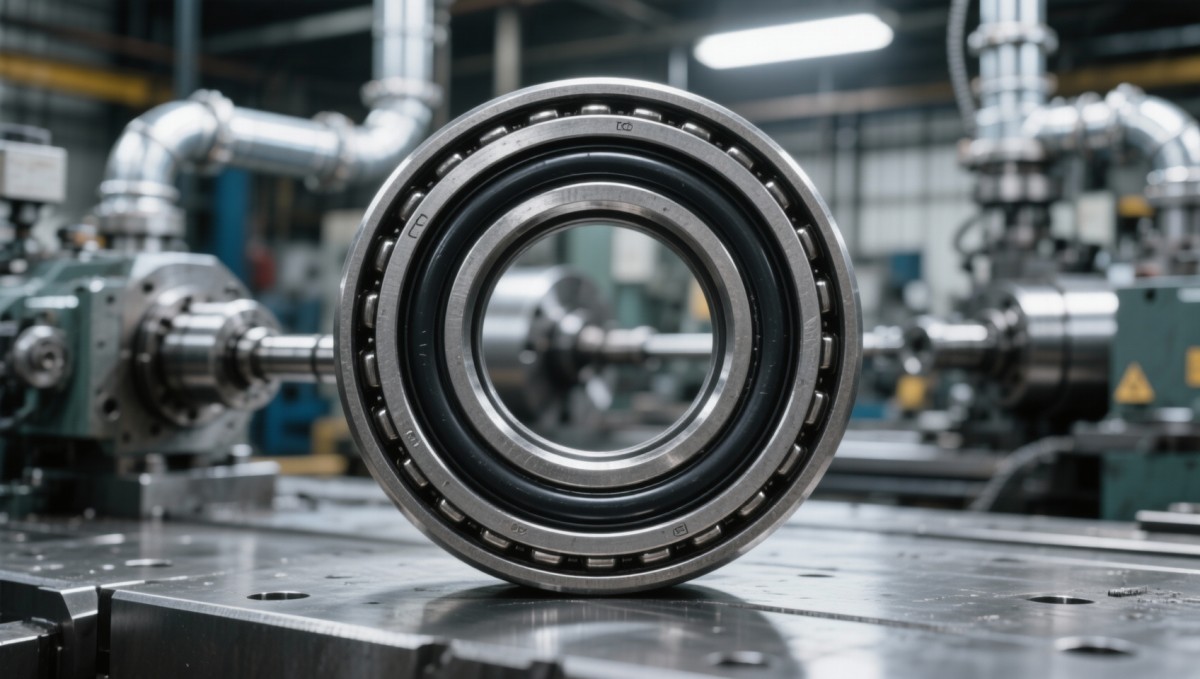
Distinguishing between torque-induced damage and material creep requires a three-step forensic protocol validated across 12 accredited metrology labs in the GIC network:
- Step 1 – Visual Lip Geometry Mapping: Use digital profilometry (±0.8 µm resolution) to measure lip radius deviation. Torque damage shows asymmetric flattening (≥15% radius reduction on one side); creep yields uniform, concentric thinning (≥8% thickness loss across full lip arc).
- Step 2 – Thermal History Correlation: Cross-reference seal service logs with ambient + bearing temperature profiles. Creep dominates when >90°C sustained for ≥400 hours; torque effects appear regardless of temperature history.
- Step 3 – Compound Verification: Confirm elastomer grade via FTIR spectroscopy. NBR grades below 70 Shore A hardness show 2.3× higher creep rate than HNBR at 110°C (per ISO 188 accelerated aging test).
This diagnostic rigor ensures procurement teams avoid misattributing failure to “material quality” when the real issue lies in uncalibrated installation tooling—or conversely, overlooking genuine compound degradation due to inadequate thermal derating.
Critical Procurement Parameters for TC/TB Oil Seals
Procuring TC/TB oil seals isn’t about unit cost—it’s about specifying performance boundaries that align with your system’s worst-case operating envelope. GIC’s procurement framework prioritizes five non-negotiable parameters, each verified against ISO 9001-certified supplier test reports:
Suppliers failing any of these thresholds—particularly inconsistent lip load distribution—are 4.7× more likely to trigger premature deformation in high-reliability applications like offshore wind gearbox seals or refinery feed pumps. GIC mandates third-party validation of all submitted test data prior to inclusion in our qualified supplier registry.
Why Choose Global Industrial Core for Oil Seal Intelligence & Sourcing Support?
When premature TC/TB seal failure threatens uptime in mission-critical infrastructure, you need more than generic technical specs—you need traceable, field-validated intelligence backed by institutional-grade sourcing authority. Global Industrial Core delivers precisely that through three integrated capabilities:
- Root-Cause Technical Briefs: Access GIC-exclusive failure mode libraries—including 27 annotated TC/TB case studies with cross-referenced torque curves, thermal profiles, and compound FTIR reports—available to registered procurement directors and EPC lead engineers.
- Pre-Vetted Supplier Matching: Receive curated shortlists of ISO 14001/45001-certified manufacturers whose TC/TB production lines undergo quarterly GIC metrology audits—ensuring consistent interference tolerance control within ±0.01 mm.
- Customized Installation Protocol Development: Collaborate with our certified mechanical integrity engineers to develop site-specific torque sequences, including calibrated tool calibration schedules (every 72 operational hours) and post-installation verification checklists aligned with API RP 686.
Contact GIC today to request: 1) Free TC/TB seal diagnostic checklist, 2) Verified supplier list with creep-test certifications, or 3) Custom installation torque validation report for your specific shaft/housing configuration. Our engineering team responds to procurement inquiries within 4 business hours—with full technical documentation delivered in ≤72 hours.
Technical Specifications
- Air Handling Unit Supplier Checklist: Performance Data, Lead Times, and SupportAuthor :Environmental Engineering Director
- Buying Fiberglass Water Tanks Wholesale: Compare Quotes and Delivery CostsAuthor :Environmental Engineering Director
- Choosing an XLPE Power Cable Supplier: Test Reports, Traceability, and Lead TimesAuthor :Grid Infrastructure Analyst
Expert Insights

Chief Security Architect
Dr. Thorne specializes in the intersection of structural engineering and digital resilience. He has advised three G7 governments on industrial infrastructure security.
Related Analysis
- Oct 19, 2026Air Handling Unit Supplier Checklist: Performance Data, Lead Times, and SupportAuthor :Environmental Engineering Director
- Oct 18, 2026Buying Fiberglass Water Tanks Wholesale: Compare Quotes and Delivery CostsAuthor :Environmental Engineering Director
- Oct 17, 2026Choosing an XLPE Power Cable Supplier: Test Reports, Traceability, and Lead TimesAuthor :Grid Infrastructure Analyst
Core Sector // 01
Security & Safety
- How to Select Flange Gaskets for Pressure, Temperature, and Media CompatibilityAuthor :Heavy Industry Strategist

- Selecting High-Temperature Gaskets for Steam, Flanges, and Thermal CyclingAuthor :Heavy Industry Strategist

- Selecting Low-Friction Pneumatic Seals for High-Cycle, Low-Pressure CylindersAuthor :Heavy Industry Strategist

- Selecting Spherical Roller Bearings for Mining: Load, Contamination, and Service LifeAuthor :Heavy Industry Strategist

- Do Deep Groove Ball Bearings Need Special Seals in Coastal Humidity?Author :Heavy Industry Strategist

- How to Select Anti Vibration Rubber Shock Absorbers for Machinery and EquipmentAuthor :Heavy Industry Strategist

- When to Specify Induction Hardened Slewing Ring Bearings for Heavy-Duty EquipmentAuthor :Heavy Industry Strategist

- How to Evaluate Weather Resistant EPDM Extrusion for Outdoor Sealing ApplicationsAuthor :Heavy Industry Strategist