Vietnam to Require ISO 5593:2026 Sealing Declarations for Imported Bearings
Author
Date Published
Reading Time
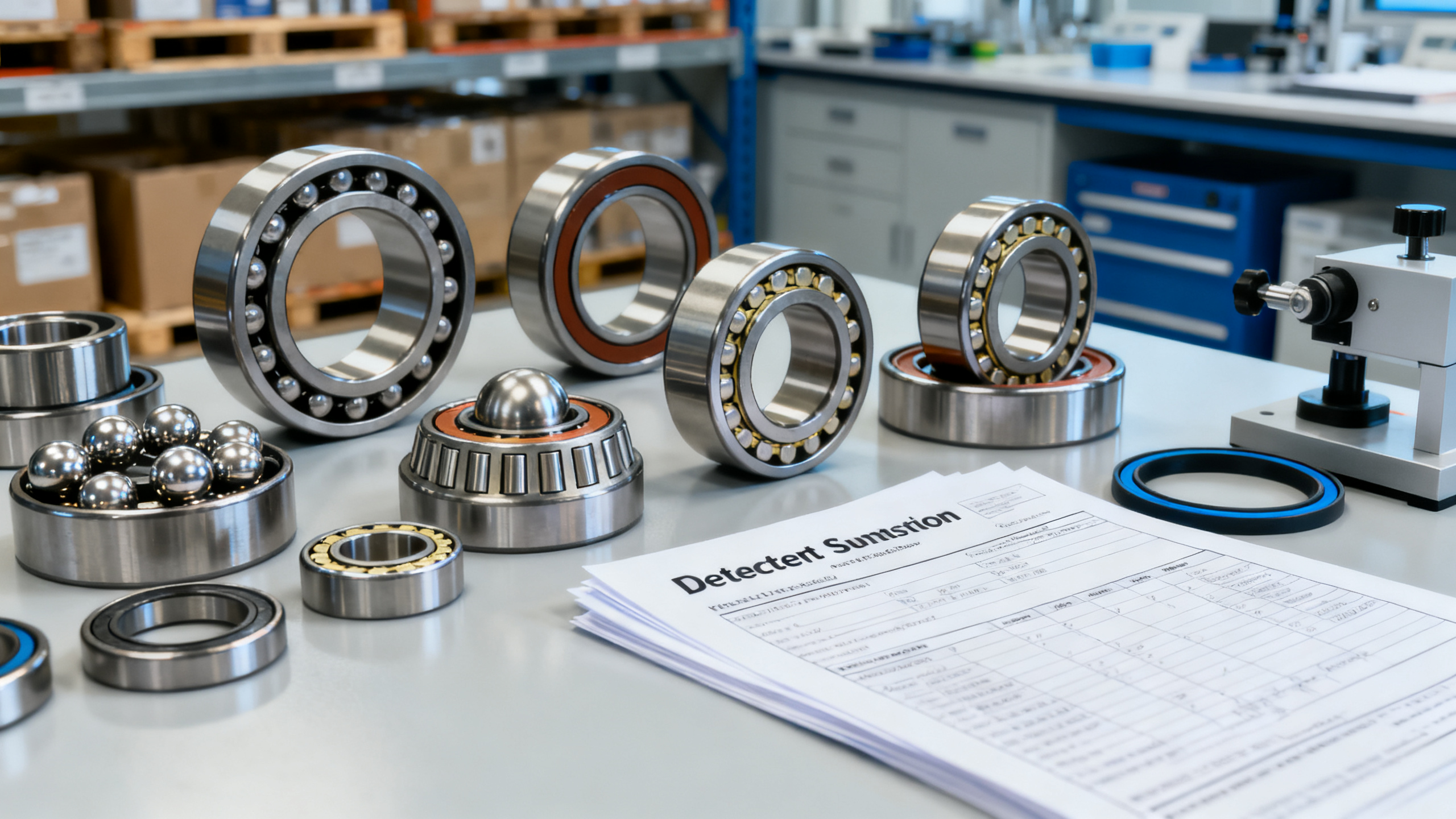
On June 16, 2026, Vietnam’s Ministry of Industry and Trade announced a compliance change tied to the revised technical rules for industrial machinery imports: from July 1, 2026, imported industrial bearings will need a sealing performance declaration to ISO 5593:2026 issued by an ISO/IEC 17025 accredited laboratory. The change matters not only because it covers the full range of imported industrial bearings, including deep groove ball, tapered roller, and spherical roller types, but also because customs rejection and re-export apply if the document is missing and no post-submission correction is accepted. For exporters, importers, procurement teams, testing providers, and delivery planners, this turns sealing verification from a technical detail into a pre-clearance requirement.
A documented import condition takes effect on July 1
According to the June 16 announcement, the new requirement is based on a revised technical specification governing industrial machinery imports. From July 1, 2026, all imported industrial bearings must be accompanied by a conformity declaration on sealing performance under ISO 5593:2026, and that declaration must be issued by a laboratory accredited to ISO/IEC 17025.
The scope described in the announcement covers the full range of industrial bearings, including deep groove ball bearings, tapered roller bearings, and spherical roller bearings. The same notice states that if the required declaration is not provided, customs will return the goods and will not allow later supplementation of the missing document.
The announced standard also introduces two mandatory verification points into this import requirement for the first time: dynamic sealing life and IP6X dust protection validation.
Where the rule change is most likely to be felt
Import transactions and customs filing move earlier in the compliance chain
From an industry perspective, direct trading companies and importers are likely to feel the change first because the declaration is no longer a background quality file but a document linked to customs release. The practical impact is on document readiness before shipment arrival, file completeness at declaration stage, and the ability to align product model, test basis, and supporting paperwork before customs review.
Export-side suppliers face stricter document matching expectations
For exporters and manufacturing suppliers shipping industrial bearings into Vietnam, the rule change may affect how product files are prepared for customers. Analysis shows that attention will likely shift to whether the bearing category falls within the covered scope, whether the sealing performance statement is tied to ISO 5593:2026, and whether the issuing laboratory holds ISO/IEC 17025 accreditation acceptable for the stated purpose.
Procurement and delivery planning may need tighter lead-time control
Procurement teams and supply chain service providers may be affected because the requirement introduces a hard document gate shortly before import clearance. What deserves closer attention is the interaction between purchase timing, testing availability, shipping schedules, and final handover of compliance documents. Where supply arrangements previously treated testing records as supplemental, the announced rule suggests that missing paperwork can now directly disrupt delivery.
Testing and certification-related service providers gain a more central role
Testing service institutions and compliance support providers may see increased involvement because the declaration must come from an ISO/IEC 17025 accredited laboratory. Observably, the immediate issue is less about broad market expansion and more about whether laboratories, exporters, and importers can coordinate on the exact form and timing of the required statement under the new rule.
What companies should review now
Check whether existing technical files meet the new entry requirement
Companies handling affected bearings should review whether current product dossiers already contain a sealing performance declaration aligned with ISO 5593:2026 and issued by an ISO/IEC 17025 accredited laboratory. If not, the gap is not merely administrative; under the announced rule, it may determine whether goods are cleared or returned.
Re-examine document packages for covered bearing categories
Because the notice expressly mentions multiple bearing types and describes the requirement as applying to all imported industrial bearings, companies should verify category mapping in contracts, technical specifications, and shipment files. Analysis shows that consistency across commercial documents and technical documents may become more important when customs treatment depends on the presence of a specific declaration.
Watch for execution language around the new mandatory test points
The announcement confirms that dynamic sealing life and IP6X dust protection verification are now mandatory elements, but it does not provide detailed execution wording in the input provided here. It is therefore more appropriate to monitor how these items are reflected in future official explanations, technical document practice, procurement specifications, or tender language rather than assume a settled implementation pattern.
Factor compliance timing into shipment and after-sales planning
Where shipments are already in production or close to dispatch, exporters, importers, and service teams should pay closer attention to whether the necessary declaration can be assembled in time. Observably, the no-correction rule raises the importance of checking documentation before shipment rather than relying on follow-up supplementation after arrival.
Why this looks more like an execution signal than a general policy statement
Analysis shows that this development is better understood as a rule landing in operational trade practice, not just a broad regulatory direction. The effective date is near, the required document is clearly identified, the laboratory accreditation basis is explicitly named, and the customs consequence for non-compliance is also stated. At the same time, it remains necessary to watch how market participants interpret the newly mandatory sealing life and IP6X verification points in day-to-day documentation, technical review, and supplier qualification.
From an industry perspective, the most important takeaway is not simply that a standard has been referenced, but that a specific compliance record is being tied directly to import admissibility. That combination tends to affect contract review, supplier communication, document control, and shipment release decisions at the same time.
How this update is best understood at this stage
This update is most appropriately read as an implemented compliance threshold for imported industrial bearings entering Vietnam from July 1, 2026, based on the information provided. The immediate significance lies in the shift from optional or background technical proof to a mandatory customs-facing declaration. Even so, a measured reading is still necessary: the rule change is clear, while the finer points of execution, documentation practice, and market response still warrant ongoing attention.
Basis of this article and what still needs verification
This article is generated from the user-provided news title, event date, and event summary concerning Vietnam’s July 1, 2026 requirement for an ISO 5593:2026 sealing performance declaration for imported industrial bearings. For developments of this kind, relevant source types typically include official government notices, releases from regulatory or trade authorities, customs-related publications, industry association updates, standard-setting documents, and reporting by established trade media.
A specific official source link was not provided in the input, so the exact source document link remains to be verified on an ongoing basis. Observably, the areas that still deserve continued checking include any detailed implementation wording, certification interpretation, customs filing practice, procurement document changes, tender specification updates, industry feedback, and how companies execute the requirement in actual shipments.
Technical Specifications
- Wholesale Borosilicate Lab Glassware: How Buyers Verify Quality, Specs, and Supply ReliabilityAuthor :Precision Metrology Expert
- How to Select Electronic Hotel Key Card Locks for Guest Rooms and Staff AreasAuthor :Safety Compliance Lead
- How to Select Lab Instruments for Reliable Chemical Analysis WorkflowsAuthor :Precision Metrology Expert
Expert Insights

Chief Security Architect
Dr. Thorne specializes in the intersection of structural engineering and digital resilience. He has advised three G7 governments on industrial infrastructure security.
Related Analysis
- Sep 18, 2026Wholesale Borosilicate Lab Glassware: How Buyers Verify Quality, Specs, and Supply ReliabilityAuthor :Precision Metrology Expert
- Sep 17, 2026How to Select Electronic Hotel Key Card Locks for Guest Rooms and Staff AreasAuthor :Safety Compliance Lead
- Sep 16, 2026How to Select Lab Instruments for Reliable Chemical Analysis WorkflowsAuthor :Precision Metrology Expert
Core Sector // 01
Security & Safety
- Selecting Low-Friction Pneumatic Seals for High-Cycle, Low-Pressure CylindersAuthor :Heavy Industry Strategist

- Selecting Spherical Roller Bearings for Mining: Load, Contamination, and Service LifeAuthor :Heavy Industry Strategist

- Do Deep Groove Ball Bearings Need Special Seals in Coastal Humidity?Author :Heavy Industry Strategist

- How to Select Anti Vibration Rubber Shock Absorbers for Machinery and EquipmentAuthor :Heavy Industry Strategist

- When to Specify Induction Hardened Slewing Ring Bearings for Heavy-Duty EquipmentAuthor :Heavy Industry Strategist

- How to Evaluate Weather Resistant EPDM Extrusion for Outdoor Sealing ApplicationsAuthor :Heavy Industry Strategist

- Bearing and Seal Lead Times Stretch to 22 WeeksAuthor :Heavy Industry Strategist

- Angular Contact Ball Bearings Explained: Contact Angle, Load Capacity, and Common UsesAuthor :Heavy Industry Strategist