Vietnam Tightens Bearing Import Rule from July 1
Author
Date Published
Reading Time
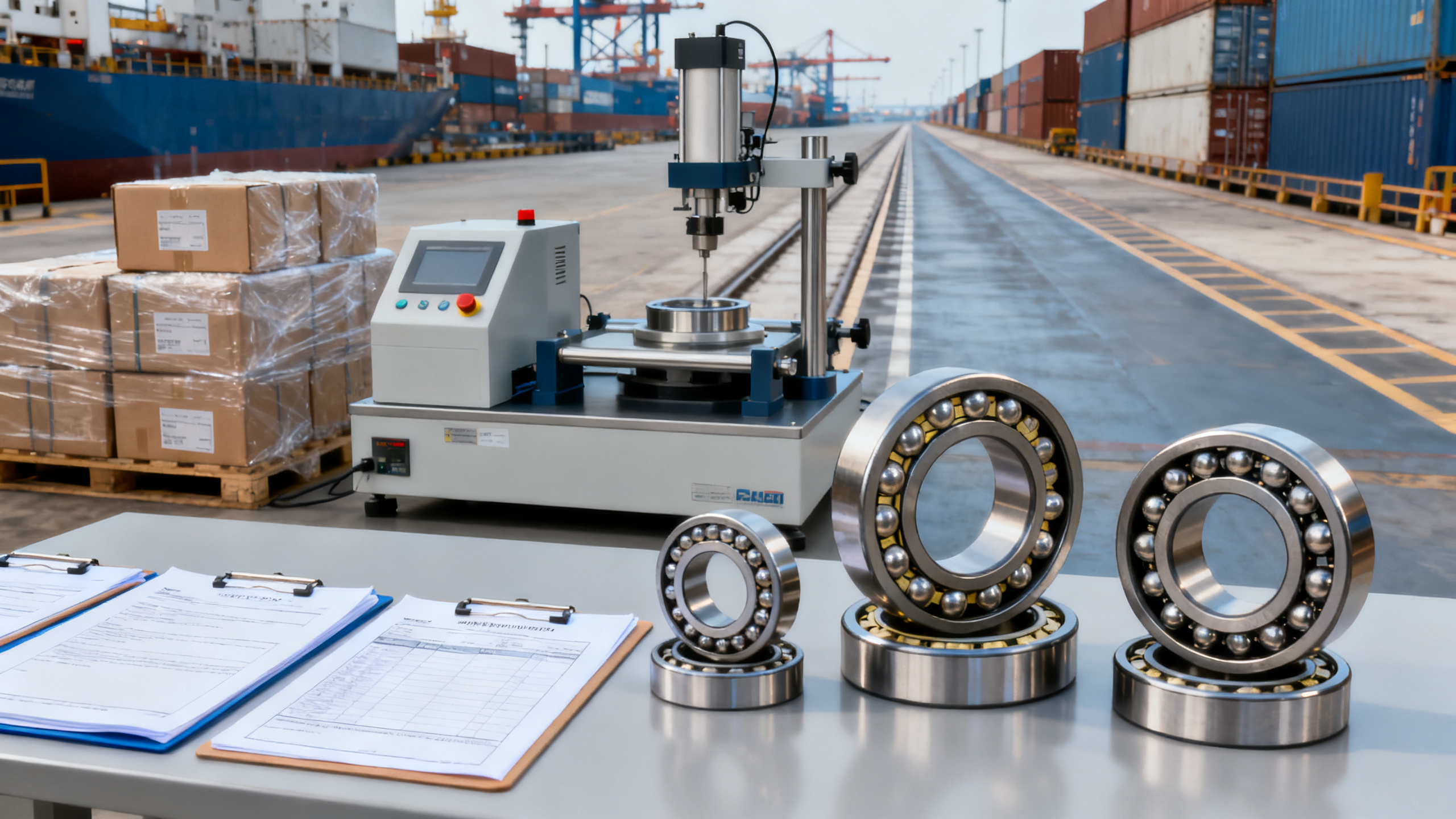
From July 1, 2026, Vietnam will apply a new import compliance requirement to industrial bearings, linking customs clearance more directly to laboratory documentation and the latest ISO standard. For exporters, importers, procurement teams, testing providers, and logistics operators involved in deep groove ball bearings, tapered roller bearings, spherical roller bearings, and related products, this is worth close attention because the rule affects not only product conformity but also document readiness and delivery timing at port.
What the new requirement confirms
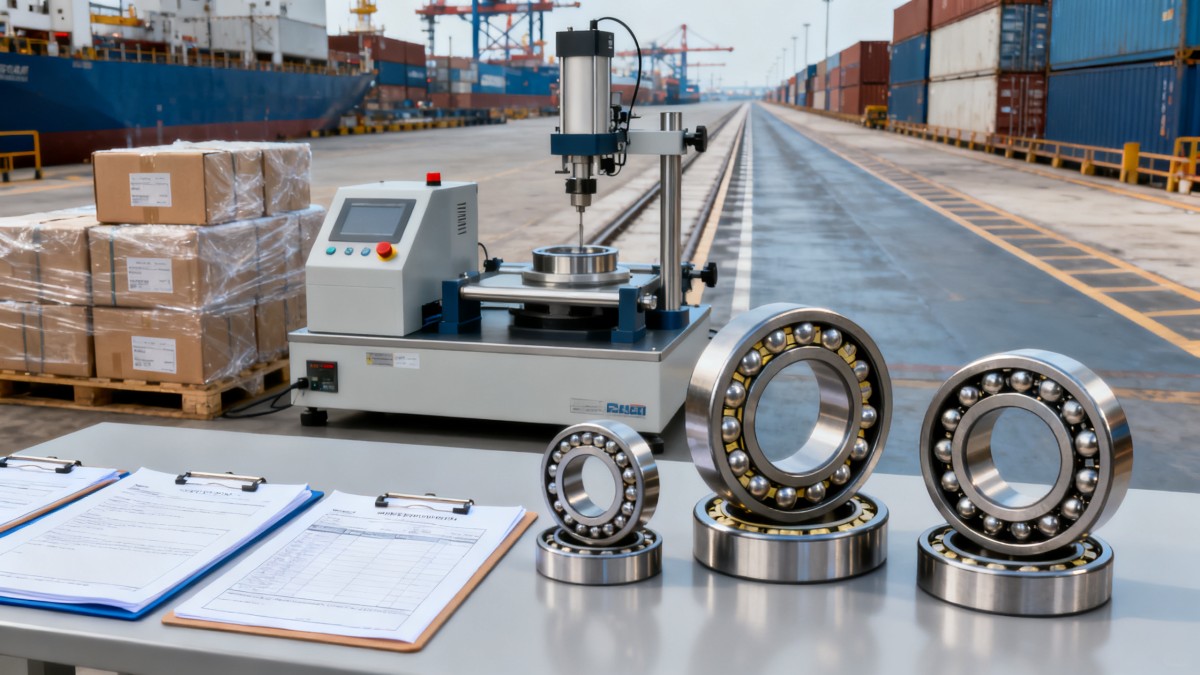
According to the provided information, Vietnam’s Ministry of Industry and Trade (MOIT) issued Circular No. 28/2026/TT-BCT on June 16, 2026. The circular requires that, from July 1, 2026, all imported industrial bearings must be accompanied by a sealing performance test report issued by an ISO/IEC 17025 accredited laboratory and must comply with the latest version of ISO 5593:2026.
The requirement applies to imports from all countries of origin. The covered products include industrial bearings such as deep groove ball bearings, tapered roller bearings, and spherical roller bearings. The provided information also states that China is the largest source of supply.
For non-compliant shipments, the stated enforcement consequence is detention and a request for rectification at Ho Chi Minh City and Hai Phong ports. The average port delay is indicated as 7 to 12 working days.
Where the pressure is likely to appear first
Export transactions now depend more heavily on test-file readiness
From an industry perspective, exporters shipping industrial bearings to Vietnam may be affected first because the rule makes the sealing performance report a practical precondition for import processing. The main impact is likely to fall on pre-shipment document preparation, product-to-report matching, and coordination with laboratories that hold ISO/IEC 17025 accreditation.
What deserves closer attention is whether each shipment file clearly supports conformity with ISO 5593:2026 and whether the supporting report is ready before cargo arrival. Even where product quality itself is unchanged, document gaps may still create trade friction.
Importers and procurement teams face a tighter receiving threshold
For Vietnamese importers and procurement functions, the new rule may affect supplier onboarding, order confirmation, and inbound scheduling. Analysis shows that buyers can no longer focus only on price, lead time, and basic specifications; they also need to verify whether suppliers can provide the required test report from an ISO/IEC 17025 accredited laboratory.
The operational impact is likely to appear in purchasing documents, technical specifications, and acceptance conditions. Where a supplier cannot align its paperwork with the new standard requirement, delivery risk may shift back to the buyer in the form of detention, correction requests, and extended receiving cycles.
Logistics and customs-handling parties may need to plan for document-sensitive delays
Supply chain service providers, including freight and customs-handling parties, may be affected because the reported enforcement consequence is detention at major ports if the requirement is not met. Observably, the issue is not only whether goods arrive on time, but whether compliance documents are complete and usable at the point of clearance.
This makes document review, submission timing, and exception handling more relevant to delivery planning. The stated average delay of 7 to 12 working days means businesses may need to reassess buffer time for port operations and downstream commitments.
Testing and compliance support functions become more central
Testing service providers and compliance-related teams may see increased operational importance because the rule specifically refers to reports issued by ISO/IEC 17025 accredited laboratories. Analysis shows that laboratory selection, report validity review, and alignment between product scope and test evidence may become more visible parts of cross-border bearing trade into Vietnam.
For manufacturers and traders, this does not automatically mean a broader certification regime beyond the provided facts, but it does mean that testing evidence now has a more direct role in shipment eligibility.
What companies should review now
Check whether current product files match the new import condition
Companies handling industrial bearings for Vietnam should review whether existing technical files already include sealing performance evidence that can support imports under ISO 5593:2026. If documents were prepared under earlier internal templates or older market assumptions, the immediate concern is whether they are sufficient for shipment after July 1, 2026.
Reconfirm laboratory accreditation and report usability
What deserves closer attention is not only having a test report, but having one issued by an ISO/IEC 17025 accredited laboratory as stated in the provided information. Businesses may need to verify whether the selected laboratory, report format, and product coverage can be accepted in practice for import documentation.
Adjust procurement and delivery planning around possible detention risk
Analysis shows that the reported 7 to 12 working day delay for non-compliant goods can affect order sequencing, inventory planning, and delivery promises. For this reason, importers, exporters, and supply chain coordinators may need to revisit shipment timing, especially where bearings are tied to maintenance schedules, equipment assembly, or contracted delivery windows.
Keep watching for execution language and market feedback
The provided information confirms the rule change and the stated enforcement consequence, but it does not provide fuller operational detail on how all cases will be reviewed in practice. It is therefore reasonable for companies to keep tracking official wording, customs-facing implementation language, and any adjustments that may appear in commercial specifications or tender documents.
How this change is best understood at this stage
Analysis shows that this is more than a general policy signal because it comes with a stated effective date, a named regulatory notice, a defined document requirement, and a described enforcement outcome at specific ports. At the same time, it is more appropriate to understand it as an implementation-stage compliance shift rather than a fully mapped operating framework, because the provided information does not cover every execution detail that companies may encounter in actual clearance.
From an industry perspective, the immediate significance lies in the move from product trading to document-backed product trading. In practical terms, the rule increases the weight of test evidence and standard alignment in routine bearing imports into Vietnam.
Why the market should keep this in focus
In a narrow sense, the change affects imported industrial bearings entering Vietnam from July 1, 2026. In a broader trade and compliance sense, it signals that document sufficiency, laboratory accreditation, and standard-version alignment may directly affect customs timing and delivery reliability. The current development is therefore best understood as a landed rule with immediate operational relevance, while some aspects of execution and market response still deserve continued observation.
Basis of this article
This article is generated from the user-provided news title, event date, and event summary. The discussion is based on the provided description of Vietnam’s MOIT notice, the stated July 1, 2026 effective date, the requirement for an ISO/IEC 17025 accredited laboratory report on sealing performance, compliance with ISO 5593:2026, the all-origin scope, and the stated detention risk and delay period for non-compliant goods.
For developments of this kind, relevant source types usually include official notices, releases from regulatory authorities, customs or trade administration information, industry association updates, standard-setting documents, and reporting by authoritative media. A specific official source link was not provided in the input, so the exact publication path still needs to be verified on an ongoing basis.
Further observation is still needed on detailed implementation language, compliance interpretation, document review practice, tender or specification changes, market feedback, and how companies execute against the new requirement in live trade flows.
Technical Specifications
- How to Select Electronic Hotel Key Card Locks for Guest Rooms and Staff AreasAuthor :Safety Compliance Lead
- How to Select Lab Instruments for Reliable Chemical Analysis WorkflowsAuthor :Precision Metrology Expert
- How to Size a UPS for Server Rooms: Load, Runtime, and Redundancy FactorsAuthor :Grid Infrastructure Analyst
Expert Insights

Chief Security Architect
Dr. Thorne specializes in the intersection of structural engineering and digital resilience. He has advised three G7 governments on industrial infrastructure security.
Related Analysis
- Sep 17, 2026How to Select Electronic Hotel Key Card Locks for Guest Rooms and Staff AreasAuthor :Safety Compliance Lead
- Sep 16, 2026How to Select Lab Instruments for Reliable Chemical Analysis WorkflowsAuthor :Precision Metrology Expert
- Sep 15, 2026How to Size a UPS for Server Rooms: Load, Runtime, and Redundancy FactorsAuthor :Grid Infrastructure Analyst
Core Sector // 01
Security & Safety
- Selecting Low-Friction Pneumatic Seals for High-Cycle, Low-Pressure CylindersAuthor :Heavy Industry Strategist

- Selecting Spherical Roller Bearings for Mining: Load, Contamination, and Service LifeAuthor :Heavy Industry Strategist

- Do Deep Groove Ball Bearings Need Special Seals in Coastal Humidity?Author :Heavy Industry Strategist

- How to Select Anti Vibration Rubber Shock Absorbers for Machinery and EquipmentAuthor :Heavy Industry Strategist

- When to Specify Induction Hardened Slewing Ring Bearings for Heavy-Duty EquipmentAuthor :Heavy Industry Strategist

- How to Evaluate Weather Resistant EPDM Extrusion for Outdoor Sealing ApplicationsAuthor :Heavy Industry Strategist

- Bearing and Seal Lead Times Stretch to 22 WeeksAuthor :Heavy Industry Strategist

- Angular Contact Ball Bearings Explained: Contact Angle, Load Capacity, and Common UsesAuthor :Heavy Industry Strategist