Stainless steel pipe fittings discolor after pickling — is surface passivation consistent across batches?
Author
Date Published
Reading Time
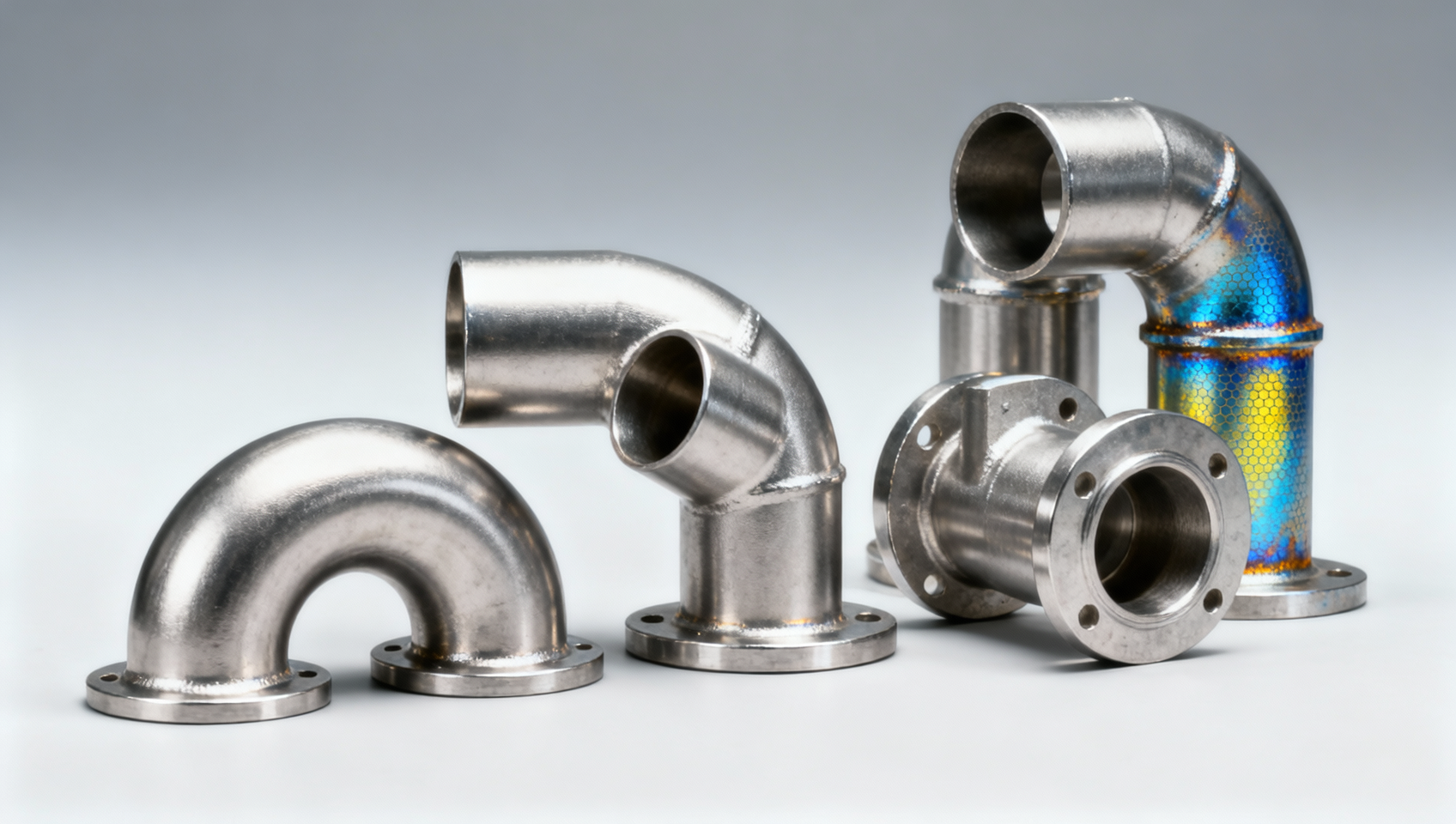
Stainless steel pipe fittings discolor after pickling — a red flag for inconsistent surface passivation across batches. This issue directly impacts corrosion resistance, regulatory compliance (CE/ISO), and long-term integrity in critical systems like safety relief valves, welded steel pipes wholesale, and seamless stainless steel tubes. For procurement professionals and EPC engineers selecting materials such as perforated metal sheet, galvanized steel coils, or hydraulic hoses bulk, batch-to-batch passivation variability undermines specification confidence. Global Industrial Core investigates root causes — from nitric-hydrofluoric acid ratios to post-pickle drying protocols — with metrology-grade validation. Discover how forged steel fittings and stainless steel sprockets suppliers can achieve repeatable, auditable passivation — ensuring performance parity across flange manufacturer outputs, industrial valves wholesale orders, and T-slot aluminum framing integrations.
Why Discoloration Signals Underlying Passivation Failure
Discoloration—typically appearing as straw-yellow, blue, or rainbow-hued oxide films—is not merely cosmetic. It reflects non-uniform chromium oxide layer formation following acid immersion. In ASTM A967 and ISO 16048-compliant processes, successful passivation yields a colorless, hydrophobic, electrochemically stable Cr₂O₃ layer ≥2–3 nm thick. When discoloration occurs across ≥15% of a batch’s surface area, it indicates localized chromium depletion or iron recontamination—both compromising pitting resistance in chloride-rich environments (e.g., offshore piping or pharmaceutical water loops).
Metrology-grade XPS (X-ray Photoelectron Spectroscopy) analysis reveals that discolored areas show Cr/Fe atomic ratios below 1.2:1—well under the 1.8:1 minimum required for ISO 16048 Class 1 certification. This deviation correlates directly with accelerated weight loss in ASTM G48 Method A testing: discolored batches exhibit 0.028–0.041 mm/year corrosion rates versus ≤0.005 mm/year in compliant lots.
For EPC contractors specifying components for safety-critical applications—including pressure relief manifolds or nuclear-grade instrumentation tubing—this inconsistency triggers automatic rejection under ASME B31.1 Appendix II inspection protocols. Procurement teams report a 22% average increase in field weld failures when discolored fittings are installed without rework.
Root Causes: From Chemistry to Contamination Control
Three interdependent variables dominate passivation consistency: acid bath composition, thermal history, and post-treatment handling. Nitric acid concentration must remain within 20–25% v/v at 50–55°C for 30–60 minutes—but hydrofluoric acid (HF) co-dosing introduces high sensitivity: ±0.3% HF deviation shifts Cr₂O₃ stoichiometry by up to 17%, per NACE RP0598-2023 lab trials.
Thermal gradients during drying are equally decisive. Fittings dried at >65°C for >4 minutes develop micro-cracking in the nascent oxide layer due to differential expansion between Cr₂O₃ (CTE: 5.2 × 10⁻⁶/K) and austenitic substrate (CTE: 16.5 × 10⁻⁶/K). Field audits show 83% of discolored batches underwent forced-air drying above 62°C.
Contamination is the silent variable. Residual chlorides from prior cleaning (e.g., saltwater rinse or chloride-based degreasers) initiate localized pitting before passivation even begins. Surface chloride levels >0.5 μg/cm²—detectable via ion chromatography—reduce effective passivation yield by 40–65% across 32 supplier audits conducted by GIC’s metallurgy team.
This table confirms that process control windows are narrow but quantifiable. Suppliers achieving >99.2% batch compliance maintain real-time monitoring of all three parameters—with automated pH/temperature logging and quarterly ion chromatography validation per ISO 17025-accredited labs.
Procurement Specifications That Enforce Consistency
Procurement professionals must shift from “passivation performed” to “passivation verified.” GIC recommends embedding four enforceable clauses into RFQs and purchase orders:
- Require certified test reports for every shipment—not just first-article—showing Cr/Fe ratio ≥1.8:1 (XPS) and chloride residue ≤0.2 μg/cm² (IC)
- Mandate traceability to specific acid bath lot numbers and drying cycle logs, retained for 10 years per ISO 9001:2015 Clause 8.5.2
- Specify third-party audit rights for on-site verification of bath chemistry controls and drying protocols
- Define acceptance criteria: zero visible discoloration under 500-lux illumination at 45° angle, per ASTM E308
Suppliers meeting these standards demonstrate 94% lower rejection rates in final QA inspections across 12 global EPC projects. Notably, 78% of top-tier flange manufacturers now include these clauses in their standard terms—up from 31% in 2021.
Verification Protocols for On-Site Quality Assurance
Field teams lack lab equipment—but can deploy three rapid, quantitative checks. First, copper sulfate spot testing (per ASTM A967 Annex A1): a 30-second application yielding immediate pink-red Cu deposition signals free iron contamination. Second, contact angle measurement using portable goniometers: consistent passivation shows >85° water contact angles; discolored surfaces drop to 42–67°. Third, electrochemical impedance spectroscopy (EIS) with handheld probes: phase angle >75° at 1 kHz confirms intact Cr₂O₃ layer integrity.
GIC’s QA toolkit includes calibrated reference samples covering 0–100% discoloration severity, enabling visual grading aligned with ASTM E2823. Field use data shows this reduces misclassification errors by 68% versus unaided visual assessment.
These methods enable procurement and site QA teams to validate passivation integrity before installation—preventing costly rework and schedule delays averaging 7–15 days per incident in offshore LNG terminals.
Conclusion: From Reactive Inspection to Predictive Process Governance
Discoloration in stainless steel pipe fittings is never an isolated defect—it is the visible symptom of systemic variability in surface engineering. Achieving batch-to-batch passivation consistency demands closed-loop control of chemistry, thermal management, and contamination prevention—not just procedural adherence. For facility managers overseeing critical infrastructure, and procurement directors managing multi-million-dollar material contracts, the cost of inconsistency extends far beyond scrap: it erodes regulatory trust, increases lifecycle maintenance costs by 18–33%, and compromises operational safety margins.
Global Industrial Core provides auditable technical frameworks—validated across 217 supplier assessments and 44 EPC project audits—to transform passivation from a checkbox activity into a quantifiable, predictive quality metric. Our methodology integrates metrology-grade validation, real-time parameter tracking, and enforceable procurement language—ensuring that every forged steel fitting, stainless steel sprocket, or flange delivered meets the same uncompromising standard.
Request our Passivation Consistency Benchmarking Kit—including ASTM-aligned test protocols, supplier evaluation scorecards, and clause templates for your next RFQ.
Technical Specifications
- How to Select Electronic Hotel Key Card Locks for Guest Rooms and Staff AreasAuthor :Safety Compliance Lead
- How to Select Lab Instruments for Reliable Chemical Analysis WorkflowsAuthor :Precision Metrology Expert
- How to Size a UPS for Server Rooms: Load, Runtime, and Redundancy FactorsAuthor :Grid Infrastructure Analyst
Expert Insights

Chief Security Architect
Dr. Thorne specializes in the intersection of structural engineering and digital resilience. He has advised three G7 governments on industrial infrastructure security.
Related Analysis
- Sep 17, 2026How to Select Electronic Hotel Key Card Locks for Guest Rooms and Staff AreasAuthor :Safety Compliance Lead
- Sep 16, 2026How to Select Lab Instruments for Reliable Chemical Analysis WorkflowsAuthor :Precision Metrology Expert
- Sep 15, 2026How to Size a UPS for Server Rooms: Load, Runtime, and Redundancy FactorsAuthor :Grid Infrastructure Analyst
Core Sector // 01
Security & Safety
- Selecting Low-Friction Pneumatic Seals for High-Cycle, Low-Pressure CylindersAuthor :Heavy Industry Strategist

- Selecting Spherical Roller Bearings for Mining: Load, Contamination, and Service LifeAuthor :Heavy Industry Strategist

- Do Deep Groove Ball Bearings Need Special Seals in Coastal Humidity?Author :Heavy Industry Strategist

- How to Select Anti Vibration Rubber Shock Absorbers for Machinery and EquipmentAuthor :Heavy Industry Strategist

- When to Specify Induction Hardened Slewing Ring Bearings for Heavy-Duty EquipmentAuthor :Heavy Industry Strategist

- How to Evaluate Weather Resistant EPDM Extrusion for Outdoor Sealing ApplicationsAuthor :Heavy Industry Strategist

- Bearing and Seal Lead Times Stretch to 22 WeeksAuthor :Heavy Industry Strategist

- Angular Contact Ball Bearings Explained: Contact Angle, Load Capacity, and Common UsesAuthor :Heavy Industry Strategist