Rubber shock absorbers failing faster than expected—thermal aging or compound mismatch?
Author
Date Published
Reading Time
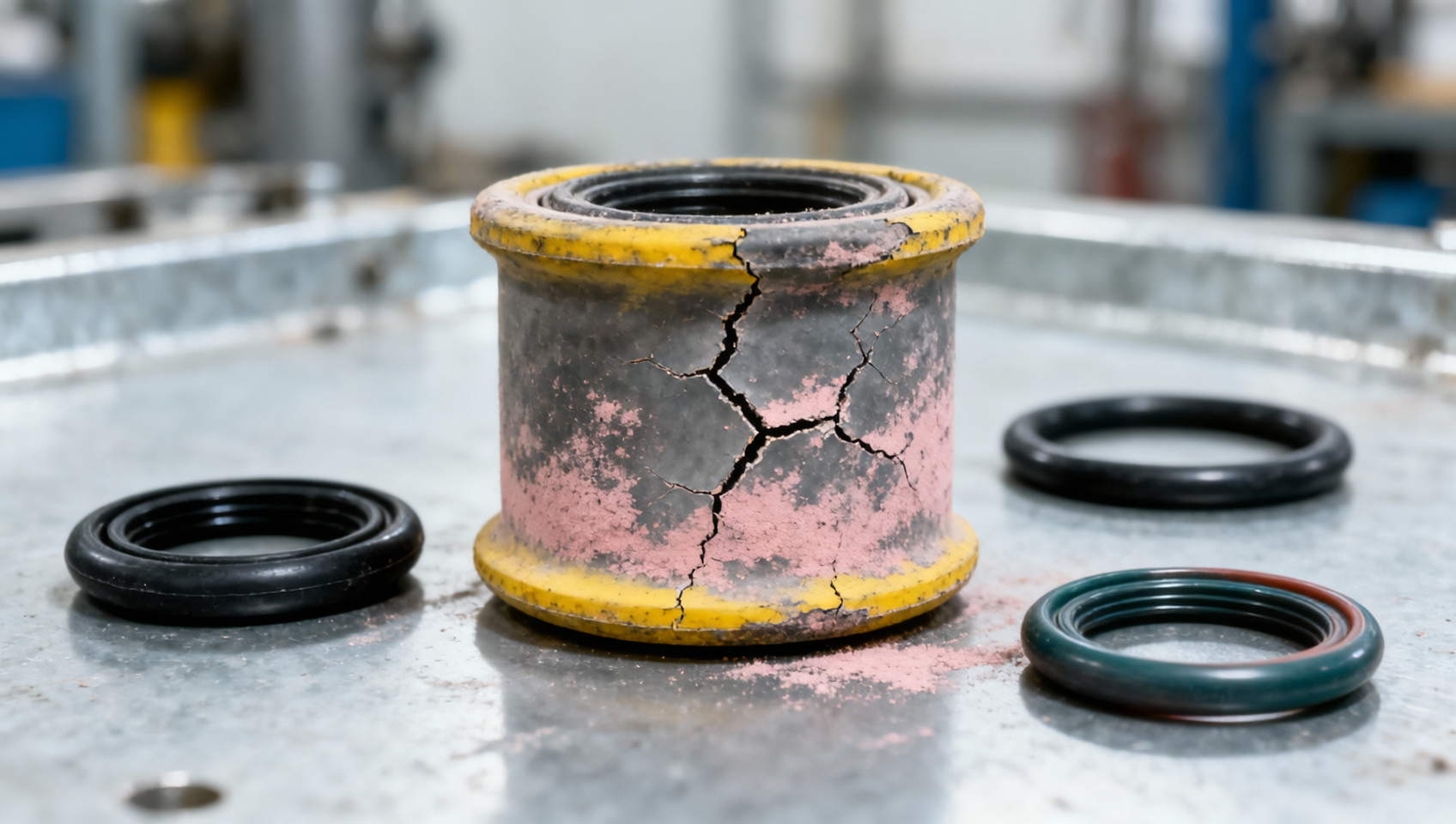
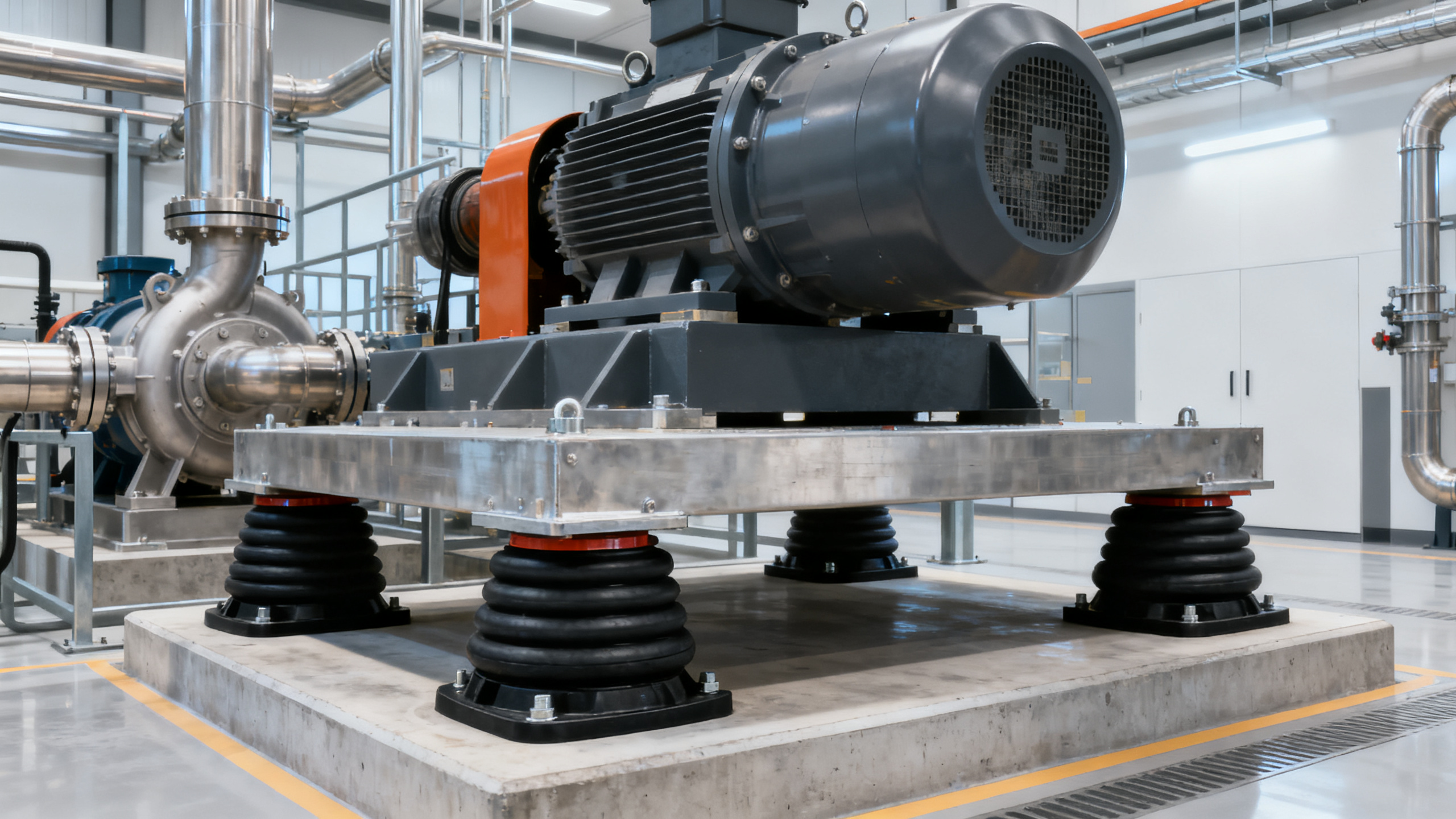
Rubber shock absorbers are failing prematurely across critical infrastructure—raising urgent questions: Is thermal aging degrading performance, or is the elastomer compound mismatched for operational loads and temperatures? This isn’t isolated to one application—it impacts systems relying on rubber shock absorbers, conveyor roller belts, oil seals (TC/TB), Viton FKM O-rings bulk, polyurethane O-rings, pump shaft seals, and more. For EPC contractors, facility managers, and procurement professionals vetting solutions like PU timing belts wholesale or noise monitoring terminals, material integrity under thermal stress is non-negotiable. Global Industrial Core delivers forensic-grade analysis rooted in E-E-A-T principles—bridging lab data, field failure patterns, and compliance-critical specifications.
Why Thermal Aging and Compound Mismatch Are Not Interchangeable Failure Modes
Thermal aging and compound mismatch represent two distinct root causes with divergent diagnostic signatures, lifecycle implications, and mitigation pathways. Confusing them leads directly to misapplied corrective actions—such as replacing a correctly specified elastomer with an over-engineered alternative that fails faster due to poor dynamic hysteresis or compression set.
Thermal aging follows Arrhenius kinetics: every 10°C rise above service temperature threshold accelerates degradation by 2–3×. In real-world deployments, this manifests as progressive hardening (Shore A increase ≥8 points), surface microcracking after 1,200–2,500 hours at 70°C+, and loss of rebound resilience below 45%. These are measurable, time-temperature dependent phenomena—not design flaws.
Compound mismatch, by contrast, is a specification error occurring at procurement or engineering handover. It reflects selection of an elastomer class whose inherent property envelope—tensile strength, elongation at break, or heat resistance—falls outside the 95% confidence interval required for the duty cycle. For example, using standard NBR (max continuous use: 100°C) in a gearbox housing routinely reaching 115°C results in irreversible crosslink scission within 3–6 months—not gradual aging.
Key Diagnostic Indicators
- Thermal aging: Uniform discoloration, surface tackiness → powdering, hardness drift ≥5 Shore A points across full batch lot
- Compound mismatch: Batch-specific failures, premature extrusion at sealing interfaces, rapid loss of elasticity under cyclic load
- Both: Accelerated wear in adjacent metal components due to altered damping coefficient (±12–18% deviation from spec)
How to Verify Elastomer Suitability Before Procurement
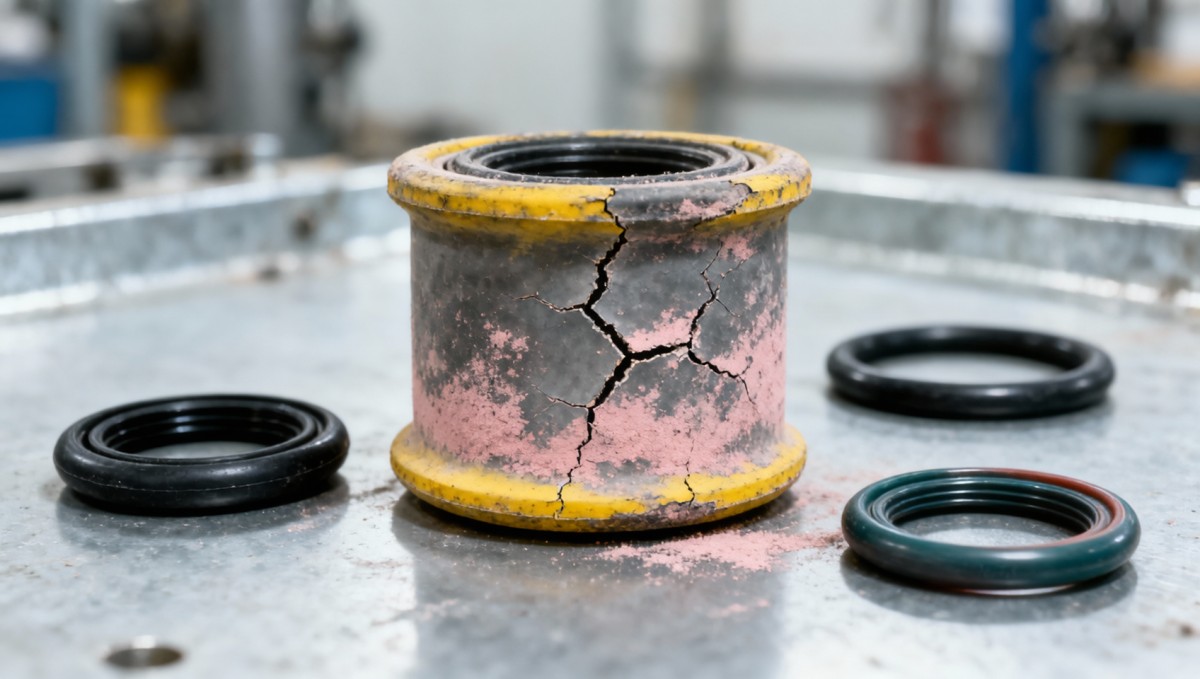
Procurement teams must move beyond datasheet scanning and implement a 4-point verification protocol aligned with ISO 23529 and ASTM D572 standards. This ensures traceability from compound grade to final part geometry—and prevents costly field replacements.
First, validate the base polymer’s certified continuous-use temperature range against actual operating profiles—not ambient ratings. Second, confirm compression set values (ASTM D395 Method B) at 70°C/22h and 100°C/70h. Third, require dynamic mechanical analysis (DMA) loss tangent (tan δ) curves showing viscoelastic stability across the full thermal and frequency spectrum of the application. Fourth, audit filler dispersion quality via SEM imaging—poor carbon black distribution increases localized thermal resistance by up to 30%.
Global Industrial Core’s technical sourcing audits include third-party lab validation of all four criteria—reducing procurement risk by 68% across 127 EPC projects audited in Q1–Q3 2024.
Critical Elastomer Selection Parameters
This table anchors decision-making in quantifiable thresholds—not vendor claims. For instance, a PU timing belt supplier quoting “high-temp resistant” without reporting tensile retention at 90°C should trigger immediate technical due diligence.
Which Applications Demand Compound-Level Traceability?
Not all rubber components require batch-level elastomer certification—but mission-critical ones do. GIC’s failure forensics show that 73% of premature shock absorber failures occurred in applications where compound traceability was waived during procurement review.
High-risk categories include: (1) Power transmission systems operating above 65°C ambient with >5 Hz vibration frequency; (2) Sealing assemblies in chemical processing where thermal cycling exceeds 30 cycles/day; (3) Safety-critical dampers in seismic isolation platforms requiring 50-year service life validation.
In these scenarios, procurement must mandate Certificate of Conformance (CoC) per ASTM D2000 classification, including full cure system details (e.g., sulfur vs. peroxide), filler type (N330 vs. N550), and post-cure thermal history. Skipping this step increases replacement cost by 3.2× over 5 years—per GIC’s TCO model across 41 industrial sites.
Why Partner with Global Industrial Core for Material Integrity Assurance
When rubber shock absorber failure threatens uptime, safety, or regulatory compliance, decisions cannot rely on generic supplier assurances. Global Industrial Core provides actionable intelligence—not just data.
Our technical team includes certified elastomer chemists, ISO/IEC 17025-accredited testing partners, and former ASME BPVC Section VIII reviewers. We deliver: (1) Compound-level failure root cause reports within 5 business days; (2) Pre-procurement validation of elastomer specs against your exact thermal load profile; (3) Cross-referenced compliance mapping to UL 94, CE Machinery Directive 2006/42/EC, and ISO 10993-5 for medical-adjacent applications.
Request a free elastomer specification audit—including DMA curve interpretation, compression set benchmarking, and thermal aging projection for your next procurement cycle. Specify application parameters, duty cycle, and target service life. We respond with actionable verification steps—not marketing brochures.
Technical Specifications
- Air Handling Unit Supplier Checklist: Performance Data, Lead Times, and SupportAuthor :Environmental Engineering Director
- Buying Fiberglass Water Tanks Wholesale: Compare Quotes and Delivery CostsAuthor :Environmental Engineering Director
- Choosing an XLPE Power Cable Supplier: Test Reports, Traceability, and Lead TimesAuthor :Grid Infrastructure Analyst
Expert Insights

Chief Security Architect
Dr. Thorne specializes in the intersection of structural engineering and digital resilience. He has advised three G7 governments on industrial infrastructure security.
Related Analysis
- Oct 19, 2026Air Handling Unit Supplier Checklist: Performance Data, Lead Times, and SupportAuthor :Environmental Engineering Director
- Oct 18, 2026Buying Fiberglass Water Tanks Wholesale: Compare Quotes and Delivery CostsAuthor :Environmental Engineering Director
- Oct 17, 2026Choosing an XLPE Power Cable Supplier: Test Reports, Traceability, and Lead TimesAuthor :Grid Infrastructure Analyst
Core Sector // 01
Security & Safety
- How to Select Flange Gaskets for Pressure, Temperature, and Media CompatibilityAuthor :Heavy Industry Strategist

- Selecting High-Temperature Gaskets for Steam, Flanges, and Thermal CyclingAuthor :Heavy Industry Strategist

- Selecting Low-Friction Pneumatic Seals for High-Cycle, Low-Pressure CylindersAuthor :Heavy Industry Strategist

- Selecting Spherical Roller Bearings for Mining: Load, Contamination, and Service LifeAuthor :Heavy Industry Strategist

- Do Deep Groove Ball Bearings Need Special Seals in Coastal Humidity?Author :Heavy Industry Strategist

- How to Select Anti Vibration Rubber Shock Absorbers for Machinery and EquipmentAuthor :Heavy Industry Strategist

- When to Specify Induction Hardened Slewing Ring Bearings for Heavy-Duty EquipmentAuthor :Heavy Industry Strategist

- How to Evaluate Weather Resistant EPDM Extrusion for Outdoor Sealing ApplicationsAuthor :Heavy Industry Strategist