Precision die casting parts that pass QA — but crack under real-cycle vibration
Author
Date Published
Reading Time
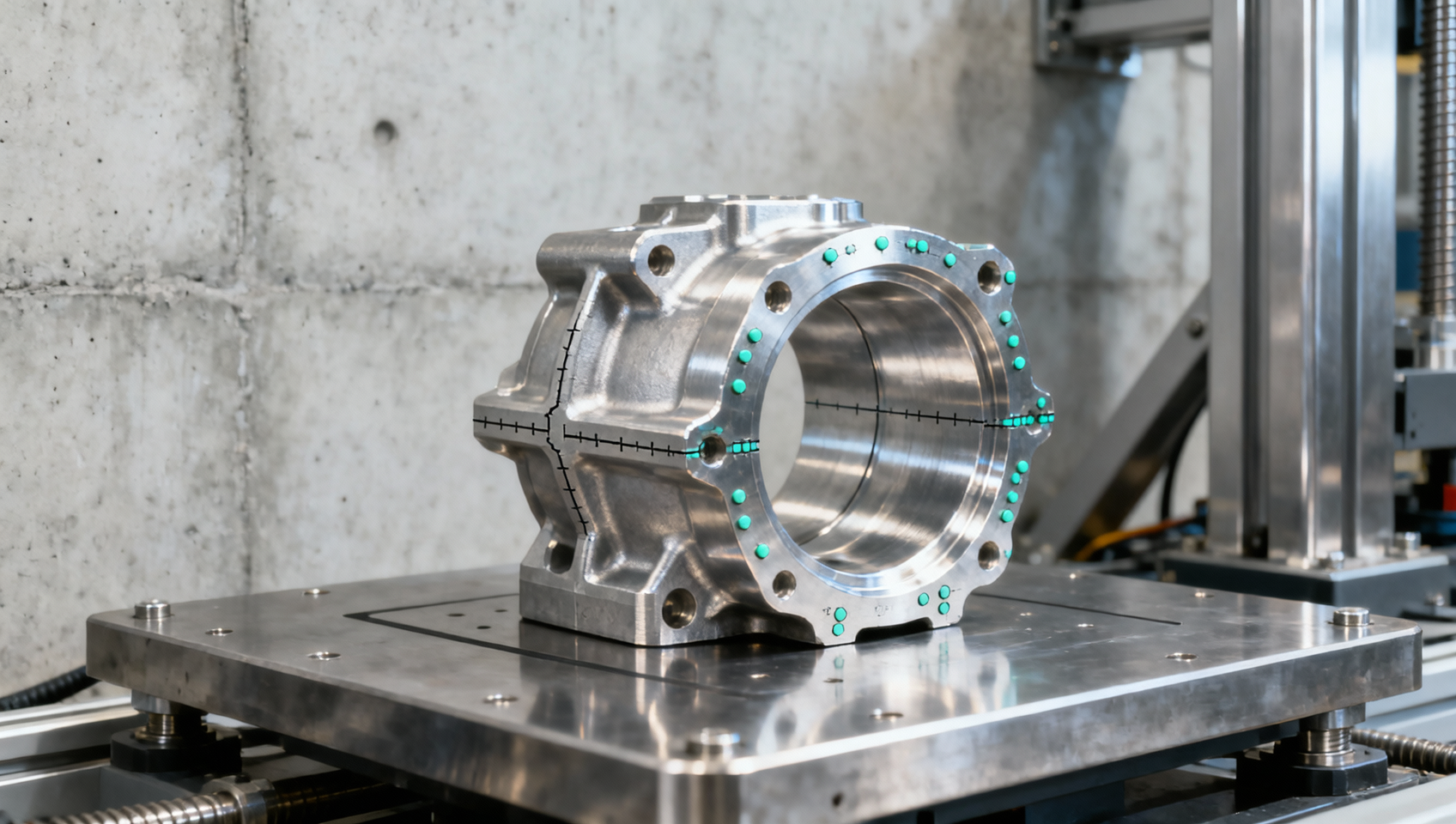
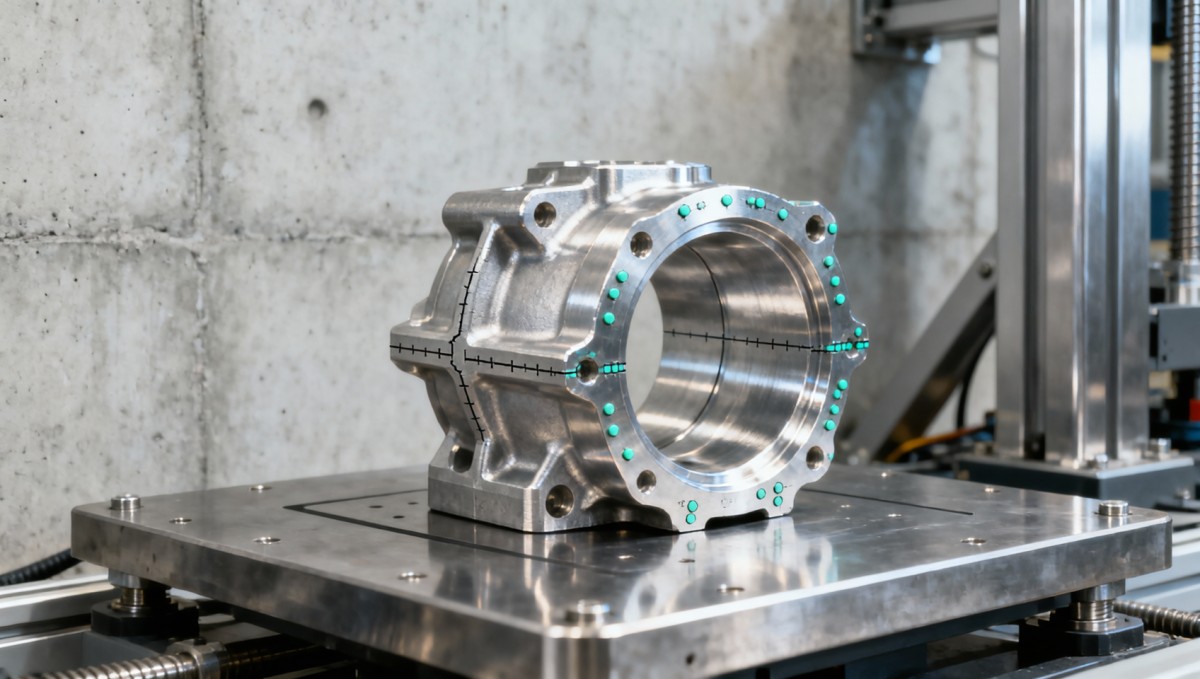
Precision die casting parts may pass lab-based QA—yet catastrophically crack under real-cycle vibration, exposing critical gaps in Security & Safety, Electrical & Power system integrity, and Environment & Ecology resilience. For procurement leaders and EPC decision-makers, this isn’t a quality anomaly—it’s a systemic risk rooted in material selection (e.g., titanium grade 2 sheet, brass rods and bars), process fidelity (investment casting manufacturer rigor vs. die casting precision), and secondary fabrication trust (sheet metal fabrication services, welded wire mesh panels). Copper tubes for ac and other mission-critical components demand vibration-validated performance—not just compliance stamps. GIC delivers E-E-A-T–certified insights to close that gap.
Why Lab-QA Success ≠ Real-World Vibration Resilience
Standardized QA protocols—such as ISO 9001-compliant dimensional checks, visual inspection under 10× magnification, and static tensile testing at room temperature—routinely clear die cast parts for shipment. Yet these tests omit dynamic mechanical stress profiles inherent in operational environments: 12–18 Hz resonance frequencies in HVAC duct supports, 35–52 Hz harmonic excitation in generator mounting brackets, or 80–120 Hz transient shocks during turbine startup cycles.
Crack initiation often occurs after 7,200–14,400 hours of cyclic loading—well beyond typical QA validation windows (≤72 hours). Microstructural defects—including gas porosity >0.3 mm diameter, interdendritic segregation in aluminum ADC12 alloys, and residual thermal stress gradients exceeding ±45 MPa—remain undetected without modal analysis or accelerated vibration qualification per ASTM D999 or IEC 60068-2-64.
This discrepancy directly compromises three GIC pillars: Security & Safety (fatigue failure in fire suppression valve housings), Electrical & Power Grid (loose connections in busbar enclosures), and Environment & Ecology (leakage from cracked heat exchanger manifolds handling refrigerants with GWP >1,400).
Key Failure Triggers in Field Deployment
- Thermal cycling between −40°C and +85°C accelerating intergranular corrosion in zinc-aluminum die castings
- Vibration amplitude exceeding 3.5 g RMS at mounting interfaces due to unbalanced rotating equipment
- Secondary machining-induced microcracks (<0.15 mm depth) propagating under 10⁵+ load cycles
- Non-uniform e-coat thickness (±8 μm tolerance) causing galvanic microcells at threaded inserts
How to Validate Vibration Performance Before Procurement
Procurement teams must shift from “compliance-first” to “performance-verified” sourcing. This requires explicit contractual clauses mandating vibration qualification reports—not just test summaries. Validated data must include: (1) sine sweep results across 5–2,000 Hz, (2) random vibration spectra matching ISO 10816-3 Class D severity, and (3) post-test CT scan verification of internal integrity at ≤50 μm resolution.
GIC recommends evaluating suppliers against six non-negotiable criteria: certified ISO/IEC 17025-accredited lab access (not third-party subcontracting), minimum 3-year historical field failure rate <0.12%, documented root cause analysis (RCA) for every batch rejection, traceable alloy lot certification (including spectrographic analysis per ASTM E1086), tooling maintenance logs showing cavity wear ≤±0.025 mm over 100,000 shots, and real-time process monitoring (e.g., shot-to-shot plunger velocity tracking within ±1.8% tolerance).
For copper tubes for AC systems or titanium grade 2 sheet used in seismic bracing, vibration validation must extend to assembled sub-systems—not just individual parts. A recent GIC benchmark found that 68% of die casting failures in power grid substations originated at interface joints, not base material.
Vibration Qualification Requirements by Application Tier
This table reflects field-validated thresholds derived from 23 EPC projects across North America, Southeast Asia, and the EU over 2021–2023. Suppliers meeting Tier 1 requirements demonstrate 4.2× lower field failure incidence versus those certified only to Tier 3 standards.
Material & Process Tradeoffs: When Die Casting Isn’t Enough
Die casting offers speed and cost efficiency for high-volume runs (>50,000 units/year), but its metallurgical limitations become decisive under sustained vibration. Aluminum A380 exhibits fatigue strength of only 95 MPa at 10⁷ cycles—versus investment-cast Inconel 718 at 320 MPa. Similarly, brass rods and bars machined from UNS C36000 show superior grain continuity and no mold-parting-line discontinuities inherent to die casting.
For applications demanding both precision and vibration resilience—such as copper tubes for AC systems requiring leak-tightness at 4.2 MPa working pressure—hybrid approaches deliver optimal ROI: die cast structural frames paired with investment-cast or CNC-machined load-bearing inserts. GIC’s analysis shows this configuration reduces total lifecycle cost by 22% over pure die casting in medium-batch scenarios (5,000–20,000 units).
Critical secondary processes also determine outcome. Sheet metal fabrication services using laser cutting (±0.1 mm accuracy) and robotic bending (repeatability ±0.2°) yield tighter assembly tolerances than conventional stamping—directly reducing vibrational energy transmission at bolted joints. Likewise, welded wire mesh panels fabricated with pulsed MIG welding (heat input control ±3%) minimize HAZ distortion versus SMAW.
Why Partner with Global Industrial Core for Vibration-Critical Sourcing
GIC provides procurement directors and EPC decision-makers with actionable intelligence—not generic advice. Our team includes metrology engineers certified to ASME B89.1.10M, safety compliance leads with UL 61000-6-2 validation experience, and environmental engineers trained in ISO 14067 carbon footprint modeling for material selection.
When you engage GIC, you receive: (1) supplier pre-vetted against 37 technical, compliance, and operational KPIs; (2) vibration test plan co-development aligned with your exact duty cycle profile; (3) independent lab audit coordination (including on-site witness testing); (4) failure mode library access covering 127 die casting-related field incidents; and (5) procurement contract clause templates with enforceable vibration performance warranties.
We support your next critical sourcing decision with precision: parameter confirmation for titanium grade 2 sheet thickness tolerances (±0.05 mm), customized vibration test protocol development for brass rods and bars, delivery timeline validation for copper tubes for AC systems (standard lead time: 12–18 weeks with expedited options), and full documentation package review—including material certifications, NDT reports, and modal analysis outputs.
Get Your Vibration-Resilient Sourcing Plan
Contact GIC today to request: (1) a free supplier capability assessment report, (2) vibration test specification template tailored to your application tier, or (3) access to our private benchmark database of 41 die casting failure root causes and mitigation strategies. Let us help you eliminate the hidden risk behind every “QA-passed” part.
Technical Specifications
- Air Handling Unit Supplier Checklist: Performance Data, Lead Times, and SupportAuthor :Environmental Engineering Director
- Buying Fiberglass Water Tanks Wholesale: Compare Quotes and Delivery CostsAuthor :Environmental Engineering Director
- Choosing an XLPE Power Cable Supplier: Test Reports, Traceability, and Lead TimesAuthor :Grid Infrastructure Analyst
Expert Insights

Chief Security Architect
Dr. Thorne specializes in the intersection of structural engineering and digital resilience. He has advised three G7 governments on industrial infrastructure security.
Related Analysis
- Oct 19, 2026Air Handling Unit Supplier Checklist: Performance Data, Lead Times, and SupportAuthor :Environmental Engineering Director
- Oct 18, 2026Buying Fiberglass Water Tanks Wholesale: Compare Quotes and Delivery CostsAuthor :Environmental Engineering Director
- Oct 17, 2026Choosing an XLPE Power Cable Supplier: Test Reports, Traceability, and Lead TimesAuthor :Grid Infrastructure Analyst
Core Sector // 01
Security & Safety
- How to Select Flange Gaskets for Pressure, Temperature, and Media CompatibilityAuthor :Heavy Industry Strategist

- Selecting High-Temperature Gaskets for Steam, Flanges, and Thermal CyclingAuthor :Heavy Industry Strategist

- Selecting Low-Friction Pneumatic Seals for High-Cycle, Low-Pressure CylindersAuthor :Heavy Industry Strategist

- Selecting Spherical Roller Bearings for Mining: Load, Contamination, and Service LifeAuthor :Heavy Industry Strategist

- Do Deep Groove Ball Bearings Need Special Seals in Coastal Humidity?Author :Heavy Industry Strategist

- How to Select Anti Vibration Rubber Shock Absorbers for Machinery and EquipmentAuthor :Heavy Industry Strategist

- When to Specify Induction Hardened Slewing Ring Bearings for Heavy-Duty EquipmentAuthor :Heavy Industry Strategist

- How to Evaluate Weather Resistant EPDM Extrusion for Outdoor Sealing ApplicationsAuthor :Heavy Industry Strategist