How to Select Cylindrical Roller Bearings for High Radial Load Applications
Author
Date Published
Reading Time
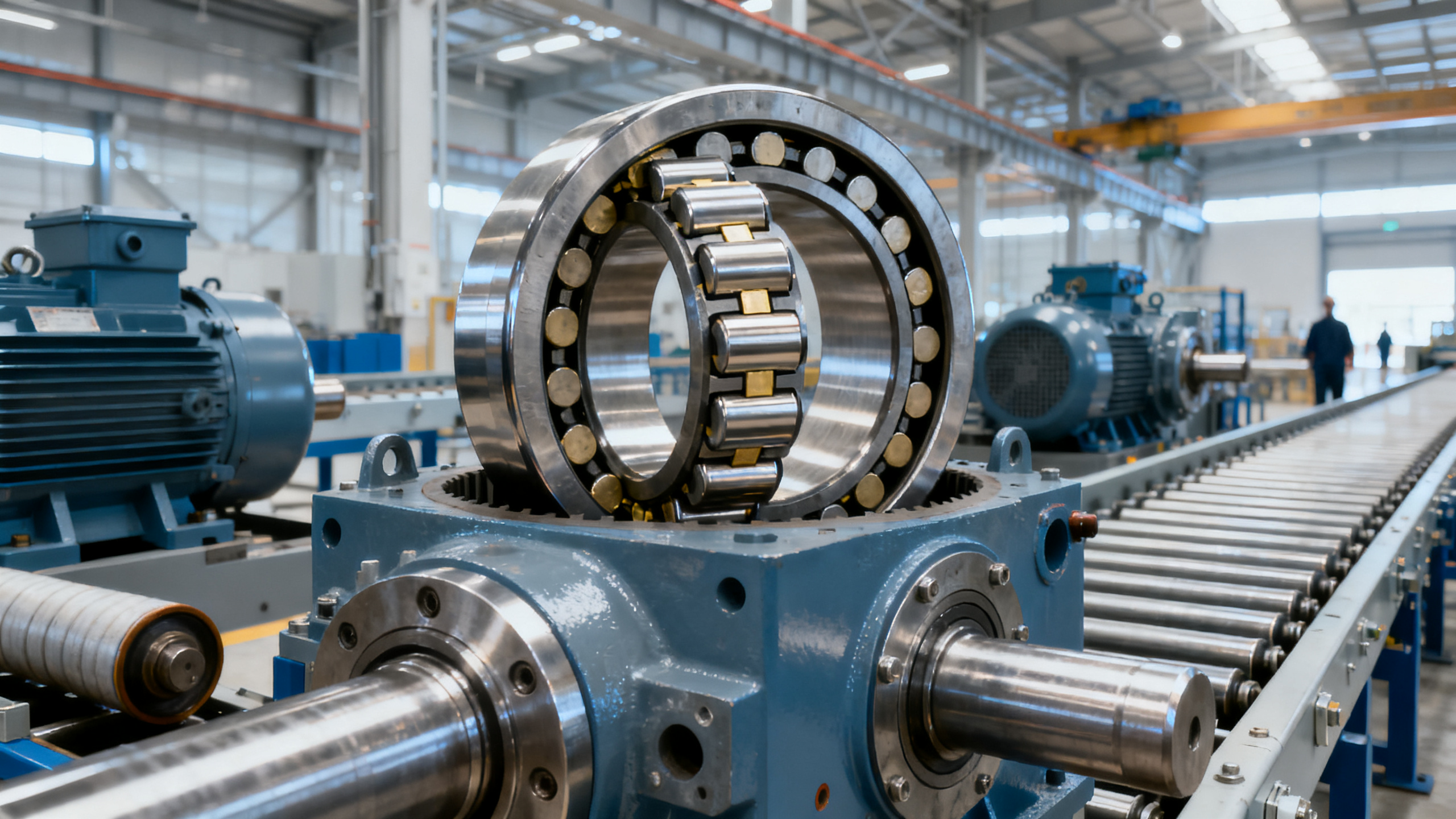
Selecting cylindrical roller bearings for high radial load applications is rarely a simple matter of matching bore size and outside diameter. In heavy industry, bearing choice shapes uptime, vibration behavior, maintenance intervals, and even compliance confidence. Where rotating equipment supports conveyors, gearboxes, pumps, rolling mills, or power transmission systems, the wrong specification can shorten service life long before a machine reaches its design limit.
That is why cylindrical roller bearings remain a persistent focus across industrial sourcing and technical evaluation. Their high radial load capacity, rigid geometry, and suitability for demanding shafts make them valuable, but only when operating speed, lubrication regime, internal clearance, fits, and thermal conditions are considered together. In the kind of infrastructure-oriented environment tracked by Global Industrial Core, reliability is judged less by catalog claims and more by performance under real duty cycles.
Why This Bearing Type Matters in High-Load Equipment
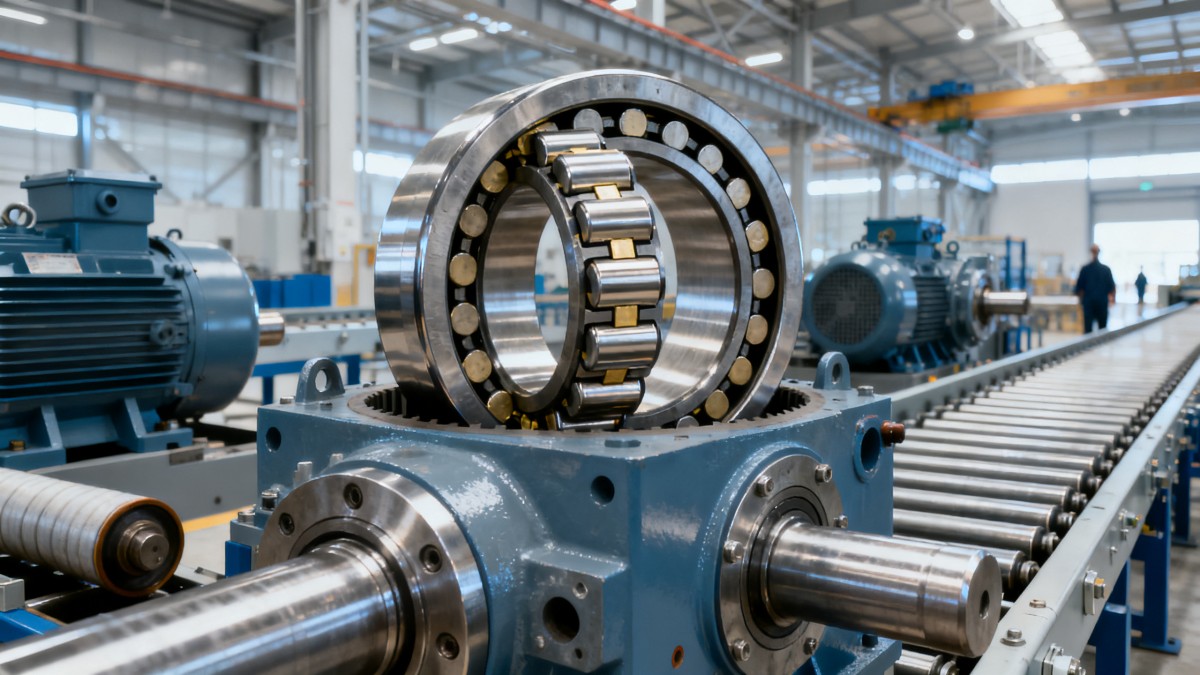
Cylindrical roller bearings are designed so the rollers contact raceways along a line rather than at a point. That geometry spreads radial force more effectively than many ball bearing designs.
This makes them especially relevant where shafts carry sustained heavy loads, shock loading, or repeated process stress. Typical examples include steel processing lines, mining equipment, paper machinery, industrial fans, marine drive systems, and electric motor assemblies.
Their appeal is not only load capacity. Many cylindrical roller bearings also support high rotational speed compared with other heavy-duty rolling bearing types, provided lubrication and heat management are well controlled.
Still, these bearings are not universal solutions. Some designs handle axial displacement well, while others do not. Some are optimized for stiffness, others for assembly convenience. Selection errors often begin when these distinctions are ignored.
The First Screening Step Is the Load Profile
High radial load applications are not all the same. A bearing carrying a constant heavy load at moderate speed behaves very differently from one exposed to load reversals, contamination, misalignment, and intermittent starts.
A useful evaluation begins with four questions. What is the steady radial load, what peak load appears during upset conditions, how often shock events occur, and whether any axial load exists in practice.
Catalog dynamic and static load ratings provide a starting point, but duty cycle matters just as much. A bearing that looks acceptable on nominal load may be undersized once transient overload, emergency stopping, or process imbalance is included.
In critical systems, it is better to convert load data into an equivalent operating profile rather than rely on a single nameplate value. This is where many sourcing decisions become more accurate and more defensible.
Load Conditions Worth Separating Early
- Continuous heavy radial load with stable speed
- Variable radial load with process-driven peaks
- Shock load from impact, crushing, or sudden starts
- Combined loading where axial force is small but present
- Load cases with frequent direction reversal
Design Variants Change Performance in Practical Ways
Not all cylindrical roller bearings behave the same way. Internal geometry and rib arrangement affect axial displacement capability, rigidity, friction, mounting behavior, and where the bearing should sit in the shaft system.
Single-row designs are common for speed and compactness. Double-row versions raise radial stiffness and load capacity. Full complement bearings remove the cage and increase roller count, but they usually trade away speed capability.
The familiar NU, N, NJ, and NUP configurations are not just naming details. They tell you whether the bearing ring can accommodate axial displacement or locate the shaft in one or both directions.
A good selection process asks whether the bearing is floating, locating, or part of a paired arrangement. That system view prevents many avoidable failures.
Speed, Heat, and Lubrication Usually Decide Service Life
In many plants, a bearing fails for lubrication reasons before it fails for pure load reasons. Cylindrical roller bearings are sensitive to film formation because roller-to-raceway contact areas carry significant stress.
Grease may work well in moderate-speed enclosed equipment with disciplined relubrication. Oil circulation is often preferred where heat removal, contamination flushing, or sustained high speed becomes important.
Viscosity must match operating temperature, not ambient temperature. A lubricant that looks adequate at startup can become too thin once the housing stabilizes at elevated temperature.
More worth noting is the interaction between speed and cage design. Some cylindrical roller bearings are optimized for high-speed running with lower friction cages, while full complement styles favor load over speed.
Where contamination risk is high, lubrication strategy should be judged together with sealing, filter quality, relubrication access, and maintenance discipline. A technically correct bearing can still underperform in a dirty system.
Lubrication Checks That Prevent Misjudgment
- Operating temperature range during steady production
- Minimum viscosity at actual bearing temperature
- Relubrication interval against contamination severity
- Compatibility with seals, cages, and additives
- Oil cleanliness target for critical rotating assets
Internal Clearance, Fits, and Thermal Movement Cannot Be Treated Separately
Internal clearance is one of the most misunderstood factors in selecting cylindrical roller bearings. Too little clearance can raise friction and temperature. Too much can reduce stiffness, accuracy, and load distribution quality.
The correct clearance class depends on shaft fit, housing fit, temperature gradient, and whether the inner ring runs hotter than the outer ring. Press fits reduce effective internal clearance after mounting.
This issue becomes more serious in motors, gear drives, and process lines with thermal cycling. Bearings selected only from free-state clearance tables may bind or loosen once the machine reaches operating temperature.
Mounting accuracy matters too. Cylindrical roller bearings can tolerate heavy radial load, but they are less forgiving of shaft shoulder errors, bore damage, and incorrect ring support geometry.
From an evaluation standpoint, fit calculations should sit beside thermal assumptions and installation method. Those three factors belong to one conversation.
Application Context Often Reveals the Better Choice
The best bearing choice depends on where the asset sits in the process chain. A paper machine roll neck, an offshore drive train, and a quarry conveyor pulley may all require cylindrical roller bearings, but not the same design logic.
In clean indoor systems, speed, precision, and energy efficiency may dominate. In harsher settings, sealing, cage robustness, surface hardening quality, and tolerance to contaminated lubricant become more important.
That is one reason GIC-style evaluation frameworks matter in industrial procurement. The bearing is not assessed as an isolated part. It is judged as a reliability component inside a broader operating environment.
Documentation also counts. Material traceability, heat treatment consistency, dimensional inspection records, and alignment with ISO or sector-specific requirements can help separate a low-price offer from a durable supply option.
Signals of a Stronger Technical Submission
- Clear dynamic and static load data with application notes
- Defined speed limits by lubrication method
- Tolerance, clearance, and cage material details
- Inspection, certification, and quality records
- Evidence from comparable field conditions
A Practical Selection Path for Better Decisions
A disciplined approach usually outperforms a brand-first or price-first approach. Start with the shaft arrangement and duty cycle. Then verify radial load, shock events, speed, temperature, contamination level, and axial movement needs.
After that, narrow the cylindrical roller bearings family by design type, cage style, clearance class, and lubrication method. Check fits and thermal expansion before finalizing the part number.
If the application is highly critical, compare at least two technical routes. One may prioritize higher load margin. Another may prioritize better speed stability or easier maintenance access.
The next step is to turn selection logic into a repeatable checklist. That includes operating data, housing and shaft tolerances, lubricant specification, sealing plan, installation method, and supplier documentation requirements.
When cylindrical roller bearings are evaluated in that full context, the result is usually fewer premature failures, cleaner sourcing decisions, and a stronger match between component design and industrial reality.
Technical Specifications
- Air Handling Unit Supplier Checklist: Performance Data, Lead Times, and SupportAuthor :Environmental Engineering Director
- Buying Fiberglass Water Tanks Wholesale: Compare Quotes and Delivery CostsAuthor :Environmental Engineering Director
- Choosing an XLPE Power Cable Supplier: Test Reports, Traceability, and Lead TimesAuthor :Grid Infrastructure Analyst
Expert Insights

Chief Security Architect
Dr. Thorne specializes in the intersection of structural engineering and digital resilience. He has advised three G7 governments on industrial infrastructure security.
Related Analysis
- Oct 19, 2026Air Handling Unit Supplier Checklist: Performance Data, Lead Times, and SupportAuthor :Environmental Engineering Director
- Oct 18, 2026Buying Fiberglass Water Tanks Wholesale: Compare Quotes and Delivery CostsAuthor :Environmental Engineering Director
- Oct 17, 2026Choosing an XLPE Power Cable Supplier: Test Reports, Traceability, and Lead TimesAuthor :Grid Infrastructure Analyst
Core Sector // 01
Security & Safety
- How to Select Flange Gaskets for Pressure, Temperature, and Media CompatibilityAuthor :Heavy Industry Strategist

- Selecting High-Temperature Gaskets for Steam, Flanges, and Thermal CyclingAuthor :Heavy Industry Strategist

- Selecting Low-Friction Pneumatic Seals for High-Cycle, Low-Pressure CylindersAuthor :Heavy Industry Strategist

- Selecting Spherical Roller Bearings for Mining: Load, Contamination, and Service LifeAuthor :Heavy Industry Strategist

- Do Deep Groove Ball Bearings Need Special Seals in Coastal Humidity?Author :Heavy Industry Strategist

- How to Select Anti Vibration Rubber Shock Absorbers for Machinery and EquipmentAuthor :Heavy Industry Strategist

- When to Specify Induction Hardened Slewing Ring Bearings for Heavy-Duty EquipmentAuthor :Heavy Industry Strategist

- How to Evaluate Weather Resistant EPDM Extrusion for Outdoor Sealing ApplicationsAuthor :Heavy Industry Strategist