Global Bearing Delivery Times Extend to 18 Weeks Amid ISO 15242-3:2026 Certification Bottleneck
Author
Date Published
Reading Time
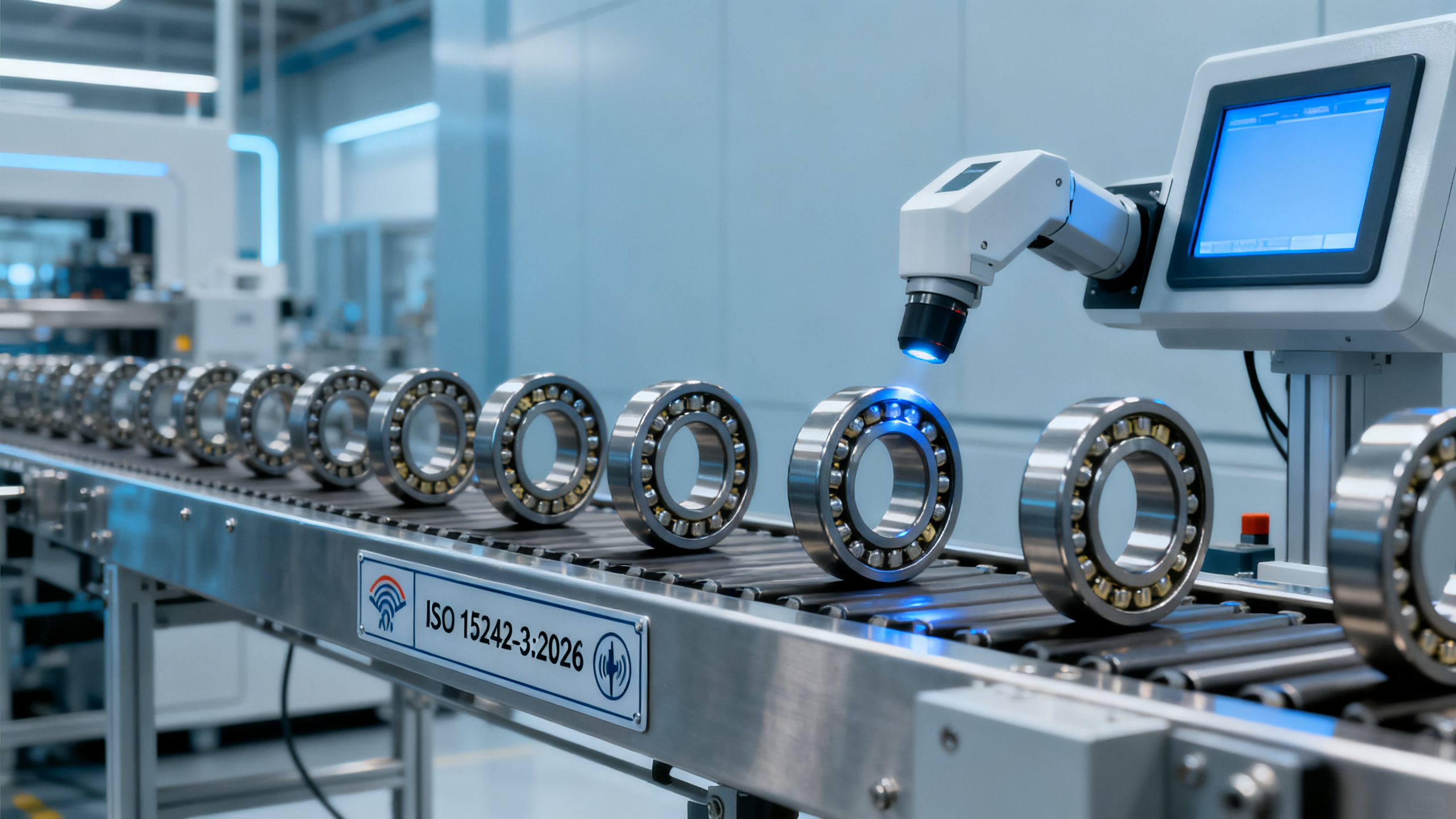
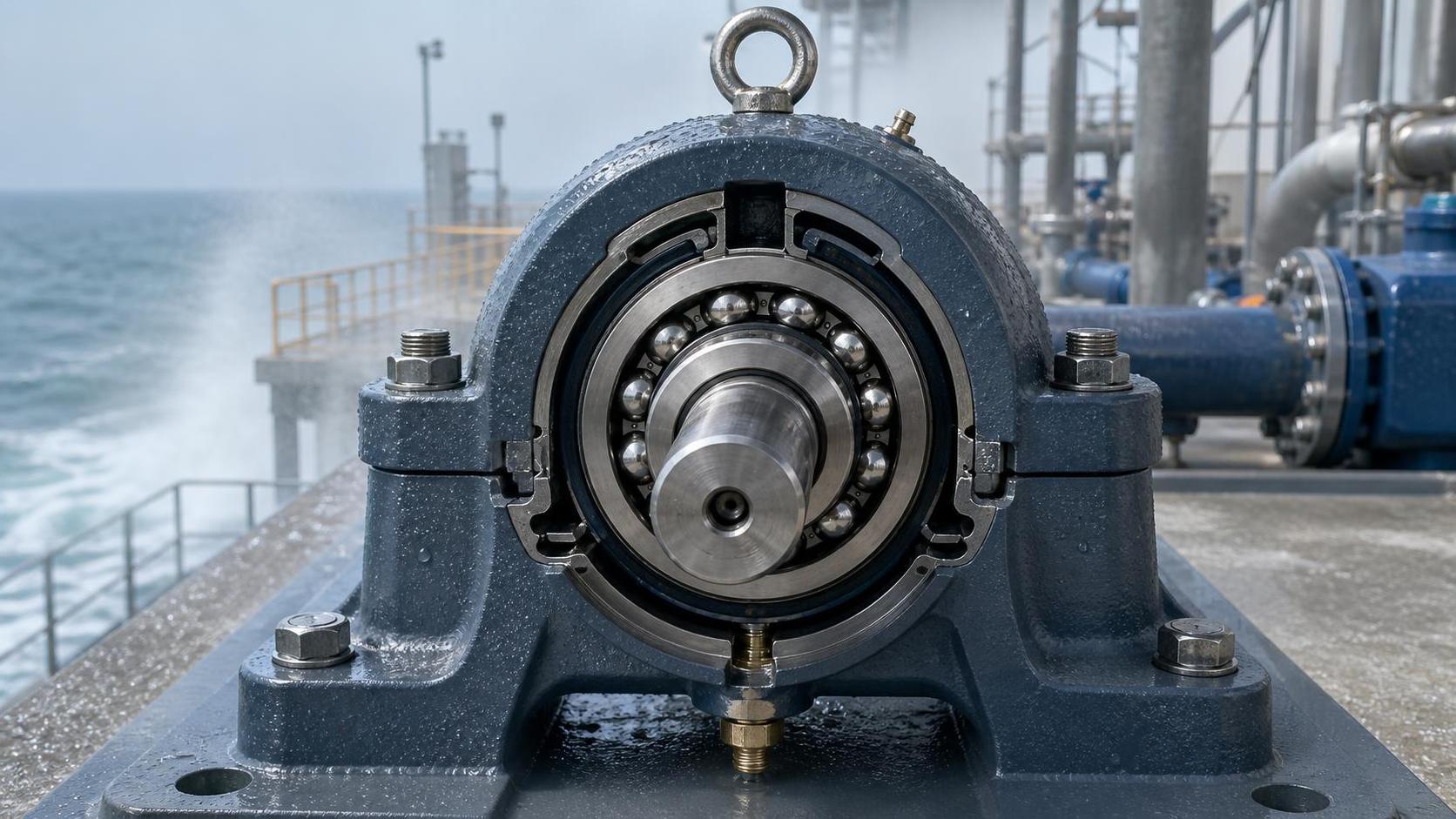
Global industrial bearing delivery timelines have extended to 18 weeks on average for Chinese exports, according to the latest supply chain alert issued by TÜV Rheinland. The delay stems from surging demand for ISO 15242-3:2026 vibration and noise certification — a requirement increasingly mandated for high-reliability applications in wind power and rail transit sectors. This development, observed in early 2024, directly affects procurement planning and project scheduling for OEMs and system integrators reliant on certified bearings.
Event Overview
TÜV Rheinland’s recent supply chain alert confirms that global capacity for full-scope ISO 15242-3:2026 testing is highly constrained: only seven laboratories worldwide hold full accreditation, four of which are located in China (Shanghai, Shenzhen, Xi’an, and Shenyang). As of early 2024, certification queue times for exported industrial bearings from China have reached 12 weeks. Combined with saturated production line capacity, total lead time has increased from 16 to 18 weeks. This delay is impacting delivery schedules for wind energy and rail transit projects in Europe and North America.
Impact on Specific Industry Segments
Direct Exporters and Trading Companies
These entities face direct pressure on contractual delivery commitments. Extended certification queues delay shipment readiness, increasing the risk of penalty clauses or renegotiation requests from overseas buyers — particularly those in regulated infrastructure sectors where ISO 15242-3:2026 compliance is non-negotiable.
Original Equipment Manufacturers (OEMs) and System Integrators
OEMs integrating bearings into wind turbine gearboxes or rail bogies rely on certified components to meet end-customer specifications and regulatory approvals. The 18-week lead time now constrains their own assembly and commissioning timelines — especially for projects with fixed grid-connection or tender deadlines.
Domestic Bearing Manufacturers
Manufacturers must allocate internal resources not only to production but also to pre-testing coordination and documentation preparation for certification. With only four accredited labs in China and no near-term expansion announced, lab access has become a bottleneck independent of factory output capacity.
Supply Chain and Logistics Service Providers
Freight forwarders and customs brokers supporting bearing exports may see shifts in booking patterns — including earlier advance bookings for air freight alternatives or increased demand for bonded warehousing near test labs — as clients seek to compress non-production time segments.
What Enterprises and Practitioners Should Monitor and Act On
Track official updates on laboratory capacity and accreditation scope
Monitor announcements from CNAS (China National Accreditation Service) and international accreditation bodies (e.g., ILAC) regarding new lab accreditations or expanded test scopes under ISO 15242-3:2026. Any addition to the current pool of seven labs would materially ease bottlenecks.
Pre-qualify certification-ready batches ahead of formal order placement
For critical programs, consider initiating sample submission and preliminary test planning during the quotation or design review phase — rather than waiting until PO issuance. This can reduce effective queue time by up to 4–6 weeks if coordinated with accredited labs in advance.
Differentiate between certification requirements and actual project enforcement timelines
Not all end markets currently enforce ISO 15242-3:2026 for every bearing application. Analyze specific customer contracts and regional regulatory guidance (e.g., EU EN 15085 for rail, IEC 61400-22 for wind) to determine whether full certification applies — and whether phased or partial validation may be accepted pending final approval.
Adjust procurement buffers and revise master production scheduling
Procurement teams should treat the 18-week timeline as the operational baseline — not an exception — for any bearing requiring ISO 15242-3:2026 certification. Update MRP parameters accordingly and communicate revised lead-time expectations transparently to downstream engineering and project management units.
Editorial Perspective / Industry Observation
Observably, this situation reflects a structural lag between standard adoption and certification infrastructure scaling. ISO 15242-3:2026 was published in 2026, but its practical implementation began accelerating in late 2023 as major European wind and rail tenders started referencing it. The current bottleneck is less about technical capability and more about geographic concentration and accreditation throughput — making it a near-term constraint rather than a long-term barrier. Analysis shows that while the 18-week delay is operationally significant, it does not indicate systemic failure in the supply chain; rather, it signals a transitional phase where compliance capacity is catching up to demand. From an industry perspective, sustained attention is warranted — not because the issue is worsening, but because resolution depends on cross-border accreditation harmonization and lab investment cycles that typically span 12–18 months.
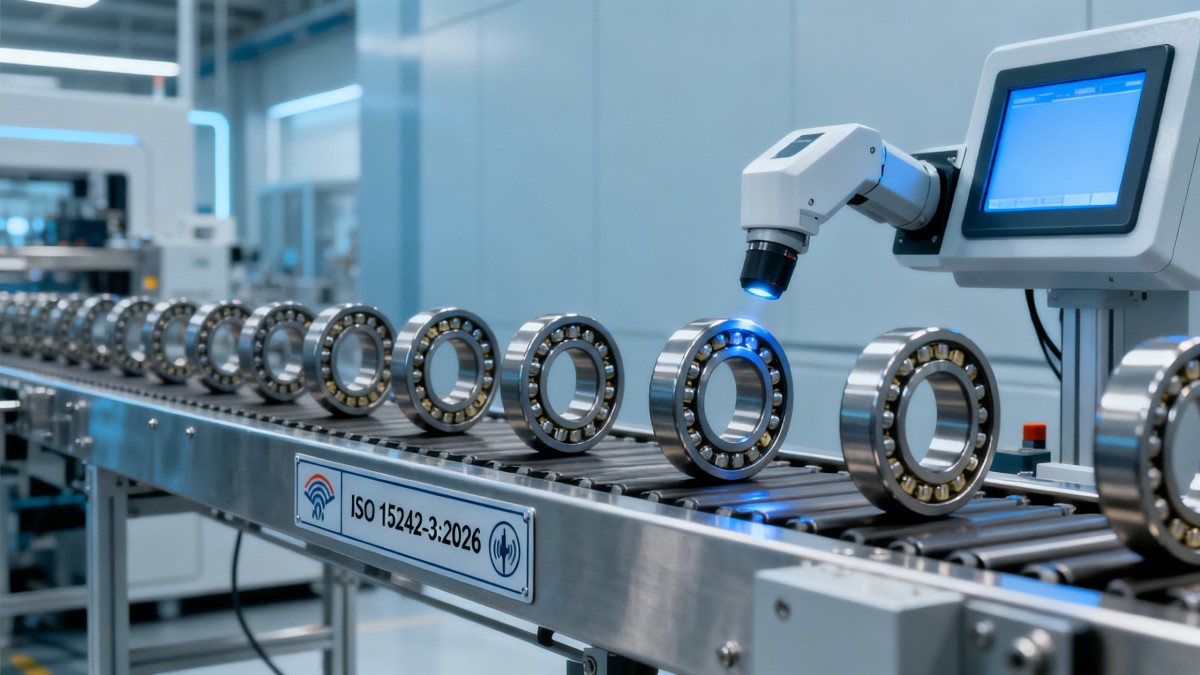
In summary, the extension of global bearing delivery times to 18 weeks is not merely a logistics footnote — it is a measurable indicator of how fast-evolving standards reshape supply chain dependencies. For stakeholders, the priority is not to anticipate a reversal, but to adapt planning, communication, and qualification workflows to a newly stabilized — albeit longer — certification-constrained reality. This development is best understood as a calibration point in the broader convergence of international performance standards and industrial execution capacity.
Source: TÜV Rheinland Supply Chain Alert (early 2024); ISO 15242-3:2026 standard documentation; CNAS public accreditation database (as of March 2024).
Areas requiring ongoing observation: Updates on additional laboratory accreditations under ISO 15242-3:2026, particularly outside China and Germany.
Technical Specifications
- Air Handling Unit Supplier Checklist: Performance Data, Lead Times, and SupportAuthor :Environmental Engineering Director
- Buying Fiberglass Water Tanks Wholesale: Compare Quotes and Delivery CostsAuthor :Environmental Engineering Director
- Choosing an XLPE Power Cable Supplier: Test Reports, Traceability, and Lead TimesAuthor :Grid Infrastructure Analyst
Expert Insights

Chief Security Architect
Dr. Thorne specializes in the intersection of structural engineering and digital resilience. He has advised three G7 governments on industrial infrastructure security.
Related Analysis
- Oct 19, 2026Air Handling Unit Supplier Checklist: Performance Data, Lead Times, and SupportAuthor :Environmental Engineering Director
- Oct 18, 2026Buying Fiberglass Water Tanks Wholesale: Compare Quotes and Delivery CostsAuthor :Environmental Engineering Director
- Oct 17, 2026Choosing an XLPE Power Cable Supplier: Test Reports, Traceability, and Lead TimesAuthor :Grid Infrastructure Analyst
Core Sector // 01
Security & Safety
- How to Select Flange Gaskets for Pressure, Temperature, and Media CompatibilityAuthor :Heavy Industry Strategist

- Selecting High-Temperature Gaskets for Steam, Flanges, and Thermal CyclingAuthor :Heavy Industry Strategist

- Selecting Low-Friction Pneumatic Seals for High-Cycle, Low-Pressure CylindersAuthor :Heavy Industry Strategist

- Selecting Spherical Roller Bearings for Mining: Load, Contamination, and Service LifeAuthor :Heavy Industry Strategist

- Do Deep Groove Ball Bearings Need Special Seals in Coastal Humidity?Author :Heavy Industry Strategist

- How to Select Anti Vibration Rubber Shock Absorbers for Machinery and EquipmentAuthor :Heavy Industry Strategist

- When to Specify Induction Hardened Slewing Ring Bearings for Heavy-Duty EquipmentAuthor :Heavy Industry Strategist

- How to Evaluate Weather Resistant EPDM Extrusion for Outdoor Sealing ApplicationsAuthor :Heavy Industry Strategist