Structural Steel Market Outlook: What Project Buyers Should Track in 2026
Author
Date Published
Reading Time
As 2026 approaches, the structural steel market is becoming less predictable in the ways that matter most to project delivery. Steel has always been exposed to swings in ore, scrap, energy, freight, and construction demand. What has changed is the number of variables that can affect a purchase order after the budget is approved: trade measures, carbon-reporting rules, mill allocation, fabricator capacity, port disruption, grid constraints, and increasingly stringent owner requirements for traceability.
For project managers and engineering leaders, this is not simply a question of whether steel prices will rise or fall. Structural steel is a schedule-critical system. A procurement decision made too late, a specification written too narrowly, or an unverified low-carbon claim can create consequences far beyond material cost. Connection redesign, fabrication rework, missed erection windows, and delayed handover can erase the apparent savings from a cheaper tonne price.
The key question for 2026 is therefore not, “Where will the structural steel market be next year?” It is, “Which market changes can materially affect this project’s budget, compliance position, and construction sequence, and when should the team act?”
Price direction matters, but price volatility matters more
Most project teams begin market tracking with a benchmark price. That is necessary, but insufficient. Structural steel pricing is influenced by raw material inputs, electricity and natural-gas costs, scrap availability, regional capacity utilization, interest rates, infrastructure spending, and the pace of commercial and industrial construction. These variables do not move together. A period of weak building activity can coexist with higher delivered steel costs if energy prices rise, local supply is constrained, or imports face new duties.
In 2026, buyers should focus on the range of plausible outcomes rather than rely on a single forecast. Market outlooks are useful for establishing scenarios, but they are not a substitute for a project-specific exposure assessment. A project using standard sections from multiple qualified mills has different risk from a bridge, process plant, data center, or high-rise frame requiring heavy plate, uncommon grades, large built-up members, or strict ultrasonic testing.
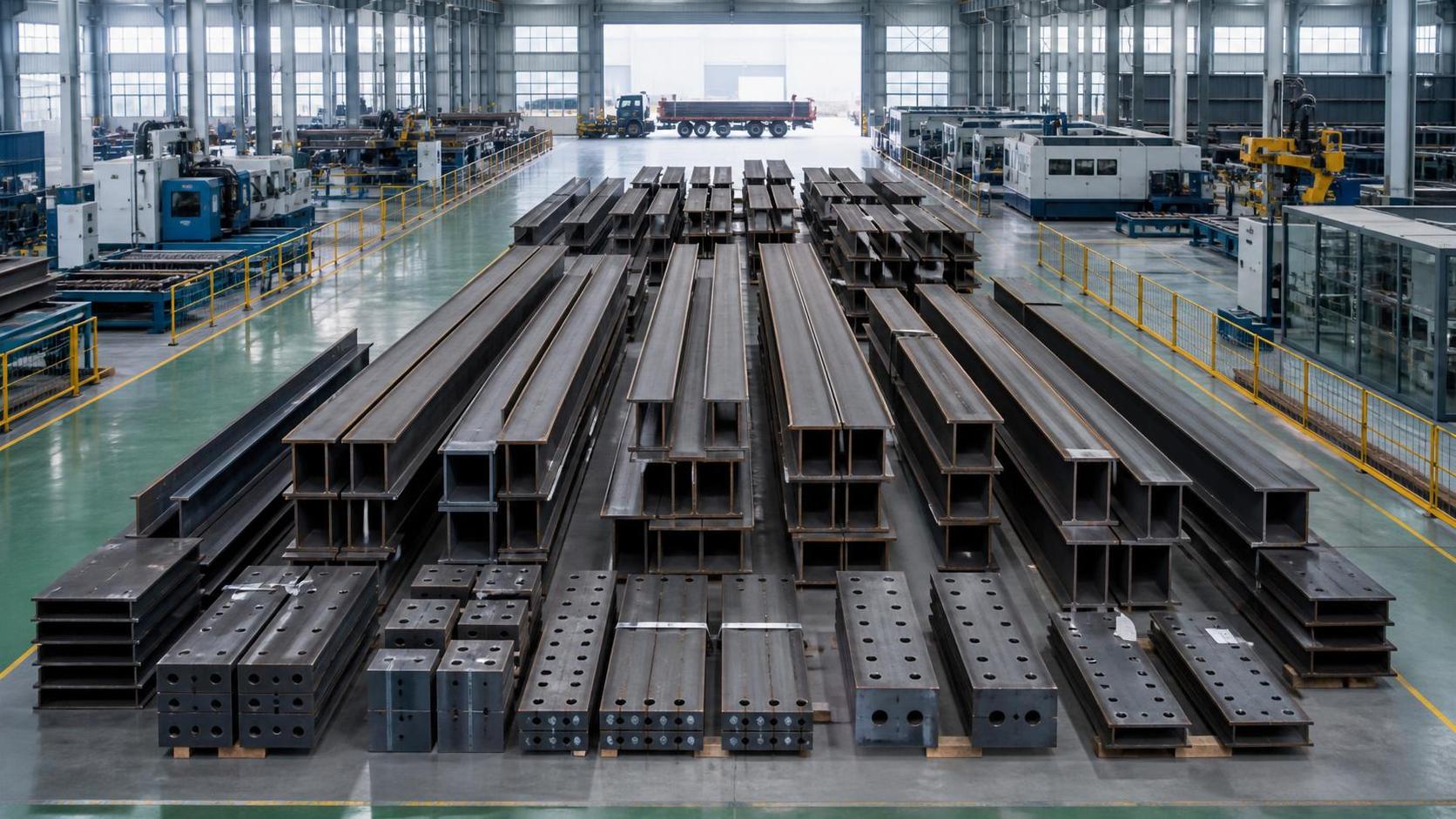
It is also important to separate the price of base steel from the price of a deliverable structural package. The latter may include cutting, drilling, welding, coatings, fire protection interfaces, trial assembly, packing, inland logistics, inspections, and documentation. Fabrication capacity can tighten even when mill prices are stable. In practice, the cost problem often appears not as a dramatic change in steel commodity pricing, but as a quotation validity period shrinking from weeks to days, a surcharge being added for plate or transport, or a fabricator declining to hold a delivery slot without an early release.
A practical procurement view should track at least three levels:
- Input exposure: steel, scrap, energy, alloys, zinc, welding consumables, and freight.
- Conversion exposure: fabrication labor, shop capacity, coating availability, quality-control workload, and financing costs.
- Project exposure: design maturity, package release dates, construction sequence, site access, storage limits, and the cost of delay.
That distinction prevents a common error: negotiating aggressively on a visible steel rate while accepting vague terms for escalation, lead time, substitutions, or delivery performance.
Regional availability will be as important as global supply
Global headline supply can create a misleading sense of security. Steel may be available somewhere, but not necessarily in the required grade, section size, certification route, or delivery window. Nor is every nominally equivalent product acceptable under a project’s governing design code, client specification, insurance requirement, or local procurement rules.
For example, a contractor may have access to lower-cost imported sections, yet face longer transit times, uncertain port handling, incomplete material test documentation, or additional review of welding procedures. A domestic supply option may carry a higher unit price but reduce coordination risk through shorter transport, familiar standards, easier mill communication, and faster resolution of quality issues. Neither route is automatically superior. The correct decision depends on the project’s time contingency, inspection regime, and tolerance for substitution risk.
Trade policy should remain on the 2026 watchlist. Anti-dumping measures, safeguard actions, local-content requirements, sanctions, tariff changes, and country-of-origin restrictions can change the delivered cost or eligibility of material after sourcing strategies have been developed. The exact rules are jurisdiction-specific and should be confirmed with qualified trade and legal advisers before award. Project teams should not assume that an existing import channel will remain commercially or administratively frictionless.
There is a related operational issue: buyers frequently assess supply-chain resilience only at the mill level. The steel package depends on a chain of mills, stockholders, transport providers, fabricators, coating applicators, testing laboratories, and site logistics. The weakest participant can determine the actual delivery date. A mill may produce plate on time, while the project still slips because specialized drilling capacity, galvanizing slots, or abnormal-load transport was never reserved.
Carbon requirements are moving from narrative to procurement condition
Embodied carbon is likely to remain a central structural steel market theme in 2026, especially in public infrastructure, multinational capital projects, premium commercial developments, and facilities with corporate decarbonization targets. The shift is not merely about whether steel is described as “green.” It is about whether environmental information is credible, comparable, contractually usable, and aligned with the project boundary.
Steel’s emissions profile varies significantly by production route, feedstock mix, electricity source, plant efficiency, and the allocation methodology used in environmental reporting. Scrap-based electric arc furnace production can have a different emissions profile from ore-based production, but broad assumptions are not enough for procurement decisions. Product-specific environmental product declarations, declared modules, verification status, geographical relevance, and data age all affect comparability.
Project managers should be careful with a widely repeated but incomplete claim: that specifying “low-carbon steel” is always a simple way to reduce project emissions. It may reduce a reported footprint, but only when the requirement is defined well enough to be auditable and feasible. An unclear requirement can produce inconsistent bids, disputed substitutions, or late documentation requests that hold up approval.
A more defensible approach is to establish the carbon requirement alongside technical specifications and commercial evaluation criteria. The project should define, before tender where possible:
- the applicable reporting standard or owner methodology;
- the required product categories and structural elements covered;
- whether plant-specific or product-specific declarations are required;
- the emissions boundary to be compared;
- the date and third-party verification expectations for documentation; and
- how carbon performance will be evaluated against price, quality, and schedule.
Teams should also distinguish between material decarbonization and design efficiency. Optimizing member sizes, grid layouts, connection details, spans, and fabrication complexity can reduce total steel tonnage, sometimes with a more direct project-level effect than selecting a marginally lower-emission source for an overdesigned frame. This does not mean material sourcing is unimportant. It means the structural engineer, estimator, procurement team, and sustainability lead need to make decisions from the same project baseline.
Design maturity is a market-risk control
The structural steel market is often discussed as though risk begins once a buyer requests quotations. In reality, many commercial risks originate earlier in design. Late changes to loading assumptions, equipment layouts, foundation locations, connection philosophy, corrosion category, fire rating, or seismic provisions can turn an apparently straightforward package into a difficult fabrication exercise.
Engineering leaders should identify which details are genuinely fixed before committing to material or fabrication. This is especially important for industrial facilities where mechanical, electrical, piping, process, and access systems compete for the same structural zones. A change to pipe-rack loads, crane capacity, rooftop equipment, cable-tray routing, or blast criteria can affect member selection and connection design after procurement has started.
Early release of standard materials can be sensible, but only when the team understands the consequences of change. Releasing universal beams or common plate sizes may protect a production slot. Releasing bespoke built-up sections, heavy members, or specialty grades before interfaces are resolved can create expensive stranded inventory. The appropriate strategy is often phased commitment: reserve capacity first, release stable material next, and hold complex items until design gates are met.
Quality risk is increasingly a documentation risk
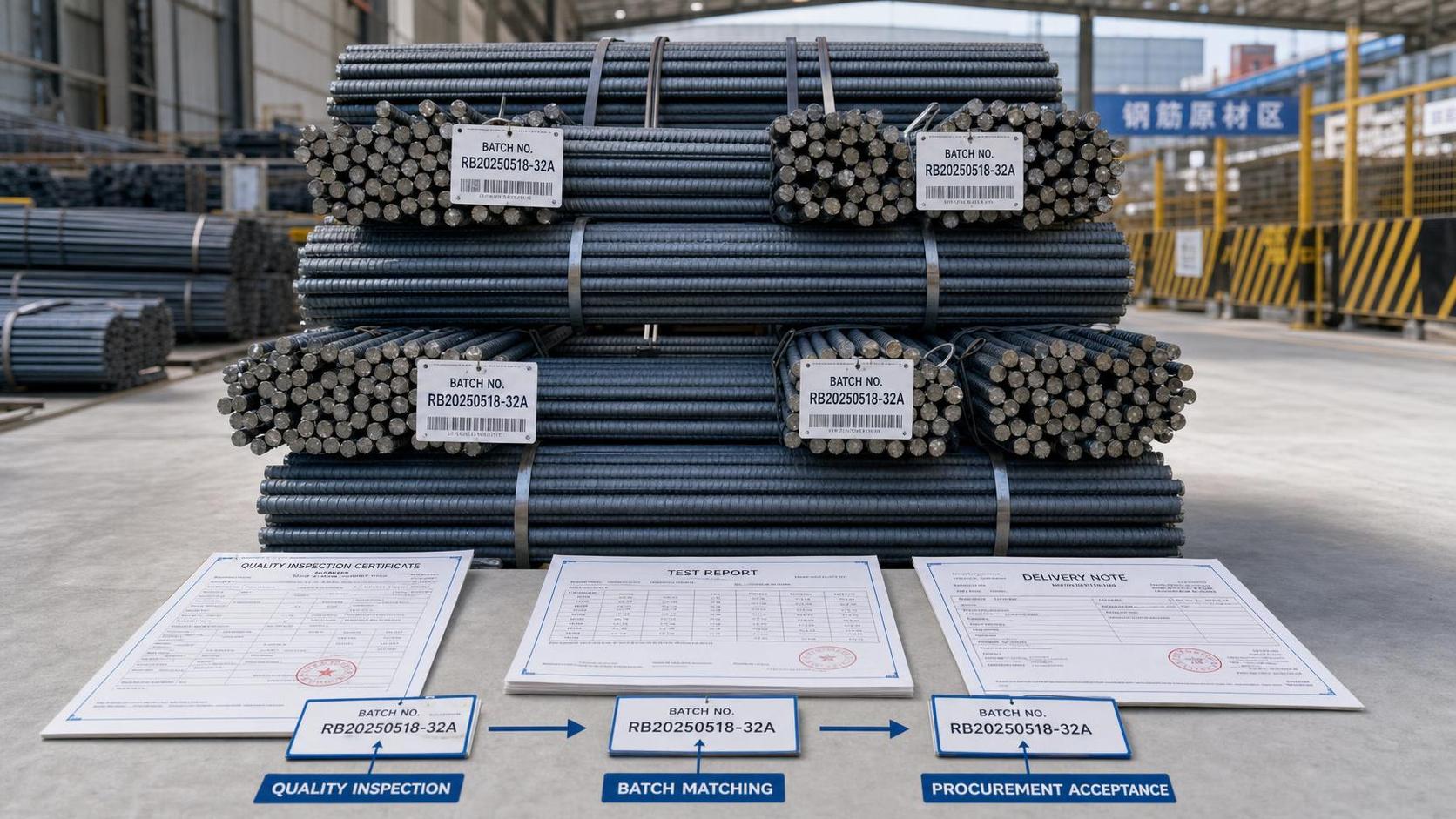
Material quality remains non-negotiable, but the nature of the risk is broader than a failed mechanical test. A structural package can meet nominal grade requirements and still generate site problems if heat numbers are not traceable, mill test certificates cannot be reconciled with marked members, welding documentation is incomplete, coating records are inconsistent, or dimensional tolerances have not been controlled against the erection plan.
For critical projects, procurement teams should treat documentation as a deliverable rather than a closing administrative task. The inspection and test plan should make clear which records are required, who reviews them, and which points require approval before fabrication proceeds. Depending on project requirements, this may include material certificates, welding procedure specifications, welder qualifications, non-destructive examination reports, bolt certificates, coating inspection results, dimensional reports, and packing lists tied to erection sequence.
International standards such as ISO, EN, ASTM, AISC, AWS, CE-related obligations, or local building-code requirements may be relevant, but applicability depends on the project location, contract documents, and authority having jurisdiction. Buyers should avoid using a standards list as a substitute for a coherent acceptance plan. Certification logos alone do not prove that a delivered member satisfies the project specification.
Third-party inspection can reduce risk, particularly where the buyer has limited visibility into a new supply base or where the steelwork is safety-critical. Yet inspection is not a cure for poor scope definition. Inspectors can verify against agreed requirements; they cannot efficiently resolve missing acceptance criteria, conflicting drawings, or unapproved material substitutions.
Delivery performance needs a different set of KPIs
On-time delivery is too blunt a measure for structural steel. A package can arrive “on time” in aggregate while still disrupting erection because the required columns, bracing, connection plates, bolts, or access components are missing from a specific shipment. Conversely, early delivery can become a problem where the site has limited laydown space and weather protection.
In 2026, project buyers should seek schedule reporting that connects fabrication status to construction need dates. The most useful indicators tend to be physical and package-specific: approved-for-construction drawing status, material received by heat or lot, fabrication completion, non-conformance closure, coating completion, release for shipment, shipment departure, and site receipt. Progress percentages without a link to priority erection zones can conceal critical gaps.
Contract terms should also be tested against the reality of disruption. A nominal liquidated-damages clause may not protect the project if the fabricator’s liability cap is low, force majeure wording is broad, or delays arise from buyer-controlled drawings and approvals. The commercial team should map responsibilities for design changes, material escalation, transport interruptions, inspections, and rejected work before finalizing the award.
What project teams should monitor through 2026
The most effective market watch is a short, recurring review connected to live project decisions. It should not become a generic monthly steel-price presentation. A project steering group needs signals that change the decision to reserve, release, re-source, redesign, or add contingency.
Useful questions include:
- Are local mills and qualified fabricators extending lead times for the grades and sections the project actually needs?
- Have energy, freight, trade, or currency movements changed delivered-cost assumptions enough to trigger a commercial review?
- Is the structural design sufficiently mature to release material without creating rework exposure?
- Are lower-carbon material claims supported by documentation compatible with the owner’s reporting requirement?
- Which long-lead components, coating operations, or transport routes could constrain the erection sequence?
- Do current supplier reports show real production evidence, or only planned dates?
There is no single 2026 forecast that can answer these questions for every project. The structural steel market will remain shaped by macroeconomic uncertainty, industrial policy, decarbonization pressure, and uneven regional demand. But projects do not experience the market as an index. They experience it through qualified availability, approved documents, fabrication slots, delivered members, and the ability to erect safely on the planned date.
That is the working discipline worth carrying into 2026: buy steel as a managed project system, not as an isolated commodity. Teams that link market intelligence to design gates, supply-chain verification, carbon evidence, and erection priorities will be better positioned to absorb volatility without allowing it to dictate the project outcome.
Technical Specifications
- Air Handling Unit Supplier Checklist: Performance Data, Lead Times, and SupportAuthor :Environmental Engineering Director
- Buying Fiberglass Water Tanks Wholesale: Compare Quotes and Delivery CostsAuthor :Environmental Engineering Director
- Choosing an XLPE Power Cable Supplier: Test Reports, Traceability, and Lead TimesAuthor :Grid Infrastructure Analyst
Expert Insights

Chief Security Architect
Dr. Thorne specializes in the intersection of structural engineering and digital resilience. He has advised three G7 governments on industrial infrastructure security.
Related Analysis
- Oct 19, 2026Air Handling Unit Supplier Checklist: Performance Data, Lead Times, and SupportAuthor :Environmental Engineering Director
- Oct 18, 2026Buying Fiberglass Water Tanks Wholesale: Compare Quotes and Delivery CostsAuthor :Environmental Engineering Director
- Oct 17, 2026Choosing an XLPE Power Cable Supplier: Test Reports, Traceability, and Lead TimesAuthor :Grid Infrastructure Analyst
Core Sector // 01
Security & Safety
- Cold-Formed Steel Market: Price, Capacity, and Lead-Time Signals for BuildersAuthor :

- Heat-Resisting Steel Market Trends: Availability Risks for High-Temperature FabricatorsAuthor :

- Sintered Steel Market: Demand Drivers and Supply Risks for Component SourcingAuthor :

- Structural Steel Market Outlook: What Project Buyers Should Track in 2026Author :

- EU Nickel Supply Chain Compliance: Due Diligence Steps for Industrial BuyersAuthor :

- Comparing Stock vs Custom Galvanized Square Tube for Stable Project DeliveryAuthor :

- How Rebar Traceability Is Shaping Procurement and QA ExpectationsAuthor :

- Galvalume Coil Applications: How Buyers Match Coated Steel to Real ProjectsAuthor :