Cold-Formed Steel Market: Price, Capacity, and Lead-Time Signals for Builders
Author
Date Published
Reading Time
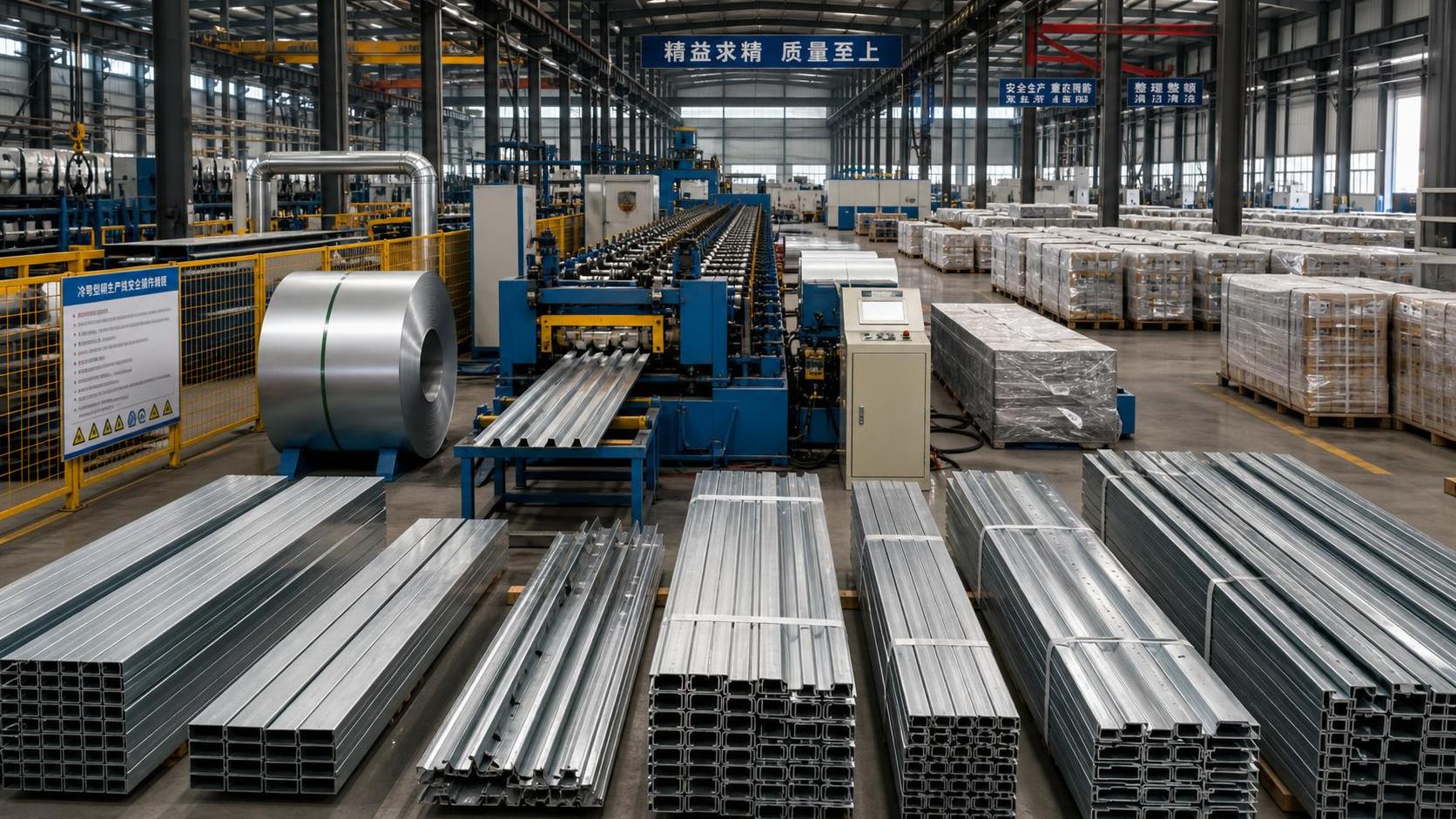
The cold formed steel market matters to a project long before steel framing reaches the site. A quoted price may look competitive, yet the real exposure often sits elsewhere: a mill allocation that cannot support the delivery date, a fabricator whose roll-forming line is booked, a coating specification that narrows the supplier pool, or an engineering revision that turns standard sections into long-lead custom work.
For commercial evaluations, the useful question is not simply, “Where is steel priced today?” It is, “Can the required profile, grade, coating, documentation, and fabrication capacity be secured for the construction sequence we have committed to?” Price direction remains important, but it is only one signal in a market that is highly sensitive to regional supply and project timing.
A practical market view combines four checks: the underlying coil cost, available conversion capacity, specification complexity, and the time needed to release approved shop drawings into production. When those signals are considered together, budget forecasts become more realistic and delivery risk becomes visible earlier.
Reading the Cold Formed Steel Market Beyond the Headline Price
Cold-formed steel is made by forming sheet steel at room temperature into structural sections such as studs, tracks, joists, purlins, girts, clips, and framing components. Its market does not move in exactly the same way as structural plate, hot-rolled sections, or rebar. The finished product cost is influenced by steel coil, but also by slitting, roll-forming, punching, welding where applicable, galvanizing or other protective coatings, engineering, packaging, freight, and fabrication labor.
That distinction explains a common procurement mistake: using a broad steel-price index as the sole basis for judging a cold-formed steel quotation. Coil pricing can move downward while an actual framing package remains expensive because a local fabricator is at capacity, a specified finish is constrained, or transport to the site is unusually costly. The opposite can also happen. A higher coil market may not immediately produce a higher package price if a supplier has committed inventory or needs to fill an available production slot.
Commercial evaluators should therefore treat published commodity indicators as direction signals, not as a complete project budget. Ask each bidder what portion of the quotation is exposed to coil-price movement, what assumptions apply to material procurement, and whether the offer includes a price-validity period. A quote that is lower by a small margin but valid for only a few days may carry more cost risk than a slightly higher offer with clear escalation terms.
There is also a timing issue. Market price movements are rarely reflected instantly at every stage of the supply chain. Mills may adjust coil offers first; service centers and fabricators may then work through existing inventory, contracted supply, or already-booked jobs. In a short bid period, comparing the date, material basis, and validity of quotations is more meaningful than comparing a single price per tonne.
Capacity Is Often the Constraint Builders See Too Late
Cold-formed steel capacity is not one thing. A region can have ample steel coil and still lack the capacity to turn it into approved, project-specific components at the required time. Mill availability, service-center inventory, roll-forming lines, punching operations, engineering resources, coating capability, and freight availability all affect the outcome.
Standard light-gauge studs and tracks may be relatively easy to source in active construction regions. Long-span members, deep sections, high-strength grades, perforated profiles, heavy coatings, and engineered connections are a different procurement category. These requirements can reduce the number of qualified producers quickly. A project team that assumes every local supplier can provide an equivalent product may receive late qualifications, substitutions, or exclusions after the commercial decision has already been made.
Capacity pressure tends to show up first in soft indicators. Suppliers begin qualifying delivery dates rather than confirming them. Engineering response times lengthen. Fabricators ask for earlier release of drawings. Freight becomes provisional. These are not necessarily signs of poor supplier performance; they often indicate that the supplier is managing a production schedule that has little spare room.
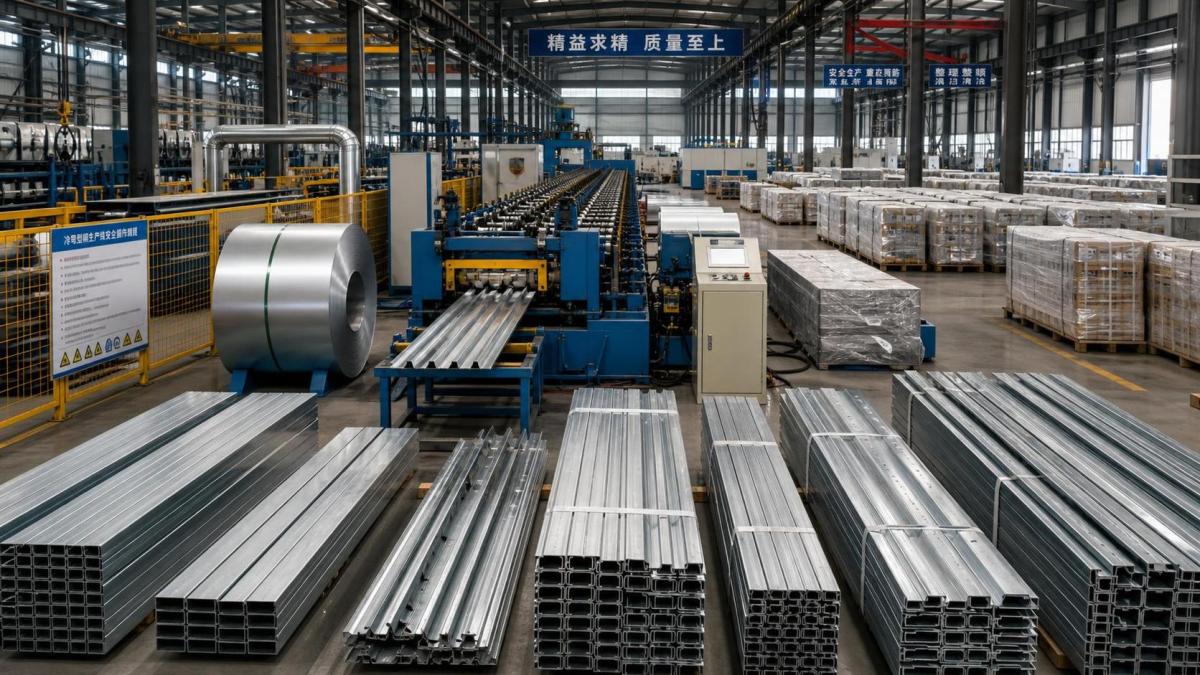
A useful way to test capacity is to ask for the production path, not merely a promised delivery week. Can the supplier identify the material source? Has the relevant line produced the specified section before? Is tooling available, or does it need to be made or changed? Does the stated lead time begin after purchase order, after approved submittals, or after the supplier receives all final dimensions? Those details separate a planning estimate from a deliverable commitment.
Lead Time Starts With Design Release, Not With the Purchase Order
Many schedules underestimate cold-formed steel lead time because they count only manufacturing days. In practice, the clock usually includes design coordination, structural review, shop drawings, submittal approval, coil procurement, fabrication, quality checks, loading, and shipment. A nominal fabrication lead time can be accurate and still fail to protect the project schedule if the preceding approvals are unresolved.
This is particularly relevant where cold-formed steel framing interfaces with concrete embeds, curtain wall systems, mechanical penetrations, fire-rated assemblies, roofing systems, or proprietary cladding. Small changes in opening locations, loads, connection geometry, or corrosion exposure can require revised member schedules. The downstream impact is often greater than the engineering change itself because it interrupts material release.
For early commercial planning, separate the package into three states:
- Budget-ready: quantities and typical sections are sufficient for an indicative price, but not for firm production planning.
- Procurement-ready: the specification, member schedule, coating requirement, and commercial terms are sufficiently stable to reserve material and capacity.
- Fabrication-ready: approved shop drawings, connection details, dimensions, and site-delivery sequence allow production to begin.
These labels are more useful than a single “lead time” figure. They force the team to identify what remains outside the supplier’s control. A supplier cannot reliably commit to a final delivery date when architectural or structural approvals are still moving.
Coatings, Grades, and Compliance Can Change the Market Available to You
Cold-formed steel specifications are frequently copied from previous projects without confirming whether they match the current environment, local code requirements, or available supply base. That can create unnecessary cost and delay, but reducing the specification without engineering justification creates an equally serious risk.
Galvanized coatings, corrosion protection systems, steel grade, thickness tolerances, fire-performance requirements, and connection details all influence sourcing options. The right solution depends on exposure conditions, expected service life, detailing, drainage, contact with dissimilar materials, and the applicable building code. A coastal or industrially aggressive environment may justify a more robust corrosion strategy than an enclosed, climate-controlled interior. But the required protection should be established through the project’s design and code process, not selected because it appears on a competitor’s quotation.
Documentation also deserves attention. A compliant package may require mill test certificates, coating records, third-party certification, traceability, structural calculations, or factory quality records. The exact requirements vary by jurisdiction and contract. Buyers should state these requirements in the inquiry rather than assuming they are included. Retrofitting documentation requests after fabrication can create administrative delay and, in some cases, expose a gap that cannot be corrected by paperwork alone.
Global projects create another layer of complexity. CE marking, UL-related system requirements, ISO-certified quality processes, local approvals, and project-specific standards are not interchangeable proof of compliance. They may each be relevant, but only where the contract, authority having jurisdiction, and assembly design require them. The correct approach is to map the required evidence to each product category before bid comparison.
What a Credible Commercial Comparison Looks Like
A line-item rate is not enough for a reliable comparison. Commercial teams should normalize offers before selecting a supplier. This does not mean turning every bid into an elaborate spreadsheet exercise. It means ensuring that all bidders are pricing the same technical and logistical reality.
The most revealing questions are often plain ones:
- What steel grade, thickness basis, coating designation, and tolerances are included?
- Are engineering, shop drawings, calculations, testing, and certifications included or excluded?
- Which profiles are standard production items, and which require special tooling or dedicated runs?
- What date triggers the price lock and what circumstances allow escalation?
- Is delivery based on one shipment, phased site releases, or call-off orders?
- Who carries the cost and risk of changes after approved drawings are issued?
Phased delivery deserves special scrutiny. It can reduce site congestion and damage risk, but it may increase handling, freight, and coordination effort. It also requires the fabricator to hold material or preserve production capacity for later releases. For a tight build sequence, the best commercial choice may be a supplier that can package and deliver by installation zone, even if its initial unit price is not the lowest.
Another overlooked point is yield. Cold-formed sections are produced from coil width and thickness combinations that may not align perfectly with the required profile. The supplier’s material efficiency, nesting approach, and scrap assumptions can affect price. This is a legitimate part of manufacturing economics, not necessarily evidence of an inflated quote. It becomes a concern only when the bid lacks transparency or when supposedly equivalent proposals use different section properties.
Where Buyers Misread the Market
The first error is assuming that a lower steel market automatically means it is wise to delay buying. Delaying may work when drawings are stable, supply is broad, and the project has schedule float. It becomes dangerous when the package depends on constrained fabrication capacity or when the next milestone requires released shop drawings. A falling material market can be outweighed by a missed installation window.
The second is treating alternates as interchangeable. Switching from one section family, coating, or supplier system to another can affect structural calculations, connection details, fire assemblies, fastener selection, and warranty responsibilities. An alternate should be evaluated as a technical change with commercial consequences, not simply as a discount.
The third is using an average lead time as a contractual delivery promise. Average lead times are useful for early feasibility studies. A live project needs a supplier-specific schedule tied to current capacity, approved scope, and a defined delivery point.
There is a fourth mistake that appears in international sourcing: focusing on ex-works price while underestimating documentation, export packing, port handling, customs procedures, inland delivery, and replacement response. Imported supply can be appropriate for well-defined, repeatable packages with enough schedule allowance. It is less suitable when the project expects frequent field changes, rapid replenishment, or close coordination with multiple trades.
A Better Market-Monitoring Routine
For active projects, a short recurring review is more valuable than occasional market commentary. Track quotation validity, coil exposure, supplier capacity statements, approved-drawing status, long-lead profiles, coating availability, and the next construction milestone. The purpose is not to predict every market move. It is to identify which uncertainty can still affect the committed date or budget.
Independent industrial intelligence can help frame these conversations, particularly on projects that span several supply regions. Global Industrial Core (GIC) focuses on the practical link between technical compliance, material sourcing, and infrastructure reliability. That perspective is useful when a cold-formed steel package must meet defined standards and fit a wider procurement strategy, rather than simply achieve the lowest initial price.
The cold formed steel market rewards early clarity more than aggressive guesswork. Builders and commercial teams that define the technical basis, verify actual fabrication capacity, and distinguish budget estimates from production-ready commitments are better positioned to protect both cost and schedule. The strongest procurement decision is usually the one that makes delivery certainty visible before the site depends on it.
Frequently Asked Questions
Are cold-formed steel prices tied directly to steel coil prices?
Coil is a major cost input, but it is not the entire price. Fabrication, coating, engineering, tooling, logistics, capacity, and commercial terms can materially change the final package cost.
When should a project reserve cold-formed steel capacity?
Reserve capacity once the scope is stable enough to define key profiles, specifications, expected quantities, and required delivery sequence. Do not wait for every minor detail if the supplier can safely reserve a conditional production slot.
Is a longer lead time always a sign of supply trouble?
No. It may reflect a realistic approval process, specialized fabrication, or planned production scheduling. The concern is an unexplained lead time or a promise that is not linked to drawings, material availability, and capacity.
Can imported cold-formed steel reduce project cost?
It can, especially for standardized packages with adequate schedule allowance. Compare the delivered and compliant cost, including documents, freight, duties where applicable, handling, inspection, and the ability to respond to site changes.
Technical Specifications
- Air Handling Unit Supplier Checklist: Performance Data, Lead Times, and SupportAuthor :Environmental Engineering Director
- Buying Fiberglass Water Tanks Wholesale: Compare Quotes and Delivery CostsAuthor :Environmental Engineering Director
- Choosing an XLPE Power Cable Supplier: Test Reports, Traceability, and Lead TimesAuthor :Grid Infrastructure Analyst
Expert Insights

Chief Security Architect
Dr. Thorne specializes in the intersection of structural engineering and digital resilience. He has advised three G7 governments on industrial infrastructure security.
Related Analysis
- Oct 19, 2026Air Handling Unit Supplier Checklist: Performance Data, Lead Times, and SupportAuthor :Environmental Engineering Director
- Oct 18, 2026Buying Fiberglass Water Tanks Wholesale: Compare Quotes and Delivery CostsAuthor :Environmental Engineering Director
- Oct 17, 2026Choosing an XLPE Power Cable Supplier: Test Reports, Traceability, and Lead TimesAuthor :Grid Infrastructure Analyst
Core Sector // 01
Security & Safety
- Cold-Formed Steel Market: Price, Capacity, and Lead-Time Signals for BuildersAuthor :

- Heat-Resisting Steel Market Trends: Availability Risks for High-Temperature FabricatorsAuthor :

- Sintered Steel Market: Demand Drivers and Supply Risks for Component SourcingAuthor :

- Structural Steel Market Outlook: What Project Buyers Should Track in 2026Author :

- EU Nickel Supply Chain Compliance: Due Diligence Steps for Industrial BuyersAuthor :

- Comparing Stock vs Custom Galvanized Square Tube for Stable Project DeliveryAuthor :

- How Rebar Traceability Is Shaping Procurement and QA ExpectationsAuthor :

- Galvalume Coil Applications: How Buyers Match Coated Steel to Real ProjectsAuthor :