EU Nickel Supply Chain Compliance: Due Diligence Steps for Industrial Buyers
Author
Date Published
Reading Time
EU Nickel Supply Chain Compliance: Due Diligence Steps for Industrial Buyers
For industrial buyers, EU nickel supply chain compliance is no longer a procurement checkbox. It is a practical control against interrupted production, rejected customer audits, customs questions, contractual disputes, and reputational damage that can outlast a temporary price advantage.
Nickel appears in far more procurement categories than many sourcing teams initially map: stainless steel, corrosion-resistant alloys, electrical components, chemical-process equipment, high-temperature fasteners, coatings, and battery-related materials. That makes compliance difficult. A buyer may purchase finished pipe, fabricated vessels, alloy bar, cathode material, or engineered assemblies without directly buying nickel units. Yet the upstream origin and processing route can still become relevant when an EPC customer, OEM, lender, sustainability team, or regulator asks for evidence.
The sensible objective is not to promise perfect visibility across every mine, trader, processor, and sub-tier fabricator. In most industrial supply chains, that promise is neither realistic nor commercially useful. The objective is to build a proportionate, documented process that identifies where nickel enters the bill of materials, ranks the meaningful risks, obtains credible evidence, and defines what happens when evidence is weak.
Start with the material route, not the supplier’s sustainability brochure
The first costly mistake is treating “nickel” as one uniform procurement category. Nickel briquettes, nickel cathodes, ferronickel, nickel pig iron, nickel sulphate, stainless steel scrap, and finished nickel-containing alloy products do not carry the same traceability profile or commercial risk. A stainless steel fabricator may know the melt source and heat number but not the original mine. A battery-material supplier may have a more detailed chain-of-custody model, while a distributor selling cut alloy plate may only hold mill certificates and import documentation.
Before issuing questionnaires, procurement should create a material map. Identify the nickel-bearing item, its grade or specification, annual spend, criticality to production, country of manufacture, known mill or refinery, and whether the product is virgin, recycled, or blended material. The map should also distinguish between direct nickel procurement and embedded nickel in fabricated equipment. This basic exercise often reveals that a small number of high-value alloy grades create most of the exposure.
For example, nickel alloy piping for a corrosive chemical plant may be low-volume but operationally critical. A late or non-conforming shipment can delay a shutdown turnaround. In that situation, a buyer should put far more effort into mill identity, test certificates, substitution controls, and supply continuity than into broad, generic supplier statements. Conversely, commodity stainless fasteners may justify a lighter review unless the project contract or customer requirements say otherwise.
Know which EU obligations actually apply
Nickel is not currently one of the minerals covered by the EU Conflict Minerals Regulation, which is focused on tin, tantalum, tungsten, and gold. Buyers should not represent that regulation as a direct nickel-compliance rule. Doing so is an avoidable credibility problem during a customer audit.
That does not mean nickel falls outside the EU compliance landscape. Depending on the product, corporate structure, and customer sector, relevant expectations may arise from several directions. The EU Battery Regulation includes due-diligence provisions for certain battery value-chain actors and raw materials, including nickel. Broader corporate due-diligence and sustainability-reporting requirements can also influence what large companies request from suppliers. In parallel, EU chemicals requirements, product-safety obligations, sanctions screening, waste and scrap rules, and contractual ESG clauses may affect the transaction.
The important procurement question is therefore not, “Is there one nickel regulation?” It is, “Which obligations attach to our company, our product, and this customer contract?” Legal applicability should be checked by qualified counsel or internal compliance specialists, particularly where a buyer imports material into the EU, supplies battery-related products, or sells into regulated infrastructure projects. Procurement can own the evidence-gathering process, but it should not make legal conclusions based on a supplier’s marketing language.
Build a supplier file that can survive a real challenge
A supplier code of conduct is useful, but it is not proof of nickel origin, responsible sourcing, or material integrity. The stronger approach is a supplier file that connects commercial records, technical records, and due-diligence evidence. It should be practical enough for buyers to maintain and structured enough for compliance, quality, engineering, and customer-audit teams to use.
For each material stream, request evidence that fits the supplier’s position in the chain. A producer or mill may be able to provide a mill test certificate, heat number, production location, quality management documentation, and information on its feedstock controls. A distributor should be able to identify the original producer, preserve lot segregation, and show how its documentation remains linked to the delivered material. A fabricator should be able to demonstrate traceability from incoming material to finished components, especially where alloy substitution would affect corrosion resistance, weldability, pressure performance, or service life.
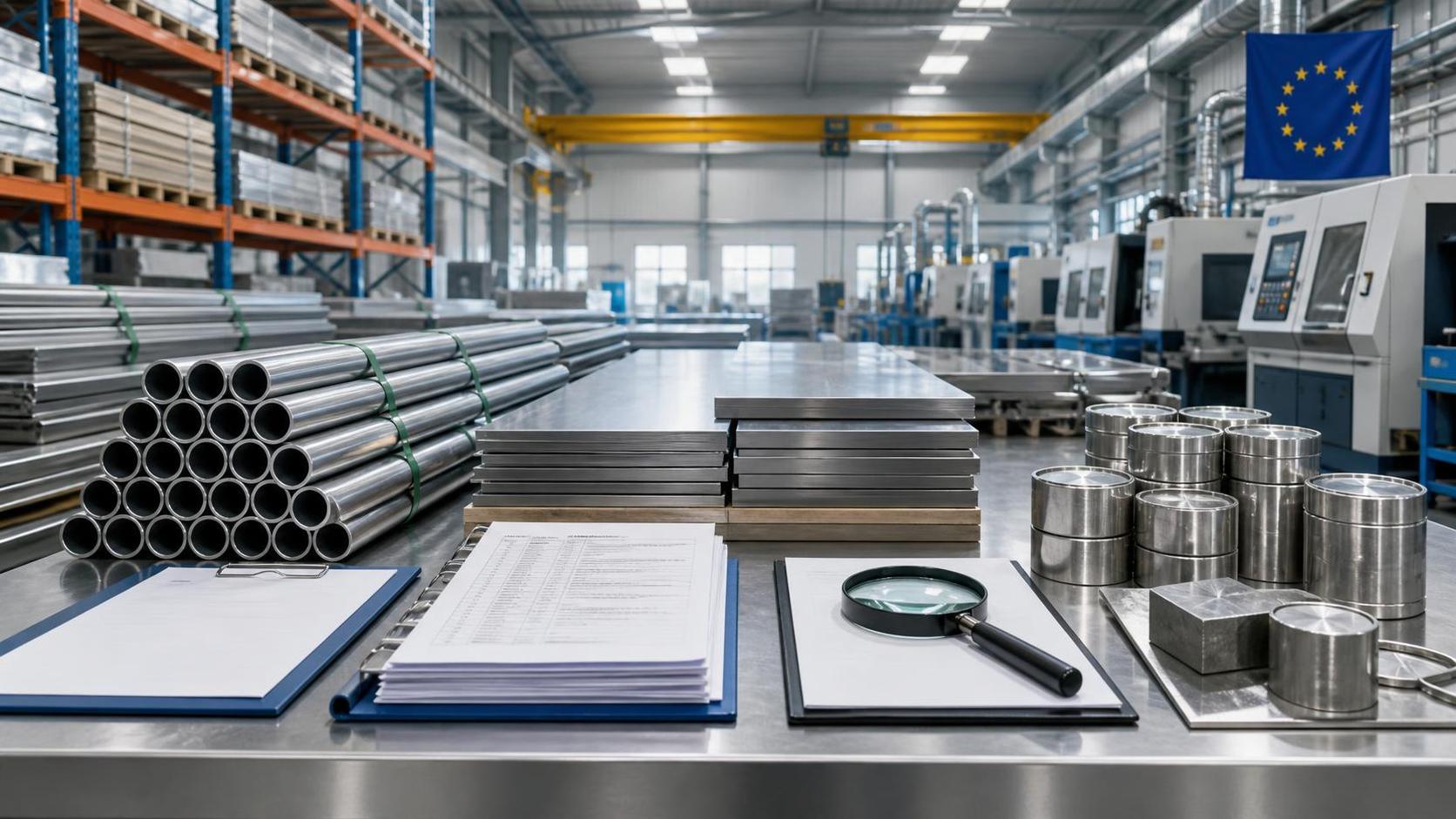
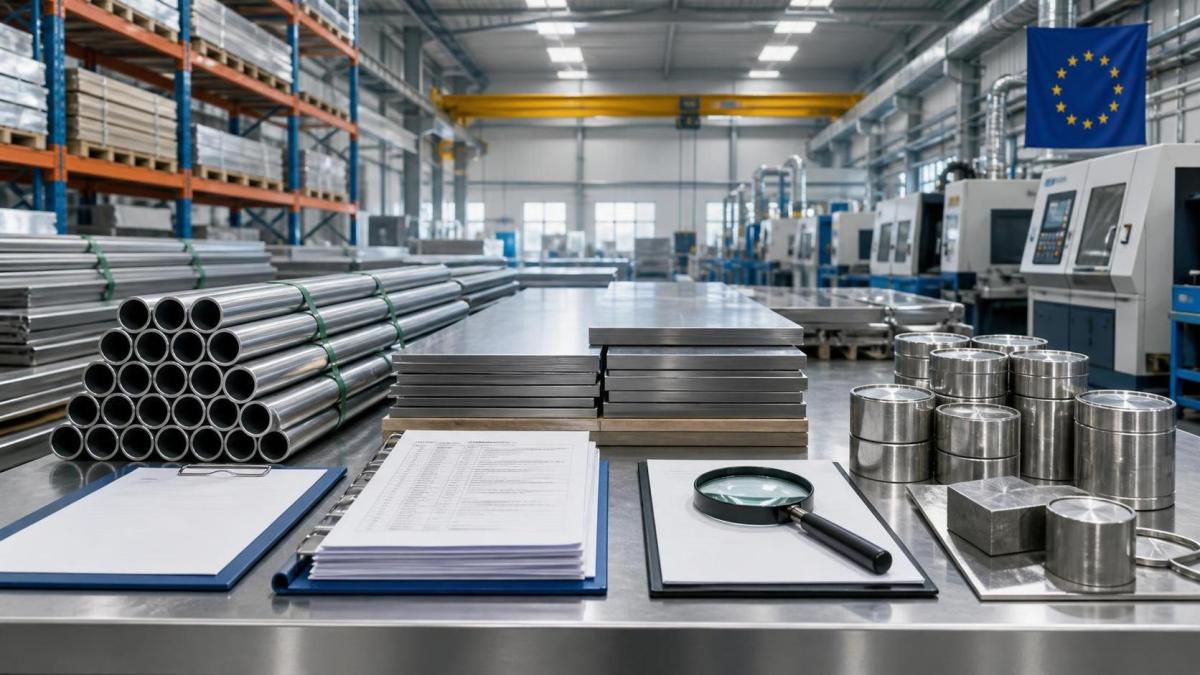
Useful documents often include purchase orders, invoices, packing lists, certificates of analysis, mill test certificates, heat or batch records, transport records, declarations on recycled content where applicable, and signed responses to a risk-based due-diligence questionnaire. None of these documents is flawless on its own. Their value lies in consistency. If the heat number on a certificate cannot be linked to the physical material, or the producer named on an invoice differs from the mill stated in a declaration, the file should not be treated as complete.
The evidence should follow the physical flow
This is where many procurement programs become too abstract. A polished corporate report may describe a supplier’s global commitments, while the actual shipment arrives through a different legal entity, warehouse, or subcontracted fabricator. Ask a simple operational question: can the supplier show how the nickel-containing material delivered to our site is connected to its stated source or controlled supply route?
For critical alloys, include traceability requirements directly in the purchase order and technical specification. State whether heat-level traceability is required, whether mixed heats are allowed, which certificates must accompany delivery, and who must approve any material substitution. Leaving these points to a late-stage quality inspection usually creates more cost than resolving them during supplier qualification.
Assess ESG and human-rights exposure without turning the process into paperwork theatre
Nickel supply chains can involve mining, smelting, refining, trading, recycling, alloy production, and fabrication across several jurisdictions. Risks vary by site and route. They may include labour practices, land and community impacts, worker health and safety, tailings management, emissions, water use, bribery exposure, and weak grievance mechanisms. A buyer should resist both extremes: assuming all material from a country is unacceptable, or accepting a one-page declaration as sufficient evidence of responsible practice.
A workable model uses risk tiers. Higher scrutiny is generally justified when the nickel is linked to a complex or opaque chain, a high-risk geography, a new supplier, a trader unable to name the producer, or a product category tied to a customer’s stringent sustainability commitments. Lower-risk, long-established sources may still need periodic review, but not the same level of escalation.
Public allegations should be treated carefully. They are a reason to investigate, not automatic proof of wrongdoing. Document the source, request a supplier response, assess whether the issue is connected to the actual material route, and record the decision. A clear audit trail matters, especially when the decision is to continue sourcing subject to remediation rather than immediately exit.
Calculate compliance cost as part of total landed cost
The cheapest nickel-containing product is not necessarily the lowest-cost purchase. Industrial buyers should add the cost of document review, incoming inspection, laboratory verification where justified, supplier development, expediting, inventory buffers, and possible requalification to the sourcing decision. These costs are especially material for engineered equipment, pressure applications, power infrastructure, and process plants, where a material issue can trigger rework or project delay.
There is also a subtle commercial trade-off. Requiring full upstream disclosure from every supplier may reduce competition and slow procurement, particularly for standard products sold through distribution channels. A better approach is to apply stricter requirements to high-criticality materials and to suppliers making specific origin, recycled-content, low-carbon, or responsible-sourcing claims. If a claim influences award selection or customer reporting, it needs evidence proportionate to its value.
Framework agreements can reduce recurring friction. Include document-retention periods, audit cooperation, notification obligations for source changes, rights to request corrective action, and consequences for false or materially incomplete declarations. Do not rely on boilerplate alone. The quality team must confirm that the contractual wording matches the actual documentation flow at receiving inspection and during fabrication.
Watch for the failure points that show up after award
Supplier approval is not a permanent status. Nickel markets move, mills change feedstock, distributors change inventory sources, and fabricators may use an alternate sub-supplier to protect delivery dates. The most common failure is not always a dramatic compliance breach; it is silent change. A replacement material may meet the nominal chemical grade but fail the traceability, customer-origin, or project-specific documentation requirement.
Require change notification for producer, country of melting, refinery where relevant, material grade, recycled-content methodology, and significant subcontracting changes. For critical items, make this a formal approval gate. Procurement should also establish a review cadence based on risk: high-risk sources may need review before each significant release, while stable, well-documented suppliers may be reviewed annually or when a trigger occurs.
It is worth separating quality certificates from broader supply-chain evidence. A certificate of analysis can confirm chemical composition for a specific lot; it does not independently establish human-rights performance or full mine-to-product traceability. Equally, a responsible-sourcing statement does not prove that the delivered alloy meets the project’s mechanical or corrosion-performance requirements. Both controls matter, but they answer different questions.
Make procurement the coordinator, not the sole owner of risk
Effective EU nickel supply chain compliance sits between procurement, engineering, quality, legal, sustainability, and operations. Procurement sees the supplier and commercial leverage. Engineering understands whether a material route is technically substitutable. Quality controls incoming evidence and non-conformances. Compliance and legal teams interpret obligations and contractual exposure. When these functions work separately, the business either buys unnecessary paperwork or discovers a material problem when installation has already started.
For industrial infrastructure, the strongest sourcing decision is usually the one that can be explained clearly months later: this was the material requirement, this was the identified supply route, these were the risks, this is the evidence obtained, and this is why the residual risk was accepted, mitigated, or rejected. That standard is more useful than a supplier scorecard full of untested claims.
Teams managing complex mechanical, metallurgy, power-grid, environmental, or safety-related procurement should preserve this evidence alongside technical submittals rather than in an isolated ESG folder. In practice, the best compliance file is the one a project engineer, auditor, and buyer can all understand without reconstructing the supply chain from scratch.
Technical Specifications
- Air Handling Unit Supplier Checklist: Performance Data, Lead Times, and SupportAuthor :Environmental Engineering Director
- Buying Fiberglass Water Tanks Wholesale: Compare Quotes and Delivery CostsAuthor :Environmental Engineering Director
- Choosing an XLPE Power Cable Supplier: Test Reports, Traceability, and Lead TimesAuthor :Grid Infrastructure Analyst
Expert Insights

Chief Security Architect
Dr. Thorne specializes in the intersection of structural engineering and digital resilience. He has advised three G7 governments on industrial infrastructure security.
Related Analysis
- Oct 19, 2026Air Handling Unit Supplier Checklist: Performance Data, Lead Times, and SupportAuthor :Environmental Engineering Director
- Oct 18, 2026Buying Fiberglass Water Tanks Wholesale: Compare Quotes and Delivery CostsAuthor :Environmental Engineering Director
- Oct 17, 2026Choosing an XLPE Power Cable Supplier: Test Reports, Traceability, and Lead TimesAuthor :Grid Infrastructure Analyst
Core Sector // 01
Security & Safety
- Cold-Formed Steel Market: Price, Capacity, and Lead-Time Signals for BuildersAuthor :

- Heat-Resisting Steel Market Trends: Availability Risks for High-Temperature FabricatorsAuthor :

- Sintered Steel Market: Demand Drivers and Supply Risks for Component SourcingAuthor :

- Structural Steel Market Outlook: What Project Buyers Should Track in 2026Author :

- EU Nickel Supply Chain Compliance: Due Diligence Steps for Industrial BuyersAuthor :

- Comparing Stock vs Custom Galvanized Square Tube for Stable Project DeliveryAuthor :

- How Rebar Traceability Is Shaping Procurement and QA ExpectationsAuthor :

- Galvalume Coil Applications: How Buyers Match Coated Steel to Real ProjectsAuthor :