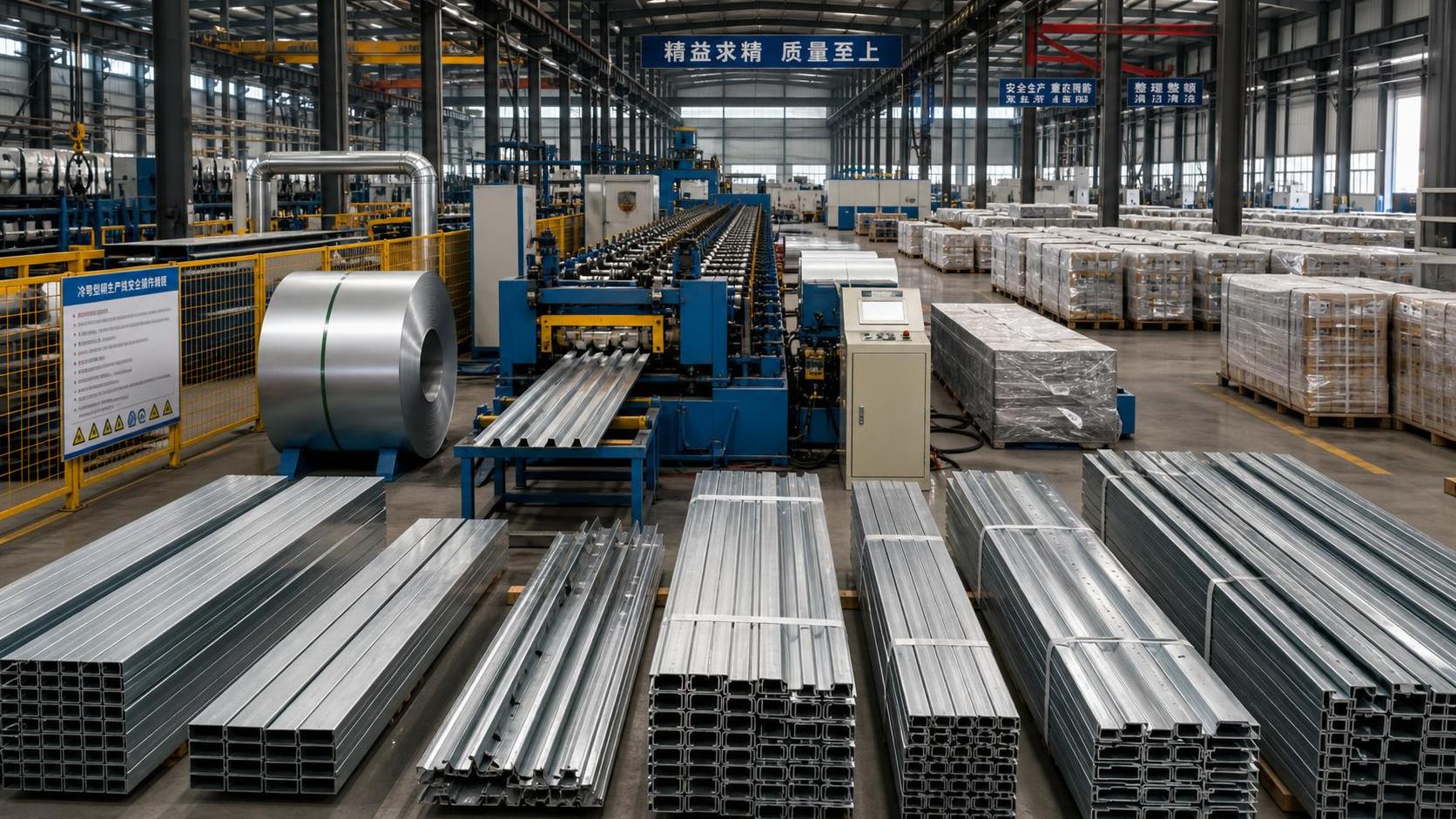
Comparing Stock vs Custom Galvanized Square Tube for Stable Project Delivery
Author
Date Published
Reading Time
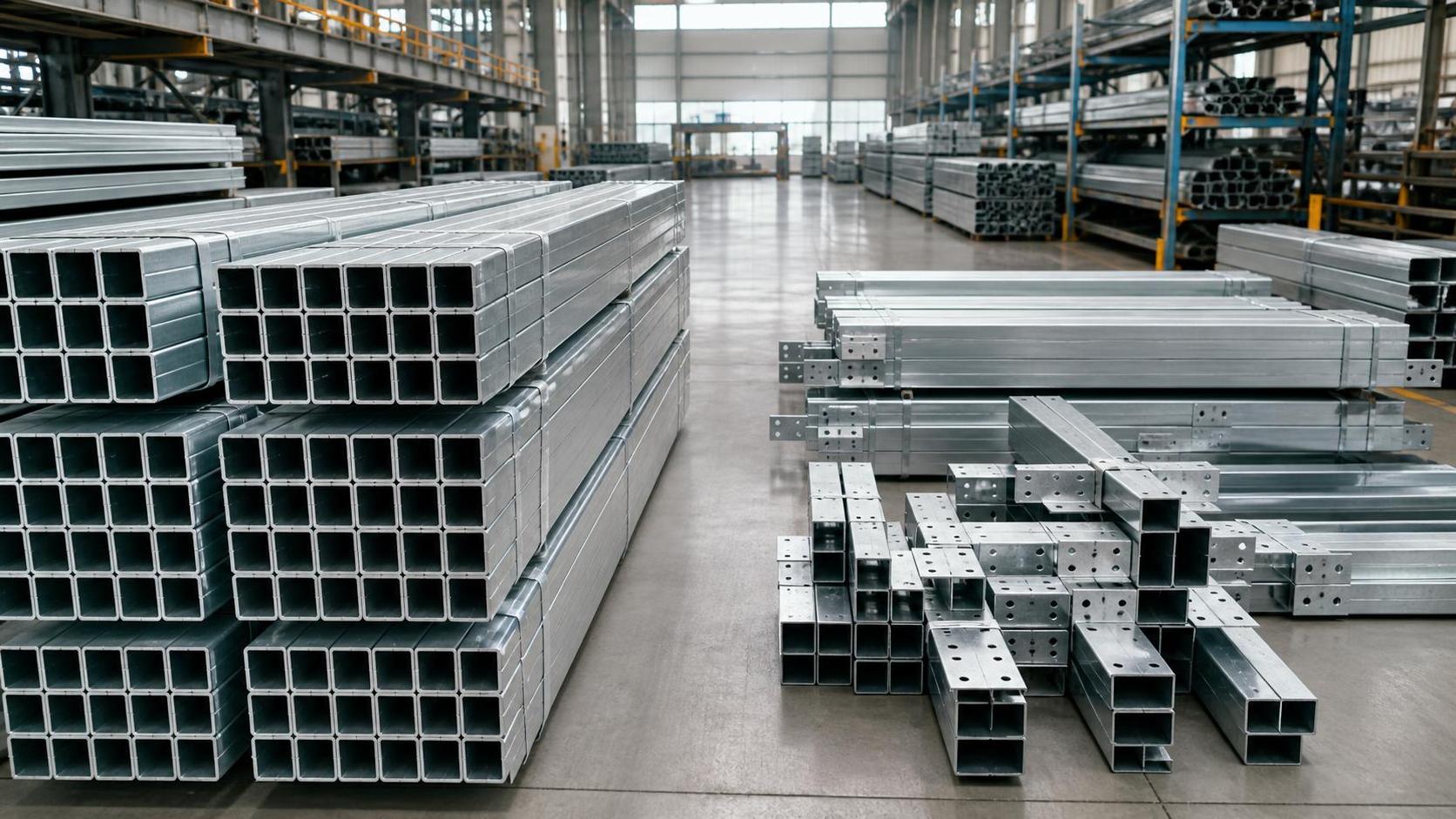
When stock tubing helps a project move faster—and when it creates hidden delays
For project managers and fabrication leads, the question is rarely whether square steel tube can do the job. The real issue is whether stock material will keep the schedule stable, or whether a custom order will reduce downstream disruption. That distinction matters more with galvanized products because coating type, dimensional consistency, and processing sequence all affect not just structural use, but welding, fit-up, rework, and site acceptance.
In many projects, stock galvanized square tube looks like the safer purchasing choice because it is easier to source quickly and compare across suppliers. Yet “available now” does not always mean “ready for the project.” If the tube size, wall thickness, coating condition, or length range do not match fabrication needs, the team may lose time through cutting waste, added touch-up work, unexpected lead time for replacement bundles, or disputes over appearance and tolerance.
Custom material, on the other hand, can align better with drawings and production flow, but only if the order is defined well enough to avoid ambiguity. A poorly specified custom order can stretch procurement, complicate approval, and create dependence on one production slot. Stable delivery is not simply a stock-versus-custom price comparison. It is a decision about where risk sits: in inventory availability, in fabrication variability, or in supplier execution.
Why this decision matters more for galvanized square tube than for plain carbon steel
With uncoated steel, buyers can often treat stock sizes as a straightforward commodity purchase and handle finishing later. Galvanized square tube introduces more variables. Teams need to think about corrosion protection, coating coverage after cutting or drilling, surface condition for visible applications, and whether the material will be welded, bolted, or used in modular assemblies.
That makes the specification path more sensitive. A fabricator buying Galvanized Square Tube for fencing, support frames, equipment bases, canopy structures, or outdoor utility assemblies may care about different things even when the nominal section size is similar. One job may tolerate standard mill lengths and field trimming. Another may depend on repeatable cut lengths to maintain throughput on a production line. A public-facing installation may prioritize consistent appearance, while a concealed industrial support may prioritize availability and mechanical suitability.
Galvanized material also creates planning questions around post-fabrication repair. If a project starts with stock tube and requires extensive cutting, coping, slotting, or welding, the original coating advantage can be reduced unless the fabrication route includes accepted repair procedures. That does not mean stock is the wrong choice. It means procurement has to look beyond the purchase order and ask what happens once the material enters the shop.
Where stock material usually works best
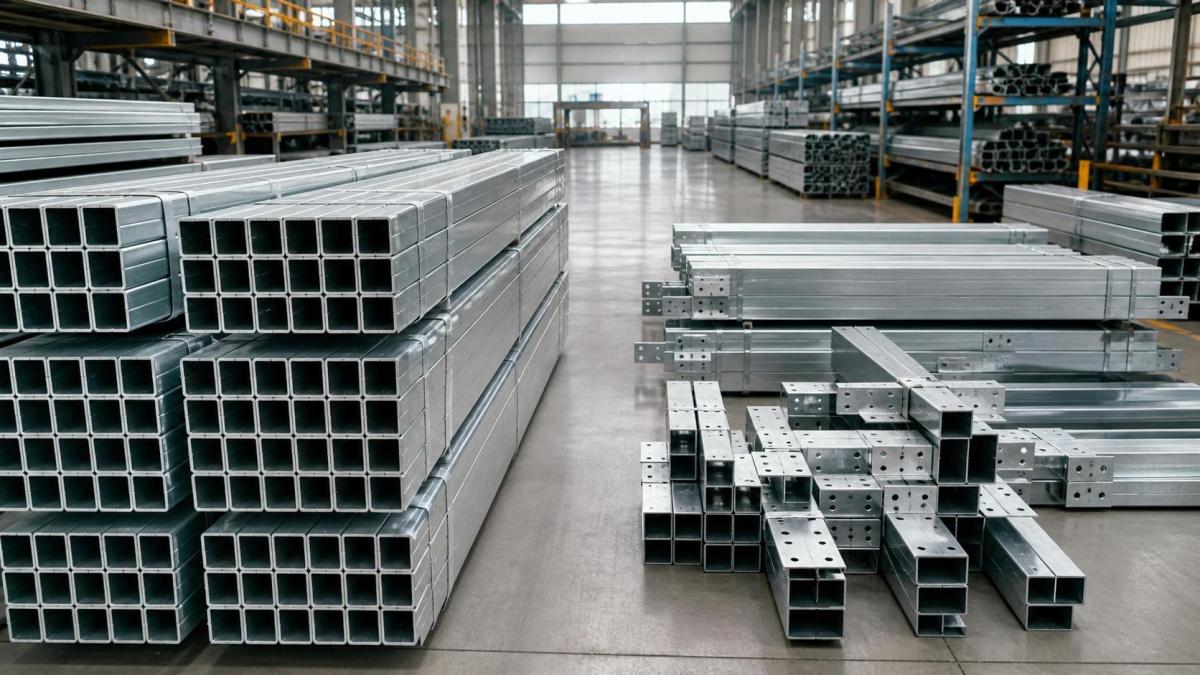
Stock galvanized square tube is often the practical option when design flexibility exists and the fabrication team can absorb some variation without disturbing the delivery plan. It is commonly suitable in projects with repeatable, standard sections; moderate quantity; and limited need for unusual lengths or secondary processing before assembly.
Typical advantages include:
- Shorter sourcing cycle when standard sizes are already in circulation
- Easier comparison of offers across multiple distributors or mills
- Lower commitment risk for smaller orders or uncertain schedules
- Simpler replacement purchasing if project quantities change midstream
For project managers, stock material can be especially useful during early-phase work, pilot fabrication, emergency replacement, or jobs where final dimensions are still moving. If engineering changes are likely, carrying a standard tube size may be less risky than waiting on a custom batch that could become obsolete before it arrives.
Stock supply also helps when multiple subcontractors need equivalent material from different regions. A section that exists in normal trade channels is easier to re-source if one shipment slips. That matters for schedule resilience. A project may survive a small price increase more easily than a two-week gap caused by a single-source special order.
Where stock choices start to hurt delivery stability
The main weakness of stock material appears when standard availability does not match production reality. Fabricators often discover the problem after release, not during quotation. Tube may be available, but only in mill lengths that increase scrap. Surface condition may vary across lots, affecting visible installations. Actual wall thickness and corner profile may work structurally but not fit fixtures, brackets, or automated handling setups as expected.
Several issues commonly push stock material from “convenient” to “disruptive”:
- Excessive cutting and remnant management. A standard length can be economical on paper while creating labor loss and inventory clutter in the shop.
- Mismatch with assembly tolerances. If fixtures are designed around a tighter dimensional expectation, small variation can slow fit-up and create hold points in quality checks.
- Coating damage during rework. More shop modification usually means more surface repair and more inspection attention afterward.
- Lot-to-lot inconsistency. Even when the nominal product is the same, mixed supply from different sources may complicate appearance control or downstream processing.
Projects with repetitive fabrication cycles feel these issues fastest. A manual crew may adjust around minor differences. An operation using jigs, saw stops, punch routines, or semi-automated assembly feels every deviation in cycle time. The cost does not always show up as material waste alone; it appears as slower line balance, more sorting, and more supervisor intervention.
What custom orders really buy you
Custom galvanized square tube is not only about requesting a non-standard section. In many procurement contexts, “custom” means the order is aligned to the job’s manufacturing logic: required lengths, quantity splits, coating expectations, packaging sequence, or tolerances that support the way the material will actually be processed.
That can reduce hidden friction in several ways. If material arrives in fabrication-ready lengths, the shop may cut less, stage more efficiently, and reduce handling damage. If bundle identification follows project segmentation, receiving and traceability become easier. If the material is matched to a recurring assembly, repeatability improves and planning becomes more reliable.
Custom supply tends to make sense when:
- The project uses high volume of the same geometry
- Fabrication time is more expensive than incremental material cost
- Site installation depends on tight sequencing
- Standard stock creates unacceptable waste or touch-up work
- Visible finish consistency matters across the whole project lot
In these conditions, custom ordering can support stable delivery not because the product is “better” in the abstract, but because it removes avoidable variation between drawing, shop floor, and installation sequence.
The trade-offs that need honest review before choosing custom
Custom procurement shifts risk rather than eliminating it. The benefit comes from fit. The exposure comes from dependence on specification clarity and manufacturing lead time. Once a project commits to custom lengths or a special production arrangement, late engineering changes become more expensive. Quantity forecasting must be tighter, and approval cycles need to move on time.
Project teams should ask a few direct questions before locking in custom supply:
- Is the drawing package mature enough to support exact lengths and quantities?
- Will the fabrication shop actually capture the labor savings, or will the material still need substantial secondary work?
- Can the supplier maintain schedule reliability if raw material input or coating capacity tightens?
- What happens if one portion of the order needs to be expedited or revised?
Custom supply also reduces the fallback options available during disruption. If a standard stock size is delayed, another seller may have an equivalent section. If the order depends on a specific custom combination, replacement sourcing may be limited. That is why custom is often strongest in well-planned production environments and weaker in projects still exposed to frequent drawing revision.
How project managers should compare total delivery risk
A useful way to compare stock and custom is to stop treating price, lead time, and quality as separate topics. They interact. A lower upfront material price can still lead to an unstable project if the shop loses days in processing or if site installation crews wait for corrected parts. Likewise, a longer custom lead time may still reduce overall schedule risk if it prevents fabrication bottlenecks at the critical path stage.
The table below frames the comparison in delivery terms rather than only purchasing terms.
Details in the buying guide that often decide whether supply stays stable
For fabricators that need dependable project flow, the buying guide should not stop at tube size and quantity. Stable supply depends on whether the order documents reflect the way material will be received, processed, and inspected. Many delays start with omissions that seem minor at the RFQ stage.
Procurement and project teams usually benefit from checking:
- Length requirements: fixed lengths, random lengths, and allowable variance affect cut planning and scrap rates.
- Coating condition expectations: surface appearance, handling marks, and repair responsibility should be understood before shipment.
- End use environment: outdoor exposure, moisture retention points, and contact with other metals may influence whether a standard galvanized option is suitable.
- Processing route: whether the tube will be welded, drilled, laser cut, punched, or bent can change the true value of stock versus custom.
- Traceability and documentation: receiving becomes smoother when bundles and paperwork can be matched to project sections or fabrication batches.
- Packing and release sequence: delivery timing matters as much as total quantity when site access or shop space is constrained.
One of the easiest mistakes is buying for nominal specification rather than for flow of work. The material may be technically correct and still interfere with delivery because it arrives in the wrong sequence, in mixed lengths, or with insufficient identification for rapid staging.
Common selection mistakes in multi-phase projects
Projects with phased releases often expose the limits of a simple stock-versus-custom rule. Teams may buy stock early to save time, then discover that later phases require more consistency than the first phase did. Or they may over-customize the first release before the design has stabilized, locking themselves into avoidable change costs.
A more durable approach is to split the decision by risk profile. Early uncertain phases may justify stock material for flexibility. Repetitive later phases, where dimensions and quantities are validated, may justify a more customized order. This hybrid strategy can preserve optionality while improving throughput once the job moves into a predictable pattern.
Another mistake is evaluating only the procurement lead time and not the receiving burden. If custom material arrives well packed, clearly labeled, and ready for specific fabrication cells, it may create less operational delay than stock material that technically arrives earlier but requires sorting and manual verification before release to production.
The better question: which option reduces variation at the critical path?
Stable project delivery depends less on whether material is “standard” or “special” and more on whether it reduces variation where the schedule is most vulnerable. For some teams, that critical point is sourcing speed. For others, it is fabrication repeatability, coating repair workload, or installation sequencing.
Stock galvanized square tube is often the right answer when the project needs sourcing flexibility, alternate supply paths, and tolerance for some shop-side adjustment. Custom supply becomes stronger when the work is repetitive enough that every extra cut, every sorting decision, and every surface repair turns into a measurable schedule risk.
The strongest buying decision usually comes from mapping the tube specification to the actual production path: how it will be unloaded, identified, cut, assembled, touched up, inspected, and installed. Once that map is clear, the stock-versus-custom choice stops being a generic purchasing debate and becomes a delivery control decision.
Technical Specifications
- Air Handling Unit Supplier Checklist: Performance Data, Lead Times, and SupportAuthor :Environmental Engineering Director
- Buying Fiberglass Water Tanks Wholesale: Compare Quotes and Delivery CostsAuthor :Environmental Engineering Director
- Choosing an XLPE Power Cable Supplier: Test Reports, Traceability, and Lead TimesAuthor :Grid Infrastructure Analyst
Expert Insights

Chief Security Architect
Dr. Thorne specializes in the intersection of structural engineering and digital resilience. He has advised three G7 governments on industrial infrastructure security.
Related Analysis
- Oct 19, 2026Air Handling Unit Supplier Checklist: Performance Data, Lead Times, and SupportAuthor :Environmental Engineering Director
- Oct 18, 2026Buying Fiberglass Water Tanks Wholesale: Compare Quotes and Delivery CostsAuthor :Environmental Engineering Director
- Oct 17, 2026Choosing an XLPE Power Cable Supplier: Test Reports, Traceability, and Lead TimesAuthor :Grid Infrastructure Analyst
Core Sector // 01
Security & Safety
- Cold-Formed Steel Market: Price, Capacity, and Lead-Time Signals for BuildersAuthor :

- Heat-Resisting Steel Market Trends: Availability Risks for High-Temperature FabricatorsAuthor :

- Sintered Steel Market: Demand Drivers and Supply Risks for Component SourcingAuthor :

- Structural Steel Market Outlook: What Project Buyers Should Track in 2026Author :

- EU Nickel Supply Chain Compliance: Due Diligence Steps for Industrial BuyersAuthor :

- Comparing Stock vs Custom Galvanized Square Tube for Stable Project DeliveryAuthor :

- How Rebar Traceability Is Shaping Procurement and QA ExpectationsAuthor :

- Galvalume Coil Applications: How Buyers Match Coated Steel to Real ProjectsAuthor :