Vietnam Enforces QCVN 16:2026/BCT for Respiratory PPE from July 2026
Author
Date Published
Reading Time

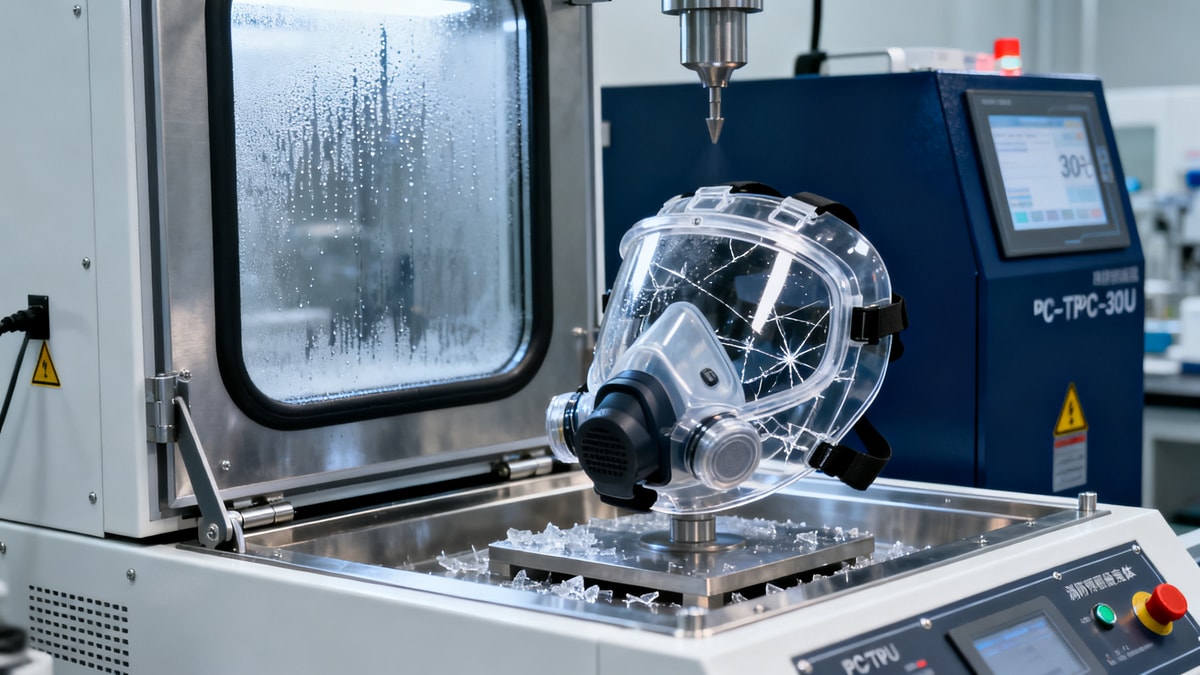
On May 2, 2026, Vietnam’s Ministry of Industry and Trade (MOIT) issued mandatory standard QCVN 16:2026/BCT, requiring all imported industrial respiratory protective equipment—including dust masks, half-face respirators, and powered air-purifying respirators (PAPRs)—to undergo full-unit particle filtration efficiency (PFE) testing at VILAS-accredited laboratories. Effective July 1, 2026, this regulation directly affects PPE exporters, especially those based in China, and signals a tightening of conformity assessment for occupational safety products entering the Vietnamese market.
Event Overview
Vietnam’s Ministry of Industry and Trade published QCVN 16:2026/BCT on May 2, 2026. The standard mandates that, starting July 1, 2026, all imported respiratory PPE must be tested for particulate filtration efficiency (PFE) at laboratories accredited by the Vietnam Laboratory Accreditation Scheme (VILAS). Testing must be performed on complete assembled units—not filter elements alone—and must verify compliance with FFP2 or FFP3 performance levels per EN 149:2001+A1:2009 or equivalent.
Which Subsectors Are Affected
Direct Exporters (Especially Chinese PPE Manufacturers)
These enterprises supply finished respiratory PPE to Vietnamese importers or distributors. Under QCVN 16:2026/BCT, they must now arrange new VILAS-recognized full-unit PFE testing—replacing prior component-level or non-VILAS-certified reports. This requirement resets certification timelines and increases pre-shipment lead time by an average of 12–15 working days per model.
Contract Manufacturers & OEM Suppliers
Suppliers producing under private labels or white-label agreements for Vietnamese or regional brands face revised documentation obligations. Even if final assembly occurs overseas, the exporting entity remains responsible for providing VILAS-validated test reports for the full device. This may necessitate coordination with end-product assemblers to ensure correct unit configuration is submitted for testing.
Distributors & Import Agents in Vietnam
Local importers are legally responsible for ensuring conformity before customs clearance. With no grandfathering clause confirmed, previously cleared models without VILAS full-unit PFE reports may require re-submission for verification. Inventory planning, labeling updates, and customs declaration workflows must now accommodate the new evidence requirement.
What Relevant Enterprises or Practitioners Should Focus On — And How to Respond
Monitor official MOIT and VILAS guidance for implementation clarifications
As of May 2026, no official list of approved VILAS labs conducting PFE testing on full respiratory devices has been published. Enterprises should track updates from MOIT’s Department of Standards, Metrology and Quality (DSMQ) and VILAS to identify authorized facilities and confirm accepted test protocols.
Prioritize high-volume and high-risk product lines for early VILAS testing
Given the 12–15 working day extension per test cycle, exporters should identify best-selling or contract-critical models (e.g., N95-equivalent disposable masks, reusable half-masks with replaceable filters) and initiate testing well ahead of the July 1, 2026 deadline to avoid shipment delays.
Distinguish between regulatory intent and operational readiness
QCVN 16:2026/BCT sets a legal requirement—but actual enforcement capacity (e.g., customs inspection frequency, document sampling rate) remains unconfirmed. Enterprises should treat the standard as binding for compliance purposes, while recognizing that initial rollout may involve phased verification rather than immediate full-scope checks.
Update technical documentation and internal quality control checkpoints
Manufacturers should revise internal QC procedures to include full-unit PFE validation prior to batch release—even for export-only lines. Packaging, user manuals, and declarations of conformity must reflect VILAS test report numbers and validity periods where applicable.
Editorial Perspective / Industry Observation
Observably, QCVN 16:2026/BCT reflects Vietnam’s broader shift toward aligning domestic technical regulations with international occupational health benchmarks—particularly those referenced in ASEAN harmonization frameworks. Analysis shows this is less a sudden policy pivot and more a formalization of existing de facto expectations among Vietnamese regulators and notified bodies. From an industry perspective, it functions primarily as a market access signal: not a barrier per se, but a procedural checkpoint requiring upfront investment in certified testing infrastructure. Current implementation timing suggests it is already a binding requirement—not merely a draft proposal—yet its real-world impact will depend heavily on enforcement consistency and lab capacity scaling over the next two months.
Conclusion
This regulation marks a concrete step in Vietnam’s effort to strengthen post-market surveillance of personal protective equipment. It does not introduce new performance thresholds beyond established FFP2/FFP3 levels, but significantly raises the evidentiary bar for conformity demonstration. For affected exporters and importers, it is best understood not as a temporary compliance hurdle, but as a structural update to Vietnam’s PPE regulatory baseline—one that prioritizes traceability, unit-level verification, and third-party accountability.
Information Source
Primary source: Official Gazette of the Ministry of Industry and Trade of Vietnam (QCVN 16:2026/BCT, issued May 2, 2026).
Note: Lab accreditation status, test protocol equivalency (e.g., EN 149 vs. ISO 16890), and transitional provisions remain subject to official clarification and are under ongoing observation.
Technical Specifications
- India BIS Draft IS 17832:2026 Sets Noise & Dust Limits for Waste CrushersAuthor :Environmental Engineering Director
- Korea MFDS Mandates Korean UI & KOSHA OEL Database for Industrial Water AnalyzersAuthor :Precision Metrology Expert
- Indonesia BPOM Mandates PM0.1 Efficiency & CADR Decay Labeling for Industrial Air PurifiersAuthor :Environmental Engineering Director
Expert Insights

Chief Security Architect
Dr. Thorne specializes in the intersection of structural engineering and digital resilience. He has advised three G7 governments on industrial infrastructure security.
Related Analysis
- May 03, 2026India BIS Draft IS 17832:2026 Sets Noise & Dust Limits for Waste CrushersAuthor :Environmental Engineering Director
- May 03, 2026Korea MFDS Mandates Korean UI & KOSHA OEL Database for Industrial Water AnalyzersAuthor :Precision Metrology Expert
- May 03, 2026Indonesia BPOM Mandates PM0.1 Efficiency & CADR Decay Labeling for Industrial Air PurifiersAuthor :Environmental Engineering Director
Core Sector // 01
Security & Safety
- Vietnam Enforces QCVN 16:2026/BCT for Respiratory PPE from July 2026Author :Safety Compliance Lead

- Safety Barricades Wholesale: Which Specs Matter Most?Author :Safety Compliance Lead

- JIS T 8201-2026 Enforced: Fire Respirator Masks Require -30°C Impact ResistanceAuthor :Safety Compliance Lead

- 2026 Foshan Tanzhou Auto Show: Smart Cockpit Optics, EV PPE Systems Highlight China’s Supply Chain ShiftAuthor :Safety Compliance Lead

- Custom high visibility clothing without long lead time problemsAuthor :Safety Compliance Lead

- Reflective safety vests bulk: color fading can become a safety issueAuthor :Safety Compliance Lead

- What separates a reliable steel toe work boots manufacturerAuthor :Safety Compliance Lead

- Flame retardant coveralls: why fabric weight affects comfort and complianceAuthor :Safety Compliance Lead