Indonesia BPOM Mandates PM0.1 Efficiency & CADR Decay Labeling for Industrial Air Purifiers
Author
Date Published
Reading Time
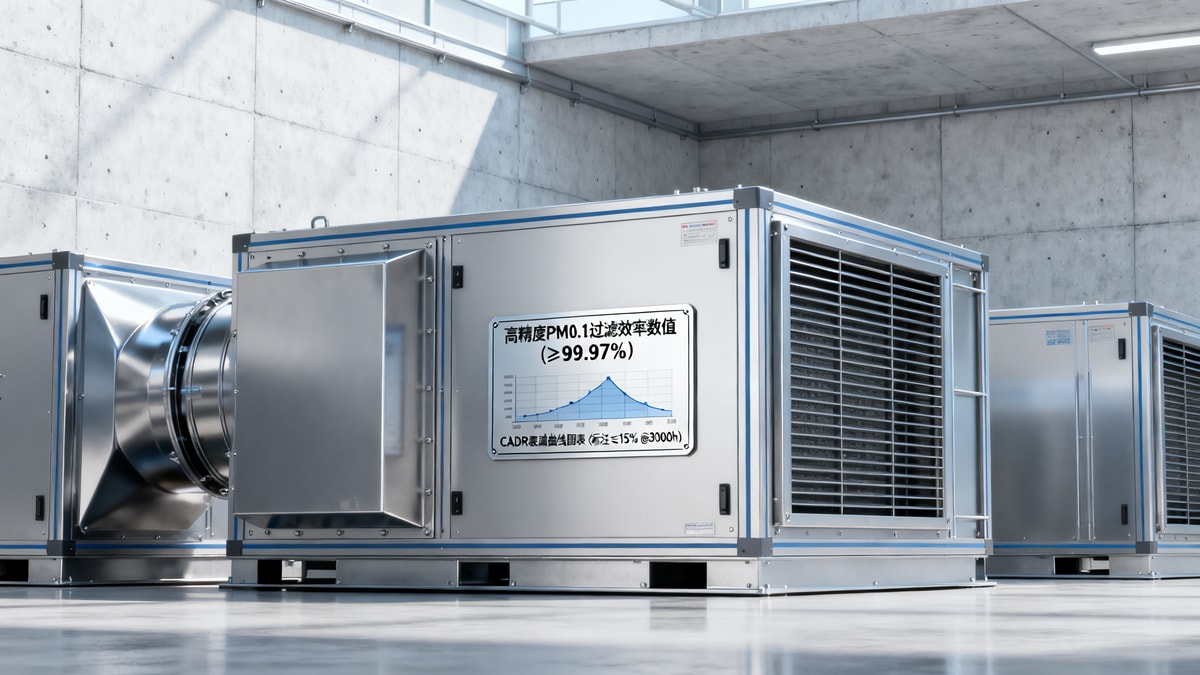
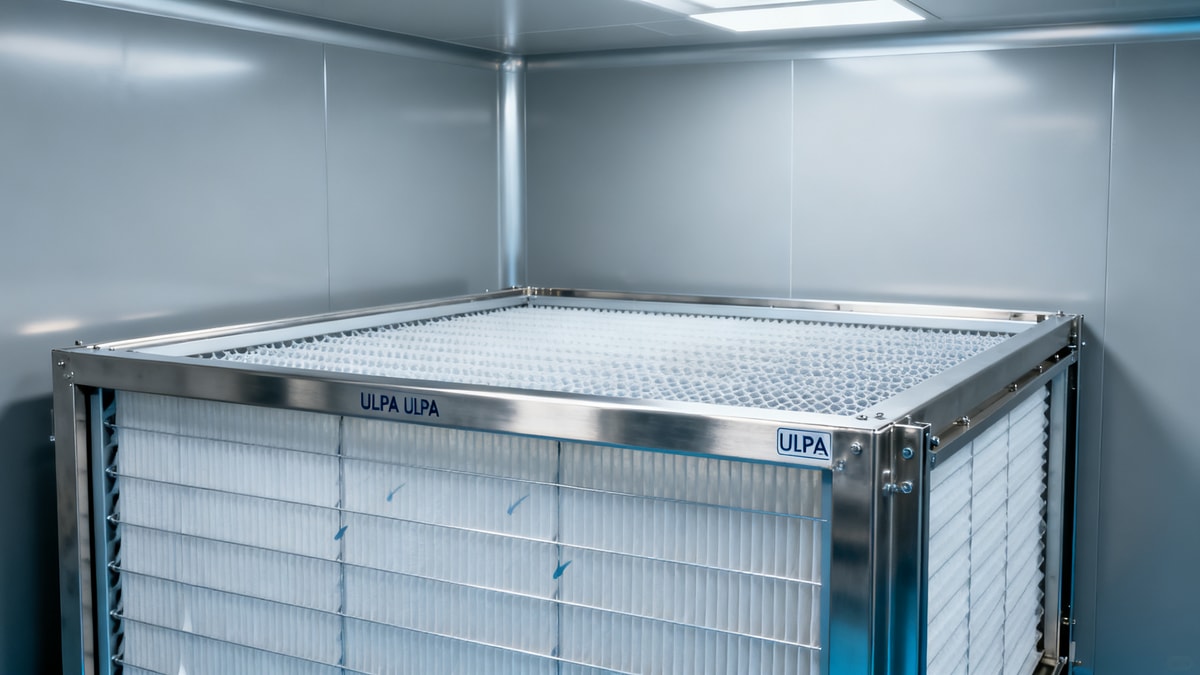
On May 1, 2026, Indonesia’s National Agency of Drug and Food Control (BPOM) issued Regulation SE No. HK.01.07/B/2352/2026, requiring all imported industrial-grade air purifiers—including HEPA, ULPA, and electrostatic composite types—to disclose PM0.1 filtration efficiency (≥99.97%) and CADR decay curve (≤15% decline after 3,000 hours of operation) on nameplates and user manuals. The rule takes effect August 1, 2026. Manufacturers and exporters—especially those in China supplying the Indonesian industrial air purification market—must revise technical documentation and labeling accordingly, or risk registration rejection. This development directly impacts industrial HVAC integrators, cleanroom equipment suppliers, occupational health solution providers, and OEM/ODM partners serving regulated manufacturing sectors.
Event Overview
On May 1, 2026, BPOM published SE No. HK.01.07/B/2352/2026, mandating that, effective August 1, 2026, all industrial air purifiers imported into Indonesia must display PM0.1 filtration efficiency (minimum 99.97%) and a verified CADR decay curve showing ≤15% performance loss after 3,000 operating hours. The requirement applies to devices using HEPA, ULPA, or electrostatic composite filtration technologies. Both product nameplates and accompanying instruction manuals must present this information in prominent locations. Non-compliant products will be denied BPOM registration.
Which Sub-Sectors Are Affected
Direct Exporters & Trading Companies
Exporters shipping industrial air purifiers from China (or other third countries) to Indonesia face immediate compliance pressure. Since BPOM registration is mandatory prior to import clearance, failure to update labels and technical files by August 1, 2026, halts market access. Impact manifests in delayed customs release, re-labeling costs, and potential shipment rejection at port.
OEM/ODM Manufacturing Partners
Contract manufacturers producing units for global brands targeting the Indonesian industrial segment must now integrate PM0.1 test protocols and long-duration CADR stability validation into their QA workflows. Existing production lines may require recalibration of filter media sourcing, aging test cycles, and data reporting formats to meet BPOM’s new evidentiary standards.
Cleanroom & Facility Integration Providers
Firms specifying or installing air purification systems in pharmaceutical, semiconductor, or medical device manufacturing facilities in Indonesia must verify supplier compliance before procurement. Non-disclosure of PM0.1 efficiency and CADR decay curves may invalidate technical bids or violate facility validation requirements under local GMP-aligned guidelines.
Aftermarket & Service Providers
Companies offering maintenance, filter replacement, or performance certification services for installed industrial units must prepare updated service documentation referencing the new BPOM-mandated metrics. Clients may request decay-curve verification during scheduled audits—creating demand for traceable, time-stamped performance logs.
What Relevant Companies or Practitioners Should Focus On — And How to Respond Now
Monitor BPOM’s official implementation guidance
BPOM has not yet published testing protocols, accredited lab requirements, or acceptable formats for CADR decay curve presentation. Companies should track BPOM’s official portal and registered notification channels for supplementary circulars expected before July 2026.
Validate current filter media and aging test capabilities
Manufacturers should audit whether existing PM0.1 test reports (e.g., via SMPS or CPC-based methods) and 3,000-hour accelerated CADR stability tests align with BPOM’s minimum thresholds. If internal capability is lacking, identify and engage BPOM-recognized laboratories early—lead times for test scheduling are increasing.
Update labeling templates and technical dossiers ahead of deadline
Revisions to nameplate layouts, multilingual manual sections, and electronic regulatory dossiers must be completed by mid-July 2026 to allow buffer time for BPOM review and potential queries. Avoid last-minute changes to avoid registration delays.
Distinguish between policy signal and operational enforcement
This regulation reflects BPOM’s broader shift toward particle-size-specific performance transparency—not just broad “HEPA-grade” claims. However, enforcement scope (e.g., whether retroactive audits apply to units registered before August 2026) remains unconfirmed and warrants ongoing observation.
Editorial Perspective / Industry Observation
Observably, this mandate signals BPOM’s growing emphasis on real-world, time-weighted performance metrics—moving beyond static filter class labels toward dynamic, usage-conditioned verification. Analysis shows it is less a sudden compliance shock and more a formalization of emerging regional expectations for industrial air quality control, especially in high-sensitivity sectors like biopharma and microelectronics. From an industry perspective, it functions primarily as a regulatory signal: it confirms Indonesia’s intent to harmonize with advanced particulate monitoring practices seen in EU and Japanese markets—but actual enforcement rigor and inspection frequency remain to be observed over the next 12 months.
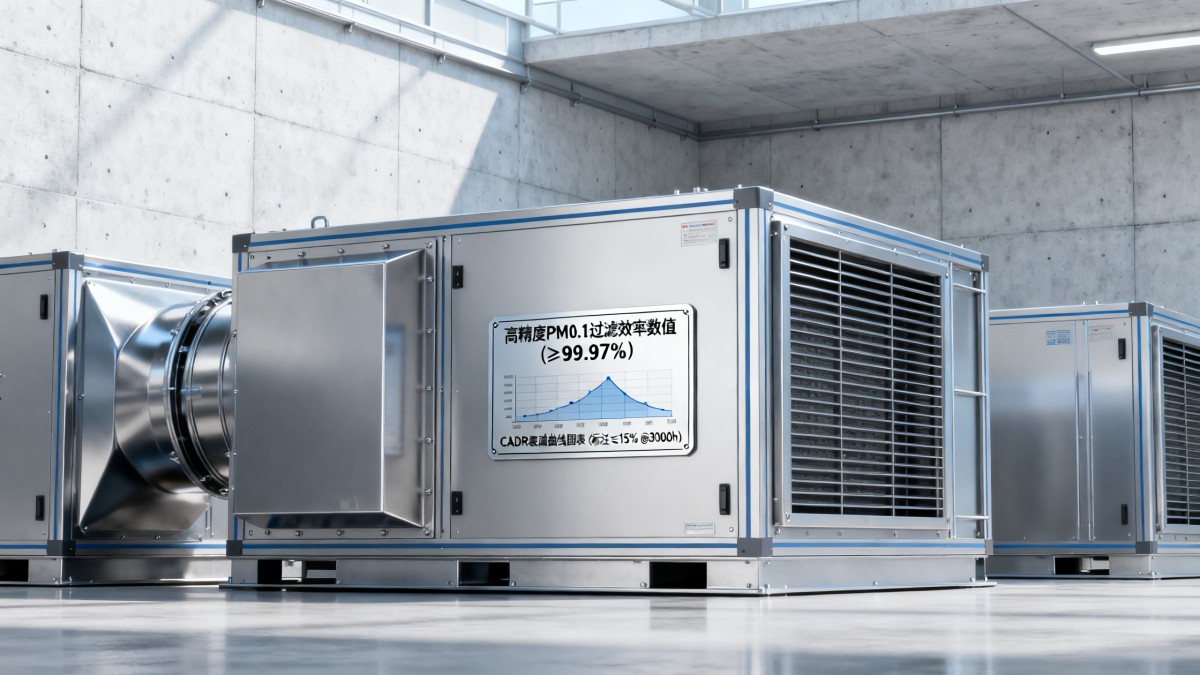
Conclusion: This BPOM requirement does not introduce entirely new testing science, but rather institutionalizes specific performance disclosures previously treated as optional or vendor-specific. Its industry significance lies in raising the baseline for technical transparency in Indonesia’s industrial air purification market—particularly for applications where sub-100nm particles impact process integrity or worker health. It is best understood not as a standalone compliance hurdle, but as an indicator of tightening technical accountability across ASEAN’s regulated industrial equipment landscape.
Source: Indonesia National Agency of Drug and Food Control (BPOM), Regulation SE No. HK.01.07/B/2352/2026, issued May 1, 2026. Note: Implementation details—including accredited laboratory criteria, CADR decay curve formatting rules, and enforcement scope for pre-August 2026 registrations—are pending further BPOM communication and remain under active observation.
Technical Specifications
- India BIS Draft IS 17832:2026 Sets Noise & Dust Limits for Waste CrushersAuthor :Environmental Engineering Director
- Korea MFDS Mandates Korean UI & KOSHA OEL Database for Industrial Water AnalyzersAuthor :Precision Metrology Expert
- Indonesia BPOM Mandates PM0.1 Efficiency & CADR Decay Labeling for Industrial Air PurifiersAuthor :Environmental Engineering Director
Expert Insights

Chief Security Architect
Dr. Thorne specializes in the intersection of structural engineering and digital resilience. He has advised three G7 governments on industrial infrastructure security.
Related Analysis
- May 03, 2026India BIS Draft IS 17832:2026 Sets Noise & Dust Limits for Waste CrushersAuthor :Environmental Engineering Director
- May 03, 2026Korea MFDS Mandates Korean UI & KOSHA OEL Database for Industrial Water AnalyzersAuthor :Precision Metrology Expert
- May 03, 2026Indonesia BPOM Mandates PM0.1 Efficiency & CADR Decay Labeling for Industrial Air PurifiersAuthor :Environmental Engineering Director
Core Sector // 01
Security & Safety
- Indonesia BPOM Mandates PM0.1 Efficiency & CADR Decay Labeling for Industrial Air PurifiersAuthor :Environmental Engineering Director

- Ambient Air Quality Monitor Placement Can Distort ReadingsAuthor :Environmental Engineering Director

- Wholesale N95 respirators: test reports that deserve a closer lookAuthor :Environmental Engineering Director

- RCEP Mandates Carbon Labeling for Industrial Air Filters from Jul 2026Author :Environmental Engineering Director

- EU CE Update: ULPA Filters Require MVR Testing from Jan 2027Author :Environmental Engineering Director

- EU CE Draft: ULPA Air Filters Must Pass MVR TestingAuthor :Environmental Engineering Director
![]()
- FDA Expands Regulation of Industrial Air Filters: ULPA Filter MVR Verification RequiredAuthor :Environmental Engineering Director
![]()
- Preventing dust leaks in environmental engineeringAuthor :Environmental Engineering Director