Safety Barricades Wholesale: Which Specs Matter Most?
Author
Date Published
Reading Time
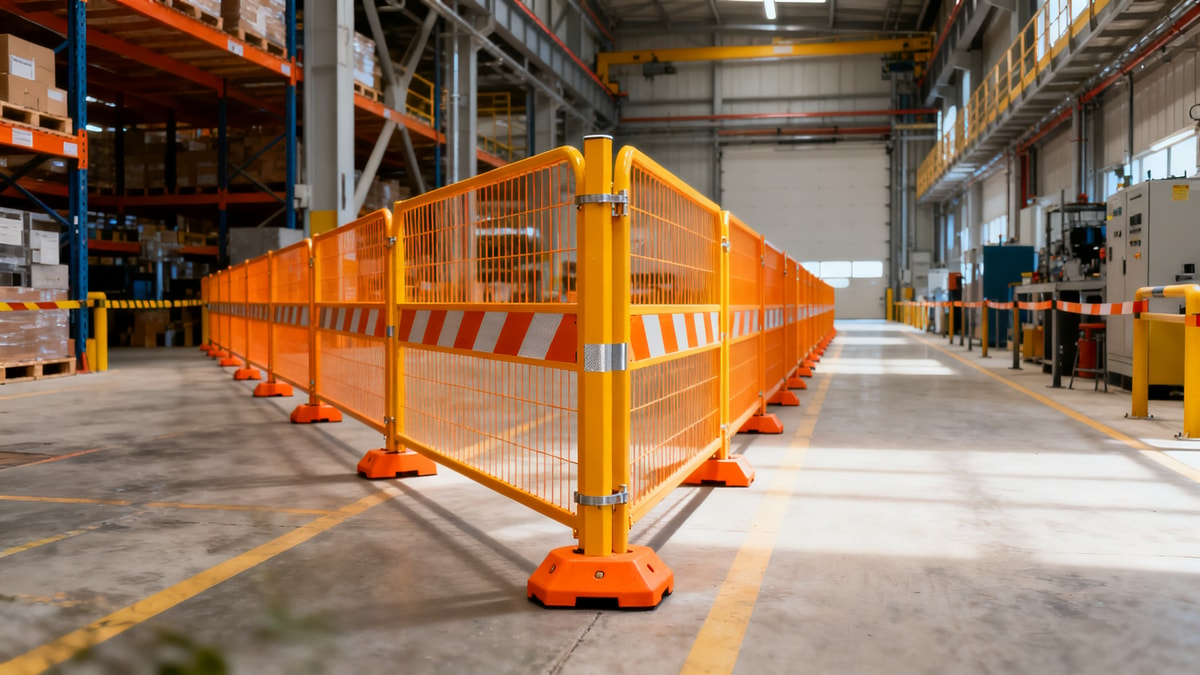
Choosing the right safety barricades wholesale supplier is not just about price—it is about compliance, durability, and fit-for-purpose performance. For procurement teams, the most important specs directly affect worker safety, site efficiency, and long-term replacement costs. This guide breaks down the key barricade specifications that matter most when sourcing for industrial, construction, and facility operations.
What procurement teams should evaluate first in safety barricades wholesale
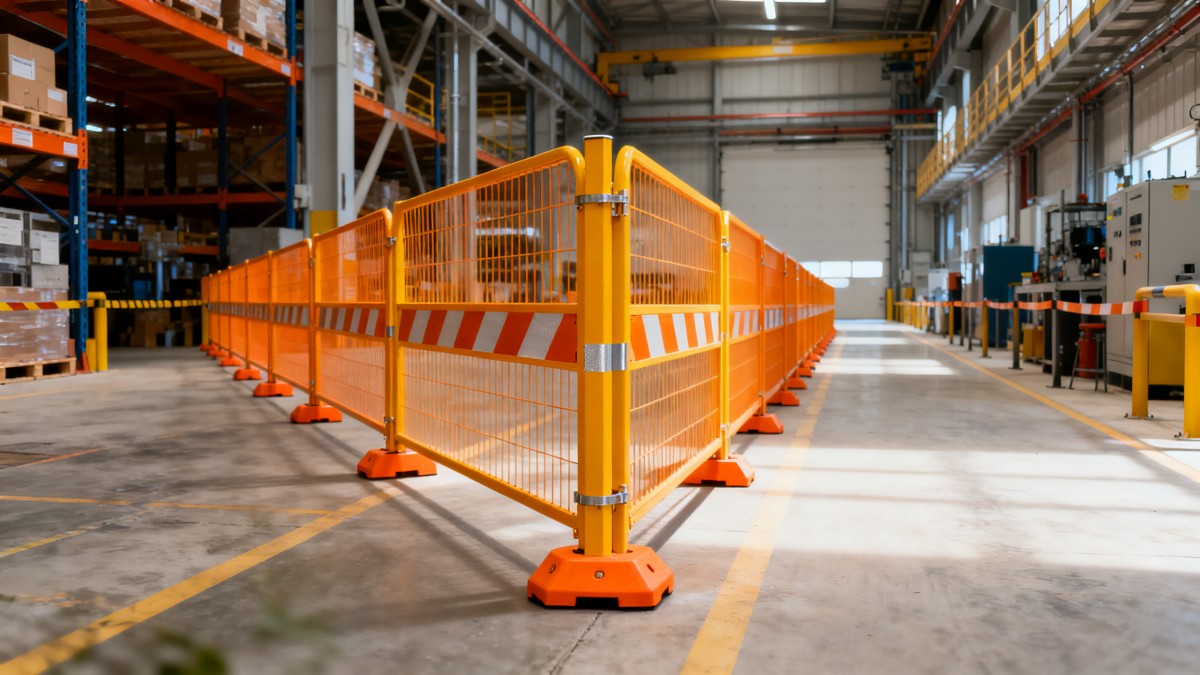
In industrial purchasing, safety barricades are not a generic commodity. A barricade used to isolate a wet floor inside a facility has very different requirements from one deployed near vehicle routes, excavation zones, substations, pipelines, or temporary work areas. That is why safety barricades wholesale decisions should begin with risk category, operating environment, and compliance obligations rather than unit price alone.
For buyers serving EPC projects, plants, logistics yards, utilities, and municipal contractors, the most useful approach is to treat barricades as part of a site control system. Material strength, visibility, portability, connection method, weather resistance, and standard alignment all influence whether the product will perform reliably under actual field conditions.
Global Industrial Core supports this decision-making process by focusing on the technical and sourcing realities that matter in heavy industry. Procurement teams often need to balance safety compliance, lead time, SKU simplification, and total lifecycle cost across multiple sites. A structured specification review helps avoid overbuying in low-risk zones and under-specifying in high-liability applications.
- Define whether the barricade is for pedestrian guidance, hazard isolation, vehicle separation, or restricted-access control.
- Check exposure conditions such as UV, rain, corrosive chemicals, wind load, or forklift traffic.
- Confirm whether the site requires modular linking, stackability, reflective marking, or color coding by risk level.
- Review documentation needs including material declarations, test data, and relevant standard references.
Which specifications matter most when comparing safety barricades wholesale options?
When buyers compare safety barricades wholesale products, six specifications usually have the greatest operational impact: material, dimensions, load stability, visibility, interlocking design, and service life. These are the factors that determine whether the barricade can stay upright, remain visible, integrate with traffic management plans, and withstand repeated deployment cycles.
The table below summarizes the core specs that should appear on a procurement checklist before request for quotation, sample approval, or framework contract negotiation.
A useful buying rule is simple: if the barricade will be moved often, prioritize weight efficiency and connection speed; if it will remain in place outdoors, prioritize UV resistance, ballast options, and reflective performance. Procurement teams that compare these specs early usually reduce bid revision cycles and field complaints later.
Material selection: plastic, metal, or composite?
Plastic barricades, often made from HDPE or PP, are common in safety barricades wholesale channels because they resist corrosion, are lightweight, and support molded warning colors. They fit temporary work zones, facility maintenance, pedestrian guidance, and utility access control. Their limitation is lower impact resistance in aggressive vehicle exposure unless reinforced or weighted.
Metal barricades, including steel or aluminum, are generally chosen for higher rigidity, stronger perimeter control, and repeated outdoor event or construction use. Steel offers strength but needs corrosion control. Aluminum reduces handling weight but may cost more upfront. Composite options can bridge the gap where electrical insulation or chemical resistance is important.
Dimensions and footprint: more than a catalog number
Height influences both visual authority and practical safety. Low-profile barriers may be adequate for marking equipment service zones, but taller units are typically better for restricting entry or channeling foot traffic around active works. Panel length affects how quickly teams can isolate an area, but longer panels may become less stable in high wind unless paired with a larger base.
How application scenario changes the right safety barricades wholesale choice
One of the most common purchasing mistakes is using a single barricade type across every site. In reality, different operating environments create different failure risks. A refinery turnaround, a warehouse aisle closure, and a roadside maintenance zone each demand distinct performance priorities.
The following scenario matrix helps procurement teams align safety barricades wholesale selections with actual operational needs rather than broad assumptions.
This comparison shows why scenario-based sourcing is more effective than catalog-based sourcing. It helps purchasers standardize fewer, better-fit SKUs across departments while still respecting different hazard profiles. That approach typically improves stock efficiency and reduces site-level substitutions.
Indoor versus outdoor deployment
Indoor applications often emphasize maneuverability, compact nesting, and clean appearance. Outdoor applications require stronger attention to UV stability, water drainage, ballast compatibility, and reflective surfaces. If a supplier cannot clearly explain how the same model performs in both conditions, buyers should request additional technical clarification or sample evaluation.
Standards, visibility, and compliance: what buyers cannot ignore
In safety barricades wholesale procurement, compliance is rarely about a single universal certificate. Instead, buyers need to assess whether the barricade supports the site’s broader safety management obligations. Depending on region and application, this may include color coding practices, reflective requirements, material safety expectations, site signage rules, and references to ISO, CE-related product conformity, or other local regulatory frameworks.
For industrial environments, visibility performance deserves special scrutiny. A barricade that looks adequate in daylight can become ineffective in rain, dust, low-angle lighting, or nighttime maintenance windows. Reflective film grade, color contrast, and sign mounting compatibility should be reviewed as functional safety items, not aesthetic options.
- Ask for material and product documentation that supports the stated application range.
- Verify whether warning legends, striping, and colors align with your internal site safety system.
- Check if reflective elements are replaceable, embedded, or surface applied.
- Confirm whether the supplier can support project-specific marking, language, or traceability needs.
This is where a technical sourcing partner adds value. GIC helps procurement teams interpret safety, measurement, and infrastructure requirements across varied industrial sectors, making it easier to compare supplier claims with practical field use. That reduces the risk of buying products that are nominally similar but operationally mismatched.
How to control total cost in safety barricades wholesale procurement
The lowest purchase price often leads to the highest lifecycle cost. Thin-wall products, weak hinges, unstable bases, and poor UV performance can trigger frequent replacement, higher incident exposure, and labor inefficiency during setup. Buyers should measure cost in terms of service cycles, damage rate, storage footprint, and labor hours—not invoice price only.
A better commercial model compares total cost across at least four variables:
- Initial unit price and freight impact based on stackability or nesting.
- Expected field life in the actual site environment, not in ideal storage conditions.
- Time required for deployment, removal, and transport between work zones.
- Availability of replacement components such as feet, reflectors, or connectors.
For centralized purchasing teams, product standardization can unlock better pricing and simpler replenishment. However, standardization should follow application mapping. A two-tier range, such as one lightweight indoor model and one heavy-duty outdoor model, is often more effective than forcing one specification into every environment.
When should buyers consider alternatives?
If the task is long-term perimeter protection or impact-rated separation, standard barricades may not be enough. Buyers may need barriers, guardrails, mesh fencing, or bollard systems instead. If the requirement is short-duration hazard marking, cones, chains, retractable belt barriers, or caution tape may be more economical. Good procurement practice defines what the barricade is expected to stop, signal, or control before comparing prices.
A practical procurement checklist for supplier selection
Supplier evaluation in safety barricades wholesale should combine technical evidence with delivery reliability. Industrial buyers often face tight shutdown schedules, multi-site distribution, or public project documentation requirements. A vendor that offers an attractive quote but cannot support lead-time accuracy or specification consistency creates downstream risk.
Key questions to ask before placing a bulk order
- Can the supplier provide dimensional tolerances, material details, and recommended use conditions?
- Are samples available for on-site review under real lighting, traffic, and weather conditions?
- What are the standard lead times for stocked models and custom-marked versions?
- How are units packed for export, project staging, or warehouse receiving efficiency?
- Is there consistency between sample quality and batch production specifications?
- Can the supplier support repeat orders with the same color, reflector format, and connection design?
Common buying mistakes
One mistake is focusing only on visual appearance and ignoring base stability. Another is assuming all reflective tape performs equally in low-light conditions. A third is neglecting handling ergonomics. If workers avoid using the product because it is awkward to move or connect, compliance drops even if the barricade meets a basic specification on paper.
Buyers also underestimate the value of mixed-site trials. Before scaling a safety barricades wholesale contract, it is sensible to test units in at least two or three environments such as indoor warehouse traffic, outdoor maintenance zones, and rough-surface construction areas. That provides better evidence than relying on a single sample review.
FAQ: real questions buyers ask about safety barricades wholesale
How do I choose the right size for safety barricades wholesale orders?
Start with the hazard and the user path. For pedestrian redirection, moderate-height linked panels may be enough. For restricted zones or excavation edges, greater height and a more stable base are usually preferable. Also consider storage space, transport method, and how quickly a crew must cover a certain area length during deployment.
Are plastic barricades suitable for industrial sites?
Yes, in many cases. Plastic models are widely used in industrial and municipal settings because they resist corrosion and are easy to handle. The key issue is not whether the material is plastic, but whether wall thickness, UV formulation, base stability, and connection strength match the duty level of the site.
What should I prioritize if budget is tight?
Prioritize fit-for-purpose durability. If funds are limited, avoid over-specifying low-risk areas and reserve heavy-duty models for exposed outdoor or vehicle-adjacent zones. Standardizing components and reducing the number of unnecessary custom variations can also improve procurement efficiency without compromising safety.
How important are samples before bulk purchase?
Very important, especially for multi-site use. Samples allow teams to check visibility, stacking, connection speed, base behavior, and handling comfort. For safety barricades wholesale projects, a short sample test often prevents expensive batch-level mistakes and helps align purchasing, HSE, and site operations teams.
Why work with a specialist partner for specification review and sourcing support
Industrial procurement is rarely a one-product decision. Barricades interact with site safety plans, signage systems, maintenance schedules, traffic control practices, and compliance documentation. A specialist partner can help define what specifications are essential, which are optional, and where lifecycle savings are realistically achievable.
Global Industrial Core supports procurement professionals with a technical, sourcing-focused perspective across security and safety, infrastructure systems, and operational environments. That is especially useful when buyers need to compare multiple supplier offers, confirm parameter suitability, or align product selection with broader industrial standards and project conditions.
Why choose us
If your team is evaluating safety barricades wholesale options, GIC can help you move faster with better clarity. You can consult us on parameter confirmation, application-based product selection, material and visibility priorities, delivery cycle planning, bulk sourcing strategy, and certification-related document review. We also help buyers refine shortlist criteria before RFQ release, reducing rework across engineering, HSE, and procurement functions.
Contact us when you need support with sample evaluation, supplier comparison, custom marking requirements, project-specific deployment questions, or quote communication for multi-site orders. A better barricade decision starts with the right specification framework—and that is where informed sourcing creates measurable value.
Technical Specifications
Expert Insights

Chief Security Architect
Dr. Thorne specializes in the intersection of structural engineering and digital resilience. He has advised three G7 governments on industrial infrastructure security.
Related Analysis
- May 02, 2026Chemical Metering Pumps: Which Dosing Errors Cost the Most?Author :Environmental Engineering Director
- May 02, 2026What Sets One Belt Filter Press Manufacturer Apart?Author :Environmental Engineering Director
- May 02, 2026Moving Bed Biofilm Reactor MBBR Retrofit Benefits and LimitsAuthor :Environmental Engineering Director
Core Sector // 01
Security & Safety
- Safety Barricades Wholesale: Which Specs Matter Most?Author :Safety Compliance Lead

- JIS T 8201-2026 Enforced: Fire Respirator Masks Require -30°C Impact ResistanceAuthor :Safety Compliance Lead

- 2026 Foshan Tanzhou Auto Show: Smart Cockpit Optics, EV PPE Systems Highlight China’s Supply Chain ShiftAuthor :Safety Compliance Lead

- Custom high visibility clothing without long lead time problemsAuthor :Safety Compliance Lead

- Reflective safety vests bulk: color fading can become a safety issueAuthor :Safety Compliance Lead

- What separates a reliable steel toe work boots manufacturerAuthor :Safety Compliance Lead

- Flame retardant coveralls: why fabric weight affects comfort and complianceAuthor :Safety Compliance Lead

- Cut resistant gloves wholesale: sizing errors that raise replacement costsAuthor :Safety Compliance Lead