JIS T 8201-2026 Enforced: Fire Respirator Masks Require -30°C Impact Resistance
Author
Date Published
Reading Time
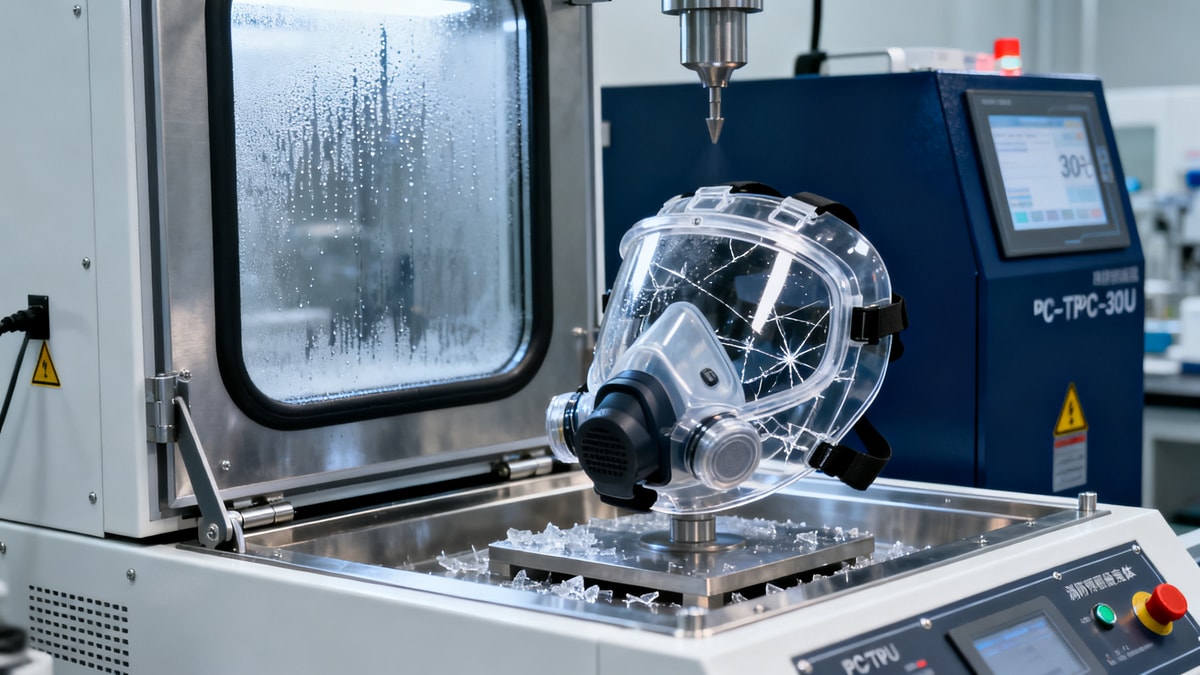
On May 1, 2026, Japan’s revised industrial standard JIS T 8201-2026 entered full mandatory enforcement, introducing a new low-temperature impact resistance requirement (−30°C) for fire respirator face masks—tested per JIS K 7111-2. This change directly affects exporters of personal protective equipment (PPE) and firefighting gear from China, particularly those supplying PC/TPU composite face mask components, as non-compliant products will fail to obtain the dual PSE+JIS certification required for market access.
Event Overview
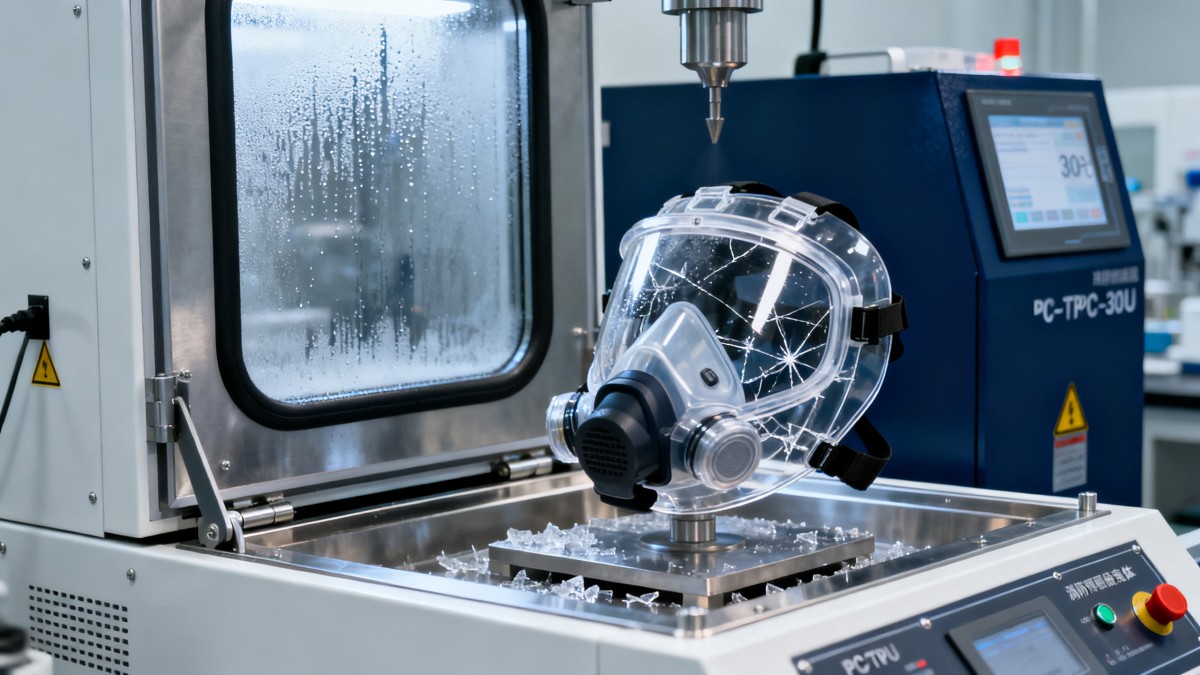
JIS T 8201-2026, the Japanese Industrial Standard for respiratory protective devices used in firefighting, became fully enforceable on May 1, 2026. The revision mandates that face mask materials pass an impact resistance test at −30°C, conducted in accordance with JIS K 7111-2. Products failing this test are ineligible for the PSE mark plus JIS certification—a prerequisite for legal sale in Japan.
Industries Affected
Direct Exporters (PPE & Firefighting Equipment)
These enterprises face immediate certification barriers. Without valid PSE+JIS certification—including verification of −30°C impact performance—their respirator masks cannot be imported or distributed in Japan. Certification delays or rejections may trigger order cancellations or contract renegotiations.
Raw Material Suppliers (PC/TPU Compound Manufacturers)
Suppliers of polycarbonate (PC) and thermoplastic polyurethane (TPU) blends used in face mask shells must now ensure batch-level low-temperature toughness data is available and traceable. Downstream customers increasingly require material test reports aligned with JIS K 7111-2—not just ambient-temperature mechanical specs.
OEM/ODM Manufacturers (Face Mask Assembly)
Manufacturers integrating face masks into full SCBA systems must update internal quality control protocols to include cold-impact validation at −30°C. This requires investment in environmental test chambers capable of stable −30°C operation and trained personnel to conduct JIS K 7111-2 testing or supervise third-party labs.
Supply Chain & Certification Support Providers
Testing laboratories, certification consultants, and logistics partners supporting Japan-bound PPE exports must now verify whether their service offerings cover −30°C impact assessment under JIS K 7111-2. Gaps here may delay clients’ compliance timelines.
What Relevant Enterprises or Practitioners Should Focus On — And How to Respond
Confirm current product certification status against JIS T 8201-2026
Exporters and manufacturers should review existing PSE+JIS certificates issued before May 1, 2026. Certificates referencing earlier editions (e.g., JIS T 8201-2019) do not cover the new −30°C requirement. Re-certification under the 2026 edition is mandatory for continued market access.
Validate material performance at −30°C—not just at room temperature
Procurement and R&D teams must request full low-temperature impact test reports (per JIS K 7111-2) from PC/TPU suppliers—not generic tensile or Izod data. Material substitution without cold-impact validation carries high compliance risk.
Engage accredited testing labs early for pre-submission verification
Given lab capacity constraints and lead times for environmental testing, enterprises should schedule −30°C impact tests well ahead of formal PSE+JIS application submission. Prioritize labs accredited for both JIS K 7111-2 and JIS T 8201-2026 conformity assessment.
Update technical documentation and labeling for Japan-bound shipments
All product manuals, test reports, and packaging must explicitly reference compliance with JIS T 8201-2026 (not prior versions). Mislabeling—even unintentional—may result in customs detention or post-market surveillance actions by Japan’s Ministry of Economy, Trade and Industry (METI).
Editorial Perspective / Industry Observation
Observably, this revision signals a tightening of performance-based regulatory expectations—not just procedural updates—for critical safety equipment in Japan. It reflects a broader global trend toward validating PPE functionality under extreme operational conditions, rather than relying solely on ambient-condition specifications. Analysis shows the −30°C requirement targets real-world failure modes observed during winter firefighting operations, especially in northern regions of Japan. From an industry perspective, this is less a one-time compliance hurdle and more a structural shift: material qualification now demands environmental resilience as a core design parameter. Current enforcement appears fully operational as of May 1, 2026, with no transitional grace period announced for the low-temperature clause.
Conclusion
This enforcement marks a concrete step in Japan’s alignment of PPE standards with actual field-use stressors. For affected exporters and suppliers, it underscores that certification readiness now hinges on verifiable low-temperature material behavior—not only on design conformity or factory audits. It is best understood not as an isolated regulatory update, but as an indicator of escalating technical due diligence expected across high-risk PPE supply chains serving mature markets.
Information Sources
Main source: Official publication of JIS T 8201-2026 by the Japanese Industrial Standards Committee (JISC), effective May 1, 2026.
Note: Ongoing monitoring is recommended for official METI guidance documents or interpretation notices related to enforcement scope—none have been publicly released as of the effective date.
Technical Specifications
- Indonesia Opens Bearing & Seal Manufacturing to 100% FDIAuthor :Heavy Industry Strategist
- SASO Extends AI Water Module Cybersecurity Deadline to Oct 2026Author :Environmental Engineering Director
- Copper Price Surges 4.1% to Record High in 2026; Impacts BOM Costs for Cable & Transformer MakersAuthor :Grid Infrastructure Analyst
Expert Insights

Chief Security Architect
Dr. Thorne specializes in the intersection of structural engineering and digital resilience. He has advised three G7 governments on industrial infrastructure security.
Related Analysis
- May 02, 2026Indonesia Opens Bearing & Seal Manufacturing to 100% FDIAuthor :Heavy Industry Strategist
- May 02, 2026SASO Extends AI Water Module Cybersecurity Deadline to Oct 2026Author :Environmental Engineering Director
- May 02, 2026Copper Price Surges 4.1% to Record High in 2026; Impacts BOM Costs for Cable & Transformer MakersAuthor :Grid Infrastructure Analyst
Core Sector // 01
Security & Safety
- JIS T 8201-2026 Enforced: Fire Respirator Masks Require -30°C Impact ResistanceAuthor :Safety Compliance Lead

- 2026 Foshan Tanzhou Auto Show: Smart Cockpit Optics, EV PPE Systems Highlight China’s Supply Chain ShiftAuthor :Safety Compliance Lead

- Custom high visibility clothing without long lead time problemsAuthor :Safety Compliance Lead

- Reflective safety vests bulk: color fading can become a safety issueAuthor :Safety Compliance Lead

- What separates a reliable steel toe work boots manufacturerAuthor :Safety Compliance Lead

- Flame retardant coveralls: why fabric weight affects comfort and complianceAuthor :Safety Compliance Lead

- Cut resistant gloves wholesale: sizing errors that raise replacement costsAuthor :Safety Compliance Lead

- Chemical resistant suits: what breakthrough time really tells youAuthor :Safety Compliance Lead