Chemical Metering Pumps: Which Dosing Errors Cost the Most?
Author
Date Published
Reading Time
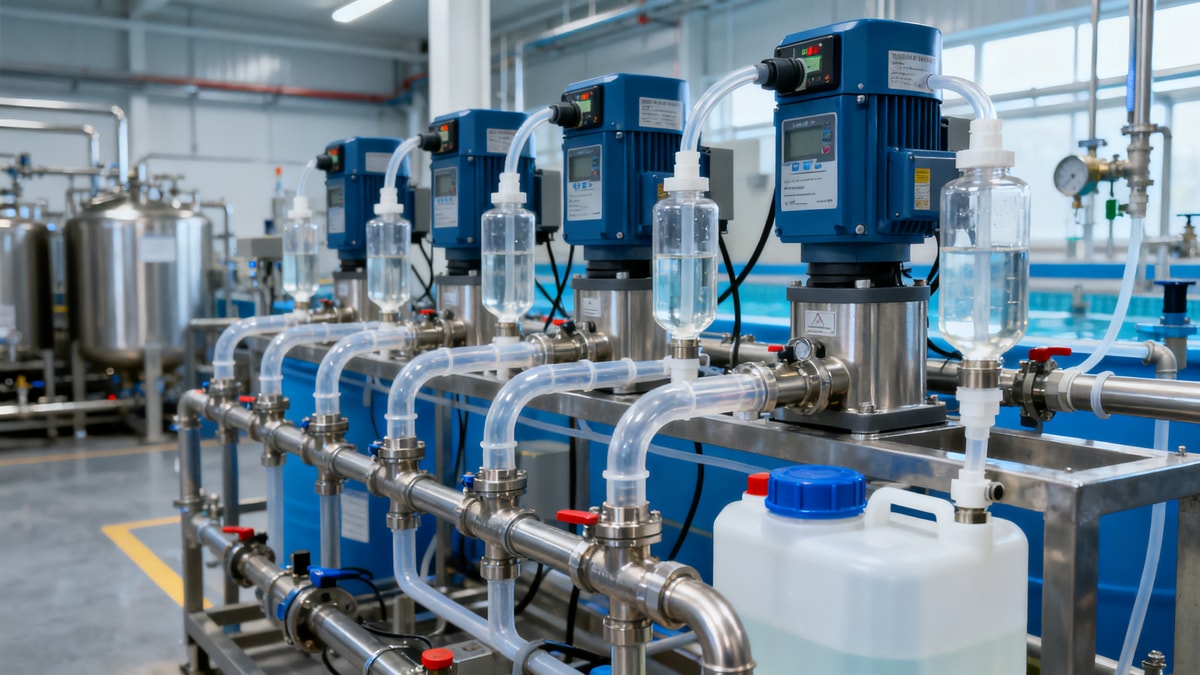
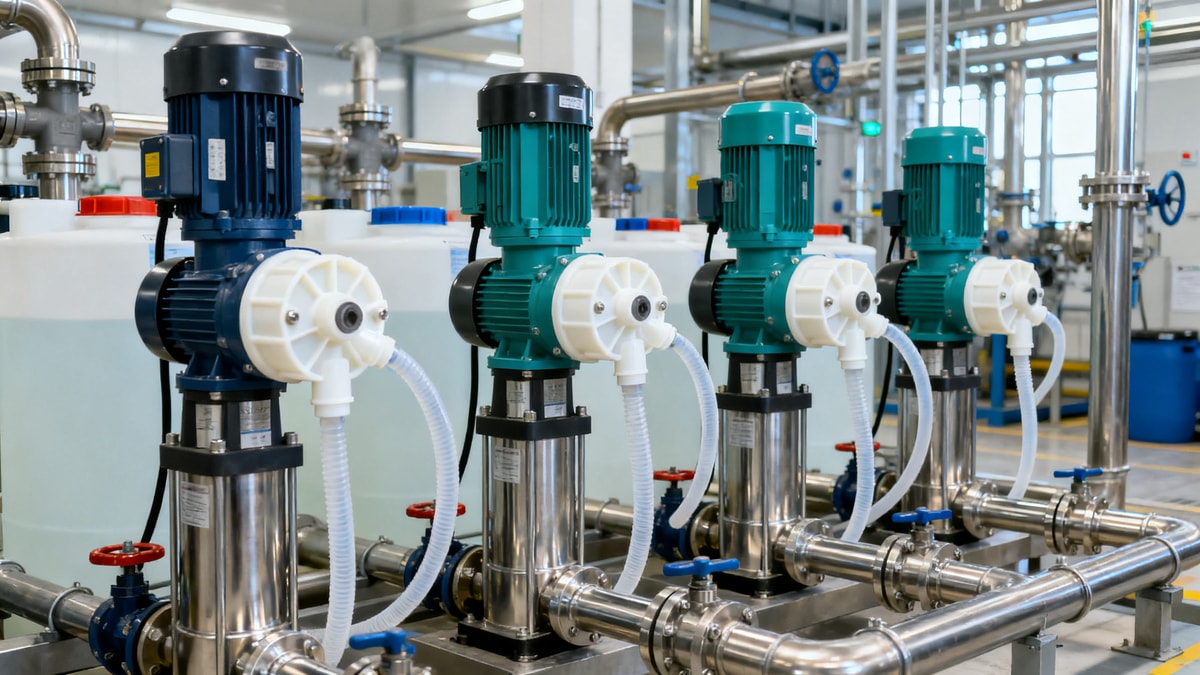
Even small dosing mistakes can turn chemical metering pumps from precision tools into costly liabilities. For operators, errors in calibration, flow settings, chemical compatibility, or maintenance can lead to wasted chemicals, off-spec output, equipment damage, and safety risks. This article highlights which dosing errors cause the highest losses and how to prevent them before they affect performance, compliance, and operating costs.
When operators search for answers about chemical metering pumps, they usually want one practical thing: to identify which dosing errors create the biggest financial, process, and safety consequences, and how to stop them quickly. The short answer is clear. The most expensive mistakes are usually not dramatic pump failures at first. They are small, repeated dosing errors that stay unnoticed long enough to affect product quality, chemical consumption, corrosion rates, environmental compliance, and equipment life.
For users and operators, the main concern is not theory. It is knowing where losses actually come from on the plant floor. Which errors lead to the most wasted chemicals? Which ones push a process out of specification? Which ones damage seals, tubing, valves, or tanks? Which ones create operator exposure or reporting issues? Those are the questions that matter most in daily operation.
The most useful way to evaluate chemical metering pumps is therefore not by nameplate capacity alone, but by dosing accuracy under real operating conditions. That includes calibration discipline, suction and discharge conditions, fluid behavior, material compatibility, maintenance quality, and the difference between displayed settings and actual delivered flow. Operators who understand these factors can prevent the majority of costly dosing problems before they escalate.
The biggest cost drivers are usually hidden dosing errors, not obvious breakdowns
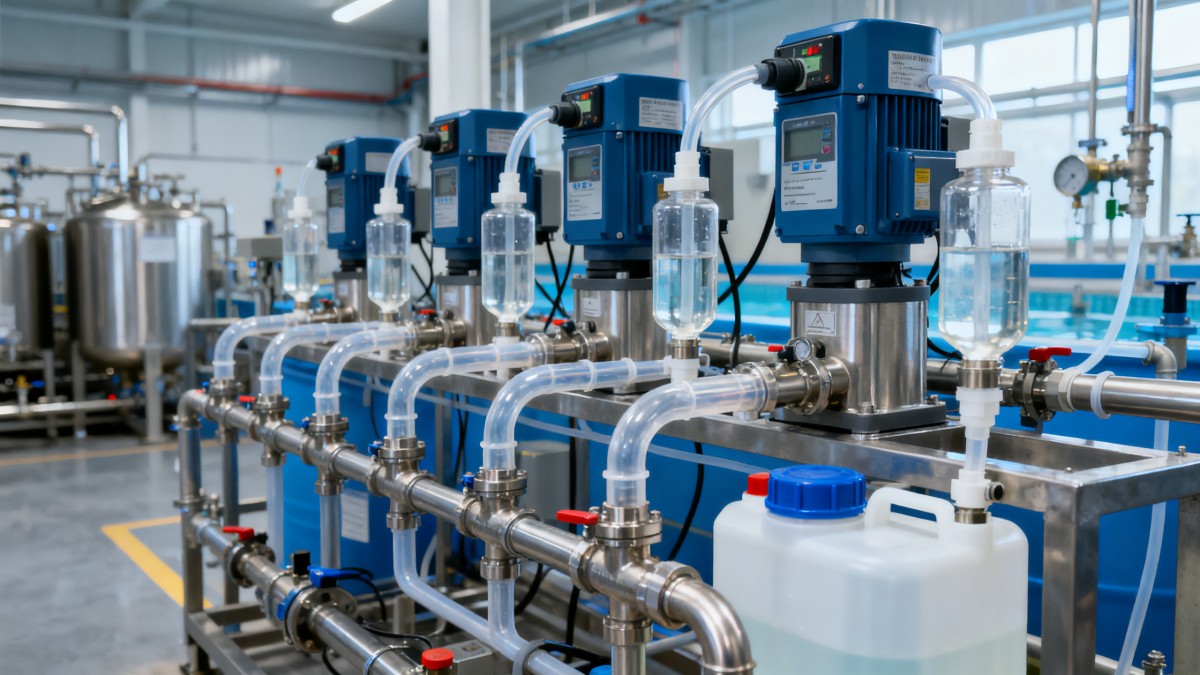
In many facilities, a pump that still runs is assumed to be working correctly. That assumption causes major losses. A chemical metering pump can stroke, sound normal, and even show the expected setting while delivering too little or too much chemical. Because the deviation often develops gradually, teams may only notice it after poor water quality, process instability, excess chemical use, or failed inspection results appear.
The highest-cost dosing errors typically fall into five categories: incorrect calibration, wrong flow-rate settings, poor chemical compatibility, suction-side problems that reduce actual feed, and delayed maintenance that allows wear to distort performance. These errors cost more than they seem because they multiply. One small inaccuracy can affect chemical efficiency, downstream treatment performance, energy use, and compliance at the same time.
For example, underdosing a neutralizing chemical may lead to corrosion, off-spec discharge, and rework. Overdosing a coagulant or biocide can waste expensive chemistry, create hazardous byproducts, and force additional treatment steps. In dosing systems tied to boilers, cooling towers, wastewater, food processing, or chemical manufacturing, the financial impact of small errors can easily exceed the cost of the pump itself.
This is why operators should think in terms of total dosing cost rather than pump purchase cost. The true expense is created by deviation from required dosage over time. If a pump is only 5% off, but it runs continuously, that error may consume large amounts of chemical or produce process failures every week. In practice, the most expensive dosing error is often the one no one verifies with a real output test.
Calibration errors often create the fastest and most repeated losses
If one issue deserves top priority, it is calibration. Many dosing problems begin when operators rely on theoretical pump output instead of measured output under actual operating conditions. A chemical metering pump rated for a certain flow at a given pressure does not automatically deliver that flow in the field. Changes in back pressure, viscosity, suction lift, temperature, valve condition, and tubing wear can all alter actual performance.
Calibration errors become expensive because they affect every batch, every cycle, or every hour of operation. If the pump is overdosing, the facility pays directly in chemical waste. If it is underdosing, the losses may be less visible but often larger: poor treatment results, noncompliance, accelerated scaling or corrosion, poor product quality, and emergency troubleshooting labor.
One common mistake is calibrating with water when the process fluid behaves very differently. Sodium hypochlorite, polymers, acids, caustics, slurries, and viscous additives do not all flow like water. Another mistake is calibrating at one pressure condition and operating at another. A third is failing to recalibrate after replacing tubing, diaphragms, check valves, or injection points.
Operators can reduce these losses by using timed drawdown tests or calibrated cylinders under representative process conditions. The key is to compare commanded output to actual delivered output, not assumed output. Calibration should also be documented, repeatable, and tied to maintenance events. If chemical metering pumps feed critical process chemistry, calibration should never be treated as a one-time setup step.
Wrong flow settings may seem minor, but they can destroy process control
A surprising number of costly dosing issues come from simple setpoint errors. The pump itself may be healthy, but the stroke length, stroke frequency, speed setting, pulse input scaling, or controller ratio is wrong. These mistakes often happen after shift changes, maintenance work, recipe adjustments, or control system updates.
Overdosing and underdosing from wrong settings can affect far more than chemical cost. In pH control, an aggressive setting can cause oscillation, making the process swing above and below the target instead of stabilizing. In biocide dosing, a low setting can allow microbial growth, fouling, and reduced heat-transfer efficiency. In additive injection, a wrong rate can ruin product consistency or trigger customer complaints.
The reason this error is expensive is that it can look like a chemistry problem, a sensor problem, or a process upset. Teams may spend hours checking analyzers, tanks, and lines when the real cause is simply an incorrect pump setting or scaling factor. This leads to labor cost, downtime, and unnecessary parts replacement in addition to the original dosing error.
To prevent this, operators should verify three things after any adjustment: the intended dosage target, the control signal or manual setting, and the actual delivered flow. A documented startup checklist is one of the simplest and most effective protections. On critical systems, dual verification after recipe or control changes is often justified because the cost of one wrong dosing rate can be much higher than the cost of a brief confirmation step.
Chemical compatibility mistakes can shorten pump life and create safety risk
Some of the most expensive problems occur when the chemical is incompatible with the wetted materials of the dosing system. This includes not only the pump head, diaphragm, and seals, but also tubing, check valves, injection quills, gaskets, and tanks. A pump may perform acceptably at first, then begin to swell, crack, harden, leak, or lose check-valve sealing efficiency.
These failures are costly because they do not only reduce dosing accuracy. They can release hazardous chemicals, expose operators, damage nearby equipment, and force unplanned shutdowns. In regulated environments, a leak or loss of containment can also bring reporting obligations, cleanup cost, and compliance scrutiny. What looked like a material selection detail becomes a major operational event.
Compatibility errors often happen when a facility changes chemical supplier, concentration, temperature, or cleaning routine without reviewing materials again. A seal material that handled one oxidizer concentration may fail at a higher strength. A tubing material that worked with one acid may degrade quickly with another blend. Even storage conditions can change fluid behavior enough to affect component life.
Operators should know the chemical concentration, temperature range, and any contaminants or gas-release tendencies in the fluid. Material selection should be checked against current operating conditions, not old assumptions. If a chemical metering pump shows repeated seal failures, valve sticking, discoloration, loss of prime, or unexplained leakage, compatibility should be investigated early rather than after multiple part changes.
Suction-side problems cause underfeeding more often than many operators realize
When teams think about pump performance, they often focus on the discharge side. But many dosing inaccuracies begin at the suction side. Air ingress, excessive suction lift, clogged strainers, crystallization, poor foot valve condition, inadequate flooded suction, and degassing fluids can all reduce the pump’s ability to fill consistently on each stroke.
The financial danger here is that the pump may continue cycling without obvious alarm while actual feed drops well below target. This leads to chronic underdosing. In treatment systems, that can mean poor residual control, unstable pH, inadequate disinfection, scale formation, or process rejection. Because the problem is not always visible, operators may respond by increasing settings, which only masks the issue temporarily.
Gas-locking is especially costly with chemicals such as sodium hypochlorite or other fluids that release gas. Once gas collects in the pump head, delivered flow can become erratic or collapse. The result is not just poor process performance but also wasted troubleshooting time. If operators do not recognize gas-binding behavior, they may keep adjusting the pump instead of correcting line layout, valve arrangement, or venting practice.
Routine inspection of suction tubing, connections, strainers, foot valves, and chemical level conditions can prevent large losses. Short, direct suction lines, proper line sizing, leak-free fittings, and pump placement that minimizes lift improve feed reliability. For difficult fluids, operators may need degassing heads, flooded suction arrangements, or more frequent monitoring of prime retention.
Deferred maintenance turns a precision device into an unreliable feeder
Chemical metering pumps are expected to dose accurately for long periods, but that expectation depends on maintenance. Worn diaphragms, fatigued tubing, dirty check valves, spring damage, crystal buildup, and seal degradation all change how much chemical is actually delivered. The pump may still operate, yet no longer feed with the consistency the process requires.
Deferred maintenance becomes expensive because the decline is gradual. Instead of one clear failure, the facility experiences a series of small penalties: extra chemical use, drift in analyzer readings, more operator adjustments, unstable process control, and shorter component life elsewhere in the system. In other words, poor maintenance creates both direct and indirect cost.
Another hidden cost is emergency response. When maintenance is reactive, teams replace parts during an upset instead of during a planned interval. That means rush labor, unplanned downtime, higher safety exposure, and more chance of installation mistakes. A scheduled valve cleaning or diaphragm replacement is far cheaper than a midnight callout linked to a containment issue or production interruption.
Operators benefit from simple preventive routines: inspect for leaks, verify prime, watch for pulsation changes, check injection points for blockage, clean valves as needed, and compare actual output against expected output at regular intervals. Maintenance records should include not just parts changed, but symptoms observed. Patterns such as repeated loss of prime or recurring valve fouling often point to system conditions that need correction.
Which dosing errors usually cost the most in real operations?
While the exact ranking depends on the application, the most expensive errors usually share one feature: they continue unnoticed. In many plants, the costliest mistakes are inaccurate calibration, underfeeding caused by suction problems, and compatibility-related component degradation. These three create long-duration losses that spread across chemical use, asset life, process quality, and safety.
Overdosing tends to show up faster in chemical spend and sometimes in process side effects, so it is often corrected sooner. Underdosing can be even more expensive because it quietly damages process performance until the consequences become severe. For example, a slight underfeed in corrosion inhibitor dosing may not be obvious immediately, but over time it can increase metal loss, repair work, and equipment replacement costs.
Compatibility errors can be the most severe on a single-event basis. One wrong elastomer or valve material can trigger leakage, downtime, and cleanup costs far beyond normal operating losses. That is why operators should not treat materials review as an engineering-only issue. It directly affects safe, stable, and economical operation.
If a facility wants to prioritize action, start by asking four questions: Is the pump calibrated under real conditions? Has actual flow been recently verified? Are the wetted materials confirmed for the current chemical and concentration? Is the suction side designed and maintained to ensure reliable fill on every stroke? Those questions uncover most high-cost dosing risks.
How operators can reduce dosing losses without major system redesign
Not every facility can replace equipment or automate every feed point immediately. The good news is that many improvements come from disciplined operating practice. The first step is to stop assuming that a running pump is an accurate pump. Build regular output verification into normal rounds for critical chemical metering pumps.
Second, standardize calibration and setting changes. Use clear procedures, log every adjustment, and verify actual delivery afterward. This reduces errors caused by shift turnover or inconsistent methods. Third, keep a live compatibility record for each chemical, especially if suppliers, formulations, or concentrations change. Fourth, inspect the entire dosing path, not just the pump, because valves, tubing, injection points, and tank conditions all affect performance.
Fifth, use trends. If chemical consumption changes, residual control becomes unstable, or operators need frequent setting corrections, treat those as warning signs rather than routine variation. Finally, link maintenance schedules to the chemistry and duty cycle, not just the calendar. Some fluids foul, gas off, or attack components faster than others, so equal maintenance intervals do not always make sense.
For operators, the goal is practical: stable dose, predictable process response, safe handling, and fewer surprises. Chemical metering pumps deliver strong value when they are verified, maintained, and matched correctly to the chemical. Most costly errors are preventable once the team focuses on actual delivered performance instead of nominal pump capability.
Conclusion: the most expensive dosing mistakes are the ones that quietly continue
The biggest losses from chemical metering pumps usually do not start as dramatic failures. They begin as small, persistent dosing errors that go unchecked. Incorrect calibration, wrong flow settings, suction-side feed problems, material incompatibility, and delayed maintenance are the errors that most often cost operators the most through chemical waste, off-spec performance, equipment damage, downtime, and safety exposure.
For users and operators, the smartest response is simple but disciplined: verify real output, confirm settings, review compatibility, maintain the full dosing path, and investigate drift early. When these basics are controlled well, chemical metering pumps remain what they are meant to be: precision tools that protect process quality, compliance, and operating cost rather than hidden sources of loss.
Technical Specifications
Expert Insights

Chief Security Architect
Dr. Thorne specializes in the intersection of structural engineering and digital resilience. He has advised three G7 governments on industrial infrastructure security.
Related Analysis
- May 02, 2026Chemical Metering Pumps: Which Dosing Errors Cost the Most?Author :Environmental Engineering Director
- May 02, 2026What Sets One Belt Filter Press Manufacturer Apart?Author :Environmental Engineering Director
- May 02, 2026Moving Bed Biofilm Reactor MBBR Retrofit Benefits and LimitsAuthor :Environmental Engineering Director
Core Sector // 01
Security & Safety
- Chemical Metering Pumps: Which Dosing Errors Cost the Most?Author :Environmental Engineering Director

- What Sets One Belt Filter Press Manufacturer Apart?Author :Environmental Engineering Director

- Moving Bed Biofilm Reactor MBBR Retrofit Benefits and LimitsAuthor :Environmental Engineering Director

- Wholesale Ozone Generators: Output Claims vs Real PerformanceAuthor :Environmental Engineering Director

- How Sludge Dewatering Machine Choice Affects Disposal FeesAuthor :Environmental Engineering Director

- Wholesale Dosing Pumps: Which Materials Last Longer?Author :Environmental Engineering Director

- Dissolved Air Flotation DAF Problems That Raise Sludge VolumeAuthor :Environmental Engineering Director

- Chamber Filter Press Cycle Time: What Slows It Down?Author :Environmental Engineering Director