Moving Bed Biofilm Reactor MBBR Retrofit Benefits and Limits
Author
Date Published
Reading Time
For industrial decision-makers upgrading wastewater treatment without major civil reconstruction, the moving bed biofilm reactor mbbr offers a practical retrofit path. This introduction examines where MBBR delivers clear gains in capacity, stability, and operating flexibility, while also outlining the technical and economic limits that should shape investment decisions.
In many industrial facilities, wastewater assets were designed for older production loads, narrower influent variability, and less demanding discharge targets. When flow increases by 20% to 80%, or when COD, ammonia, and suspended solids fluctuate more sharply across 24-hour production cycles, conventional activated sludge systems often reach their practical limit before a new tank can be justified.
That is why the moving bed biofilm reactor mbbr has become a serious retrofit option across food processing, chemical manufacturing, metal finishing, pulp and paper, and mixed industrial estates. It can increase biological treatment capacity within an existing footprint, improve resilience to shock loading, and reduce dependence on perfect sludge settling. At the same time, not every basin is a good candidate, and not every performance gap can be solved by adding carriers alone.
Why MBBR Retrofits Attract Industrial Investors
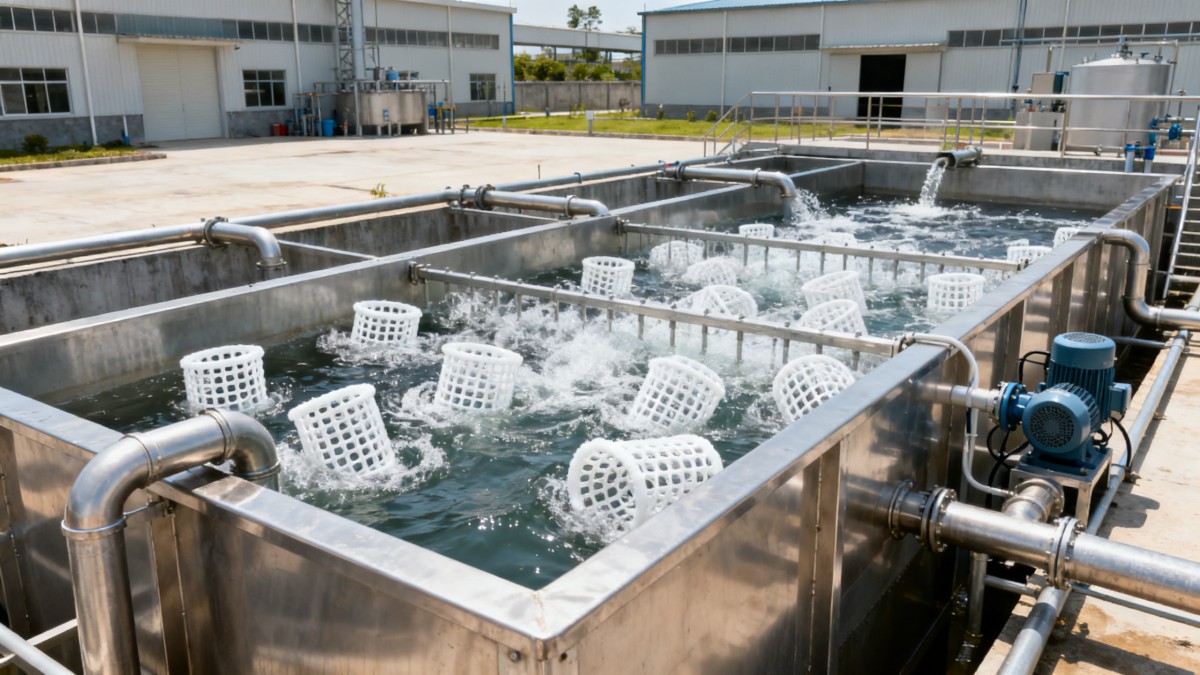
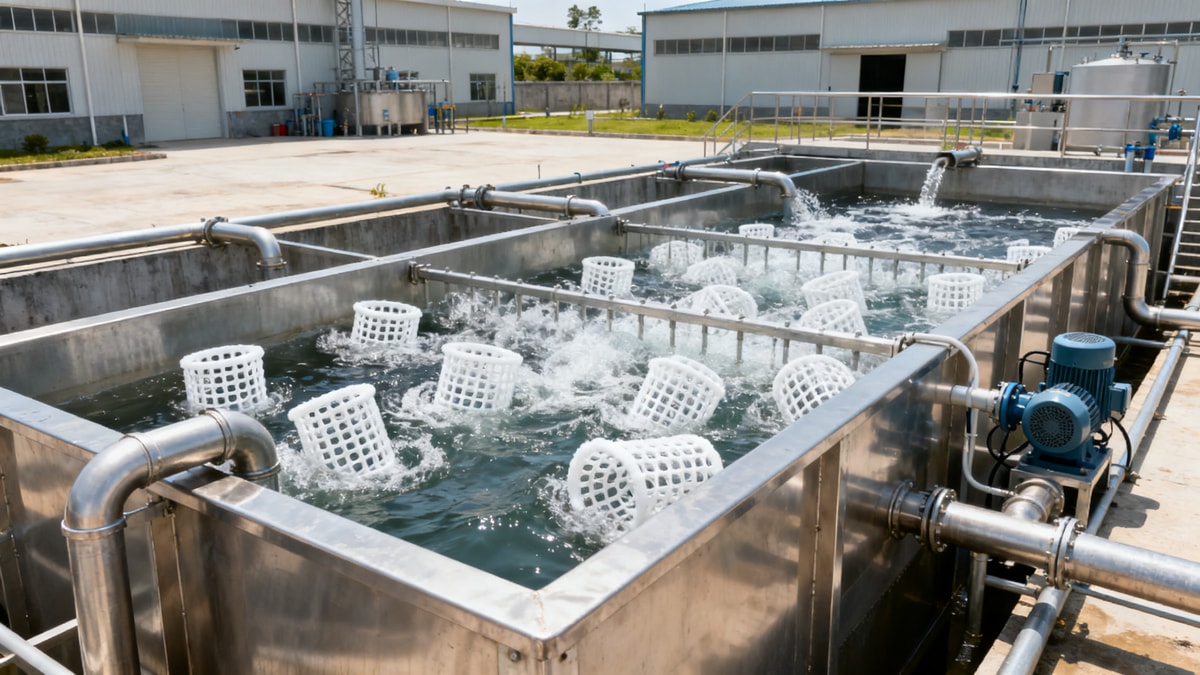
A moving bed biofilm reactor mbbr works by suspending plastic carrier media in an aerated or mixed tank. Biofilm grows on the protected surface area of the media, allowing higher active biomass concentration than a conventional suspended-growth process operating in the same volume. For retrofit projects, this matters because treatment capacity can often be lifted without adding a new reactor train.
In practical terms, industrial operators typically evaluate MBBR when one or more of four pressures appear: a 15% to 50% production increase, tighter ammonia or total nitrogen limits, poor sludge settleability in winter, or a site constraint that makes new civil works slow and expensive. Compared with full plant replacement, an MBBR upgrade can shorten implementation schedules from 12 to 24 months down to a more manageable phased retrofit window in many cases.
Core Advantages in Brownfield Upgrades
The strongest case for a moving bed biofilm reactor mbbr retrofit is capacity intensification. Because the biofilm adds biomass inventory independent of mixed liquor suspended solids, the same basin can process more biodegradable load. Typical retrofit goals include raising BOD removal capacity by 20% to 60% or improving nitrification reliability at temperatures below 15°C, especially where the existing activated sludge system already runs near its solids retention limit.
A second advantage is process stability. Biofilm systems are generally less sensitive to short-term hydraulic peaks, intermittent toxic load, and day-night production swings. In industrial plants where one upset shift can destabilize clarifier performance for 2 to 5 days, this resilience has direct commercial value through fewer permit risks, lower emergency chemical use, and steadier downstream dewatering.
A third advantage is retrofit flexibility. MBBR can be applied as a complete basin conversion, a hybrid IFAS-style step within activated sludge infrastructure, or a targeted polishing stage for ammonia reduction. This allows engineering teams to adapt the process to available blower capacity, tank geometry, and shutdown windows rather than forcing a full greenfield redesign.
Where the Business Case Is Usually Strongest
The table below helps decision-makers identify typical situations where an MBBR retrofit tends to outperform a simple aeration upgrade or a full conventional expansion.
The strongest opportunities usually share one feature: the bottleneck is biological capacity inside an asset that still has structural life left. If screening, equalization, and final solids separation are fundamentally inadequate, the moving bed biofilm reactor mbbr may still help, but it will not be a complete cure on its own.
Key Procurement Questions Before Approval
- Is the current issue driven by volume, load, temperature, toxicity, or clarifier limitation?
- Can existing blowers deliver the added oxygen transfer and mixing energy, often 10% to 35% above current demand?
- Is downstream screening sufficient to retain media and protect pumps?
- Will the retrofit target BOD removal, nitrification, denitrification, or a combination of all three?
Technical Limits That Must Shape the Investment Decision
Despite its strengths, the moving bed biofilm reactor mbbr is not a universal answer. Executive teams should understand where performance can plateau, where operating costs rise, and where retrofit constraints make the return less attractive than alternative process changes. Good decisions come from defining boundaries early rather than assuming carrier media automatically solves every biological problem.
Limits in Process Performance
First, MBBR does not eliminate the need for sound pretreatment. If influent contains high fats, fibrous solids, metal hydroxide sludge, or abrasive particulate matter, the media can foul, screening loads can rise, and tank hydraulics can deteriorate. Facilities with poor headworks often need upgraded screening in the 2 mm to 6 mm range before media introduction becomes operationally safe.
Second, oxygen transfer can become the hidden constraint. Higher biomass activity means higher oxygen demand, and older aeration systems may lack both air volume and diffuser efficiency. When the existing blower room has little reserve, a seemingly simple retrofit can trigger added CAPEX for blowers, pipework, control valves, and dissolved oxygen instrumentation.
Third, MBBR improves biology but does not replace final solids management. Detached biofilm solids still need separation. If the clarifier or downstream DAF is undersized, the plant may shift from one bottleneck to another. This is especially relevant where effluent TSS limits are below 10 mg/L or where sludge age and return activated sludge control are already unstable.
Economic and Operational Trade-Offs
The table below outlines common retrofit limits that procurement and operations teams should review before issuing a final budget approval.
The key conclusion is simple: MBBR economics are strongest when the reactor is the main bottleneck and balance-of-plant upgrades stay limited. If the plant also needs new equalization, new blowers, clarifier enlargement, and automation upgrades, the decision should be compared carefully with alternative process routes.
Common Misjudgments in Board-Level Reviews
- Assuming carrier fill percentage alone predicts outcome without checking oxygen transfer and hydraulics.
- Budgeting media and retention screens but omitting blower upgrades, instruments, and shutdown logistics.
- Expecting guaranteed nutrient removal without confirming carbon availability and anoxic volume.
- Treating pilot work as optional where wastewater composition changes by batch, season, or product line.
How to Evaluate Fit, Scope, and Retrofit Execution
For enterprise buyers, the best retrofit decisions come from a disciplined sequence rather than a vendor-first purchase. A moving bed biofilm reactor mbbr should be evaluated as part of plant-wide performance, including pretreatment, aeration energy, nutrient balance, sludge production, automation, and compliance risk. The process may be compact, but the decision framework should be broad.
A Practical 5-Step Assessment Path
Most industrial owners can reduce project risk by following five steps over roughly 6 to 14 weeks. Step 1 is data validation: collect at least 4 to 8 weeks of representative flow, COD, BOD, ammonia, pH, alkalinity, temperature, and solids data. Step 2 is bottleneck mapping: determine whether the shortfall is biological, hydraulic, or solids-separation related.
Step 3 is retrofit configuration review. Compare full MBBR conversion, hybrid biofilm addition, or targeted nitrification stage addition. Step 4 is equipment integration, covering blowers, retention sieves, mixers, instrumentation, and control logic. Step 5 is implementation planning, including phased installation, outage windows, and post-startup optimization for 30 to 90 days.
Decision Criteria That Matter in Industrial Procurement
The table below summarizes the criteria that usually matter most to EPC teams, facility managers, and procurement directors when comparing MBBR retrofit proposals.
For many organizations, the most useful comparison is not just vendor A versus vendor B. It is MBBR retrofit versus equalization expansion, advanced aeration upgrade, IFAS conversion, membrane bioreactor addition, or partial process segregation. That broader comparison often clarifies whether MBBR is the optimal investment or simply the most familiar one.
When Pilot Testing Is Worth the Time
Pilot testing is especially valuable when wastewater chemistry shifts by product campaign, when inhibitory compounds are suspected, or when nitrogen removal is critical. A 4- to 8-week pilot can reveal whether attached growth stability offsets seasonal shocks, whether alkalinity supplementation is required, and whether detached solids will pressure the final clarification step.
Operating Strategy After Commissioning
A moving bed biofilm reactor mbbr retrofit is not finished at mechanical completion. The first 30 to 90 days after startup are where real performance is shaped. Media colonization, aeration balance, DO setpoints, sludge wasting, and screen inspections all require tighter monitoring than routine steady-state operations. Plants that treat startup as a tuning period generally reach stable compliance faster than those expecting instant nameplate performance.
Early Operation Priorities
- Track DO, ammonia, pH, alkalinity, and effluent solids daily during the first 2 to 6 weeks.
- Inspect media retention systems and screen differential pressure at a defined frequency.
- Confirm that blower turndown and control logic match real process demand across shifts.
- Review detached biofilm impact on clarifier blanket stability and sludge handling.
From a management perspective, post-startup discipline protects the retrofit business case. A well-designed MBBR can still underperform if operators are not trained on biofilm dynamics, if alarm points are copied from the old plant, or if maintenance teams are not prepared for media retention equipment and revised inspection routines.
FAQ for Executive Buyers
Can MBBR eliminate the need for new tanks?
Often, but not always. If the main issue is insufficient biological capacity in an otherwise sound treatment train, the retrofit may avoid major civil expansion. If equalization, clarification, or sludge processing is already undersized, some additional infrastructure may still be required.
Is it suitable for variable industrial wastewater?
Yes, variability is one of its better use cases. However, strong toxicity events, oil and grease surges, or abrasive solids still need upstream control. Biofilm improves resilience, but it does not replace source management.
What is the biggest hidden cost?
In many retrofits, the hidden cost is not the carrier media. It is the supporting scope: aeration upgrades, retention sieves, controls, pilot work, and downtime planning. These items should be quantified before final approval rather than added after purchase.
For industrial wastewater assets under pressure to deliver more within the same footprint, the moving bed biofilm reactor mbbr remains one of the most practical retrofit strategies available. Its value is highest where biological capacity, nitrification stability, and load resilience are the true constraints, and where supporting systems can accommodate the upgraded process.
Decision-makers should weigh the benefits against pretreatment quality, aeration reserve, solids handling, and integration scope before committing capital. A disciplined assessment can prevent under-scoped projects and reveal where MBBR will generate measurable operational return. To evaluate fit for your facility, contact GIC to discuss your wastewater profile, compare retrofit pathways, and obtain a tailored industrial treatment strategy.
Technical Specifications
Expert Insights

Chief Security Architect
Dr. Thorne specializes in the intersection of structural engineering and digital resilience. He has advised three G7 governments on industrial infrastructure security.
Related Analysis
- May 02, 2026Chemical Metering Pumps: Which Dosing Errors Cost the Most?Author :Environmental Engineering Director
- May 02, 2026What Sets One Belt Filter Press Manufacturer Apart?Author :Environmental Engineering Director
- May 02, 2026Moving Bed Biofilm Reactor MBBR Retrofit Benefits and LimitsAuthor :Environmental Engineering Director
Core Sector // 01
Security & Safety
- Chemical Metering Pumps: Which Dosing Errors Cost the Most?Author :Environmental Engineering Director

- What Sets One Belt Filter Press Manufacturer Apart?Author :Environmental Engineering Director

- Moving Bed Biofilm Reactor MBBR Retrofit Benefits and LimitsAuthor :Environmental Engineering Director

- Wholesale Ozone Generators: Output Claims vs Real PerformanceAuthor :Environmental Engineering Director

- How Sludge Dewatering Machine Choice Affects Disposal FeesAuthor :Environmental Engineering Director

- Wholesale Dosing Pumps: Which Materials Last Longer?Author :Environmental Engineering Director

- Dissolved Air Flotation DAF Problems That Raise Sludge VolumeAuthor :Environmental Engineering Director

- Chamber Filter Press Cycle Time: What Slows It Down?Author :Environmental Engineering Director