Industrial safety training programs that reduce repeat incidents
Author
Date Published
Reading Time
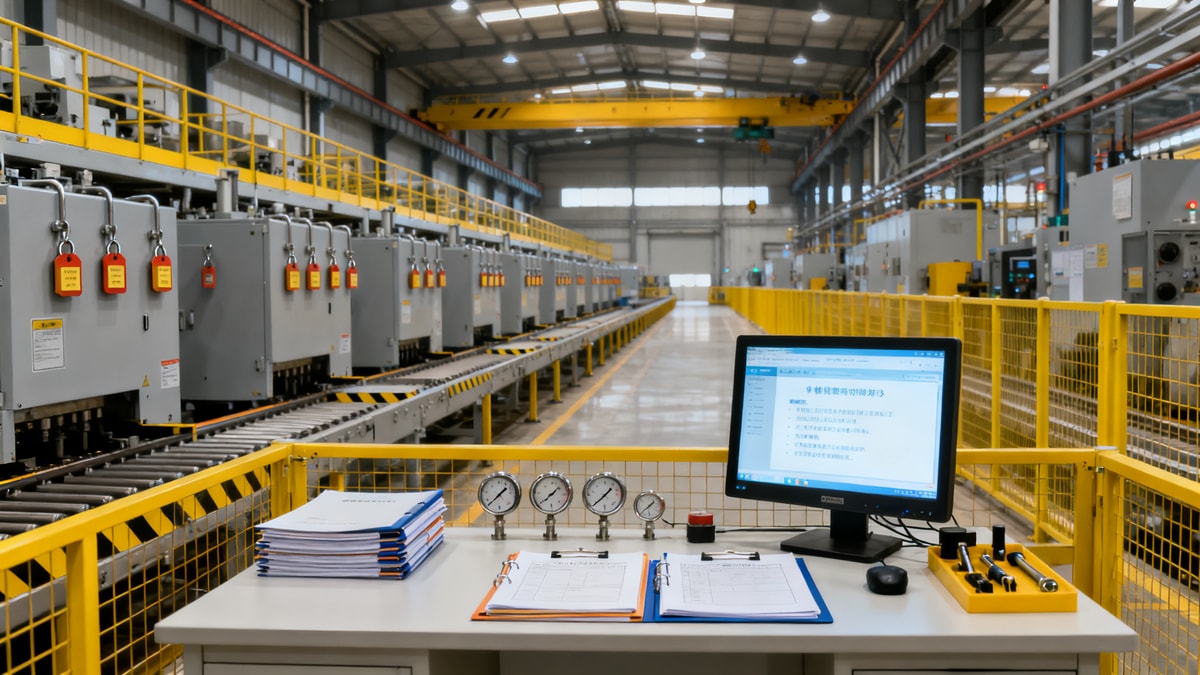
Reducing repeat incidents requires more than checklists and one-time workshops. Effective industrial safety training programs help quality control teams and safety managers turn lessons learned into safer routines, stronger compliance, and measurable risk reduction. This article explores how structured training, incident data, and continuous reinforcement can improve workforce behavior and prevent the same failures from happening again.
Why do repeat incidents continue even after safety retraining?
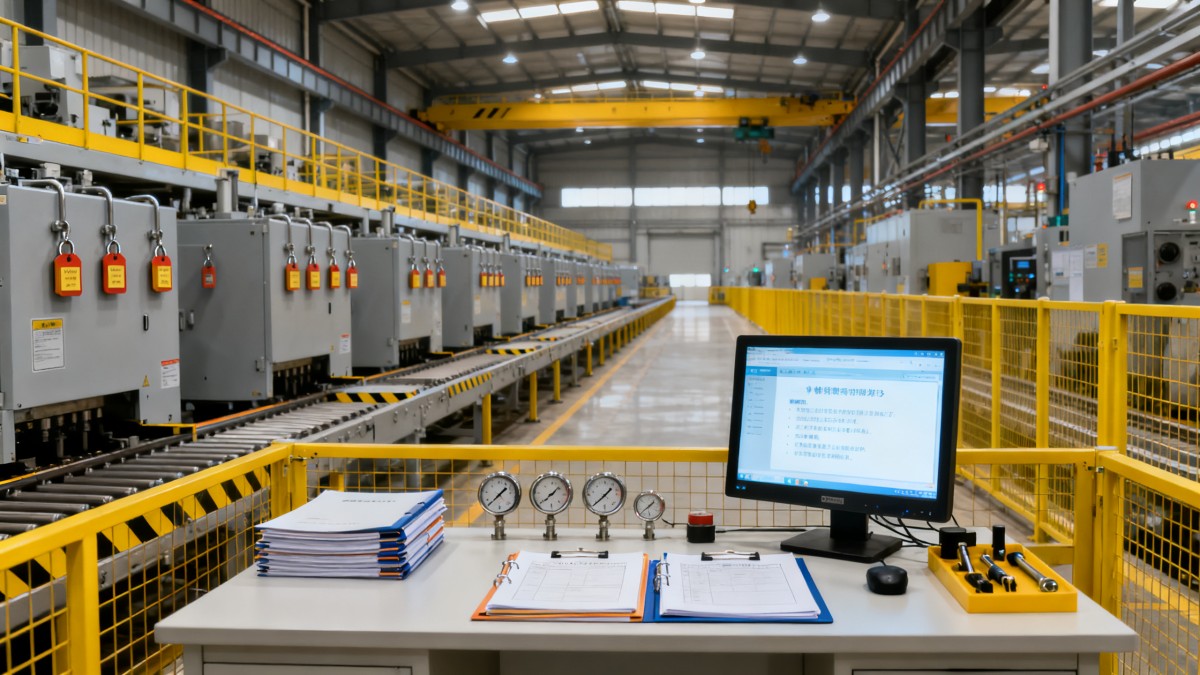
Many organizations assume that once an incident investigation is completed and a toolbox talk is delivered, the problem has been addressed. In practice, repeat events often return because the root cause was only partially understood, frontline behavior was not reinforced, or training content was too generic for the actual task, equipment, or environmental risk.
For quality control personnel and safety managers, the challenge is rarely a lack of rules. The challenge is translating requirements into repeatable behavior across shifts, contractors, maintenance windows, and changing production loads. This is where industrial safety training programs must move beyond awareness and become operational control tools.
The common failure points behind repeated events
- Training is delivered once after an incident but not embedded into daily supervision, permit control, quality checks, or maintenance planning.
- Content is broad and policy-driven, while the actual risk sits in task variation, handover gaps, calibration drift, or contractor execution.
- Near-miss data, inspection findings, and nonconformance reports are stored in separate systems, so lessons do not become targeted learning modules.
- Supervisors are expected to coach safe behavior, but they are not trained to verify competence, observe critical steps, or escalate deviations quickly.
In heavy industry, utilities, fabrication, processing, and infrastructure projects, repeated incidents often stem from the same hidden pattern: the organization trained for information retention, not for performance consistency. Strong industrial safety training programs are designed around job steps, high-energy hazards, verification methods, and measured feedback loops.
What effective industrial safety training programs look like in complex operations
A high-value program does not begin with slides. It begins with exposure mapping. Safety leaders and quality teams need to identify which tasks are linked to repeated failures, which controls are being bypassed, and where training should be matched to real operating conditions such as confined space access, lockout/tagout, energized work boundaries, lifting plans, chemical handling, or instrument maintenance.
For organizations working across the GIC focus areas of safety, measurement, power systems, environmental control, and mechanical reliability, training must be connected to asset criticality. A repeated incident around pressure isolation, sensor misreading, or electrical switching can carry operational, compliance, and procurement consequences far beyond one department.
Core elements that reduce recurrence
- Task-based design: Build modules around the exact activity, tool, equipment state, and control point rather than around generic safety categories.
- Critical control verification: Include clear proof of competence such as observed demonstrations, permit reviews, isolation checks, or quality sign-offs.
- Incident data integration: Use recurring findings from audits, near misses, maintenance defects, and nonconformance reports to refresh modules.
- Supervisor reinforcement: Train line leaders to coach, challenge, and document unsafe drift before it becomes normalized.
- Periodic requalification: Set intervals based on hazard severity, task frequency, contractor turnover, and change events such as new equipment or revised procedures.
When industrial safety training programs are structured this way, they support both prevention and accountability. They also create better traceability for procurement teams that need evidence of competence when selecting contractors, temporary labor, or training partners.
Which training model fits your risk profile best?
Not every site needs the same training format. The right choice depends on hazard severity, workforce mix, operational stability, and the maturity of your incident reporting process. The table below compares common industrial safety training programs used to reduce repeat incidents in mixed industrial environments.
Most facilities need a blended approach. For example, annual compliance instruction may establish legal awareness, but hands-on verification and short interval reinforcement are usually what stop the same unsafe behavior from returning during production pressure or maintenance urgency.
How should safety managers and QC teams build a repeat-incident prevention framework?
The most effective industrial safety training programs are part of a larger control system. They connect incident learning, inspection findings, competency matrices, and supplier or contractor oversight. That matters in cross-functional industrial settings where the same event may involve operations, quality, engineering, procurement, and maintenance at once.
A practical implementation sequence
- Rank repeated incidents by consequence and frequency. Include injuries, process deviations, contamination events, equipment damage, electrical exposures, and environmental releases.
- Define critical tasks and human error traps. Look at interfaces such as shift handover, temporary bypasses, calibration adjustments, valve line-up, material substitution, and permit closure.
- Map each task to the required competence level. Separate awareness, assisted execution, independent execution, and supervisor authorization.
- Choose verification tools. These may include observations, sign-off checklists, simulated drills, sample traceability reviews, or quality hold-point confirmation.
- Set requalification triggers. Use change in equipment, contractor turnover, process modification, incident recurrence, or failed observation results.
This framework is especially useful for sites that must satisfy multiple expectations at once: operational continuity, ISO-aligned management systems, customer quality requirements, and site-specific safety rules. GIC’s cross-disciplinary perspective is valuable here because training effectiveness depends not only on safety doctrine, but also on instrumentation reliability, electrical isolation practices, material behavior, and environmental controls.
What procurement and selection criteria matter when evaluating industrial safety training programs?
Safety managers are often asked to justify budget while proving that training will reduce repeat incidents, not just satisfy annual requirements. Procurement teams, meanwhile, need a clear method to compare internal development, external providers, and hybrid programs. The table below highlights decision factors that matter in real industrial purchasing.
A disciplined selection process prevents two costly mistakes: buying a low-cost generic package that has little field impact, or overengineering a solution that operations cannot maintain. The better choice is usually the one that balances task realism, traceability, refresher efficiency, and implementation speed.
Which standards and compliance expectations should be reflected in training?
Industrial safety training programs should reflect the compliance landscape that governs the site, equipment, and customer contract obligations. Exact requirements differ by region and process, but quality control and safety leaders should ensure training content supports recognized frameworks rather than relying on informal local habits.
Compliance areas that commonly affect training design
- Occupational safety obligations related to hazardous energy, machine guarding, work at height, confined spaces, chemical exposure, and emergency response.
- Quality system expectations requiring documented competence, traceable procedures, and controlled corrective action after nonconformance.
- Electrical and instrumentation requirements where switching, testing, calibration, and verification steps affect both worker safety and process integrity.
- Environmental management obligations when spills, emissions, waste handling, or sampling errors can lead to repeat operational events and reporting risk.
Organizations operating across multiple regions benefit from a structured intelligence approach. GIC supports this need by connecting safety, measurement, electrical, environmental, and mechanical perspectives, helping decision-makers align training priorities with the technical controls that actually determine site resilience.
What are the most common mistakes in industrial safety training programs?
Even experienced teams can miss the factors that drive recurrence. These mistakes are common in plants, fabrication yards, utility networks, and project-based industrial environments where staffing, schedules, and risk profiles change quickly.
Frequent misconceptions
- Assuming retraining after an incident is enough. Without field verification and supervisor follow-up, the same shortcuts often return within weeks.
- Treating contractors and direct employees the same without considering turnover, language clarity, task familiarity, and permit authority differences.
- Measuring completion rates instead of risk outcomes. High attendance does not mean lower exposure if unsafe work patterns remain unchanged.
- Separating quality incidents from safety learning. A repeated labeling error, torque deviation, contamination event, or calibration lapse can be both a quality issue and a serious safety precursor.
The lesson is clear: industrial safety training programs create value when they are tied to critical controls and leading indicators, not when they are treated as isolated administrative tasks.
FAQ: what do safety managers and QC teams ask most often?
How often should industrial safety training programs be refreshed?
There is no single interval for every site. High-risk tasks such as electrical isolation, confined space entry, pressure system intervention, or critical lifting usually need more frequent verification than low-risk awareness topics. A practical rule is to refresh training after process change, equipment modification, repeated deviation, contractor onboarding surge, or failed field observation.
Which metrics show whether a program is reducing repeat incidents?
Look beyond attendance. Use repeat incident rate, repeat near-miss rate, failed observation count, permit deviation trend, corrective action closure quality, and task-specific audit findings. For quality control teams, also track recurring nonconformances linked to operator handling, labeling, test execution, or isolation errors.
Are digital modules enough for frontline industrial environments?
Usually not on their own. Digital learning is efficient for refreshers, multilingual consistency, and recordkeeping, but high-consequence tasks still require hands-on verification. The strongest industrial safety training programs combine digital reinforcement with field demonstration and supervisor coaching.
What should be prioritized when budget is limited?
Start with the tasks that generate the highest combined risk of injury, downtime, quality loss, or compliance failure. Focus funding on targeted modules, verification of critical controls, and short reinforcement cycles. A smaller, precise program often outperforms a broad but shallow annual campaign.
Why choose GIC when reviewing industrial safety training programs and related sourcing decisions?
Repeat incident prevention rarely depends on training alone. It depends on whether training aligns with equipment reliability, measurement accuracy, electrical safety boundaries, environmental controls, and mechanical operating conditions. That cross-functional view is where GIC adds practical value for industrial buyers, safety managers, and quality teams.
GIC helps decision-makers evaluate industrial safety training programs in the context of broader industrial risk. If your team is reviewing task-specific training needs, contractor competence expectations, standards alignment, or the supporting products and systems behind safe execution, the discussion should be grounded in technical reality, not generic content claims.
Contact us for targeted support
- Parameter confirmation for high-risk task training tied to instruments, electrical systems, safety devices, or mechanical components.
- Selection guidance for training-linked sourcing decisions involving compliant equipment, testing methods, or verification tools.
- Review of delivery timelines, implementation priorities, and phased rollout options for multi-site or contractor-heavy operations.
- Discussion of certification expectations, documentation needs, and buyer-facing technical materials for regulated industrial environments.
- Support for customized solution planning, sample evaluation pathways, and quotation communication related to foundational industrial systems.
If your objective is to reduce repeat incidents with stronger industrial safety training programs and better technical decision-making, GIC can help you connect training requirements with procurement judgment, operational constraints, and long-term risk control priorities.
Technical Specifications
- SASO Mandates Dual Energy Label for Industrial Transformers in Saudi Arabia from May 2026Author :Grid Infrastructure Analyst
- EN 61000-4-30:2026 Enforced: Class A Harmonic Traceability Mandatory for EU PQ AnalyzersAuthor :Precision Metrology Expert
- US DOE Level 3 Transformer Efficiency Standard Effective July 1, 2026Author :Grid Infrastructure Analyst
Expert Insights

Chief Security Architect
Dr. Thorne specializes in the intersection of structural engineering and digital resilience. He has advised three G7 governments on industrial infrastructure security.
Related Analysis
- May 06, 2026SASO Mandates Dual Energy Label for Industrial Transformers in Saudi Arabia from May 2026Author :Grid Infrastructure Analyst
- May 06, 2026EN 61000-4-30:2026 Enforced: Class A Harmonic Traceability Mandatory for EU PQ AnalyzersAuthor :Precision Metrology Expert
- May 06, 2026US DOE Level 3 Transformer Efficiency Standard Effective July 1, 2026Author :Grid Infrastructure Analyst
Core Sector // 01
Security & Safety
- Construction safety equipment manufacturers under stricter site rulesAuthor :Safety Compliance Lead

- Industrial safety training programs that reduce repeat incidentsAuthor :Safety Compliance Lead

- Why Security & Safety prices differ more than expectedAuthor :Safety Compliance Lead

- How to Compare Safety Equipment Suppliers When Specs Look SimilarAuthor :Safety Compliance Lead

- Safety Equipment Standards That Change Product Selection OutcomesAuthor :Safety Compliance Lead

- Security & Safety Price Gaps: What Actually Drives the DifferenceAuthor :Safety Compliance Lead

- How to Vet a Security & Safety Supplier Before a Large RolloutAuthor :Safety Compliance Lead

- ANVISA Updates Biocompatibility Requirements for Industrial Respirators in BrazilAuthor :Safety Compliance Lead