ANVISA Updates Biocompatibility Requirements for Industrial Respirators in Brazil
Author
Date Published
Reading Time

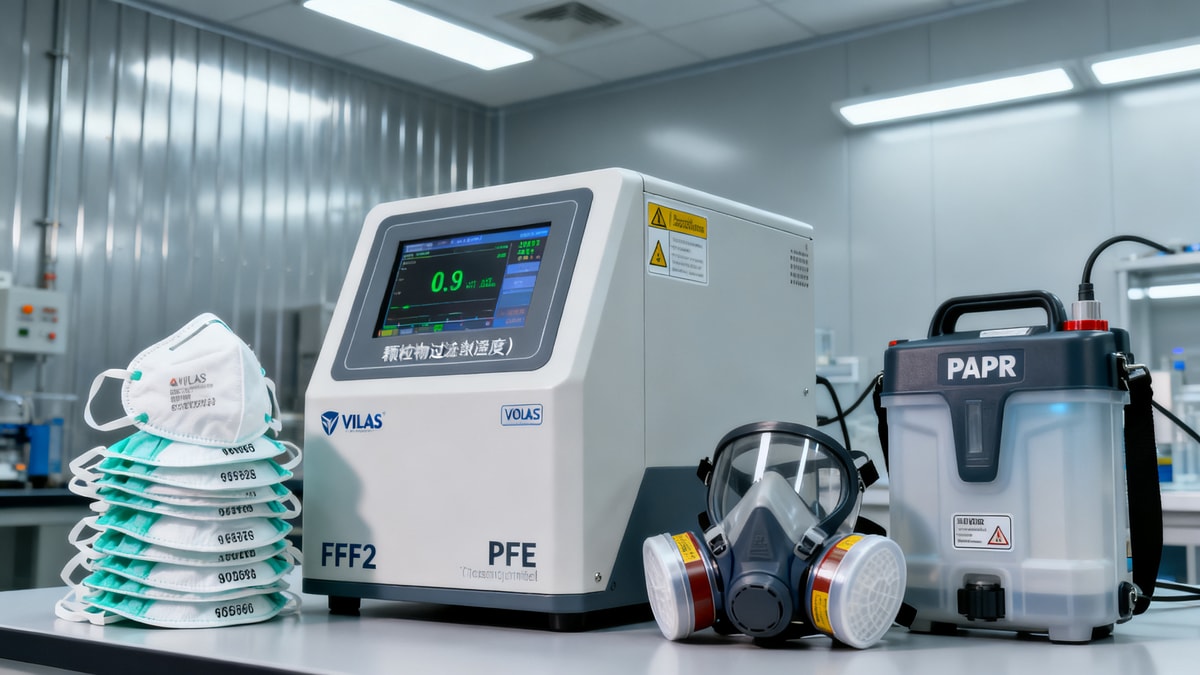
On May 1, 2026, Brazil’s National Health Surveillance Agency (ANVISA) issued Resolution RDC No. 28/2026, mandating expanded biocompatibility testing for industrial respiratory protective equipment — specifically requiring ISO 10993-10 (sensitization) and ISO 10993-23 (irritation) in addition to the existing ISO 10993-5 (cytotoxicity) test. This change directly affects manufacturers, exporters, and distributors of PPE respirators supplying the Brazilian market.
Event Overview
Effective May 1, 2026, ANVISA published RDC No. 28/2026, which revises the biocompatibility assessment requirements for industrial-use respiratory face masks. Under the new regulation, compliance now requires conformance with both ISO 10993-10 (assessment of skin sensitization potential) and ISO 10993-23 (assessment of skin and mucosal irritation), in addition to the previously required ISO 10993-5 (in vitro cytotoxicity). Test reports must be issued by laboratories accredited by ANVISA — including those in China holding CNAS-ILAC mutual recognition accreditation. Reports from non-accredited labs will not be accepted for product registration.
Industries Affected by Segment
Direct Exporters (China-based)
Chinese companies exporting industrial respirators to Brazil are directly impacted because their registration dossiers must now include two additional ISO 10993 test reports. Failure to submit valid reports from ANVISA-recognized labs will result in registration rejection — halting market access.
Manufacturers & Contract Producers
Facilities producing respirator components or finished devices — especially those using novel materials (e.g., elastic straps, inner linings, foam seals) — may need to re-evaluate material formulations and conduct new biological safety assessments. The inclusion of sensitization and irritation testing increases the risk of non-compliance if legacy materials were only validated for cytotoxicity.
Supply Chain & Certification Service Providers
Third-party testing labs, regulatory consultants, and certification bodies supporting Chinese exporters must verify whether their current ISO 10993 test scope includes ANVISA-recognized accreditation for both ISO 10993-10 and ISO 10993-23. Gaps in accreditation may require clients to retest or switch labs — introducing delays and cost implications.
What Relevant Enterprises or Practitioners Should Focus On — And How to Respond Now
Confirm lab accreditation status for ISO 10993-10 and ISO 10993-23
Exporters must verify that their chosen testing laboratory holds active ANVISA recognition specifically for these two standards — not just general ISO 10993-5 capability. CNAS-ILAC accreditation alone does not guarantee ANVISA acceptance; explicit listing on ANVISA’s recognized lab registry is required.
Review existing product registrations and pending submissions
Companies with currently registered respirators in Brazil should assess whether those registrations remain valid under RDC No. 28/2026. For pending applications, confirm whether newly submitted dossiers already include the full triad of tests — or whether resubmission with updated reports will be necessary before approval.
Map material-level biocompatibility data across product lines
Manufacturers should inventory all contact materials (e.g., nose bridges, headband elastomers, filter media adhesives) and determine whether historical test data covers sensitization and irritation endpoints. Where gaps exist, initiate testing early — as turnaround time for ISO 10993-10 and ISO 10993-23 can exceed 8–12 weeks.
Monitor ANVISA’s official updates on transitional provisions
RDC No. 28/2026 does not specify a grace period. However, analysis shows ANVISA often applies phased implementation for technical amendments. Current more appropriate interpretation is that enforcement timing — especially for already-registered products — remains subject to further official guidance. Stakeholders should track ANVISA’s official notices and Q&A documents closely.
Editorial Perspective / Industry Observation
Observably, this revision signals ANVISA’s increasing alignment with international best practices for long-term user safety — shifting emphasis beyond acute toxicity toward chronic exposure risks like allergic sensitization. From an industry perspective, it reflects a broader regulatory trend in Latin America toward harmonizing PPE evaluation with ISO 10993 frameworks used in EU MDR and US FDA pathways. Analysis suggests this is less an isolated update and more a structural signal: future revisions may extend similar biocompatibility expectations to other PPE categories (e.g., medical-grade surgical masks, reusable elastomeric respirators). It is not yet a fully implemented operational barrier — but it is a confirmed requirement with binding effect for new registrations as of May 1, 2026.

Conclusion
This regulatory update marks a concrete step in Brazil’s tightening of safety validation for industrial respiratory protection. It introduces verifiable, test-driven obligations — not conceptual guidelines — and directly conditions market access on compliance. For affected stakeholders, the most rational understanding is that RDC No. 28/2026 is an enforceable technical requirement effective immediately for new submissions, while its application to legacy products remains pending clarification. Preparedness — not speculation — is the priority.
Information Sources
Main source: ANVISA Resolution RDC No. 28/2026, published May 1, 2026.
Note: Transitional arrangements, grandfathering clauses, and implementation timelines for existing registrations have not been formally detailed and remain under observation.
Technical Specifications
- US DOE Industrial Transformer Efficiency Rule Effective Oct 2026Author :Grid Infrastructure Analyst
- Indonesia BPOM Launches AI Filter Life Algorithm ReviewAuthor :Environmental Engineering Director
- Global Industrial Waste Shredder Lead Times Extend to 22 WeeksAuthor :Environmental Engineering Director
Expert Insights

Chief Security Architect
Dr. Thorne specializes in the intersection of structural engineering and digital resilience. He has advised three G7 governments on industrial infrastructure security.
Related Analysis
- May 04, 2026US DOE Industrial Transformer Efficiency Rule Effective Oct 2026Author :Grid Infrastructure Analyst
- May 04, 2026Indonesia BPOM Launches AI Filter Life Algorithm ReviewAuthor :Environmental Engineering Director
- May 04, 2026Global Industrial Waste Shredder Lead Times Extend to 22 WeeksAuthor :Environmental Engineering Director
Core Sector // 01
Security & Safety
- ANVISA Updates Biocompatibility Requirements for Industrial Respirators in BrazilAuthor :Safety Compliance Lead

- Construction safety gaps often missed before site auditsAuthor :Safety Compliance Lead

- Electrical safety equipment mistakes that raise downtimeAuthor :Safety Compliance Lead

- Vietnam Enforces QCVN 16:2026/BCT for Respiratory PPE from July 2026Author :Safety Compliance Lead

- Safety Barricades Wholesale: Which Specs Matter Most?Author :Safety Compliance Lead

- JIS T 8201-2026 Enforced: Fire Respirator Masks Require -30°C Impact ResistanceAuthor :Safety Compliance Lead

- 2026 Foshan Tanzhou Auto Show: Smart Cockpit Optics, EV PPE Systems Highlight China’s Supply Chain ShiftAuthor :Safety Compliance Lead

- Custom high visibility clothing without long lead time problemsAuthor :Safety Compliance Lead