US DOE Level 3 Transformer Efficiency Standard Effective July 1, 2026
Author
Date Published
Reading Time
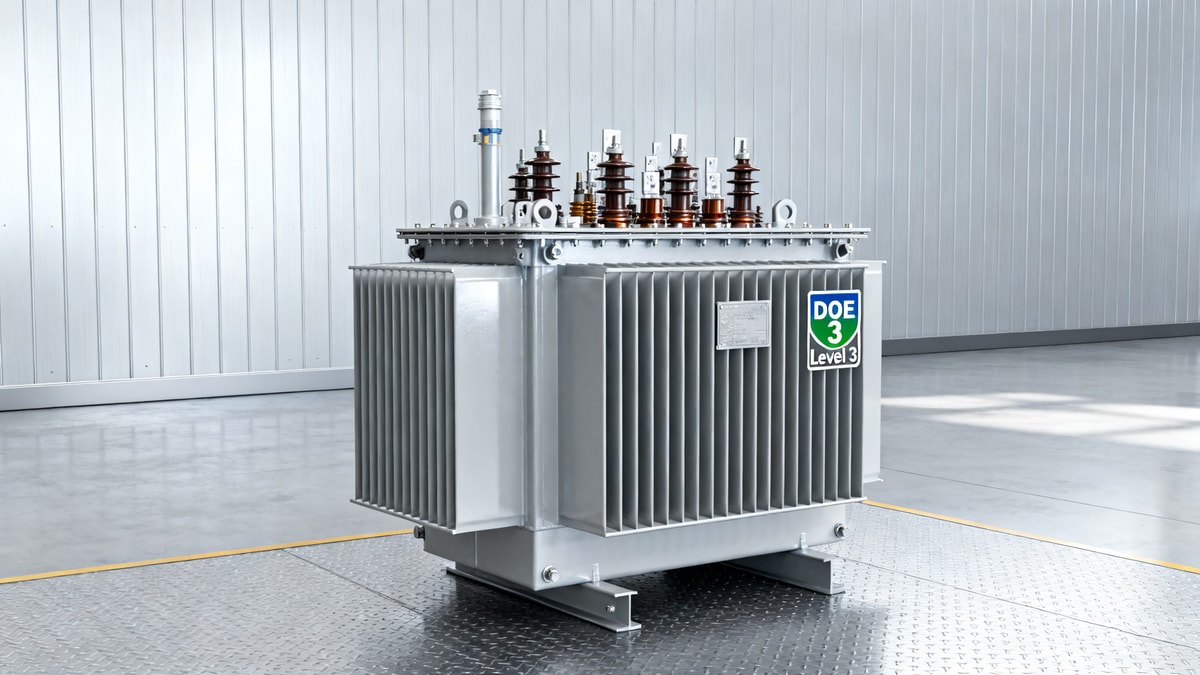
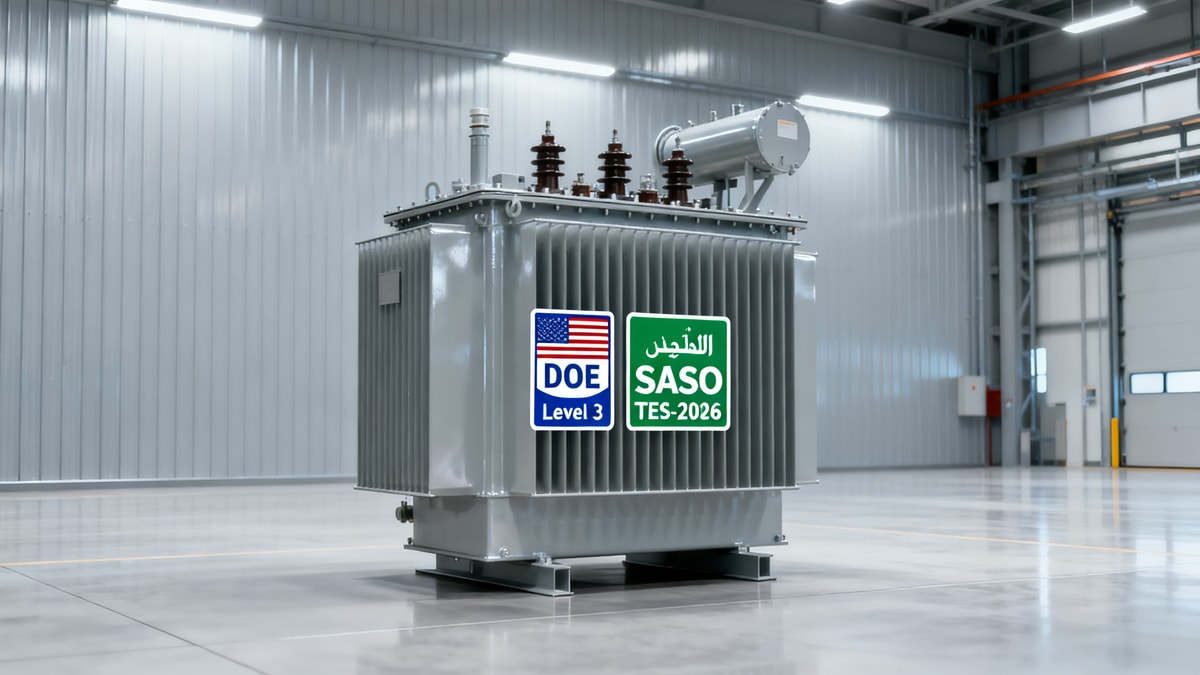
On May 1, 2026, the U.S. Department of Energy (DOE) confirmed full enforcement of the DOE Level 3 energy efficiency standard for industrial dry-type and liquid-immersed transformers—effective July 1, 2026, at 00:00 ET. This regulation directly impacts manufacturers, importers, and supply chain stakeholders serving the U.S. industrial power infrastructure market, particularly those engaged in transformer production, materials sourcing, and cross-border trade.
Event Overview
On May 1, 2026, the U.S. Department of Energy published the 2026 Energy Efficiency Compliance Guidance, formally confirming that the DOE Level 3 efficiency standard for industrial transformers (codified under 10 CFR Part 431, Subpart K) will become mandatory for all models—both domestically produced and imported—starting July 1, 2026. The standard mandates an 18% reduction in no-load losses and a 12% reduction in load losses compared to prior requirements. The guidance applies uniformly to dry-type and liquid-immersed industrial transformers.
Industries Affected by Segment
Direct Trade Enterprises (U.S. Importers & Exporters)
These entities face immediate compliance risk: any transformer shipped to or sold in the U.S. after July 1, 2026 must meet Level 3 specifications. Non-compliant units may be denied entry or subject to enforcement action. Since Chinese manufacturers account for 81% of U.S. transformer imports, exporters from China are especially exposed to customs scrutiny and certification delays.
Raw Material Procurement Firms
Suppliers of copper, aluminum, and core materials are seeing shifting demand signals. The DOE standard drives adoption of lower-loss core technologies—including amorphous metal alloys—which require specialized raw inputs and tighter material tolerances. Procurement teams must now verify supplier capability for DOE-compliant alloy grades and traceable thermal-grade conductors.
Transformer Manufacturing Firms
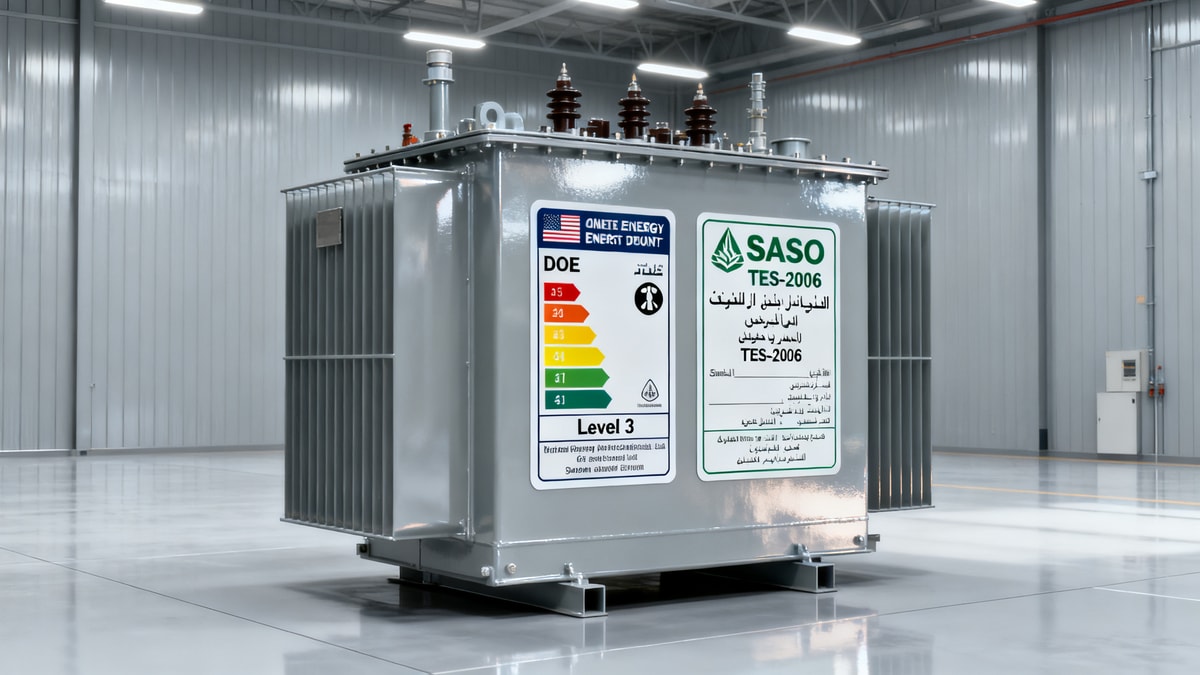
Manufacturers must revalidate designs, recertify test reports, and update labeling per DOE protocols. The 18% no-load loss reduction necessitates redesigns of magnetic cores and insulation systems; the 12% load loss requirement pressures winding layout and conductor selection. Firms with legacy tooling or inventory of pre-Level 3 cores face obsolescence risk post-July 2026.
Supply Chain & Logistics Service Providers
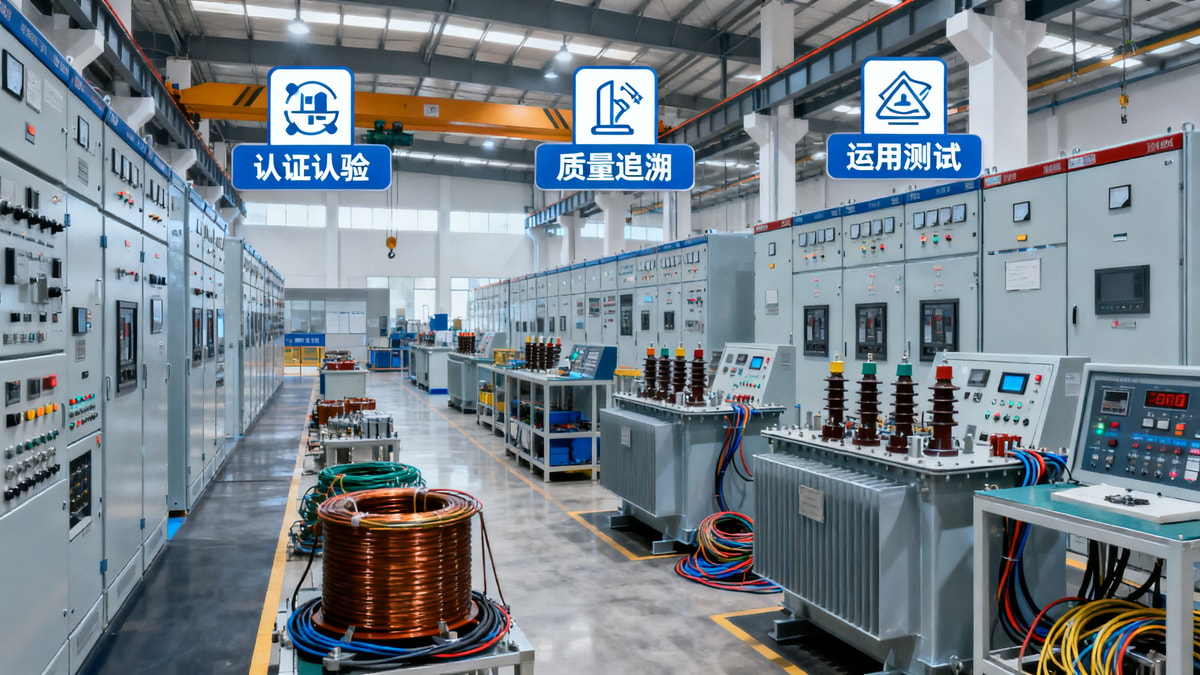
Third-party testing labs, certification bodies, and freight forwarders handling transformer shipments must align documentation workflows with DOE’s new verification framework—including updated test report formats, DOE-recognized lab attestations, and harmonized customs entry codes. Delays in certification validation could bottleneck port clearance timelines.
What Relevant Enterprises or Practitioners Should Focus On Now
Monitor official DOE implementation bulletins and lab accreditation updates
The DOE’s May 1 guidance is the first formal confirmation—but not the final operational detail. Enterprises should track subsequent bulletins on test procedure revisions (e.g., IEEE C57.12.90–2025 alignment), lab recognition status, and enforcement grace periods for transitional stock.
Verify compliance status of active SKUs—and prioritize high-volume export models
Given China’s 81% share of U.S. imports, manufacturers should audit their top 10 export SKUs for Level 3 readiness: confirm whether existing test reports reference the correct edition of 10 CFR Part 431, Subpart K, and whether loss values meet the revised thresholds under standardized test conditions.
Distinguish between regulatory signal and commercial readiness
While enforcement begins July 1, 2026, DOE does not retroactively apply penalties to inventory shipped before that date—even if delivered after. However, importers must ensure that shipment dates, bills of lading, and customs entries clearly reflect pre-July 1 dispatch to avoid misclassification.
Initiate material qualification and supplier alignment now—not after June
Amorphous alloy core procurement and high-temperature insulation validation require lead times exceeding 12 weeks. Firms still relying on conventional silicon steel or standard enameled wire should engage qualified suppliers immediately to avoid production gaps in Q3 2026.
Editorial Perspective / Industry Observation
Observably, this is not merely a technical update—it signals a structural tightening of U.S. energy policy toward embedded carbon accountability in industrial equipment. Analysis shows the Level 3 standard advances beyond incremental improvement: it effectively raises the minimum performance bar for market access, incentivizing design innovation over component substitution alone. From an industry perspective, the July 1, 2026 date functions less as a one-time deadline and more as a pivot point—where compliance transitions from optional differentiation to non-negotiable eligibility. Continued attention is warranted not only for enforcement consistency but also for potential cascading effects on adjacent standards (e.g., motor-driven systems or substation-level efficiency reporting).
Conclusion
U.S. DOE Level 3 enforcement represents a definitive regulatory milestone—not a provisional measure. Its significance lies in its enforceability, scope (covering all import and domestic units), and quantified loss-reduction targets. It is best understood not as a future possibility, but as an active compliance threshold now entering its final implementation phase. Stakeholders should treat it as an operational imperative—not a strategic option.
Source: U.S. Department of Energy, 2026 Energy Efficiency Compliance Guidance, issued May 1, 2026.
Note: Ongoing monitoring is recommended for DOE-issued clarifications on test methodology, lab recognition, and transitional inventory treatment—none of which were detailed in the May 1 guidance.
Technical Specifications
- SASO Mandates Dual Energy Label for Industrial Transformers in Saudi Arabia from May 2026Author :Grid Infrastructure Analyst
- EN 61000-4-30:2026 Enforced: Class A Harmonic Traceability Mandatory for EU PQ AnalyzersAuthor :Precision Metrology Expert
- US DOE Level 3 Transformer Efficiency Standard Effective July 1, 2026Author :Grid Infrastructure Analyst
Expert Insights

Chief Security Architect
Dr. Thorne specializes in the intersection of structural engineering and digital resilience. He has advised three G7 governments on industrial infrastructure security.
Related Analysis
- May 06, 2026SASO Mandates Dual Energy Label for Industrial Transformers in Saudi Arabia from May 2026Author :Grid Infrastructure Analyst
- May 06, 2026EN 61000-4-30:2026 Enforced: Class A Harmonic Traceability Mandatory for EU PQ AnalyzersAuthor :Precision Metrology Expert
- May 06, 2026US DOE Level 3 Transformer Efficiency Standard Effective July 1, 2026Author :Grid Infrastructure Analyst
Core Sector // 01
Security & Safety
- SASO Mandates Dual Energy Label for Industrial Transformers in Saudi Arabia from May 2026Author :Grid Infrastructure Analyst

- US DOE Level 3 Transformer Efficiency Standard Effective July 1, 2026Author :Grid Infrastructure Analyst

- SASO Mandates Dual Energy Labels for Industrial Transformers in Saudi Arabia from May 2026Author :Grid Infrastructure Analyst

- US DOE Level 3 Transformer Efficiency Rule Takes Effect July 1, 2026Author :Grid Infrastructure Analyst

- How to assess an Electrical & Power manufacturer beyond catalog claimsAuthor :Grid Infrastructure Analyst

- How to request an Electrical & Power quotation without missing costsAuthor :Grid Infrastructure Analyst

- What to check before hiring EPC contractors for power plantsAuthor :Grid Infrastructure Analyst

- Engineering procurement process mistakes that delay plant deliveryAuthor :Grid Infrastructure Analyst