SASO Mandates Dual Energy Label for Industrial Transformers in Saudi Arabia from May 2026
Author
Date Published
Reading Time
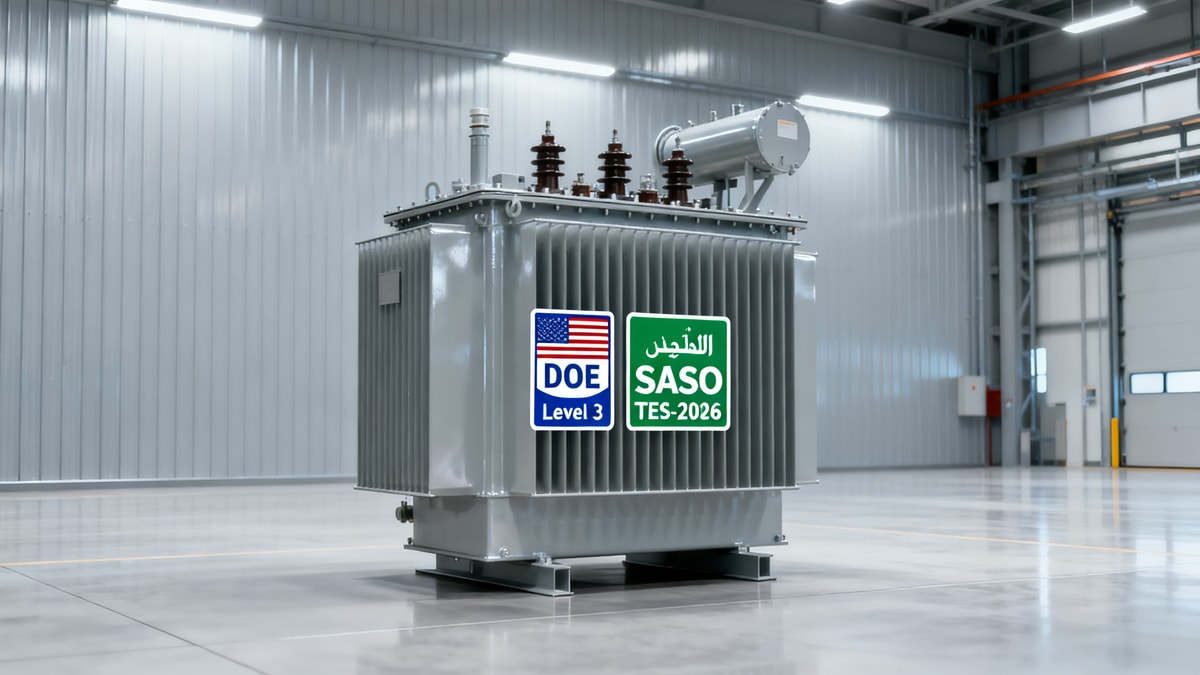
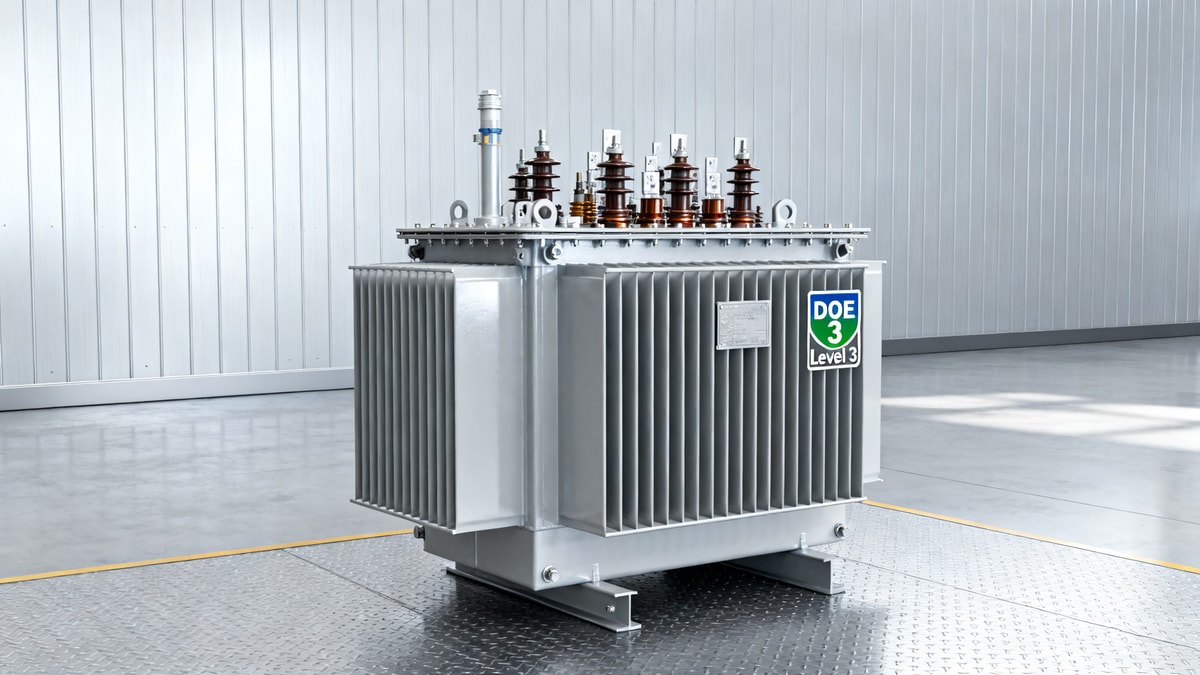
Saudi Arabia’s Standards, Metrology and Quality Organization (SASO) has updated its energy labeling requirements for industrial transformers, effective 15 May 2026. The revision mandates dual labeling — both U.S. DOE Level 3 and the newly introduced SASO TES-2026 — for all industrial transformers placed on the Saudi market. This change directly affects manufacturers, exporters, and distributors of power and distribution transformers supplying to Saudi Arabia, particularly those based in China and other major exporting countries.
Event Overview
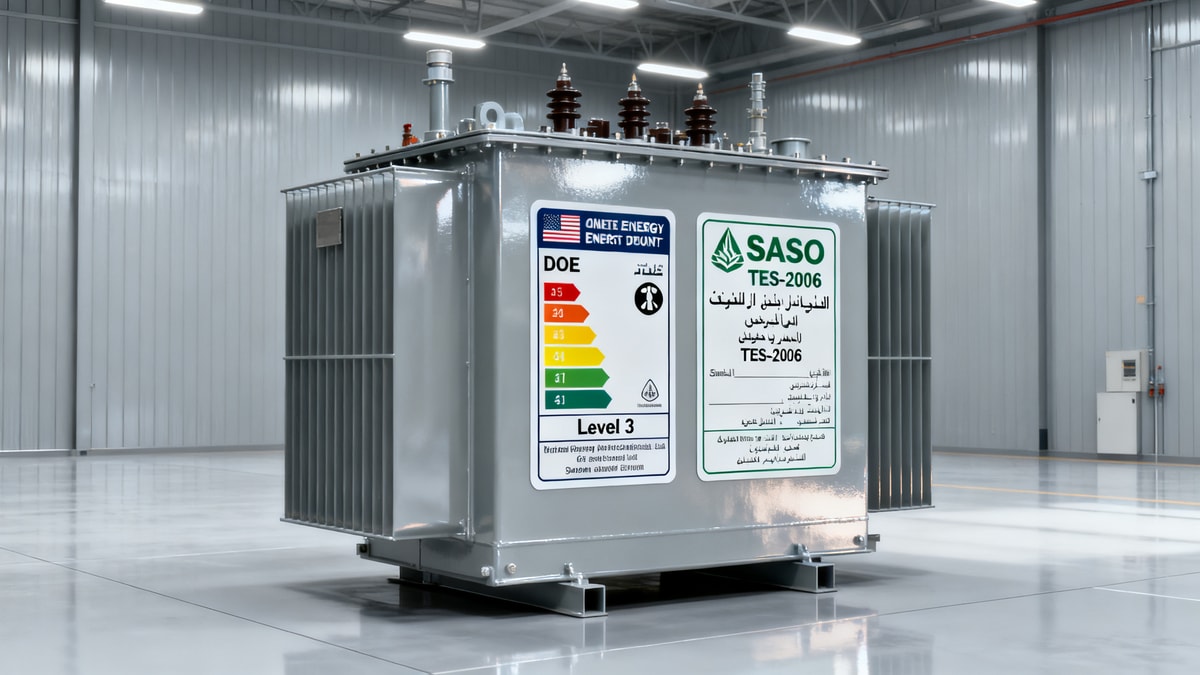
On 1 May 2026, SASO issued an update to the SASO Energy Efficiency Labeling Regulation. As of 15 May 2026, all industrial transformers sold in Saudi Arabia must bear both the U.S. Department of Energy (DOE) Level 3 efficiency label and the national SASO TES-2026 label. The regulation strengthens enforcement by increasing on-site verification of measured copper and iron losses. No transitional period or grandfathering clause is specified in the publicly available information.
Industries Affected
Direct Exporters and Trade Enterprises
Exporters shipping industrial transformers to Saudi Arabia must now ensure compliance with two distinct regulatory frameworks. Since DOE Level 3 certification requires testing under U.S. procedures (e.g., IEEE C57.12.90), and SASO TES-2026 implies local test protocols and documentation, exporters face parallel certification timelines and potential delays in customs clearance if labels are incomplete or inconsistent.
Transformer Manufacturing Enterprises
Manufacturers — especially those producing medium- and high-voltage dry-type or oil-immersed industrial transformers — must revise product labeling systems, update technical documentation, and validate test reports against both DOE and SASO requirements. Internal quality control processes may need recalibration to meet tighter loss tolerance thresholds implied by the dual-label regime.
Supply Chain and Certification Service Providers
Third-party testing labs, certification bodies, and labeling solution vendors serving transformer exporters will see increased demand for dual-standard validation services. However, current public information does not confirm whether SASO-recognized labs are authorized to issue DOE-compliant test reports — a potential bottleneck requiring cross-accreditation coordination.
What Enterprises Should Monitor and Do Now
Track official SASO implementation guidance
While the effective date is confirmed, SASO has not yet published detailed technical annexes for TES-2026 (e.g., test methods, loss limits, label layout specifications). Enterprises should monitor SASO’s official portal and notify local representatives to capture updates before May 2026.
Verify label system compatibility across markets
Manufacturers using automated label printing or ERP-integrated labeling modules must audit whether their systems support concurrent display of two regulatory marks — including font, size, placement, and bilingual (Arabic/English) requirements — without violating either standard’s formatting rules.
Confirm certification pathway alignment
DOE Level 3 certification is administered by U.S.-accredited labs; SASO TES-2026 certification is expected to require SASO-recognized entities. Companies should assess whether existing certification partners hold dual accreditation — or whether separate engagements (and associated lead times/costs) are necessary.
Review inventory and shipment schedules
Transformers shipped to Saudi Arabia on or after 15 May 2026 must comply. Enterprises should map production batches and logistics windows to avoid non-compliant units entering the market — where enforcement reportedly includes refusal of entry or mandatory re-labeling at port.
Editorial Perspective / Industry Observation
Observably, this dual-label requirement reflects SASO’s strategic shift toward harmonizing domestic energy policy with internationally referenced benchmarks — using DOE Level 3 as a de facto technical anchor while retaining national oversight via TES-2026. Analysis shows it is less a standalone efficiency upgrade and more a regulatory convergence mechanism: it leverages U.S. test rigor while enabling Saudi authorities to enforce locally defined compliance checkpoints (e.g., field loss verification). From an industry perspective, this signals growing emphasis on verifiable, real-world performance — not just lab-certified values — in Gulf energy markets. It is currently best understood as a compliance threshold, not merely a labeling formality.
This development is not an isolated update but part of a broader regional trend: Gulf Cooperation Council (GCC) members are increasingly aligning minimum energy performance standards (MEPS) with international references while layering national verification layers. Continued attention is warranted as SASO may extend similar dual-label models to motors, pumps, or HVAC equipment.
Conclusion
The SASO dual-label mandate represents a concrete operational shift for transformer exporters targeting Saudi Arabia — one that elevates documentation, testing, and labeling precision beyond prior requirements. It should be understood not as a temporary adjustment but as an institutionalized step toward stricter, evidence-based market access conditions. Enterprises are advised to treat it as a binding compliance milestone requiring coordinated action across engineering, certification, and logistics functions — rather than a procedural footnote.
Source Attribution
Main source: SASO Energy Efficiency Labeling Regulation update, effective 1 May 2026, with enforcement starting 15 May 2026.
Points requiring ongoing observation: official publication of TES-2026 technical annexes; recognition status of labs for combined DOE/SASO testing; any announced grace period or phased rollout not reflected in current public notices.
Technical Specifications
- SASO Mandates Dual Energy Label for Industrial Transformers in Saudi Arabia from May 2026Author :Grid Infrastructure Analyst
- EN 61000-4-30:2026 Enforced: Class A Harmonic Traceability Mandatory for EU PQ AnalyzersAuthor :Precision Metrology Expert
- US DOE Level 3 Transformer Efficiency Standard Effective July 1, 2026Author :Grid Infrastructure Analyst
Expert Insights

Chief Security Architect
Dr. Thorne specializes in the intersection of structural engineering and digital resilience. He has advised three G7 governments on industrial infrastructure security.
Related Analysis
- May 06, 2026SASO Mandates Dual Energy Label for Industrial Transformers in Saudi Arabia from May 2026Author :Grid Infrastructure Analyst
- May 06, 2026EN 61000-4-30:2026 Enforced: Class A Harmonic Traceability Mandatory for EU PQ AnalyzersAuthor :Precision Metrology Expert
- May 06, 2026US DOE Level 3 Transformer Efficiency Standard Effective July 1, 2026Author :Grid Infrastructure Analyst
Core Sector // 01
Security & Safety
- SASO Mandates Dual Energy Label for Industrial Transformers in Saudi Arabia from May 2026Author :Grid Infrastructure Analyst

- US DOE Level 3 Transformer Efficiency Standard Effective July 1, 2026Author :Grid Infrastructure Analyst

- SASO Mandates Dual Energy Labels for Industrial Transformers in Saudi Arabia from May 2026Author :Grid Infrastructure Analyst

- US DOE Level 3 Transformer Efficiency Rule Takes Effect July 1, 2026Author :Grid Infrastructure Analyst

- How to assess an Electrical & Power manufacturer beyond catalog claimsAuthor :Grid Infrastructure Analyst

- How to request an Electrical & Power quotation without missing costsAuthor :Grid Infrastructure Analyst

- What to check before hiring EPC contractors for power plantsAuthor :Grid Infrastructure Analyst

- Engineering procurement process mistakes that delay plant deliveryAuthor :Grid Infrastructure Analyst