EN 61000-4-30:2026 Enforced: Class A Harmonic Traceability Mandatory for EU PQ Analyzers
Author
Date Published
Reading Time
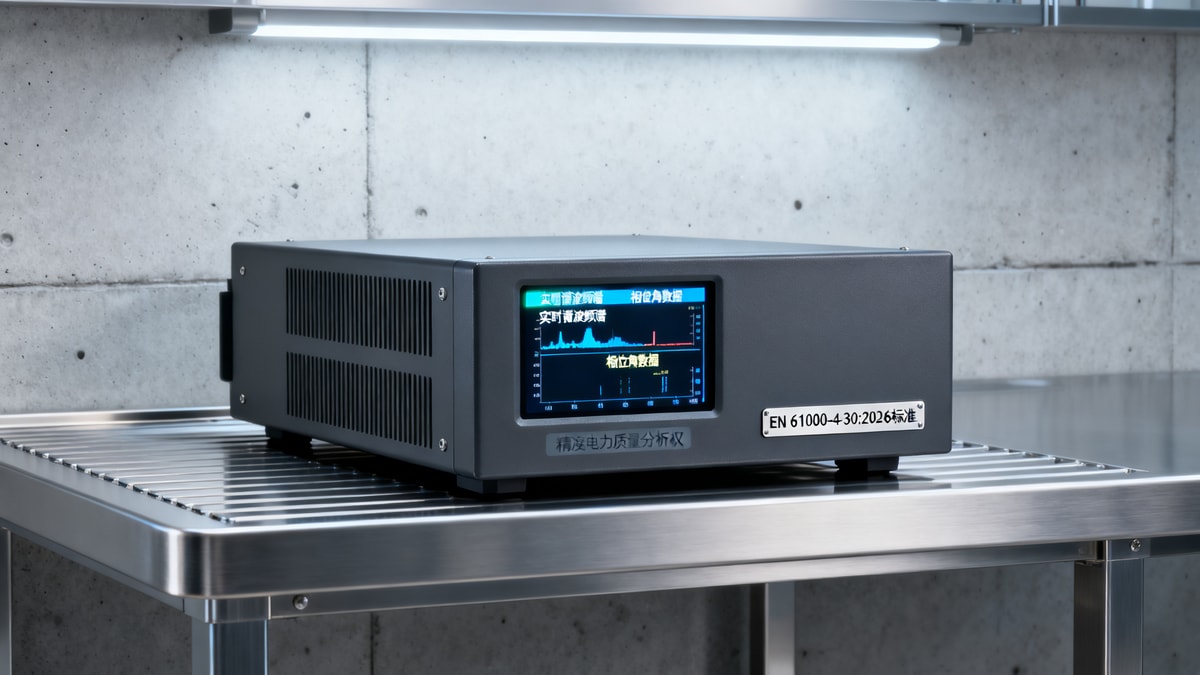
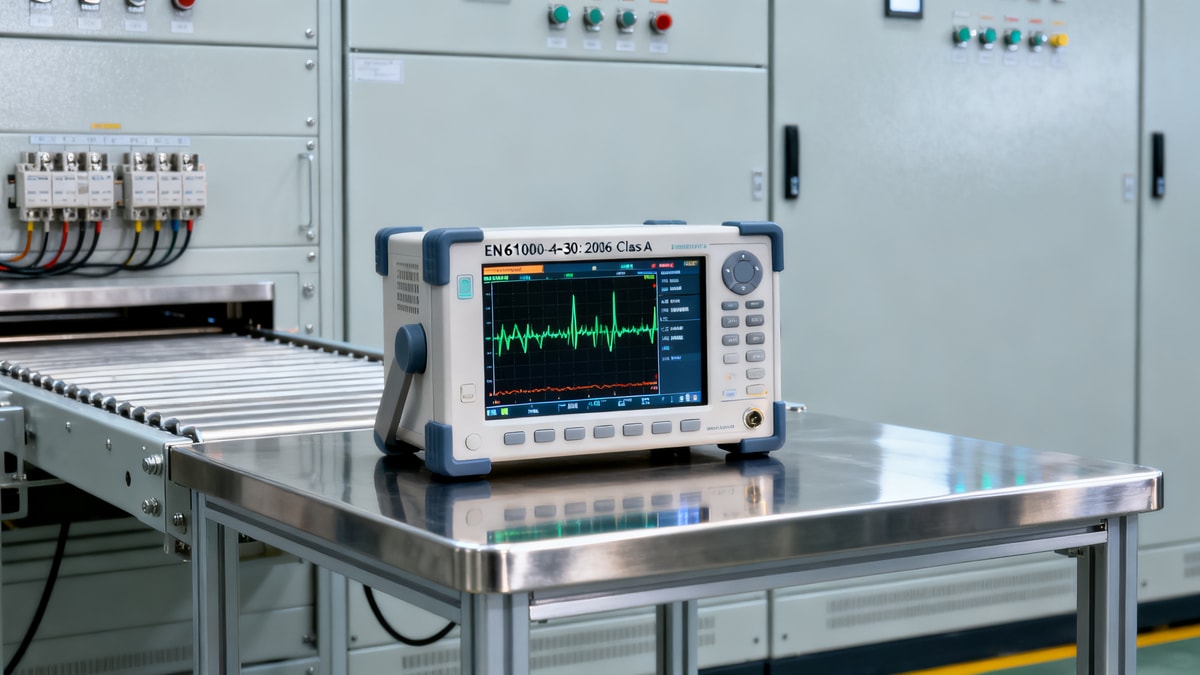
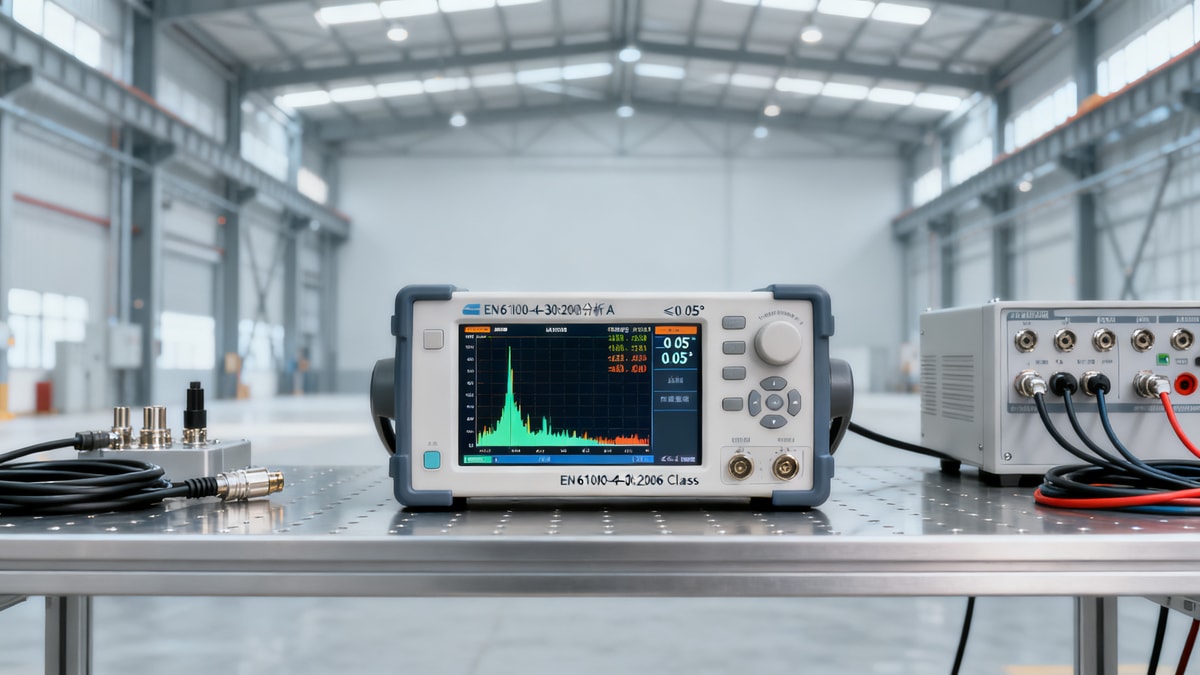
On 1 May 2026, the European Union officially published EN 61000-4-30:2026 in the Official Journal of the European Union (OJEU), making Class A real-time harmonic phase-angle traceability — with ≤1 ms measurement latency across the full harmonic spectrum — a mandatory prerequisite for CE marking of industrial power quality (PQ) analyzers. This update directly impacts manufacturers, exporters, and integrators supplying PQ analyzers to EU industrial, energy, and infrastructure sectors.
Event Overview
The European Commission confirmed EN 61000-4-30:2026 as a harmonized standard under the EU Electromagnetic Compatibility (EMC) Directive on 1 May 2026 via publication in the OJEU. The standard mandates that industrial PQ analyzers must meet Class A performance requirements — specifically, real-time harmonic phase-angle溯源 (traceability) within 1 millisecond — to obtain CE marking and enter the EU market. No transitional period is indicated in the official text; compliance is required for all new product placements from the effective date. Testing capacity demand has prompted Chinese manufacturers — accounting for 57% of global PQ analyzer production — to jointly establish laboratories with TÜV SÜD and SGS.
Industries Affected by Segment
Direct Exporters & OEM Manufacturers
Manufacturers exporting PQ analyzers to the EU must now validate Class A compliance prior to CE marking. Non-compliant units cannot be legally placed on the EU market after 1 May 2026. Impact includes delayed shipments, retesting costs, and potential redesign of signal acquisition and processing firmware/hardware to meet the 1 ms full-spectrum harmonic phase-angle traceability requirement.
Industrial System Integrators & Panel Builders
Integrators specifying or embedding PQ analyzers in switchgear, energy monitoring systems, or smart grid substations must verify Class A certification for each unit supplied. Failure to do so may invalidate the overall system’s CE declaration and expose integrators to liability under EU product liability rules. Procurement lead times are likely to extend due to increased testing backlogs at notified bodies.
Calibration & Metrology Service Providers
Service providers offering on-site PQ analyzer verification or calibration must now align their reference standards and traceability chains with the updated Class A timing and spectral accuracy requirements. Existing calibration procedures may no longer satisfy the standard’s real-time phase-angle validation criteria, requiring updates to test protocols and documentation.
Supply Chain & Distributors
Distributors holding legacy PQ analyzer inventory must confirm whether units placed on the EU market before 1 May 2026 remain compliant under the ‘placed on the market’ principle (i.e., products lawfully placed pre-enforcement may continue circulation). However, post-1 May 2026 restocking requires full Class A certification — affecting inventory planning, labeling, and technical documentation management.
What Enterprises and Practitioners Should Focus On Now
Monitor official interpretations from EU national market surveillance authorities
While the OJEU publication confirms enforceability, national enforcement guidance — especially regarding legacy stock, software-upgradable compliance, and definition of ‘real-time’ in distributed measurement architectures — remains pending. Stakeholders should track updates from national metrology institutes (e.g., PTB in Germany, LNE in France).
Prioritize verification of Class A test reports issued by EU-notified bodies
Not all test reports labeled ‘Class A’ under earlier editions (e.g., EN 61000-4-30:2015) satisfy the 2026 revision’s 1 ms full-spectrum phase-angle traceability requirement. Confirm that reports explicitly cite EN 61000-4-30:2026 and include validated measurement uncertainty for harmonic phase angles at ≥50th order.
Distinguish between regulatory signal and operational readiness
The OJEU listing signals formal legal enforceability, but actual market access depends on notified body capacity and internal manufacturer readiness. Lead times for Class A testing have already extended beyond 12 weeks per major lab — meaning firms without pre-submitted samples risk Q3 2026 shipment delays.
Update technical documentation and supply chain specifications immediately
CE declarations of conformity, user manuals, and datasheets must reflect EN 61000-4-30:2026 Class A compliance. Contracts with EU customers and distributors should be reviewed to ensure warranty, liability, and compliance clauses align with the new standard’s scope and measurement definitions.
Editorial Perspective / Industry Observation
Observably, this is not merely a technical update but a structural tightening of metrological accountability in power quality measurement. Analysis shows the 1 ms full-spectrum phase-angle traceability requirement effectively raises the bar for time-synchronized wideband harmonic analysis — moving beyond amplitude accuracy into deterministic temporal fidelity. From an industry perspective, it signals a shift toward treating PQ analyzers as primary metrological instruments rather than general-purpose monitoring tools. Current enforcement appears focused on new product introductions; however, sustained attention is warranted as market surveillance authorities begin auditing field-deployed devices in high-risk sectors (e.g., data centers, rail traction, renewable generation plants). This standard is best understood as an established regulatory outcome — not a future proposal — with immediate commercial consequences for non-compliant offerings.
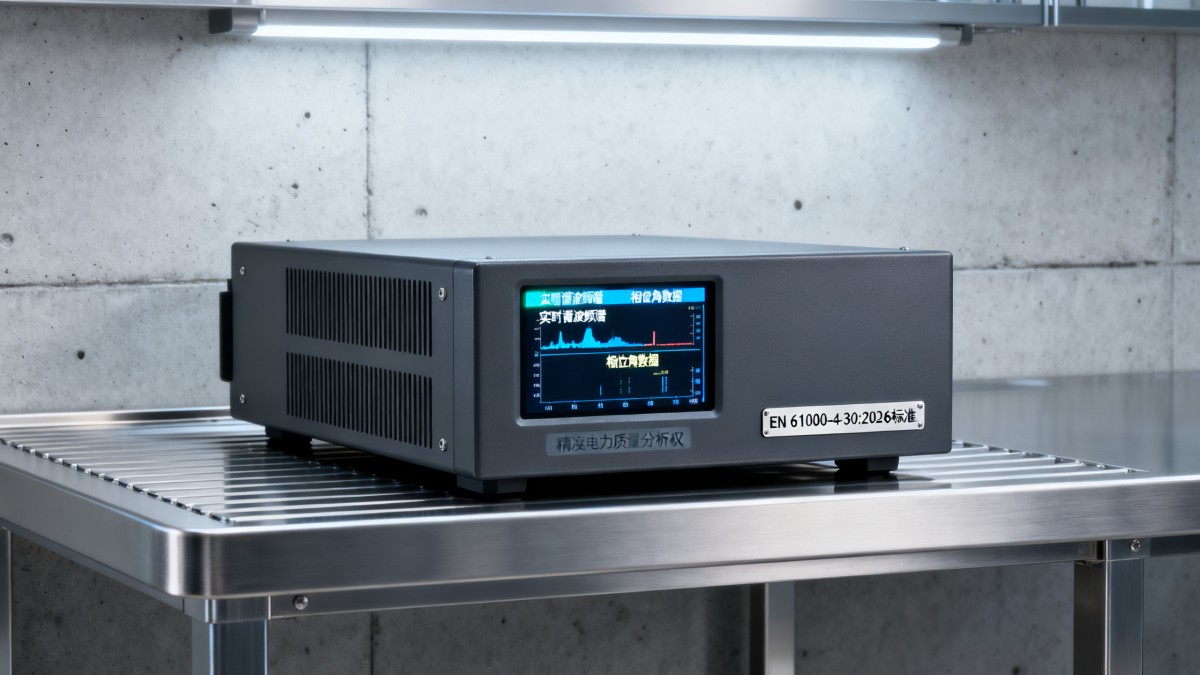
In summary, EN 61000-4-30:2026 formalizes a higher metrological threshold for PQ analyzers entering the EU — one grounded in real-time phase coherence across harmonics. Its significance lies less in novelty and more in enforceability: it transforms a long-discussed Class A benchmark into a hard gate for market access. For stakeholders, this is best interpreted not as a temporary compliance hurdle, but as a permanent recalibration of technical expectations for power quality instrumentation in regulated markets.
Source: Official Journal of the European Union (OJEU), C/2026/289, 1 May 2026. Note: Implementation timelines for specific device categories (e.g., portable vs. permanently installed analyzers) and guidance on software-based compliance upgrades remain under observation.
Technical Specifications
- SASO Mandates Dual Energy Label for Industrial Transformers in Saudi Arabia from May 2026Author :Grid Infrastructure Analyst
- EN 61000-4-30:2026 Enforced: Class A Harmonic Traceability Mandatory for EU PQ AnalyzersAuthor :Precision Metrology Expert
- US DOE Level 3 Transformer Efficiency Standard Effective July 1, 2026Author :Grid Infrastructure Analyst
Expert Insights

Chief Security Architect
Dr. Thorne specializes in the intersection of structural engineering and digital resilience. He has advised three G7 governments on industrial infrastructure security.
Related Analysis
- May 06, 2026SASO Mandates Dual Energy Label for Industrial Transformers in Saudi Arabia from May 2026Author :Grid Infrastructure Analyst
- May 06, 2026EN 61000-4-30:2026 Enforced: Class A Harmonic Traceability Mandatory for EU PQ AnalyzersAuthor :Precision Metrology Expert
- May 06, 2026US DOE Level 3 Transformer Efficiency Standard Effective July 1, 2026Author :Grid Infrastructure Analyst
Core Sector // 01
Security & Safety
- EN 61000-4-30:2026 Enforced: Class A Harmonic Traceability Mandatory for EU PQ AnalyzersAuthor :Precision Metrology Expert

- INMETRO Launches Review of EMP Requirements for Industrial Laser Distance Meters in BrazilAuthor :Precision Metrology Expert

- EN 61000-4-30:2026 Class A Certification Mandatory for PQ Analyzers in EUAuthor :Precision Metrology Expert

- INMETRO to Mandate EMP Immunity for Industrial Laser Distance Meters in BrazilAuthor :Precision Metrology Expert

- Instruments & Measurement OEM choices that affect calibration accuracyAuthor :Precision Metrology Expert

- Which industrial standards manufacturer signals real quality controlAuthor :Precision Metrology Expert

- INMETRO Proposes EMP Immunity Requirement for Industrial Laser Distance Meters in BrazilAuthor :Precision Metrology Expert

- EN 61000-4-30:2026 Mandatory for Industrial PQ Analyzers in EUAuthor :Precision Metrology Expert