How to Vet a Security & Safety Supplier Before a Large Rollout
Author
Date Published
Reading Time
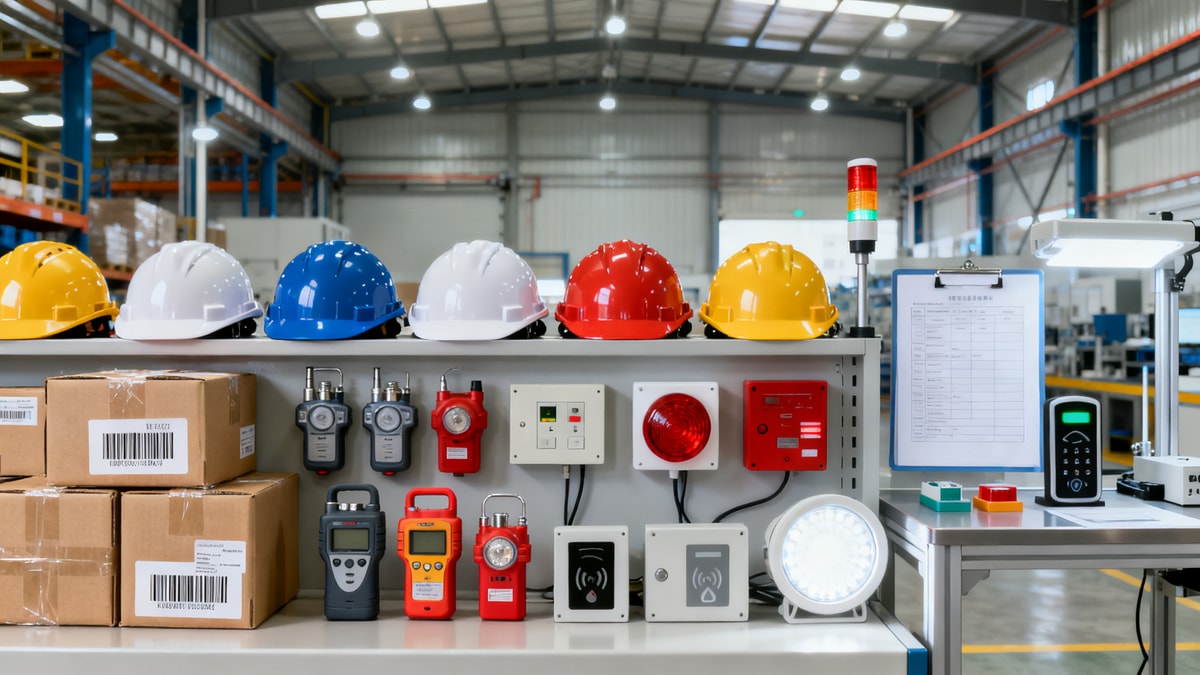
Choosing a Security & Safety supplier for a large-scale rollout is a high-stakes decision that affects compliance, uptime, and long-term operating risk. For procurement teams, effective supplier vetting goes beyond price checks to include certifications, manufacturing consistency, delivery capability, and after-sales support. This guide outlines the key criteria and practical steps buyers should use to assess supplier reliability before making a major sourcing commitment.
In industrial environments, a weak supplier decision can create delays across 2 to 4 project phases, increase non-conformance risk, and raise maintenance costs long after installation. Whether the rollout involves PPE, fire detection, access control, emergency lighting, gas monitoring, or site-wide safety systems, procurement leaders need a repeatable method for screening vendors before issuing a large purchase order.
For EPC contractors, plant operators, and industrial buyers, the right Security & Safety supplier should prove more than catalog depth. The supplier must demonstrate standards compliance, production stability, documentation discipline, traceability, and service responsiveness across multiple sites, shifts, and operating conditions.
Define the Scope Before You Vet the Supplier
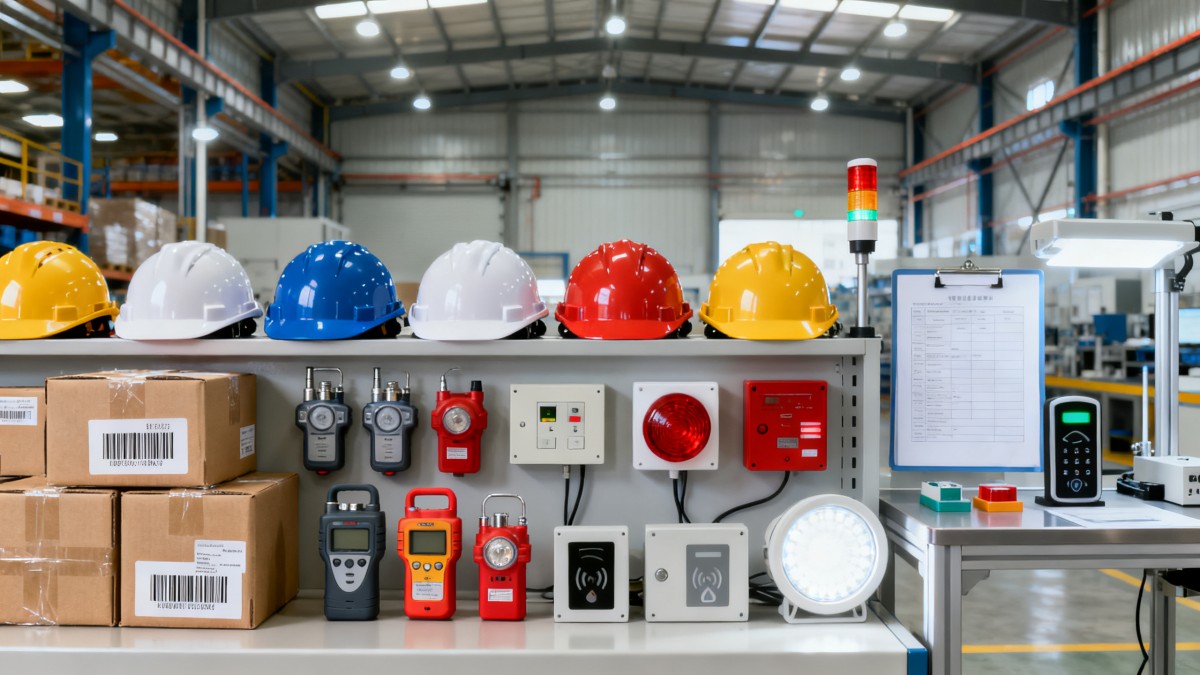
Supplier vetting starts with internal clarity. Before comparing vendors, procurement teams should define the rollout in measurable terms: number of sites, estimated unit volumes, safety categories, required certifications, environmental conditions, and delivery windows. A Security & Safety supplier that performs well for a 1-site order may struggle with a 12-site deployment over 90 days.
This early scoping step reduces two common failures: buying technically compliant products that are operationally unsuitable, and selecting a low-cost source that cannot support replenishment, commissioning, or warranty handling after go-live.
Map the rollout by risk class and usage scenario
Not every item carries the same sourcing risk. Buyers should split requirements into at least 3 groups: life-critical equipment, compliance-driven infrastructure, and routine consumables. For example, fall protection systems, gas detectors, emergency shutdown interfaces, and fire alarms require tighter vetting than standard signage or storage cabinets.
- Life-critical items: zero tolerance for undocumented substitutions
- Compliance-driven systems: certification and test records must be current
- Routine safety items: focus on replenishment speed and consistency
Key pre-vetting questions
- How many SKUs will be rolled out in the first 6 to 12 months?
- Which items require CE, UL, ISO-linked process control, or local approvals?
- What is the acceptable lead time range: 7 days, 21 days, or 45 days?
- Will the supplier support training, installation guidance, or site audits?
- What percentage of the order is critical for day-one operations?
The table below helps procurement teams align sourcing criteria with product criticality before approaching any Security & Safety supplier.
The main takeaway is simple: a supplier review should not apply the same checklist to every item. Segmenting by risk class allows procurement teams to spend more time where failure would have the highest operational or legal impact.
Evaluate Compliance, Documentation, and Manufacturing Control
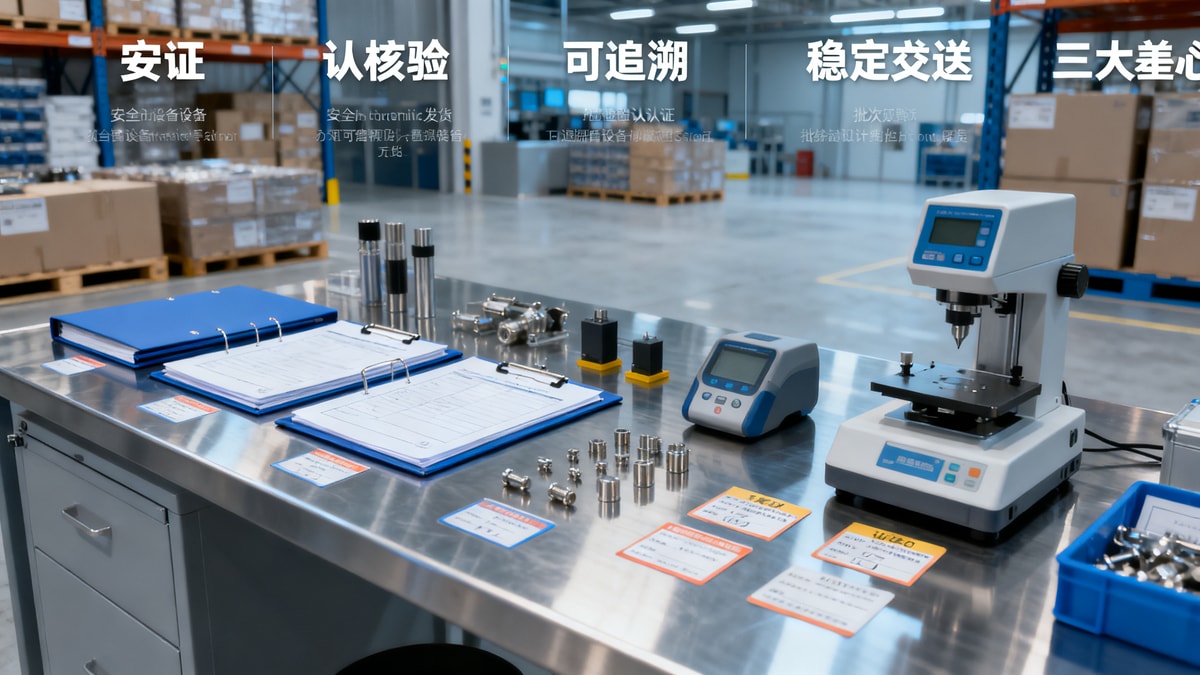
A qualified Security & Safety supplier should be able to present documentation quickly and consistently. In most industrial buying processes, if key files cannot be shared within 3 to 5 business days, that is often an early warning sign. Delayed or incomplete records may point to weak internal controls, undocumented sourcing changes, or poor familiarity with regulated markets.
Check certifications, but also verify their relevance
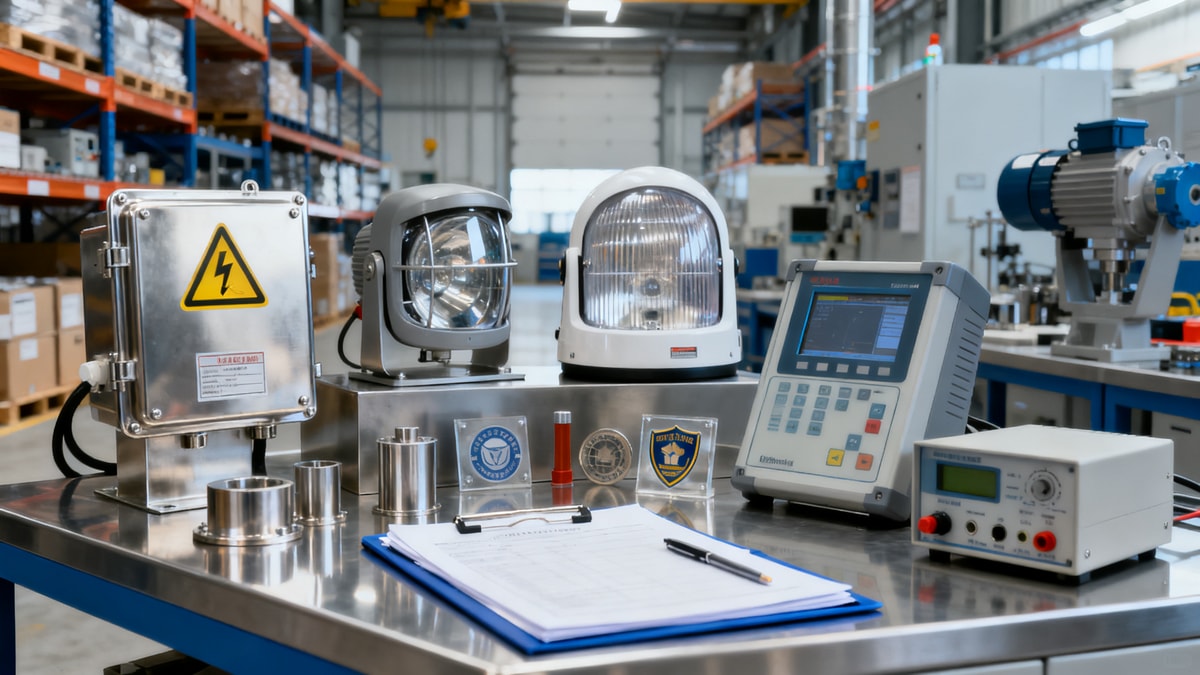
Procurement teams often ask whether a supplier has CE, UL, or ISO credentials, but the better question is whether the specific product family, production site, and shipped configuration are covered. For industrial projects, buyers should confirm at least 4 document types where applicable: declaration of conformity, test reports, quality management certificates, and product traceability records.
For example, a vendor may hold an ISO 9001 certificate, yet outsource a key assembly step to a different plant. If that subcontracted process affects enclosure sealing, electrical safety, or alarm response reliability, the purchasing risk changes immediately.
Review manufacturing discipline and lot consistency
Large rollouts depend on repeatability. A Security & Safety supplier should be able to explain incoming inspection, in-process checks, final testing, and non-conformance handling. Buyers do not always need proprietary process details, but they should require enough evidence to judge whether the supplier can maintain consistent output across 500 units, 5,000 units, or multi-batch deliveries over 6 months.
- Ask how lots are identified and traced
- Request sample inspection or final test templates
- Confirm change control procedures for components and materials
- Check how defective units are segregated and reported
Warning signs during document review
- Certificate names do not match the quoted product description
- Test dates are outdated relative to the current design revision
- Labels, manuals, and packaging show inconsistent specifications
- Serial number logic is missing or cannot be explained
The table below summarizes practical validation points procurement teams can use during supplier qualification.
A supplier that can support a large industrial rollout usually handles documentation as part of normal operations, not as a one-off favor. That difference becomes especially visible when multiple sites need the same technical pack within a short implementation window.
Assess Capacity, Delivery Reliability, and Supply Chain Resilience
Even technically strong suppliers can fail on execution. For large-scale programs, procurement should examine whether the Security & Safety supplier can deliver on schedule, absorb volume changes, and maintain product continuity when a component shortage or freight disruption occurs. A 14-day lead time on paper means little if actual delivery swings between 10 and 35 days.
Test the supplier’s real production and logistics capability
Ask for standard lead times, surge capacity, monthly output ranges, and replenishment policy. Buyers should also understand whether products are manufactured to order, assembled from stocked modules, or shipped from regional inventory. These models create very different risk profiles during expansion, emergency replacement, or phased rollout.
For instance, if 30% of the order consists of imported detection devices with 8-week replenishment, but the project plan assumes 2-week replacements, the sourcing model is misaligned from the start.
Capacity checks that matter
- Average lead time by product family
- Maximum monthly output without quality drift
- Number of approved sub-suppliers for critical components
- Regional warehouse support and spare stock strategy
- OTD expectation, such as 95% on-time delivery target
Review packaging, labeling, and site-level delivery readiness
Large deployments often fail at the final 10%: wrong labels, mixed cartons, missing manuals, incomplete accessory kits, or no pallet-level traceability. A capable Security & Safety supplier should support shipment marking by site, zone, or installation package, especially when project teams are receiving goods across multiple locations.
Where practical, buyers should request a pilot shipment of 20 to 50 units or one representative mixed batch. This is a low-cost way to validate carton labeling, barcode logic, documentation completeness, and delivery discipline before scaling to a full purchase order.
Inspect Service Capability After the Purchase Order
The best supplier evaluations continue beyond product acceptance. In industrial settings, after-sales performance affects uptime, maintenance planning, and total cost of ownership for 12 to 36 months after deployment. Procurement should therefore assess service structure before award, not after the first issue appears on site.
Measure response speed and technical support depth
A Security & Safety supplier should define service response times for commercial, technical, and warranty matters. As a baseline, buyers often look for quotation turnaround within 48 to 72 hours, document response within 3 business days, and initial after-sales acknowledgment within 24 hours for urgent issues.
Support quality matters as much as speed. Ask whether the supplier can provide remote diagnostics, installation guidance, calibration instructions, replacement part mapping, and training materials for site teams. If support depends entirely on one salesperson, continuity risk is too high for a major rollout.
Service questions to include in the RFQ stage
- What is the standard warranty period: 12 months, 18 months, or longer?
- How are DOA or field failures processed and documented?
- Are spare parts available separately, and for how many years?
- Can the supplier support commissioning or user training?
- Is there a clear escalation path for critical safety issues?
Procurement teams should also evaluate whether warranty terms are operationally usable. A nominal warranty has limited value if return authorization takes 2 weeks, overseas return freight is unclear, or root-cause reports are never shared.
Use a Structured Vetting Process and Scorecard
The most reliable buying decisions come from a structured process rather than informal impressions. For a large rollout, a 5-step supplier qualification workflow can help procurement compare options consistently and defend the final award decision to operations, engineering, HSE, and finance stakeholders.
A practical 5-step workflow
- Define scope, criticality, compliance requirements, and expected annual volume
- Issue RFQ with technical, documentation, and service questionnaires
- Review samples, records, and pilot delivery performance
- Score suppliers across quality, delivery, service, and commercial fit
- Approve with conditions, dual-source, or reject based on risk level
Suggested scoring model
Many buyers use a weighted model with 4 to 6 categories. A common structure is 30% quality and compliance, 25% delivery capability, 20% technical support and service, 15% commercial terms, and 10% communication and responsiveness. The exact weighting should match the project’s risk profile.
This approach prevents a low unit price from overshadowing weak documentation, unstable lead times, or poor support coverage. In safety procurement, the cheapest option can become the most expensive if rework, downtime, or requalification is required.
Common mistakes buyers should avoid
- Approving a supplier based only on samples, without reviewing batch controls
- Accepting generic certificates not tied to the quoted product scope
- Ignoring replacement parts and service support during bid evaluation
- Failing to run a pilot shipment before a multi-site release
- Using one supplier for all categories without criticality-based segmentation
A disciplined scorecard also improves supplier conversations. Instead of vague concerns, procurement teams can identify specific gaps such as missing traceability, uncertain 6-week lead times, or no documented calibration support for field devices.
Final Buying Guidance for Procurement Teams
When evaluating a Security & Safety supplier for a major rollout, procurement should treat the decision as an operational risk review, not just a sourcing exercise. The most dependable partners show consistent strength across 4 areas: compliance credibility, manufacturing control, delivery performance, and after-sales execution.
A good buying process starts with internal scope definition, continues through document and factory validation, and ends with service and delivery checks that reflect real site conditions. This is especially important for industrial buyers managing phased installations, strict safety obligations, and long operating cycles.
If you are preparing a large sourcing program and need a more reliable framework for supplier screening, product comparison, or technical qualification, now is the time to align procurement criteria with rollout risk. Contact us to discuss your sourcing priorities, request a tailored evaluation checklist, or explore more industrial Security & Safety solutions built for scalable deployment.
Technical Specifications
- US DOE Level 3 Transformer Efficiency Rule Takes Effect July 1, 2026Author :Grid Infrastructure Analyst
- INMETRO Proposes EMP Immunity Requirement for Industrial Laser Distance Meters in BrazilAuthor :Precision Metrology Expert
- Indonesia BPOM Fast-Tracks Chinese Industrial Air PurifiersAuthor :Environmental Engineering Director
Expert Insights

Chief Security Architect
Dr. Thorne specializes in the intersection of structural engineering and digital resilience. He has advised three G7 governments on industrial infrastructure security.
Related Analysis
- May 05, 2026US DOE Level 3 Transformer Efficiency Rule Takes Effect July 1, 2026Author :Grid Infrastructure Analyst
- May 05, 2026INMETRO Proposes EMP Immunity Requirement for Industrial Laser Distance Meters in BrazilAuthor :Precision Metrology Expert
- May 05, 2026Indonesia BPOM Fast-Tracks Chinese Industrial Air PurifiersAuthor :Environmental Engineering Director
Core Sector // 01
Security & Safety
- How to Compare Safety Equipment Suppliers When Specs Look SimilarAuthor :Safety Compliance Lead

- Safety Equipment Standards That Change Product Selection OutcomesAuthor :Safety Compliance Lead

- Security & Safety Price Gaps: What Actually Drives the DifferenceAuthor :Safety Compliance Lead

- How to Vet a Security & Safety Supplier Before a Large RolloutAuthor :Safety Compliance Lead

- ANVISA Updates Biocompatibility Requirements for Industrial Respirators in BrazilAuthor :Safety Compliance Lead

- Construction safety gaps often missed before site auditsAuthor :Safety Compliance Lead

- Electrical safety equipment mistakes that raise downtimeAuthor :Safety Compliance Lead

- Vietnam Enforces QCVN 16:2026/BCT for Respiratory PPE from July 2026Author :Safety Compliance Lead