How to Compare Safety Equipment Suppliers When Specs Look Similar
Author
Date Published
Reading Time
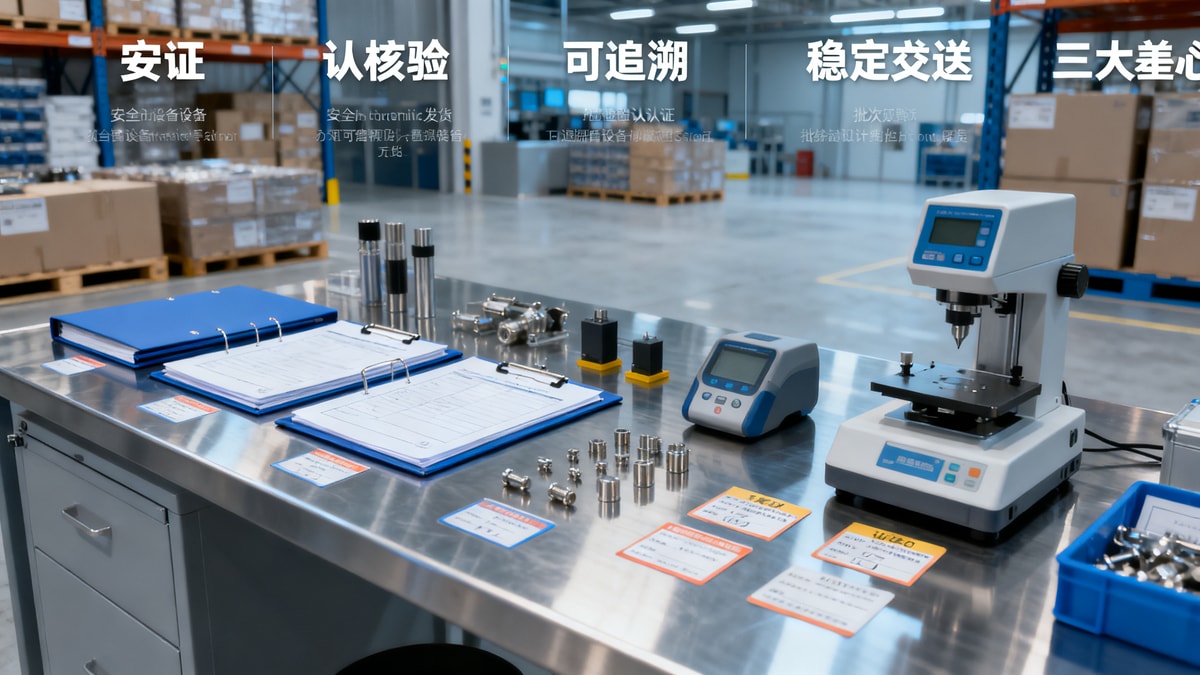
When product specifications appear nearly identical, choosing the right safety equipment supplier requires deeper evaluation than price or datasheet claims alone. For business assessors, the real differences often lie in certification integrity, traceability, quality consistency, delivery reliability, and after-sales support. This guide outlines how to compare suppliers with a risk-based, procurement-focused approach that protects compliance, operational continuity, and long-term value.
For most buyers, the core search intent behind comparing a safety equipment supplier is not simply to find a lower quote. It is to identify which supplier is least likely to create compliance exposure, operational delays, hidden quality costs, or reputational risk after the purchase order is issued.
Business assessors usually care about a practical set of questions: Are the certifications real and current? Can the supplier prove product consistency across batches? Will they deliver on time across multiple sites? How do they handle defects, warranty claims, document requests, and audits? These are the issues that matter when two suppliers appear equal on paper.
The most useful way to compare suppliers, therefore, is to move beyond nominal specifications and evaluate the full supplier risk profile. That includes technical conformity, documentation quality, production controls, supply chain resilience, service capability, and total cost of ownership over time.
Why similar product specs often hide very different supplier risk
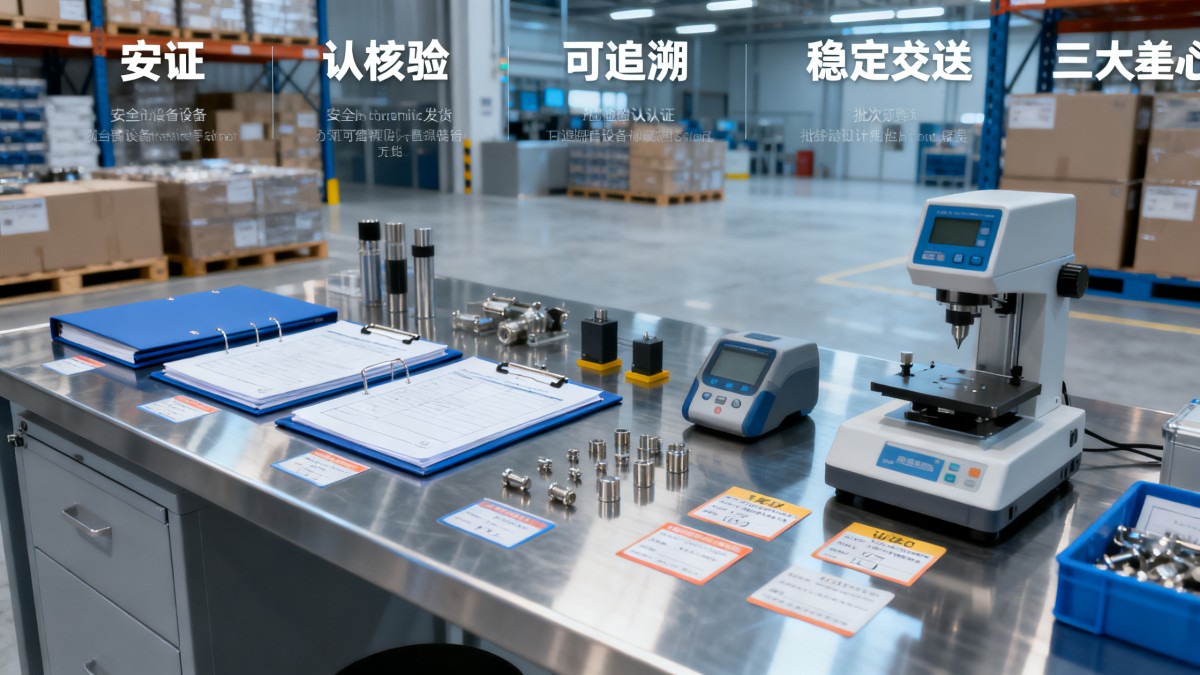
Two datasheets can list the same dimensions, material grade, voltage range, ingress protection, or compliance references and still represent very different levels of procurement risk. In industrial safety categories, similarity in stated specs does not guarantee equivalence in manufacturing discipline, test rigor, or field reliability.
Some suppliers build around stable processes, validated components, and documented quality systems. Others assemble to order, rely on inconsistent upstream sourcing, or use outdated certifications that no longer match the actual product configuration. On the surface, both may claim the same performance. In practice, one may be far more dependable under audit or in harsh operating conditions.
This is especially important in safety-related purchasing because failure costs are rarely limited to product replacement. A nonconforming item can trigger site shutdowns, failed inspections, legal exposure, accident investigations, insurance complications, and emergency re-procurement. For business assessors, the comparison framework must reflect this asymmetry of risk.
Start with search intent: what business assessors really need to know
If a buyer is searching how to compare suppliers when specs look similar, they are typically in one of three situations. First, they are shortlisting multiple vendors before a tender. Second, they are validating an alternative source against an incumbent. Third, they are trying to justify a price difference internally.
In all three cases, the decision is less about theoretical product features and more about confidence. The buyer needs defensible reasons to support supplier selection. That means the article should focus on how to verify claims, identify hidden differences, and build an evidence-based comparison matrix suitable for internal review.
From an SEO and reader-value perspective, the highest-value content is not generic advice such as “check quality” or “compare price.” It is specific evaluation logic: what documents to request, which red flags to notice, how to score supplier reliability, and how to relate commercial decisions to compliance and operational outcomes.
Check certification integrity, not just certification presence
A frequent procurement mistake is treating the existence of a certification mark as sufficient proof of suitability. A stronger evaluation asks whether the certification is valid, current, relevant to the exact product model, and issued by a recognized body for the target market.
For safety products, review the certificate number, issuing organization, scope, expiration status, and model mapping. Verify whether the certificate covers the exact SKU, not merely a similar family designation. If the supplier references CE, UL, ISO, ATEX, or other standards, confirm that the claim aligns with the product category and intended use.
Business assessors should also check whether test reports are recent and whether they reflect serial production units rather than one-time samples. A trustworthy safety equipment supplier should be able to provide clear documentation without hesitation, including declarations of conformity, test records, quality certificates, and traceability references where applicable.
Red flags include blurry certificates, inconsistent model names across documents, expired reports, unrecognized test labs, or vague statements such as “compliant with” without actual evidence. If the supplier becomes evasive during document verification, that alone is a meaningful risk signal.
Evaluate traceability and batch-level consistency
When specifications look similar, traceability is often the dividing line between a product that is easy to control and one that becomes a future audit problem. Traceability means the supplier can connect the delivered item to material lots, production records, inspections, and shipment documentation.
This matters because safety-critical procurement is not only about one approved sample. It is about whether the fiftieth shipment matches the first one. Ask how the supplier handles lot coding, incoming material verification, in-process inspection, final quality release, and nonconformance control.
Request sample documents such as inspection reports, batch records, serial number structures, and corrective action forms. A mature supplier will usually have no difficulty showing how a field issue can be traced back to a production event. A weaker supplier may only offer generic quality statements with no operational proof.
Consistency also affects long-term cost. If product performance varies across batches, your organization may incur extra inspection labor, installation delays, returns processing, and site-level troubleshooting. These costs rarely appear in the quotation but materially change supplier value.
Look past unit price to total cost of ownership
Price gaps between suppliers often seem significant during sourcing reviews, but narrow quickly once downstream costs are considered. The lowest initial quote can become the highest real cost if it causes late delivery, excess quality inspection, documentation gaps, or high failure rates in service.
Total cost of ownership for safety products should include qualification effort, compliance verification time, freight and packaging adequacy, defect handling, replacement lead time, training needs, field support, and any operational interruption risk. For multinational or project-based buying, customs documentation accuracy and regional certification alignment can also affect cost materially.
A practical comparison model assigns weight to both direct and indirect cost drivers. For example, a supplier that is 8% more expensive per unit may still be the better commercial choice if it reduces receiving inspection, avoids rework, and provides predictable replenishment. Business assessors need this perspective to justify choices that may look more expensive only at PO level.
Assess delivery reliability as a risk control, not a logistics metric
On-time delivery is often treated as a service KPI, but for industrial safety procurement it is also a continuity risk variable. A supplier that misses shipment commitments can delay commissioning, maintenance windows, compliance upgrades, or emergency replacements.
When comparing suppliers, ask for measurable delivery performance over the last 6 to 12 months, not promises. Useful indicators include on-time in-full rate, average lead time stability, expedite capability, backorder frequency, and communication quality during schedule changes.
Also examine structural resilience. Does the supplier maintain safety stock? How dependent are they on single-source components? Do they manufacture in one facility or multiple locations? What contingency plans exist for raw material shortages, labor disruptions, or transport bottlenecks? In a similar-spec comparison, supply continuity often matters more than small feature differences.
For business assessors supporting multi-site procurement, global delivery competence can be decisive. Consistent export packaging, document accuracy, Incoterm clarity, and regional support coverage all influence whether a supplier can serve as a scalable long-term partner.
Compare quality systems by evidence, not by claims
Many suppliers state that they have strict quality control. That statement has little value unless it is supported by process evidence. Ask how quality is built into production rather than only inspected at the end. The answer reveals whether the supplier is proactive or reactive.
Key evaluation areas include supplier qualification procedures, calibration management, incoming inspection standards, process control checkpoints, final acceptance testing, change management, and corrective action discipline. If a component, material, or design change occurs, how is the customer informed and how is requalification handled?
For a safety equipment supplier, engineering change control is especially important. A seemingly minor substitution in plastics, seals, electronics, fasteners, or coatings can affect certification status or field performance. Strong suppliers document these changes and control release formally. Weak suppliers may make substitutions without adequate notice.
If possible, use audits or structured supplier questionnaires to compare maturity side by side. The point is not to create bureaucracy. It is to reduce uncertainty where specifications alone cannot tell you how well the supplier can reproduce safe, compliant products over time.
Test after-sales support before you need it
After-sales support is easy to overlook during sourcing because it is only visible when something goes wrong. Yet this is exactly when the difference between suppliers becomes most expensive. When a defect, installation issue, or documentation gap arises, response speed and technical competence matter immediately.
Ask practical questions before award: Who handles technical support? What are the response times? Is there local or regional support? How are warranty claims processed? Can the supplier provide replacement units quickly? Will they support root-cause investigations with formal reports if needed?
A supplier with strong after-sales processes reduces disruption and protects internal teams from spending excessive time chasing answers. For business assessors, this has measurable value even if it does not appear in the original quotation. Strong support can shorten downtime, reduce escalation cycles, and preserve stakeholder confidence.
Use a weighted scorecard instead of informal impressions
When specs look similar, informal opinions tend to dominate selection meetings. A weighted scorecard creates discipline and makes the final decision easier to defend. The scorecard should reflect your actual procurement risk, not generic vendor evaluation templates.
A useful structure might allocate weight across certification validity, quality system maturity, traceability, delivery reliability, documentation quality, commercial terms, after-sales support, and total cost of ownership. In regulated or high-risk settings, technical and compliance factors should usually carry more weight than minor price differences.
For example, certification and compliance evidence might account for 25%, quality and consistency 20%, delivery performance 15%, traceability 10%, support capability 10%, commercial terms 10%, and unit price 10%. The exact weighting depends on application criticality, but the principle remains the same: compare what matters to operational risk.
This method also helps internal alignment. Procurement, EHS, engineering, and operations may value different things. A transparent matrix allows these perspectives to be incorporated into one decision framework rather than debated informally after the fact.
Questions to ask before approving a supplier shortlist
Before moving forward, business assessors should be able to answer a short list of high-value questions. Are all claimed certifications verified and current? Can the supplier demonstrate batch traceability? Is quality consistency evidenced by records, not slogans? What does delivery performance data show? How do they handle complaints and change control? What hidden costs might emerge after award?
It is also worth asking whether the supplier fits your organization strategically. Can they support future volume growth? Are they responsive across time zones? Do they communicate clearly with technical and commercial teams? Can they support standardized procurement across projects or sites? The right supplier is not just acceptable today but manageable over the contract life.
If two suppliers remain close after evaluation, the tie-breaker should generally favor the one with stronger documentation discipline, more stable supply capability, and better support responsiveness. Those qualities create resilience, which is often more valuable than a small initial saving.
Final takeaway: the best supplier is the one with the lowest hidden risk
When product specifications appear nearly identical, the most important differences usually sit outside the datasheet. Certification integrity, traceability, quality consistency, delivery reliability, and after-sales support are what determine whether a supplier will protect your business or create downstream problems.
For business assessors, the right approach is to compare suppliers through a risk-based procurement lens. Verify documents, test claims, score evidence, and estimate total cost over the operational lifecycle. That process leads to a more defensible decision than relying on price or nominal technical similarity alone.
In short, the best safety equipment supplier is not the one that looks equivalent on paper. It is the one that can prove compliance, deliver consistently, support your operations, and reduce uncertainty where it matters most.
Technical Specifications
- US DOE Level 3 Transformer Efficiency Rule Takes Effect July 1, 2026Author :Grid Infrastructure Analyst
- INMETRO Proposes EMP Immunity Requirement for Industrial Laser Distance Meters in BrazilAuthor :Precision Metrology Expert
- Indonesia BPOM Fast-Tracks Chinese Industrial Air PurifiersAuthor :Environmental Engineering Director
Expert Insights

Chief Security Architect
Dr. Thorne specializes in the intersection of structural engineering and digital resilience. He has advised three G7 governments on industrial infrastructure security.
Related Analysis
- May 05, 2026US DOE Level 3 Transformer Efficiency Rule Takes Effect July 1, 2026Author :Grid Infrastructure Analyst
- May 05, 2026INMETRO Proposes EMP Immunity Requirement for Industrial Laser Distance Meters in BrazilAuthor :Precision Metrology Expert
- May 05, 2026Indonesia BPOM Fast-Tracks Chinese Industrial Air PurifiersAuthor :Environmental Engineering Director
Core Sector // 01
Security & Safety
- How to Compare Safety Equipment Suppliers When Specs Look SimilarAuthor :Safety Compliance Lead

- Safety Equipment Standards That Change Product Selection OutcomesAuthor :Safety Compliance Lead

- Security & Safety Price Gaps: What Actually Drives the DifferenceAuthor :Safety Compliance Lead

- How to Vet a Security & Safety Supplier Before a Large RolloutAuthor :Safety Compliance Lead

- ANVISA Updates Biocompatibility Requirements for Industrial Respirators in BrazilAuthor :Safety Compliance Lead

- Construction safety gaps often missed before site auditsAuthor :Safety Compliance Lead

- Electrical safety equipment mistakes that raise downtimeAuthor :Safety Compliance Lead

- Vietnam Enforces QCVN 16:2026/BCT for Respiratory PPE from July 2026Author :Safety Compliance Lead