Construction safety management systems that fail under schedule pressure
Author
Date Published
Reading Time
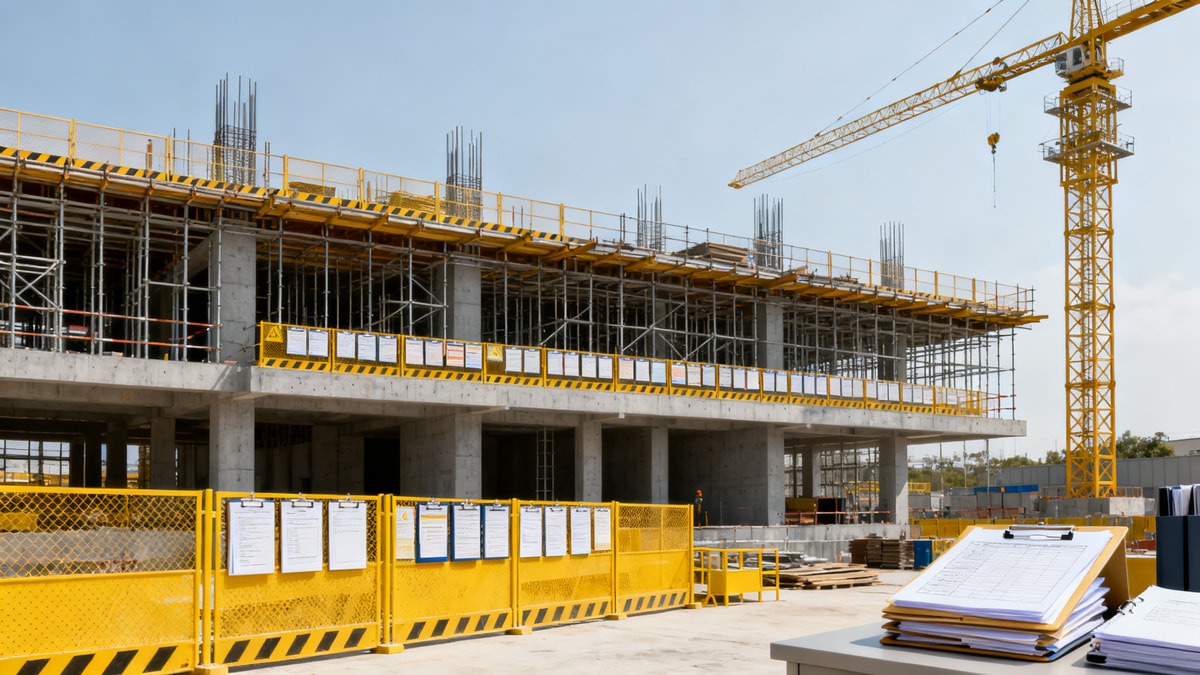
When deadlines tighten, even a well-designed construction safety management system can begin to fail in subtle but dangerous ways. For project managers and engineering leaders, the biggest mistake is assuming that schedule pressure only affects productivity. In reality, it changes how risks are reported, how supervisors prioritize field time, how permits are reviewed, and how crews make decisions at the point of work.
The practical conclusion is clear: schedule pressure does not simply test a safety system; it exposes whether that system is resilient enough to function under real project conditions. If your controls rely on perfect documentation, unlimited supervision time, or uninterrupted subcontractor coordination, they are likely to weaken exactly when the project becomes most vulnerable.
For project leaders, the goal is not to choose between safety and delivery. It is to build a construction safety management system that can absorb time compression without normalizing shortcuts, hidden rework, or delayed incident escalation. This article focuses on where these systems typically fail, what warning signs matter most, and how to strengthen them in ways that protect both schedule and operational credibility.
Why schedule pressure breaks safety systems faster than most managers expect
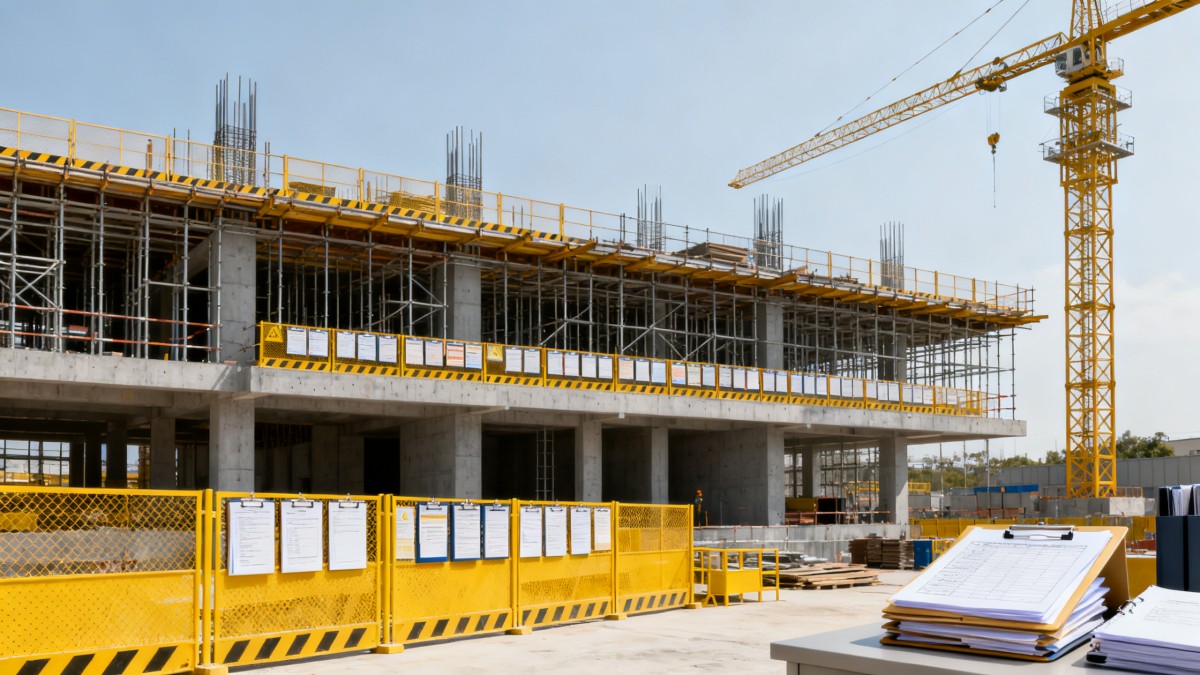
Most construction safety failures under schedule pressure do not begin with a dramatic breakdown. They begin with small operational distortions that seem reasonable in the moment. Daily pre-task planning gets shorter. Permit reviews become more routine than critical. Supervisors spend more time chasing progress updates than observing work. Near misses are discussed informally instead of logged. None of these changes looks severe on its own, but together they hollow out the system.
This matters because a construction safety management system is not only a set of procedures. It is a decision framework supported by time, attention, verification, and escalation discipline. Once schedule urgency starts consuming those resources, the system may still exist on paper while becoming less effective in practice.
Project managers often see the early symptoms as signs of operational intensity rather than control failure. Crews are moving faster, multiple trades are overlapping, and site leaders are solving problems in real time. From a delivery perspective, that can feel like momentum. From a risk perspective, it can mean that exposure is increasing while visibility is decreasing.
The key issue is not whether people care about safety. In most projects, they do. The issue is that under schedule pressure, people silently redefine what “good enough” looks like. That is when standards begin to drift.
Where a construction safety management system usually fails first
For engineering and project leadership teams, the most useful question is not whether the system is failing, but where failure appears first. In compressed schedules, breakdowns usually emerge in five predictable places.
1. Reporting quality declines before incident rates rise. Near misses, unsafe conditions, and minor deviations often become underreported because crews do not want to trigger stoppages, paperwork, or scrutiny. This creates a dangerous illusion that safety performance is stable when the reporting culture is actually weakening.
2. Frontline supervision becomes thinner. Supervisors are pulled into coordination meetings, material issues, and client updates. As their field presence drops, the quality of task observation, behavioral correction, and permit validation also drops. A system without strong field verification quickly becomes reactive.
3. Permit-to-work and job hazard analysis become procedural rather than analytical. Under time pressure, teams may complete forms correctly but discuss hazards superficially. This is a common failure mode because documentation remains compliant-looking while critical risk thinking disappears.
4. Trade stacking increases unmanaged interface risk. When multiple subcontractors work simultaneously in constrained areas, hazards multiply through interaction rather than single-task execution. Electrical work, lifting operations, confined access, temporary works, and hot work can begin to overlap in ways the original plan did not anticipate.
5. Corrective actions lose closure discipline. Open items remain open longer. Temporary controls stay in place without review. Repeated findings are tolerated because the project believes it cannot afford delay. This is one of the strongest indicators that the construction safety management system is under strain.
These failure points are especially important for project managers because they are measurable. They provide far better insight than relying only on lagging indicators such as recordable incidents or lost-time rates.
What project managers should watch for before a serious incident occurs
If you are responsible for delivery, you need leading indicators that show whether schedule pressure is degrading control quality. The most valuable indicators are usually operational, not promotional dashboard metrics.
Watch for repeated late permit approvals, frequent last-minute method changes, rising supervisor-to-workface ratios, and declining participation in toolbox talks. Track whether corrective actions are being closed on time and whether the same categories of issues keep reappearing. If unsafe condition reports suddenly fall during a high-intensity project phase, do not assume the site is safer. Assume visibility may be lower.
Another warning sign is the growing gap between formal planning and actual execution. If the approved sequence says one thing but crews regularly improvise around access, equipment availability, or subcontractor conflicts, your risk controls are no longer aligned with live site conditions.
Leadership behavior also provides useful evidence. When site meetings focus heavily on recovery dates, acceleration options, and labor loading but rarely challenge whether the workfront remains safe to execute, the organization is signaling its true priorities. Crews notice that quickly.
In practical terms, a healthy construction safety management system under pressure still produces friction. It still stops work when needed, still escalates unresolved hazards, and still forces uncomfortable trade-offs into management view. If the system has become unusually smooth during a late or accelerated phase, that is often a red flag rather than a success sign.
Why compliance alone is not enough when deadlines compress
Many organizations believe they are protected because they maintain documented compliance with internal procedures or external standards. Compliance is necessary, but under schedule pressure it is not sufficient. A site can pass audits and still be drifting toward a serious event.
This happens because compliance systems often check whether required artifacts exist: inductions, permits, inspections, training records, meeting minutes, and hazard assessments. Those documents matter. But they do not always prove that workers had enough time to understand changing conditions, that supervision was adequate, or that controls were workable in the field.
For project leaders, the important distinction is between documented control and effective control. Documented control shows process completion. Effective control shows risk reduction in live operations. The gap between the two becomes widest during acceleration, shutdown work, commissioning overlap, rework bursts, and weather recovery periods.
That is why mature firms increasingly test not just compliance status, but control robustness. They ask harder questions: Can this task still be executed safely if labor changes mid-shift? If access changes? If equipment is delayed? If another trade moves into the area? If the answer depends on ideal conditions, the system is weaker than it appears.
How to strengthen the system without sacrificing project delivery
The best response is not more paperwork. It is better control design. Project managers need a construction safety management system that remains usable under operational stress, especially when sequencing changes quickly.
Start by identifying pressure-sensitive controls. Review which parts of the system degrade first when the schedule tightens. These usually include permit review quality, field supervision coverage, subcontractor coordination, and corrective action follow-up. Once identified, treat them as critical controls, not administrative routines.
Separate high-risk work authorization from general production pressure. For lifting, energization, excavation, temporary works, confined space, work at height, and hot work, escalation authority should remain independent of short-term schedule incentives. If the same chain of command owns both production recovery and final work authorization without checks, risk acceptance can become biased.
Rebuild field visibility. During compressed phases, increase targeted site verification rather than broad inspections. Focus on high-interface zones, shift transitions, and tasks with changing conditions. Short, disciplined observations often produce more value than long checklists completed after the fact.
Make pre-task planning dynamic. A good pre-task discussion should not merely repeat yesterday’s hazards. It should address what changed since the last shift, what assumptions no longer hold, and what neighboring activities may affect the workfront. The more fluid the schedule, the more important this becomes.
Use escalation triggers tied to operations, not only incidents. Examples include three repeated permit deviations in one week, unresolved critical corrective actions beyond a defined threshold, sudden drops in near-miss reporting, or trade density above a preset limit in restricted zones. These triggers help management intervene before harm occurs.
Protect supervisory bandwidth. If frontline leaders are overloaded with reporting and coordination, they cannot maintain quality observation in the field. During acceleration, consider temporary support for administration or planning so supervisors can spend more time where risk is actually created.
These actions support delivery because they prevent the hidden costs of safety drift: rework, stoppages, investigations, client distrust, subcontractor conflict, and productivity loss after an incident. In other words, strengthening the system is not separate from schedule protection. It is part of schedule protection.
How to evaluate whether your current system is resilient or only looks complete
For senior project personnel, the most useful test is to assess resilience under pressure, not completeness in static conditions. Ask whether the system can still function when workfaces multiply, decision windows shrink, and subcontractor interfaces become unpredictable.
A resilient system typically has several characteristics. It produces honest reporting even when the project is behind. It allows rapid replanning without bypassing hazard review. It keeps critical approvals close to competent authority. It maintains visible field leadership. And it can distinguish between acceptable adaptation and unsafe improvisation.
You can evaluate this through practical review questions:
Are near misses and unsafe conditions still being reported at the same or higher rate during peak pressure periods?
Are method statements and task plans being revised to reflect actual site conditions, or are crews working from outdated assumptions?
Do supervisors have enough time in the field to observe controls, coach behavior, and stop unsafe work?
Are subcontractor interfaces actively managed, especially in shared spaces and during shift turnover?
Are corrective actions closed because risk is resolved, or because the project wants the dashboard to look clean?
If these questions produce unclear answers, that uncertainty is itself a management signal. Systems that are functioning well under pressure usually generate visible evidence, not ambiguity.
The business case for fixing safety system failure early
Project managers and engineering leaders are often forced to justify safety interventions in commercial terms. Fortunately, the business case is strong. A construction safety management system that fails under schedule pressure rarely creates only safety consequences. It creates compounding project consequences.
One incident can trigger work stoppages, forensic reviews, client escalation, regulator attention, insurance exposure, labor distrust, and recovery inefficiency across multiple trades. Even when no injury occurs, unresolved safety drift leads to hidden losses through disrupted sequencing, low-confidence crews, duplicated checks, and rushed rework.
By contrast, projects that maintain strong safety controls during compressed phases tend to make better operational decisions overall. They identify interface conflicts sooner, communicate changes more clearly, and surface unrealistic assumptions before they become expensive. In that sense, safety system resilience is also a proxy for management quality.
For organizations serving global EPC environments, this matters beyond a single project. Buyers, partners, and clients increasingly look for evidence that contractors and industrial teams can manage risk under difficult delivery conditions, not only in controlled presentations. Strong systems create trust signals that influence qualification, reputation, and long-term procurement confidence.
Conclusion: the real test of a construction safety management system is how it performs when the project is under stress
A construction safety management system does not truly fail when documents are missing. It fails when schedule pressure quietly changes decisions faster than the system can detect, challenge, and correct them. That is why many serious breakdowns occur on projects that still appear compliant on the surface.
For project managers, the priority is not adding generic safety language or more administrative burden. It is identifying where pressure distorts behavior, reinforcing the controls that matter most, and using leading indicators to detect drift early. When done well, this protects people, preserves schedule credibility, and reduces the costly instability that often follows unmanaged acceleration.
The most effective leaders understand that safety and delivery are not competing outcomes. On complex industrial and construction projects, a resilient safety system is one of the clearest signs that the project is being managed with discipline, realism, and long-term accountability.
Technical Specifications
- Hidden Environment & Ecology cost after project approvalAuthor :Environmental Engineering Director
- When does an Environment & Ecology impact assessment need updating?Author :Environmental Engineering Director
- Security & Safety standards that affect product approval speedAuthor :Safety Compliance Lead
Expert Insights

Chief Security Architect
Dr. Thorne specializes in the intersection of structural engineering and digital resilience. He has advised three G7 governments on industrial infrastructure security.
Related Analysis
- May 07, 2026Hidden Environment & Ecology cost after project approvalAuthor :Environmental Engineering Director
- May 07, 2026When does an Environment & Ecology impact assessment need updating?Author :Environmental Engineering Director
- May 07, 2026Security & Safety standards that affect product approval speedAuthor :Safety Compliance Lead
Core Sector // 01
Security & Safety
- Construction safety management systems that fail under schedule pressureAuthor :Safety Compliance Lead

- Why Security & Safety price alone can lead to higher project lossAuthor :Safety Compliance Lead

- Construction safety regulations that change site planning earlyAuthor :Safety Compliance Lead

- How to compare industrial safety equipment suppliers by response timeAuthor :Safety Compliance Lead

- Construction safety equipment manufacturers under stricter site rulesAuthor :Safety Compliance Lead

- Industrial safety training programs that reduce repeat incidentsAuthor :Safety Compliance Lead

- Why Security & Safety prices differ more than expectedAuthor :Safety Compliance Lead

- How to Compare Safety Equipment Suppliers When Specs Look SimilarAuthor :Safety Compliance Lead