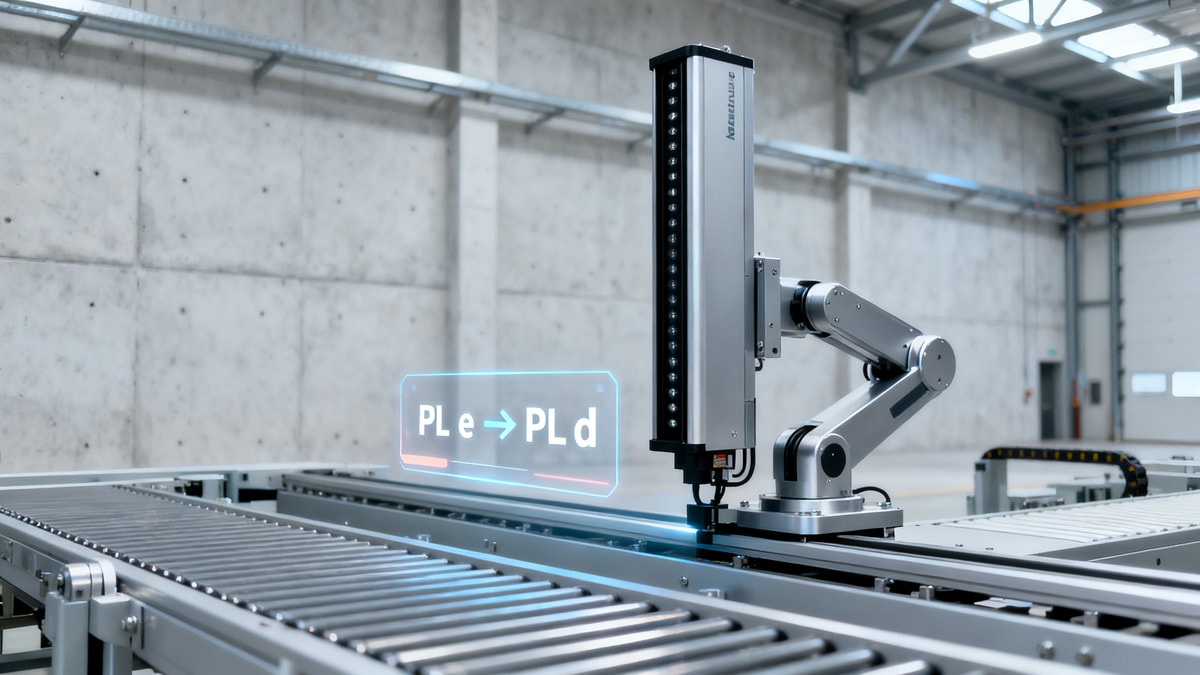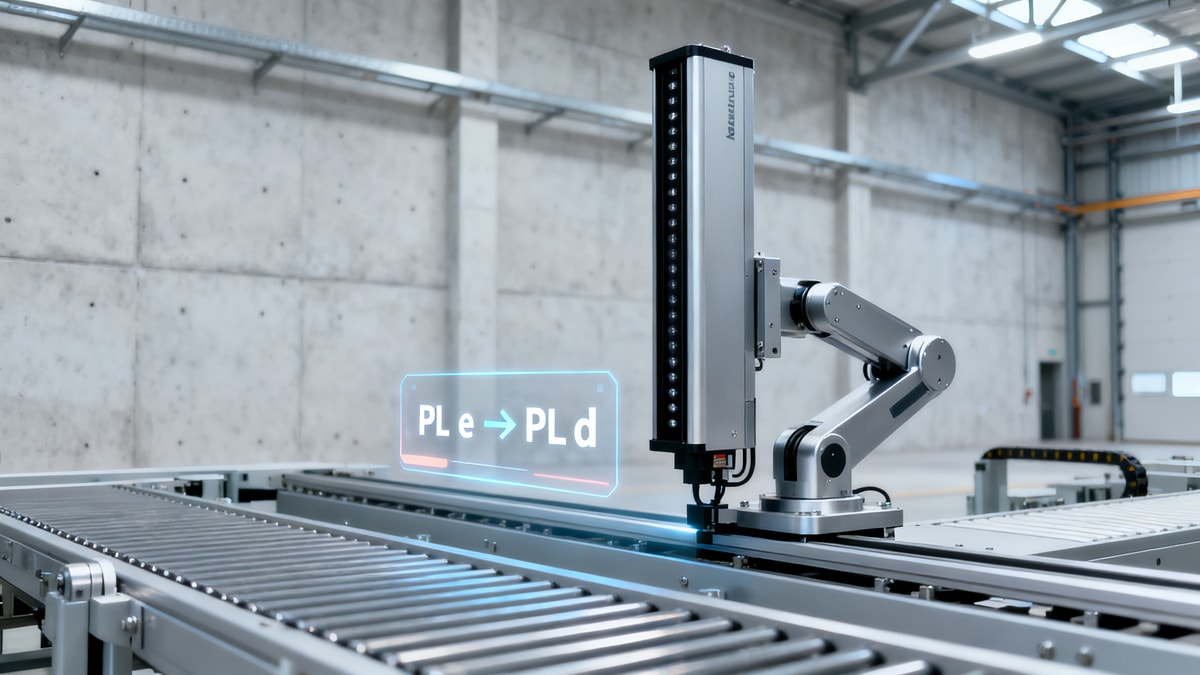
Security & Safety standards that affect product approval speed
Author
Date Published
Reading Time

For business evaluators, product approval speed is rarely just a regulatory issue—it directly affects launch timelines, supply chain confidence, and market access. Understanding how Security & Safety standards shape certification pathways helps teams reduce compliance delays, compare suppliers more accurately, and make faster, lower-risk decisions in complex industrial procurement.
Understanding the role of Security & Safety standards
Security & Safety standards are the formal technical and compliance requirements that products must meet before they can be sold, installed, or accepted in industrial environments. In practical terms, they define whether a power component can operate safely under load, whether a control device is protected against electrical hazards, whether a sensor housing is suitable for hazardous areas, and whether system design supports worker and facility protection. For business evaluators, these standards are not abstract legal references. They are approval accelerators or approval bottlenecks.
In global industry, product approval speed is shaped by how early Security & Safety standards are built into engineering, sourcing, testing, and documentation. Standards such as CE directives, UL requirements, ISO management frameworks, IEC technical standards, ATEX, RoHS, and application-specific safety codes influence design validation, lab testing, factory audits, and market-entry review. If a product aligns with the right standards from the beginning, approval paths are usually shorter and more predictable. If not, teams face redesign cycles, missing test evidence, and extended review by customers, third-party laboratories, or authorities.
This matters especially in heavy industry, infrastructure, utilities, process manufacturing, and engineered projects, where equipment is rarely evaluated as a standalone item. It must fit a wider compliance ecosystem involving site risk, electrical integration, environmental exposure, operator safety, and regional market requirements. That is why Security & Safety standards affect not only product legality, but also project schedule confidence.
Why approval speed has become a strategic issue
In today’s industrial market, approval speed has become a strategic performance indicator. EPC contractors need equipment that will pass client review without repeated technical clarifications. Facility managers want replacement parts and system upgrades that can be installed without introducing fresh compliance risk. Procurement directors are under pressure to balance cost, resilience, lead time, and certification credibility. In each case, Security & Safety standards influence the pace of decision-making.
Several market conditions have intensified this focus. First, supply chains are more global, which means products often cross jurisdictions with different conformity expectations. Second, industrial systems are more integrated, so a weak compliance record in one component may slow the acceptance of the full assembly. Third, buyers are applying stricter vendor qualification methods, especially in sectors where downtime, injury, or failure carries major financial and legal consequences. As a result, business evaluators increasingly treat Security & Safety standards as a key signal of operational readiness and supplier maturity.
At organizations such as Global Industrial Core’s audience base, this is especially relevant because approval is not merely a paperwork event. It is linked to mission-critical outcomes: commissioning schedules, insurance acceptance, cross-border sales, customer audits, and long-term serviceability. A product with strong technical performance but weak compliance positioning may still lose to a slightly more expensive option that enters service faster.
How Security & Safety standards affect approval timelines
The impact of Security & Safety standards on approval speed usually appears in five stages. The first is design alignment. If a product is engineered according to recognized standards, fewer changes are needed when customer or regulator review begins. The second is test planning. Products built for applicable standards can move into testing with clearer protocols and lower failure risk. The third is documentation quality. Certificates, declarations of conformity, technical files, risk assessments, and traceable test reports allow evaluators to make decisions faster. The fourth is installation acceptance, where compliant labeling, instructions, and system compatibility reduce field objections. The fifth is post-approval trust, because products with strong standard alignment are easier to requalify for future tenders and platform expansions.
Delays often occur when companies treat Security & Safety standards as a final checkpoint instead of an engineering requirement. Common slowdowns include incomplete material declarations, inconsistent test methods across regions, outdated certificates, lack of third-party verification, and unclear scope of certification. Even small gaps can force evaluators to pause approval while engineering, legal, and sourcing teams seek clarification.

Industry overview: common standards and their approval implications
Not every standard affects approval in the same way. Some determine legal market access, while others strengthen buyer confidence or streamline technical review. The table below provides an industry overview useful for business evaluators comparing products across industrial categories.
Where these standards create real business value
For business evaluators, the value of Security & Safety standards goes beyond passing inspection. First, they improve comparability between suppliers. When two products are offered for the same application, evaluators can more quickly identify which one has approval-ready documentation, recognized test evidence, and a lower likelihood of field rejection. Second, standards reduce hidden project cost. Faster approval means fewer engineering revisions, fewer emergency substitutions, and lower administrative effort during client or regulator review.
Third, Security & Safety standards support risk management. In capital equipment, electrical systems, monitoring instruments, and mechanical components, poor compliance can lead to installation delays, warranty disputes, or operational incidents. Evaluators therefore look for standards not only as technical markers, but also as indicators of lifecycle reliability. Fourth, these standards support global expansion. Manufacturers targeting multiple regions gain an advantage when they map standards early and produce reusable compliance packages that can travel across projects and markets.
This is especially important in sectors covered by Global Industrial Core’s editorial scope. A safety relay, gas detector, enclosure, power converter, or pressure instrument may be technically sound, yet still move slowly through approval if labels, testing scope, ingress protection data, EMC performance, or hazardous-area classification are incomplete. In other words, approval speed is often a result of documentation discipline as much as engineering quality.
Typical product categories most affected
Some industrial product groups are particularly sensitive to Security & Safety standards because they interact directly with workers, critical systems, or regulated environments. Business evaluators should expect deeper review in the following categories.
What business evaluators should examine first
A practical evaluation approach begins with relevance, not volume. More certificates do not automatically mean faster approval. What matters is whether the product carries the right Security & Safety standards for the exact application, region, and installation context. Evaluators should first confirm intended market access. A product approved for one geography may still require additional evidence elsewhere. Next, they should verify whether certification applies to the specific model, configuration, and accessories under review. Approval delays often arise when a supplier presents valid documents that do not fully match the delivered item.
Documentation completeness should be reviewed just as closely. A strong file normally includes declarations of conformity, third-party certificates where relevant, test summaries, material or environmental compliance statements, user instructions, labeling samples, and revision control. Evaluators should also assess supplier responsiveness. Even well-certified products can slow down if the manufacturer cannot quickly answer technical questions from customers, inspectors, or EPC design teams.
Another important factor is standards maturity inside the supplier organization. Companies with stable internal quality systems, disciplined change control, and repeatable testing usually move through approval faster because they create fewer last-minute contradictions. This is where E-E-A-T principles matter in industrial content and supplier communication alike: experience, expertise, authority, and trust help reduce evaluation friction.
Practical steps to reduce approval delays
Organizations seeking faster approvals should integrate Security & Safety standards into commercial and technical review earlier than many teams do today. Start by creating a standards map for major product families and target markets. This allows procurement, engineering, and compliance teams to identify mandatory requirements before vendor shortlisting. Then standardize a document checklist for all critical purchases, especially for electrical, measurement, and safety-related equipment.
It is also wise to rank suppliers by approval readiness, not only by price and lead time. Approval-ready suppliers typically provide current certificates, model-specific evidence, clear revision history, and responsive support. For higher-risk categories, pre-qualifying test laboratories and verifying recognition status can save substantial time later. Where possible, involve technical reviewers before contracts are finalized, because correcting a standards gap after shipment is far more disruptive than resolving it during bid evaluation.
Finally, treat Security & Safety standards as a living requirement. Standards evolve, product designs change, and regional enforcement can become stricter. A once-acceptable compliance package may no longer be enough for a new tender, a new country, or a new hazardous environment. Continuous monitoring is therefore part of approval speed management.
A grounded path forward for industrial decision-makers
Security & Safety standards affect product approval speed because they shape how quickly evaluators can trust a product, how confidently engineers can specify it, and how smoothly customers can accept it into operational service. For business evaluators, the most effective mindset is to view standards as a practical decision framework rather than a compliance afterthought. The right standards reduce ambiguity, improve supplier comparison, and protect project timelines.
In complex industrial procurement, speed comes from preparedness: relevant certifications, credible evidence, aligned engineering, and suppliers capable of supporting cross-border requirements. Teams that build this discipline into early evaluation are better positioned to shorten approval cycles, avoid preventable redesigns, and secure reliable market access. For organizations navigating industrial infrastructure, that is not only a compliance advantage—it is a competitive one.
Technical Specifications
- Hidden Environment & Ecology cost after project approvalAuthor :Environmental Engineering Director
- When does an Environment & Ecology impact assessment need updating?Author :Environmental Engineering Director
- Security & Safety standards that affect product approval speedAuthor :Safety Compliance Lead
Expert Insights

Chief Security Architect
Dr. Thorne specializes in the intersection of structural engineering and digital resilience. He has advised three G7 governments on industrial infrastructure security.
Related Analysis
- May 07, 2026Hidden Environment & Ecology cost after project approvalAuthor :Environmental Engineering Director
- May 07, 2026When does an Environment & Ecology impact assessment need updating?Author :Environmental Engineering Director
- May 07, 2026Security & Safety standards that affect product approval speedAuthor :Safety Compliance Lead
Core Sector // 01
Security & Safety
- Security & Safety standards that affect product approval speedAuthor :Safety Compliance Lead

- How to assess a Security & Safety manufacturer beyond certificationsAuthor :Safety Compliance Lead

- Security & Safety solutions that fix weak points in older facilitiesAuthor :Safety Compliance Lead

- What makes a Security & Safety supplier reliable after delivery?Author :Safety Compliance Lead

- DIN SPEC 91492:2026 Enforces Dynamic PL for Collaborative Safety Light CurtainsAuthor :Safety Compliance Lead

- DIN SPEC 91492:2026 Enforces Dynamic PL for Collaborative Safety Light CurtainsAuthor :Safety Compliance Lead

- DIN SPEC 91492:2026 Released: Safety Light Curtains Must Support Dynamic PL Adjustment in Human-Robot CollaborationAuthor :Safety Compliance Lead

- DIN SPEC 91492:2026 Mandates PL Dynamic Verification for Safety Light Curtains in GermanyAuthor :Safety Compliance Lead