What to Check Before Adopting New Safety Equipment Solutions
Author
Date Published
Reading Time
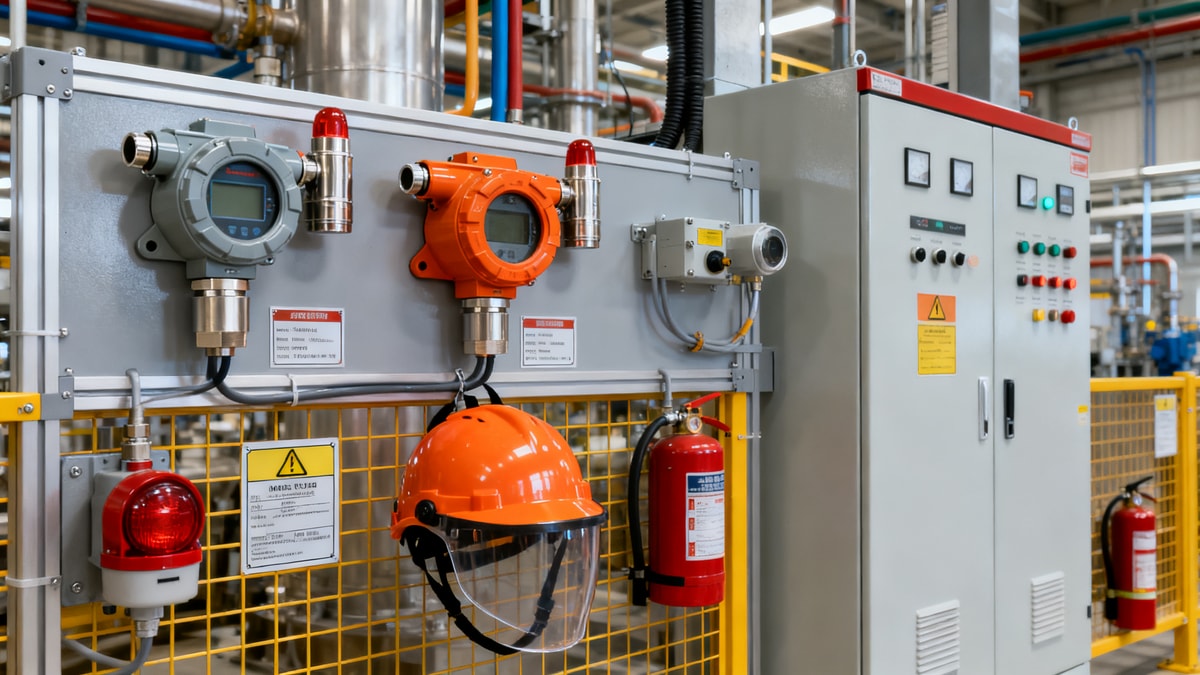
Before adopting new safety equipment solutions, project managers and engineering leads need more than product claims—they need proof of compliance, compatibility, reliability, and lifecycle value. In industrial environments where downtime, risk, and regulatory gaps carry serious consequences, evaluating the right factors upfront can protect both people and performance. This guide outlines the key checks that support safer, smarter procurement decisions.
Why the evaluation standard for safety equipment solutions is changing
The industrial market is no longer judging safety equipment solutions only by whether they can perform a basic protective function. Across construction sites, processing plants, utilities, logistics facilities, and heavy engineering environments, expectations have shifted. Buyers now need solutions that fit digital workflows, meet stricter audit demands, support workforce mobility, and remain dependable under harsh operating conditions. For project managers, this means the adoption decision has become more strategic than transactional.
Several signals are driving this change. Regulatory scrutiny is increasing in many regions, especially around traceability, worker exposure, electrical protection, fire response readiness, confined-space entry, and machine guarding. At the same time, labor shortages and contractor turnover are making ease of training and usability more important. Another major shift is that many facilities want connected safety equipment solutions that generate alerts, usage records, and maintenance data, but this raises new concerns around system compatibility, cybersecurity, and integration cost.
As a result, the right pre-adoption checks now go far beyond product brochures. Industrial buyers need to examine whether a solution fits the realities of compliance, engineering interfaces, maintenance practices, procurement risk, and long-term operational resilience.
Key market signals project leaders should not ignore
For engineering project leaders, the most important trend is convergence: safety equipment solutions are increasingly expected to work as part of a broader system rather than as isolated devices. Personal protective equipment may now connect to monitoring platforms. Gas detection may feed into control-room visibility. Emergency shutdown interfaces may need to align with electrical, instrumentation, and alarm design standards. Even traditional items such as barriers, lockout systems, and fire suppression components are being judged on interoperability and documentation quality.
Another signal is the move from upfront price comparison to lifecycle value comparison. A lower-cost option may appear attractive during tender review, but if calibration cycles are short, replacement parts are hard to source, or certifications are weak, the operational cost rises quickly. This is especially relevant for EPC teams and facility managers working under aggressive delivery schedules where a late compliance issue can disrupt commissioning.
In addition, buyers are placing more emphasis on supplier credibility. In safety-critical categories, unsupported claims, incomplete test records, and inconsistent labeling create procurement risk. High-trust vendors are increasingly expected to provide documented performance data, recognized certifications, installation guidance, and after-sales support that can stand up to audits and incident reviews.
Trend snapshot before adoption decisions
What to verify first: compliance is now the entry requirement, not the final step
When evaluating new safety equipment solutions, compliance should be treated as an early screening filter. Too many projects discover gaps late—during installation, client review, third-party inspection, or startup. That delay can trigger redesign, re-procurement, or temporary workarounds that increase both cost and risk.
Start by confirming which regulations, site rules, and customer specifications apply to the operating environment. A solution suitable for one geography or facility type may not satisfy another. Check whether the supplier can provide certification scope, declaration documents, material or performance test evidence, and installation requirements. For electrical or fire-related equipment, make sure there is no mismatch between product approval and intended system architecture. For wearable or operator-facing products, review ergonomic and exposure-related requirements as carefully as the certification marks themselves.
This trend matters because compliance expectations are becoming more granular. Buyers are not only asked whether a product is certified, but also whether the exact configuration, accessory set, and application condition remain within approved limits. Project leaders should therefore check the entire use case, not just the base model number.
Compatibility is becoming a bigger adoption risk than many teams expect
A growing source of failure in safety equipment solutions is not that the equipment is poor quality, but that it does not fit the existing operating environment. Compatibility must be assessed across physical installation, control systems, maintenance routines, environmental conditions, and worker behavior. In industrial projects, a technically sound product can still become a poor choice if it creates interface friction.
Project managers should ask practical questions. Will the solution fit available mounting space, cable routing, pressure ranges, or enclosure requirements? Can it communicate with the current monitoring or building management platform? Does it require proprietary software, unusual spare parts, or retraining of contractors? Is it suitable for dust, humidity, vibration, corrosive atmospheres, temperature swings, or explosive zones? If connected features are included, does the plant network support secure deployment and long-term updates?
This is where trend awareness helps. As industrial sites adopt more digital tools, hidden integration costs can outweigh product advantages. A careful compatibility review protects schedule certainty and avoids operational fragmentation after handover.
Reliability expectations are rising because downtime costs are rising
Reliability has always mattered, but today it carries greater commercial weight. In many industries, maintenance windows are tighter, shutdowns are more expensive, and stakeholder tolerance for avoidable incidents is lower. That is why safety equipment solutions should be assessed not only for performance under ideal conditions but for consistency under real plant stress.
Review mean time between failures if available, but do not stop there. Ask how the product performs in actual field conditions similar to yours. Examine sealing quality, material durability, sensor drift behavior, alarm stability, battery life, reset procedures, and the quality of replacement components. If the solution depends on calibration, verify calibration intervals, field service options, and whether internal teams can maintain it without excessive external support.
A useful rule for engineering leaders is to evaluate reliability together with recoverability. If a failure occurs, how quickly can the system be diagnosed, repaired, or replaced? Strong safety equipment solutions reduce both incident probability and operational recovery time.
The decision now affects more stakeholders than the safety team alone
One reason adoption decisions have become more complex is that the impact reaches across departments. Safety professionals may define the hazard control objective, but procurement, engineering, operations, maintenance, IT, compliance, and finance all influence whether the chosen solution succeeds. This broader impact reflects an industry shift from isolated purchasing to cross-functional risk management.
How different stakeholders are affected
For this reason, the most effective evaluation process is not a late-stage approval meeting. It is an early, structured review that captures the needs of every affected function before the purchase decision is locked in.
Lifecycle value is replacing low-bid logic in stronger procurement models
A notable shift across industrial procurement is the growing recognition that low initial price can hide high operational cost. The better approach is to measure lifecycle value. For safety equipment solutions, this includes installation effort, commissioning time, maintenance frequency, training demand, software support, replacement cycles, spare parts continuity, and the potential cost of non-compliance or downtime.
This trend is especially relevant for project-based industries where a system may be handed from EPC teams to owner-operators. If the selected solution is cheap to buy but difficult to maintain, the organization inherits risk for years. Project leaders should therefore ask suppliers for practical lifecycle details: expected service intervals, consumable usage, field-replacement procedures, update policies, and support response times. These factors often separate robust safety equipment solutions from risky short-term options.
What a stronger pre-adoption review process looks like
Given current market changes, project teams benefit from using a staged review model rather than relying on product demonstrations alone. A stronger process begins with hazard and application mapping, then moves into compliance screening, compatibility checks, field validation, and supplier capability review. Where possible, pilot testing in a realistic operating environment offers better insight than a datasheet comparison.
It is also wise to define rejection criteria early. For example, missing certification evidence, unclear maintenance procedures, long spare-part lead times, or incompatible communications protocols should trigger escalation before procurement advances. This reduces the chance that commercial pressure overrides technical judgment.
Another useful practice is documenting assumptions. Many safety equipment solutions are sold with broad performance claims, but actual value depends on installation quality, user training, and operating context. Capturing these assumptions helps teams evaluate whether the proposed solution will still perform once exposed to site reality.
Signals worth watching over the next procurement cycle
Looking ahead, several developments are likely to shape how safety equipment solutions are judged. First, digital traceability will keep gaining importance, especially where asset records, inspection logs, and incident accountability are under review. Second, integration between safety devices and operational data systems will continue, making interoperability a more common tender requirement. Third, buyers will likely put more weight on supplier transparency, including test evidence, service readiness, and product-change notification discipline.
There is also a clear direction toward more application-specific evaluation. Instead of buying general-purpose protection, industrial operators increasingly want solutions validated for exact use cases, environmental stresses, and workforce behaviors. This means project managers should expect future procurement decisions to require more front-end technical review, not less.
Practical decision criteria for project managers and engineering leads
If you are assessing safety equipment solutions in the current market, focus your judgment on a few high-value questions. Does the solution clearly satisfy the required standards for this exact application? Can it be integrated without introducing hidden engineering or IT burden? Is the supplier able to support operation, maintenance, and audit needs over the full asset life? Will the solution remain dependable in the site conditions your teams actually face? And if conditions change, can the equipment scale, adapt, or be serviced without major disruption?
Those questions reflect the broader shift happening across industry: safety procurement is moving from simple buying to strategic risk qualification. The organizations that adapt early are better positioned to protect personnel, maintain compliance, and preserve project performance under pressure.
Final takeaway
Adopting new safety equipment solutions now requires a trend-aware mindset. Compliance demands are tighter, integration challenges are growing, and lifecycle expectations are higher than before. For project managers and engineering leads, the best response is a disciplined evaluation process that tests not only what a product promises, but how it will perform across the realities of design, installation, operation, maintenance, and audit review.
If your organization wants to better judge the impact of these changes on current or upcoming projects, start by confirming five points: the exact compliance scope, system compatibility, field reliability, supplier support depth, and total lifecycle burden. Those checks create a stronger foundation for choosing safety equipment solutions that protect people while supporting resilient industrial performance.
Technical Specifications
- US DOE Level 3 Transformer Efficiency Rule Takes Effect July 1, 2026Author :Grid Infrastructure Analyst
- INMETRO Proposes EMP Immunity Requirement for Industrial Laser Distance Meters in BrazilAuthor :Precision Metrology Expert
- Indonesia BPOM Fast-Tracks Chinese Industrial Air PurifiersAuthor :Environmental Engineering Director
Expert Insights

Chief Security Architect
Dr. Thorne specializes in the intersection of structural engineering and digital resilience. He has advised three G7 governments on industrial infrastructure security.
Related Analysis
- May 05, 2026US DOE Level 3 Transformer Efficiency Rule Takes Effect July 1, 2026Author :Grid Infrastructure Analyst
- May 05, 2026INMETRO Proposes EMP Immunity Requirement for Industrial Laser Distance Meters in BrazilAuthor :Precision Metrology Expert
- May 05, 2026Indonesia BPOM Fast-Tracks Chinese Industrial Air PurifiersAuthor :Environmental Engineering Director
Core Sector // 01
Security & Safety
- What to Check Before Adopting New Safety Equipment SolutionsAuthor :Safety Compliance Lead

- INMETRO Updates Fire Pump Set Certification: IEC 60034-30-2 Enforcement Effective May 2026Author :Safety Compliance Lead

- Marine Oil Spill Boom Choices That Backfire in Rough WaterAuthor :Safety Compliance Lead

- Flood Control Sandbags: When Size Choice Affects Deployment SpeedAuthor :Safety Compliance Lead

- JIS T 8201-2026 Enforces New Low-Temp Impact Test for Fire Respirator MasksAuthor :Safety Compliance Lead

- Dry chemical fire extinguishers and clean-up costs after dischargeAuthor :Safety Compliance Lead

- CO2 fire extinguishers wholesale: refill logistics often overlookedAuthor :Safety Compliance Lead

- Fire hydrant valves: signs the material grade is not enoughAuthor :Safety Compliance Lead