CO2 fire extinguishers wholesale: refill logistics often overlooked
Author
Date Published
Reading Time
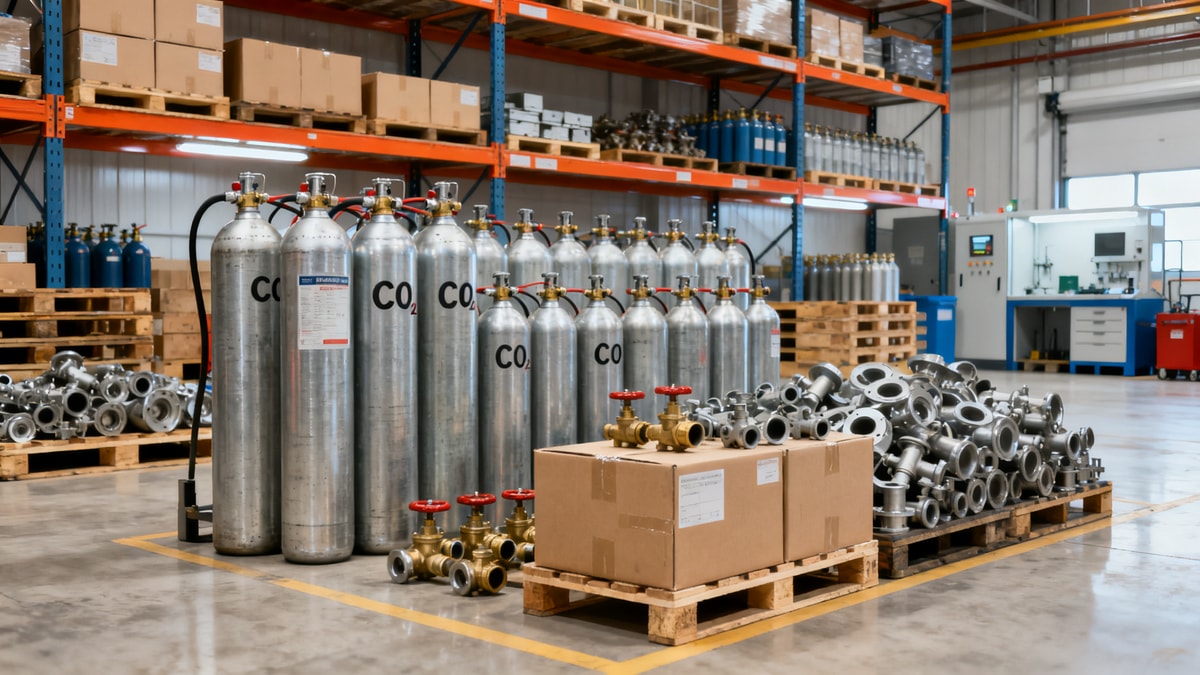
In co2 fire extinguishers wholesale, buyers often compare unit price, certifications, and delivery speed—but refill logistics is the hidden factor that shapes lifecycle cost and distributor profitability. From cylinder exchange efficiency to regional compliance and after-sales service planning, overlooking refill networks can create delays, margin loss, and customer dissatisfaction. This article explores why refill strategy should be part of every wholesale sourcing decision.
Why refill logistics changes the real value of co2 fire extinguishers wholesale
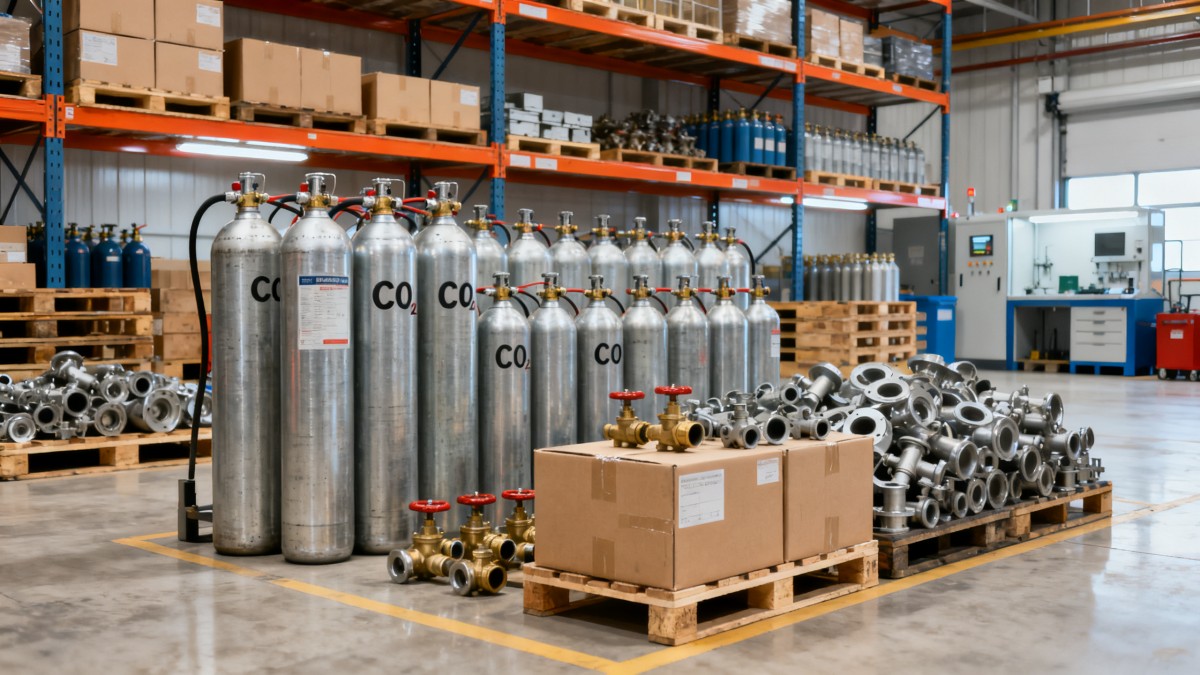
For distributors, agents, and trading companies, co2 fire extinguishers wholesale is not only a product sourcing decision. It is also a service model decision. A cylinder that ships quickly and looks competitive on paper can become expensive once the customer asks a practical question: where will this unit be refilled, by whom, under which standard, and within what turnaround time?
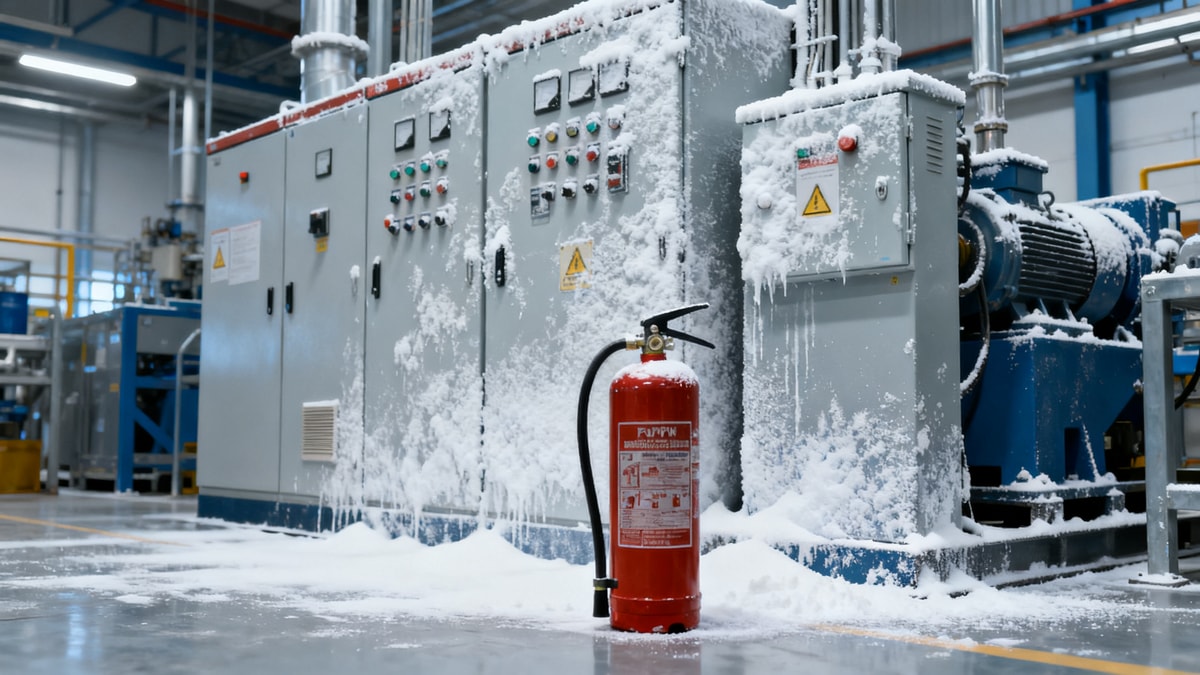
This matters more in industrial and commercial environments where CO2 extinguishers protect electrical rooms, control cabinets, server spaces, laboratories, switchgear zones, and machinery areas. These users expect not just initial supply, but operational continuity. If refill support is slow or fragmented, the distributor carries the burden through complaints, emergency substitutions, and reduced repeat business.
Global Industrial Core focuses on this type of procurement reality. In safety equipment sourcing, the lowest landed price rarely reflects the full commercial picture. Refill network coverage, cylinder valve compatibility, hydrostatic test cycles, documentation traceability, and regional service capability all influence downstream performance.
- Initial margin can be eroded if refills require non-standard adapters or special handling.
- Delivery promises become risky if emptied units cannot be exchanged locally.
- After-sales cost rises when distributors must educate customers on compliance and refill intervals without supplier support.
- Brand trust weakens when end users discover that service access is limited outside major cities or export markets.
What buyers in co2 fire extinguishers wholesale often compare—and what they miss
Most sourcing discussions start with visible variables: cylinder size, discharge range, certification documents, packaging, and ex-works price. Those are necessary checks, but they are incomplete. Refill logistics is often treated as an afterthought even though it directly affects serviceability and product acceptance in the field.
The table below highlights the difference between front-end buying criteria and the operational factors that shape long-term distributor profitability in co2 fire extinguishers wholesale.
The practical takeaway is simple: if two offers look similar on first cost, the one with stronger refill access usually performs better over the contract period. This is especially true for distributors serving factories, office complexes, logistics centers, and public infrastructure projects where periodic maintenance is not optional.
Why refill support becomes a margin issue
In co2 fire extinguishers wholesale, a distributor earns not just on the first order but on continuity. Refill cycles generate recurring customer contact, parts demand, inspection service opportunities, and replacement sales. If the original product line is difficult to refill, the distributor loses the chance to build an attached service business.
Which refill logistics factors should distributors evaluate before placing a wholesale order?
A disciplined procurement review should move beyond product brochure claims. Before confirming co2 fire extinguishers wholesale contracts, distributors should assess how the extinguisher will function inside a refill ecosystem. This means asking operational questions early, not after the first batch reaches the market.
Core assessment points
- Cylinder standardization: check whether the neck thread, valve pattern, horn assembly, and pressure-related components are commonly supported in your target region.
- Refill partner density: identify whether local or regional service providers can refill the units without custom fixtures or imported replacement parts.
- Transport handling: CO2 cylinders are pressurized containers, so return logistics, dangerous goods handling, and local transport restrictions can affect service speed and cost.
- Inspection and testing intervals: understand when hydrostatic testing, valve replacement, seal changes, or cylinder retirement may apply under the destination market’s rules.
- Documentation flow: confirm whether serial tracking, batch records, and service labels can be maintained in a format accepted by your customers and auditors.
The following table can be used as a sourcing checklist when reviewing co2 fire extinguishers wholesale offers from multiple suppliers.
A supplier that can answer these questions clearly is often more valuable than one that only offers a lower quotation. For agents managing mixed customer portfolios, predictable serviceability reduces emergency problem-solving and protects account relationships.
How refill logistics affects different sales channels and end-use scenarios
Not every distributor sells into the same environment. In co2 fire extinguishers wholesale, refill strategy should reflect the actual channel and usage pattern. A reseller focused on office buildings faces different refill expectations than one serving industrial plants or export EPC projects.
Typical scenarios
- Local building safety channel: quick replacement and routine annual service matter more than highly customized specifications.
- Industrial MRO distribution: customers care about compatibility with site safety procedures, maintenance records, and shutdown planning.
- Project-based export supply: compliance, destination-country acceptance, and service partner availability after commissioning are critical.
- Multi-branch facility accounts: standardized cylinder families simplify refill contracts and asset tracking across locations.
This is where a strategic sourcing perspective becomes useful. Global Industrial Core supports industrial buyers and channel partners by connecting technical review with real operating conditions. Instead of treating the extinguisher as a standalone item, the sourcing decision is framed around the customer’s safety workflow, maintenance burden, and supply chain exposure.
Compliance, service records, and refillability: where many wholesale deals fail later
A common mistake in co2 fire extinguishers wholesale is assuming that an approved product is automatically easy to maintain everywhere. In reality, compliance at the point of sale and practical refillability in the field are related but not identical issues. A distributor needs both.
Depending on market and application, buyers may need to align with common frameworks such as CE-related market access requirements, ISO-oriented quality management practices, local fire code provisions, pressure vessel handling rules, and documentation required by insurers or facility auditors. Even when the extinguisher itself is acceptable, service documentation may fail if refill operators cannot verify cylinder identity or maintenance history.
Practical compliance checks
- Confirm how serial numbers and manufacturing marks are presented and whether they remain legible throughout the service life.
- Verify whether service labels, refill records, and test dates can be updated according to local inspection practice.
- Ask whether the supplier can provide technical documentation suitable for distributors, not only factory test paperwork.
- Review whether replacement components can be sourced without creating mixed configurations that confuse service technicians.
For channel partners serving industrial facilities, these details affect bid qualification and renewal. Facility managers increasingly prefer products that fit into predictable inspection and refill routines. A distributor that can demonstrate this readiness is easier to shortlist.
Cost analysis: low purchase price versus lifecycle service cost
When comparing co2 fire extinguishers wholesale offers, a broader cost lens helps reveal hidden exposure. The cheapest purchase may not be the lowest-cost program once returns, exchanges, and field service complexity are included. This is especially relevant for distributors operating under fixed resale prices or competitive tenders.
The table below compares typical cost drivers that should be considered before selecting a supplier.
For many agents and distributors, the right question is not “Which extinguisher is cheapest?” but “Which product line can be sold, refilled, and supported with the least friction over three to five years?” That is where profit stability usually comes from.
Common mistakes in co2 fire extinguishers wholesale sourcing
Several avoidable mistakes repeat across the market. They often begin with an assumption that all CO2 extinguishers are commercially similar as long as capacity and certification look acceptable. In practice, small technical and logistical differences can create large service problems.
- Selecting a product line without checking local refill compatibility in the intended sales region.
- Treating refill as the customer’s problem instead of a built-in part of channel strategy.
- Overlooking parts continuity for valves, discharge horns, and seals.
- Ignoring service documentation requirements for industrial accounts and larger facility groups.
- Assuming all target countries or cities have equal access to compliant CO2 refill services.
These problems can be reduced through pre-order technical screening, destination-based service mapping, and more disciplined supplier questioning. In complex procurement, a sourcing partner that understands safety systems, industrial standards, and operational support can save more value than a narrow focus on invoice price.
FAQ: practical questions distributors ask about co2 fire extinguishers wholesale
How should I evaluate refill support before buying in bulk?
Start with your sales geography. Ask where the extinguishers will actually be used, not just where they will be shipped first. Then verify valve compatibility, refill partner availability, spare parts access, and service documentation requirements. If your supplier cannot explain how the units are maintained after discharge or periodic inspection, the offer is incomplete.
Are all CO2 extinguisher cylinders easy to refill in every market?
No. Even when the extinguisher appears standard, refill convenience can vary by country, city, and service network maturity. Differences in valve type, pressure vessel markings, maintenance practice, and technician familiarity can affect whether a local provider accepts the unit for refill or testing.
What matters more for distributors: certification or refillability?
Both matter, and they serve different purposes. Certification helps with market entry and project acceptance. Refillability protects lifecycle usability and customer satisfaction. A well-chosen co2 fire extinguishers wholesale program should satisfy both rather than forcing a trade-off.
Can refill logistics influence repeat orders?
Yes. Customers remember what happens after installation. If refill turnaround is smooth, they are more likely to reorder the same line, standardize across sites, and trust the distributor with related safety products. If service becomes difficult, they may switch brands or suppliers even if the original purchase price was good.
Why choose us for sourcing insight and project support
Global Industrial Core supports distributors, agents, and industrial sourcing teams that need more than a product list. We help evaluate co2 fire extinguishers wholesale options through the lens that actually matters in the field: compliance readiness, refill practicality, service continuity, and downstream commercial risk.
If you are comparing suppliers or preparing a channel program, you can consult us on specific topics such as:
- Parameter confirmation for cylinder sizes, discharge configuration, and accessory matching
- Product selection guidance for industrial, commercial, export, or multi-site distribution scenarios
- Lead time review for first shipment, replenishment, and replacement part continuity
- Custom sourcing strategies where certification requirements and refill network constraints must be balanced
- Documentation and compliance planning for project tenders, facility audits, and regional market entry
- Sample support and quotation communication for staged procurement decisions
For channel partners, the strongest co2 fire extinguishers wholesale decision is usually the one that reduces friction after the sale. If you want to assess refill logistics before committing to stock, discuss your target market, customer type, and compliance expectations with us. That early review can prevent avoidable service gaps and support a more durable distribution model.
Technical Specifications
Expert Insights

Chief Security Architect
Dr. Thorne specializes in the intersection of structural engineering and digital resilience. He has advised three G7 governments on industrial infrastructure security.
Related Analysis
- May 01, 2026PTZ dome camera placement mistakes that waste zoom performanceAuthor :Safety Compliance Lead
- May 01, 2026Biometric access control systems: where integration gets expensiveAuthor :Safety Compliance Lead
- May 01, 2026Facial recognition door lock accuracy drops in these common settingsAuthor :Safety Compliance Lead
Core Sector // 01
Security & Safety
- Dry chemical fire extinguishers and clean-up costs after dischargeAuthor :Safety Compliance Lead

- CO2 fire extinguishers wholesale: refill logistics often overlookedAuthor :Safety Compliance Lead

- Fire hydrant valves: signs the material grade is not enoughAuthor :Safety Compliance Lead

- Why fire hose reel cabinets fail early in humid locationsAuthor :Safety Compliance Lead

- Wholesale fire alarm panels: compatibility issues to check firstAuthor :Safety Compliance Lead

- Smoke detectors bulk orders: where false alarm costs add upAuthor :Safety Compliance Lead

- When heat detectors OEM support matters more than unit costAuthor :Safety Compliance Lead

- Emergency exit lights LED: battery backup mistakes to avoidAuthor :Safety Compliance Lead