Marine Oil Spill Boom Choices That Backfire in Rough Water
Author
Date Published
Reading Time
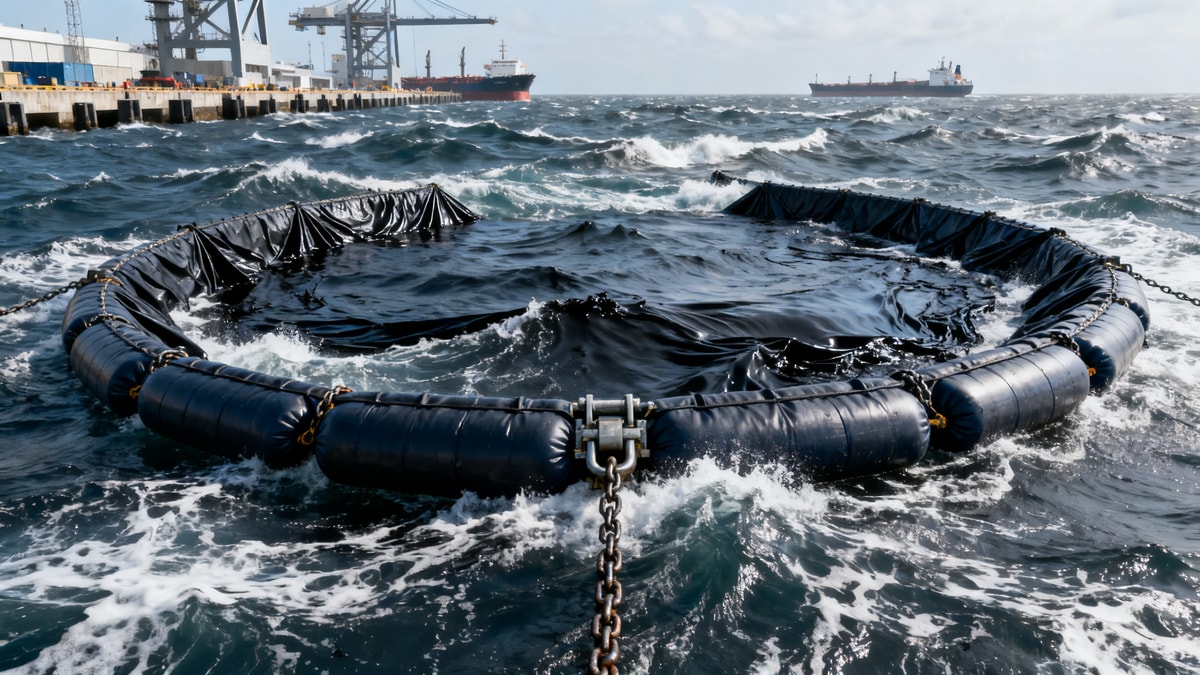
Choosing the wrong marine oil spill boom can turn a manageable incident into a fast-moving environmental and safety failure when waves, currents, and wind intensify. For quality control and safety managers, understanding which boom features underperform in rough water is essential to preventing containment loss, compliance risks, and costly cleanup escalation.
Rough-water containment is no longer a niche scenario
A clear shift is taking place in spill response planning: rough-water performance is moving from a secondary specification to a frontline procurement concern. In the past, many buyers selected a marine oil spill boom based mainly on calm-harbor deployment, storage convenience, or headline price. That approach is becoming harder to defend. Offshore transfer points, exposed terminals, high-traffic ports, and storm-affected inland waters are creating more operating windows in which wave action, cross-current, and gusting wind combine to defeat standard containment setups.
For quality control teams, this means inspection criteria must go beyond basic material conformity. For safety managers, it means asking whether the boom will still hold shape, maintain freeboard, and resist splash-over when conditions become unstable. The practical trend is simple: a marine oil spill boom that appears compliant on paper may still fail operationally if its design assumptions belong to sheltered water rather than dynamic water.
Why more boom choices are backfiring under real field conditions
Several industry signals are driving this change. First, environmental enforcement is becoming less tolerant of partial containment success. A boom that drifts, submerges, tears, or allows oil escape during rough conditions can trigger not only cleanup escalation but also investigation into preparedness, equipment suitability, and risk assessment quality. Second, procurement teams are under pressure to standardize inventories across multiple sites, which can result in one-size-fits-all purchasing. That often leads to selecting a marine oil spill boom that is versatile in theory but weak in harsh water.
Third, operators increasingly face compressed response timelines. When conditions deteriorate quickly, crews do not have the luxury of replacing an underperforming boom after deployment. The wrong skirt depth, weak ballast chain, low-tensile connectors, or inadequate buoyancy profile becomes a live incident problem, not a warehouse problem. The market is therefore shifting toward performance validation in realistic conditions rather than reliance on generic brochure claims.
The rough-water boom mistakes that still appear in buying decisions
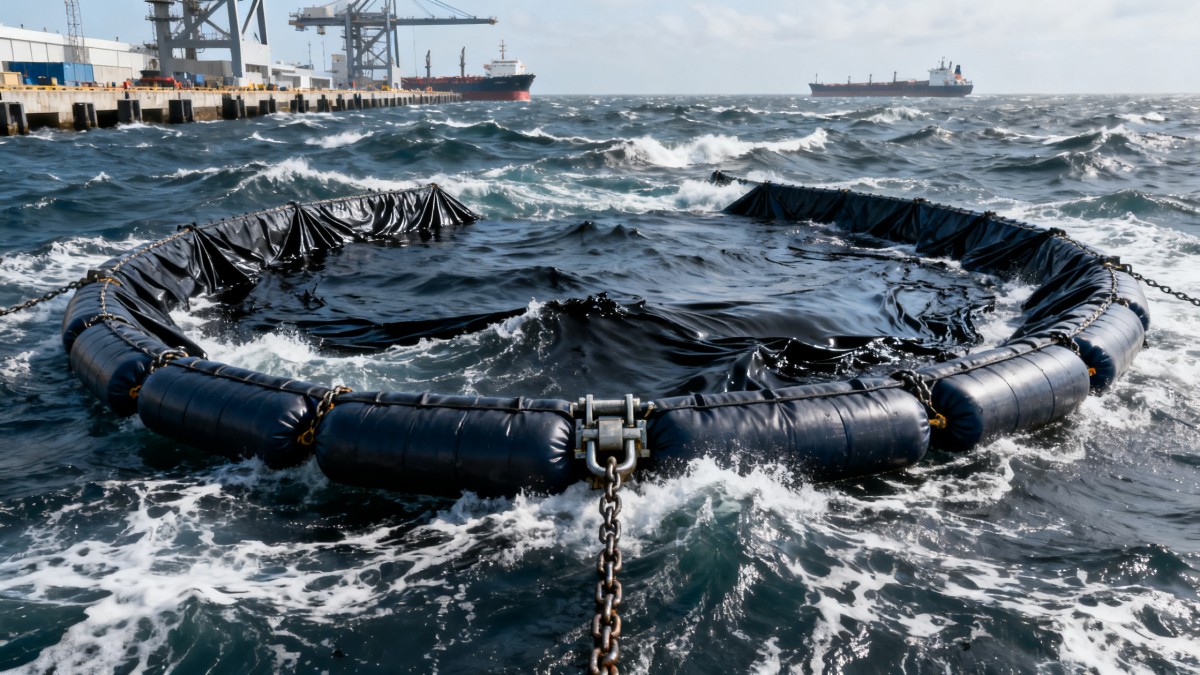
The most common failures are not always caused by obvious defects. They often come from specification mismatches. A lightweight boom chosen for rapid handling may lack the structural integrity needed for breaking chop. A boom with insufficient freeboard may permit splash-over. One with a shallow skirt may lose oil beneath the barrier in stronger current. A model optimized for temporary calm-water response may twist, accordion, or sink at connection points once towing loads and wave energy increase.
Another backfiring choice is overvaluing nominal length over controllability. Longer sections can seem efficient, but in rough water they may become harder to deploy safely, harder to anchor correctly, and more vulnerable to uneven stress distribution. Some buyers also overlook seam construction, UV aging, inflation reliability, and connector compatibility with existing site equipment. In rough conditions, these “secondary” details can decide whether a marine oil spill boom contains the slick or becomes part of the hazard.
The broader signal is that procurement criteria for a marine oil spill boom are being reshaped by operational realism. Teams that still rely on generic categorization such as “offshore” or “harbor” without scenario-level testing are more likely to buy equipment that looks adequate until the weather changes.
What is driving higher scrutiny of marine oil spill boom performance
Three drivers stand out. The first is exposure complexity. Industrial sites are handling transfers in more variable environments, including coastal zones with stronger tidal influence and logistics networks with changing vessel patterns. The second is accountability. Buyers are expected to show not just purchase records, but evidence that the selected marine oil spill boom matches the risk profile of the facility. The third is operational continuity. A failed boom does not only increase environmental harm; it can shut down marine activity, delay cargo movement, and multiply contractor mobilization costs.
This is why quality documentation is evolving. Material certificates remain necessary, but they are no longer sufficient by themselves. Buyers increasingly need test records, deployment drills, maintenance logs, and compatibility checks across reels, connectors, towing points, anchoring systems, and recovery tools. The market direction favors integrated performance assurance rather than isolated product compliance.
How the impact spreads across roles and business functions
The consequences of a poor marine oil spill boom choice are not confined to spill response teams. Quality control personnel face the burden of verifying whether incoming equipment matches certified construction and actual use conditions. Safety managers must defend emergency preparedness decisions before internal auditors, insurers, and regulators. Procurement managers may discover that the lowest-cost option creates the highest incident exposure. Facility operations teams then absorb delays, marine access restrictions, and contractor coordination challenges.
This cross-functional effect is important because rough-water readiness can no longer be treated as a specialist topic. It is becoming part of wider resilience planning. As industrial operators push for safer and more reliable infrastructure, the marine oil spill boom is being judged less as a commodity barrier and more as a critical control measure within environmental and safety governance.
The next procurement direction: from product category to scenario fit
A major trend in industrial sourcing is the move away from buying a marine oil spill boom as a generic inventory item. More mature buyers are defining decision frameworks around site exposure, water movement, deployment method, crew capability, storage readiness, and maintenance discipline. This shift matters because rough-water failures are rarely caused by one bad feature alone; they usually reflect a gap between scenario demands and design capability.
For example, inflatable booms may offer storage efficiency, but inflation speed, puncture resistance, and chamber reliability become strategic issues in rough conditions. Foam-filled booms may deliver stronger readiness, but transport weight and handling loads must be addressed. End connectors that seem standard may behave differently when repeated wave stress and towing loads cause misalignment. The better question is no longer “Which marine oil spill boom is best?” but “Which boom system remains controllable, maintainable, and verifiable under our highest-risk conditions?”
Signals that a facility should reassess its current boom inventory now
Several warning signs suggest a reassessment is overdue. One is a response plan built around average weather rather than credible worst-case operating windows. Another is a stock of booms purchased years ago without recent field drills in challenging water. A third is frequent dependence on adapters, improvised anchoring, or mixed connector sets from different suppliers. These are not minor housekeeping issues; they can become failure points when a marine oil spill boom is deployed under pressure.
Quality and safety leaders should also pay attention to softer signals: crew hesitation during deployment practice, uncertainty about current limitations, visible wear near stress points, or gaps in service records. When teams cannot clearly state the rough-water limits of their equipment, that uncertainty itself is an operational risk.
How quality control and safety managers can respond without overbuying
The answer is not automatically to purchase the heaviest or most expensive marine oil spill boom. A more effective response is structured validation. Start by mapping water conditions by area, not by facility name alone. Compare those conditions with actual boom ratings, connector load paths, skirt behavior, and anchoring strategy. Request evidence of field performance, not just datasheet assurances. Include drill observations in acceptance decisions. Confirm how the boom performs after storage, repeated deployment, and partial repair.
It also helps to segment inventory. Some sites need harbor booms for fast first response and separate rough-water booms for exposed zones. Others need modular systems that let teams adapt length, tow setup, and anchoring configuration. This is where disciplined sourcing adds value: the goal is not more equipment, but better-matched equipment with traceable performance logic.
Judgment points that will matter most in the coming cycle
Looking ahead, buyers should expect stronger emphasis on evidence-backed suitability, interoperability, and documented preparedness. Suppliers that can support inspection criteria, maintenance guidance, deployment training, and realistic performance discussion will likely gain trust over those selling only broad claims. For industrial organizations, the most useful decisions will come from linking environmental response equipment to wider asset integrity and safety management systems.
If your team is reviewing a marine oil spill boom program, focus on a few practical questions: Is the boom matched to the roughest water your facility may realistically face? Have connectors, seams, buoyancy elements, and ballast systems been verified beyond warehouse condition? Can crews deploy the system safely when visibility, footing, and timing are poor? Are inspection records strong enough to support accountability after an incident? These are the questions that turn trend awareness into operational readiness.
Final action guide for industrial decision-makers
The current direction is clear: selecting a marine oil spill boom for rough water now requires deeper judgment than selecting by price tier, catalog category, or nominal compliance alone. For quality control personnel and safety managers, the smartest next step is to treat boom selection as a risk-fit decision supported by inspection evidence, deployment reality, and scenario-based review. If your organization wants to understand how these changes affect its own operations, begin by confirming site exposure conditions, field performance expectations, connector compatibility, maintenance discipline, and the real rough-water limits of every boom now in service.
Technical Specifications
- India BIS Draft IS 17832:2026 Sets Noise & Dust Limits for Waste CrushersAuthor :Environmental Engineering Director
- Korea MFDS Mandates Korean UI & KOSHA OEL Database for Industrial Water AnalyzersAuthor :Precision Metrology Expert
- Indonesia BPOM Mandates PM0.1 Efficiency & CADR Decay Labeling for Industrial Air PurifiersAuthor :Environmental Engineering Director
Expert Insights

Chief Security Architect
Dr. Thorne specializes in the intersection of structural engineering and digital resilience. He has advised three G7 governments on industrial infrastructure security.
Related Analysis
- May 03, 2026India BIS Draft IS 17832:2026 Sets Noise & Dust Limits for Waste CrushersAuthor :Environmental Engineering Director
- May 03, 2026Korea MFDS Mandates Korean UI & KOSHA OEL Database for Industrial Water AnalyzersAuthor :Precision Metrology Expert
- May 03, 2026Indonesia BPOM Mandates PM0.1 Efficiency & CADR Decay Labeling for Industrial Air PurifiersAuthor :Environmental Engineering Director
Core Sector // 01
Security & Safety
- INMETRO Updates Fire Pump Set Certification: IEC 60034-30-2 Enforcement Effective May 2026Author :Safety Compliance Lead

- Marine Oil Spill Boom Choices That Backfire in Rough WaterAuthor :Safety Compliance Lead

- Flood Control Sandbags: When Size Choice Affects Deployment SpeedAuthor :Safety Compliance Lead

- JIS T 8201-2026 Enforces New Low-Temp Impact Test for Fire Respirator MasksAuthor :Safety Compliance Lead

- Dry chemical fire extinguishers and clean-up costs after dischargeAuthor :Safety Compliance Lead

- CO2 fire extinguishers wholesale: refill logistics often overlookedAuthor :Safety Compliance Lead

- Fire hydrant valves: signs the material grade is not enoughAuthor :Safety Compliance Lead

- Why fire hose reel cabinets fail early in humid locationsAuthor :Safety Compliance Lead