INMETRO Proposes EMP Immunity Requirement for Industrial Laser Distance Meters in Brazil
Author
Date Published
Reading Time
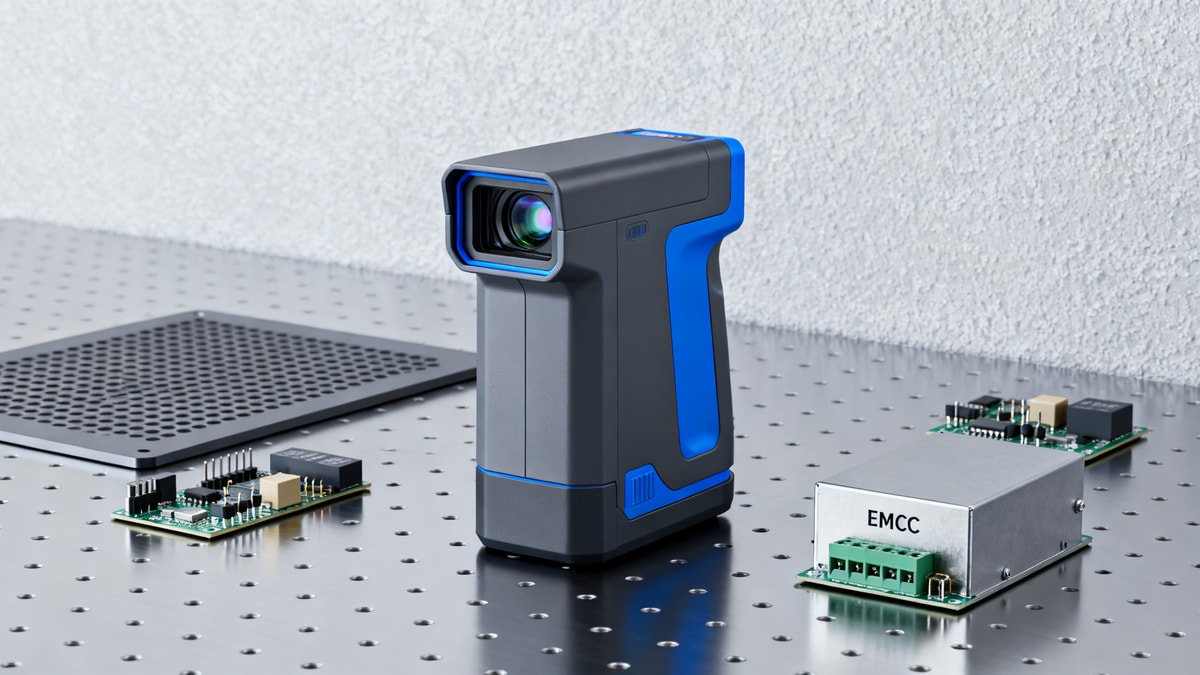
On May 4, 2026, Brazil’s National Institute of Metrology, Standardization and Industrial Quality (INMETRO) issued Technical Notice No. 112/2026, proposing a new mandatory electromagnetic pulse (EMP) immunity requirement—IEC 61000-4-32:2026 Class 4—for industrial laser distance meters. This development directly affects manufacturers, exporters, and distributors of testing and measurement equipment targeting the Brazilian market.
Event Overview
On May 4, 2026, INMETRO published Technical Notice No. 112/2026, initiating a public consultation on proposed amendments to the conformity assessment requirements for industrial laser distance meters. The notice introduces a mandatory EMP immunity test per IEC 61000-4-32:2026 at Class 4 level. The consultation period ends on June 15, 2026. No final regulation has been adopted; the notice remains in the draft and feedback phase.
Industries Affected by This Proposal
Direct Exporters of Testing & Measurement Equipment
Exporters supplying industrial laser distance meters to Brazil will face revised technical compliance obligations. If adopted, the new requirement means devices must pass standardized EMP immunity testing before INMETRO certification—and thus before market entry. Impact includes extended pre-market validation timelines and potential redesign or component-level upgrades.
Manufacturers of Industrial Laser Distance Meters
Manufacturers—especially those producing Class I or II laser-based metrology tools—may need to reassess shielding design, PCB layout, power supply filtering, and enclosure grounding to meet Class 4 EMP resilience. Unlike general EMC tests (e.g., IEC 61000-4-3), EMP-specific testing under IEC 61000-4-32:2026 involves high-intensity, short-duration transient fields, requiring specialized lab capabilities not yet widely available in all production regions.
Distributors and Certification Intermediaries
Distributors supporting Brazilian market access must update technical documentation packages and coordinate with accredited labs capable of performing IEC 61000-4-32:2026 tests. Since this standard is newly published (2026 edition), lab accreditation status and test capacity in Latin America remain limited—potentially delaying certification turnaround times.
Supply Chain Providers (e.g., Component Sourcing, EMC Test Labs)
Suppliers of EMI filters, transient voltage suppression diodes, conductive gaskets, and shielded enclosures may see increased demand for EMP-grade components. Meanwhile, EMC test laboratories—particularly those outside Europe and North America—may need to invest in new calibration and pulse generation infrastructure to support future INMETRO-mandated assessments.
What Relevant Companies or Practitioners Should Focus On Now
Monitor the official consultation outcome and timeline
Track INMETRO’s official updates following the June 15, 2026, comment deadline. A finalized regulation would likely specify implementation dates, transition periods, and possible exemptions—details not yet defined in the draft notice.
Identify whether your product models fall within scope
Confirm whether your laser distance meters are classified as ‘industrial’ under INMETRO’s current regulatory scope (e.g., NBR IEC 61000-6-2/6-4 alignment). Consumer-grade or non-contact measuring tools may be excluded—but classification criteria have not yet been clarified in the notice.
Distinguish between policy signal and enforceable requirement
This is a draft proposal—not an active regulation. Analysis shows that INMETRO often incorporates stakeholder feedback into final texts; therefore, the final version may adjust the required class, test parameters, or applicability scope. Treat the current notice as a technical readiness signal—not an immediate compliance trigger.
Begin internal technical gap assessment and lab engagement
For companies with active Brazil-bound shipments, initiate preliminary gap analysis against IEC 61000-4-32:2026. Contact accredited labs early—even if full testing isn’t needed yet—to assess availability, lead time, and cost structure for Class 4 EMP validation.
Editorial Observation / Industry Perspective
Observably, this proposal reflects a broader trend among emerging-market regulators to align with newer, threat-informed EMC standards—particularly those addressing high-energy transients relevant to critical infrastructure environments. From an industry perspective, it signals growing attention to operational resilience beyond basic emissions and immunity. However, it is more accurately understood as a forward-looking policy signal than an imminent regulatory change: no enforcement date, no transitional provisions, and no lab accreditation framework for IEC 61000-4-32:2026 have yet been published by INMETRO. Continued monitoring is warranted—not urgent re-engineering.
In summary, INMETRO’s proposal introduces a technically significant new compliance consideration for industrial laser distance meters entering Brazil—but remains in the consultative stage. Its current value lies not in immediate compliance action, but in informing medium-term R&D planning, supply chain evaluation, and certification strategy. For now, it is best interpreted as an early indicator of tightening resilience expectations—not a finalized mandate.
Source: INMETRO Technical Notice No. 112/2026, published May 4, 2026. Public consultation open until June 15, 2026. Status remains draft; final regulation text and effective date are pending.
Technical Specifications
- US DOE Level 3 Transformer Efficiency Rule Takes Effect July 1, 2026Author :Grid Infrastructure Analyst
- INMETRO Proposes EMP Immunity Requirement for Industrial Laser Distance Meters in BrazilAuthor :Precision Metrology Expert
- Indonesia BPOM Fast-Tracks Chinese Industrial Air PurifiersAuthor :Environmental Engineering Director
Expert Insights

Chief Security Architect
Dr. Thorne specializes in the intersection of structural engineering and digital resilience. He has advised three G7 governments on industrial infrastructure security.
Related Analysis
- May 05, 2026US DOE Level 3 Transformer Efficiency Rule Takes Effect July 1, 2026Author :Grid Infrastructure Analyst
- May 05, 2026INMETRO Proposes EMP Immunity Requirement for Industrial Laser Distance Meters in BrazilAuthor :Precision Metrology Expert
- May 05, 2026Indonesia BPOM Fast-Tracks Chinese Industrial Air PurifiersAuthor :Environmental Engineering Director
Core Sector // 01
Security & Safety
- INMETRO Proposes EMP Immunity Requirement for Industrial Laser Distance Meters in BrazilAuthor :Precision Metrology Expert

- EN 61000-4-30:2026 Mandatory for Industrial PQ Analyzers in EUAuthor :Precision Metrology Expert

- Industrial Standards Compliance Problems That Surface Too LateAuthor :Precision Metrology Expert

- What an Instruments & Measurement OEM Should Prove Up FrontAuthor :Precision Metrology Expert

- When Industrial Standards Solutions Reduce Rework Instead of PaperworkAuthor :Precision Metrology Expert

- CPSC Recalls 32 Batches of Chinese Industrial Laser Distance MetersAuthor :Precision Metrology Expert

- What makes an Instruments & Measurement supplier dependableAuthor :Precision Metrology Expert

- When rapid prototyping CNC saves money and when it does notAuthor :Precision Metrology Expert