Flood Control Sandbags: When Size Choice Affects Deployment Speed
Author
Date Published
Reading Time
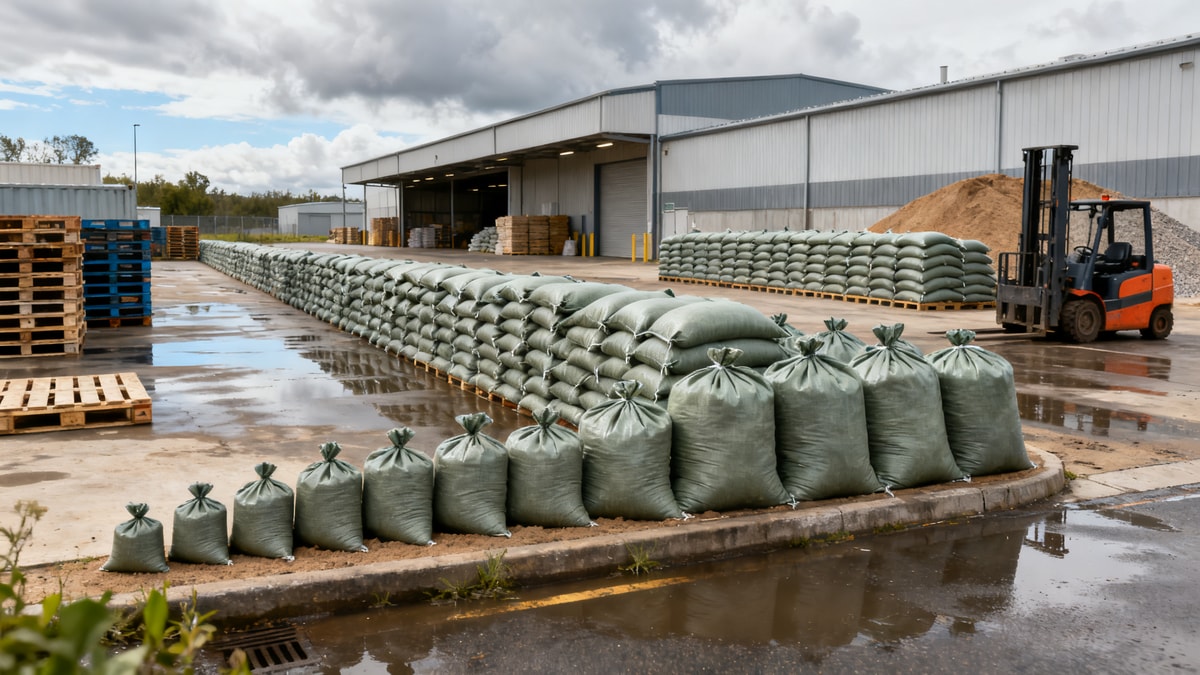
When flood response timelines are measured in minutes, the right flood control sandbags size can directly influence deployment speed, labor efficiency, and site protection outcomes. For project managers and engineering leads, understanding how size affects handling, stacking, transport, and barrier performance is essential to planning faster, safer, and more reliable flood defense operations.
Why does flood control sandbags size matter so much in emergency deployment?
For many teams, flood control sandbags look like a simple commodity. In reality, size selection changes nearly every operational variable: how quickly crews can fill bags, how many units fit on a pallet, how safely workers can carry them, how tightly a barrier can be stacked, and how fast a site can be protected before water levels rise.
A bag that is too large may create a heavier final load, slowing manual handling and increasing fatigue. A bag that is too small may move faster in one person’s hands but require many more placements to build the same protective line. For project managers, the key issue is not simply “bigger or smaller,” but the total system effect: labor availability, fill material, site access, transport constraints, and required barrier height.
This is why industrial buyers and EPC teams often assess flood control sandbags as part of a deployment strategy rather than as a standalone product. In critical infrastructure, the best size is the one that reaches the threat area fastest, can be placed consistently by available labor, and creates predictable flood defense performance under real conditions.
What are the most common flood control sandbags sizes, and how do they affect field performance?
Typical flood control sandbags come in several standard dimensions, often varying by regional practice and material type. In practical use, however, procurement teams usually compare them by filled weight, footprint, and stacking behavior rather than by nominal dimensions alone.
Smaller bags are usually easier to handle, especially where deployment depends on mixed-skill labor or when crews must move quickly across uneven ground. Medium-size bags often provide the best balance between speed and barrier density. Larger bags may reduce the number of individual units required, but they can slow deployment if fill weight exceeds what workers can repeatedly lift and position safely.
The practical takeaway is simple: field performance depends on the relationship between bag size and deployment method. A warehouse flood line, a construction site perimeter, and a substation entrance may all need flood control sandbags, but not necessarily the same size.
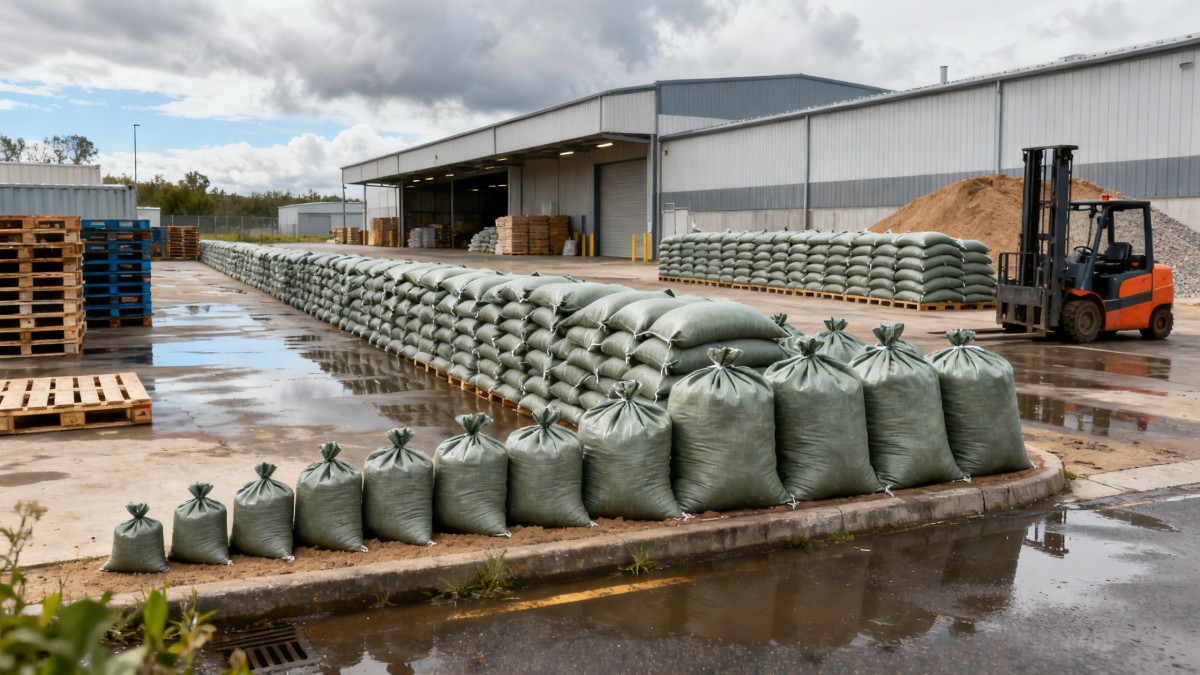
How does size choice affect deployment speed, labor productivity, and safety?
This is the question most relevant to project managers. Deployment speed is not only about how fast a worker can carry one bag. It is the combined result of filling, tying or sealing, transporting, positioning, and stacking. A larger bag may appear efficient on paper because fewer units are required, but if each bag takes longer to fill and demands two-person handling, overall speed may fall.
Labor productivity also changes with crew profile. Trained emergency teams can often maintain a higher pace with medium-size flood control sandbags because they balance manageable weight with useful volume. By contrast, volunteer-based or cross-functional crews may perform better with lighter bags, because consistency matters more than theoretical maximum coverage per unit.
Safety is another major factor. Repetitive lifting under wet, unstable, or low-visibility conditions increases the chance of strains, slips, and rushed placement errors. A bag size that exceeds safe manual handling thresholds may create hidden costs: slower work-rest cycles, reduced stacking accuracy, and higher probability of barrier gaps. In industrial environments where compliance culture matters, selecting appropriately sized flood control sandbags supports both emergency readiness and worker protection.
- Smaller bags usually improve carrying speed per person.
- Medium bags often produce the best total output per crew shift.
- Oversized bags can reduce placement precision at corners, doorways, and uneven edges.
- Safer lifting loads often translate into more reliable barrier completion times.
Which flood control sandbags size is best for different project environments?
There is no universal best size. The right choice depends on the protection target, site geometry, available machinery, and the urgency of the response. For project leaders in industrial and infrastructure settings, matching size to environment is more useful than chasing a single standard.
For facility entrances, loading bays, and narrow service corridors, smaller or medium flood control sandbags are often easier to place tightly and shape around obstacles. For long perimeter lines on open ground, medium bags may support faster stacking while still remaining manageable by hand. In large civil works or utility projects where forklifts, loaders, or organized fill stations are available, larger bag formats may become more practical.
Site surface also matters. Smooth pavement supports quicker placement and straighter stacking, while muddy or irregular terrain often favors bags that can be adjusted by one worker without repeated strain. If your flood defense plan must cover drains, temporary berms, access gates, and equipment pads in one event, a mixed-size strategy may be the most resilient option.
Quick selection guide for project teams
What do buyers often overlook when choosing flood control sandbags?
One common mistake is evaluating flood control sandbags only by unit price. A lower-cost larger bag can become more expensive in total deployment terms if it slows labor, requires more fill time, or leads to incomplete barrier construction before floodwaters arrive. Total deployment cost should include labor-hours, transport density, storage footprint, and failure risk.
Another oversight is ignoring fill behavior. The same bag size can perform differently depending on whether crews use sand, soil, gravel blend, or prefilled material. Fill material changes the final weight, shape retention, and stack stability. For that reason, procurement decisions should consider the intended fill medium, not just empty bag dimensions.
Material strength is also critical. If bag fabric tears under rough loading or prolonged moisture exposure, size selection becomes irrelevant because deployment reliability is compromised. Industrial buyers should also check UV resistance, seam integrity, storage life, and whether the product aligns with expected environmental conditions.
Finally, many teams fail to test. A short on-site drill with selected flood control sandbags can reveal whether a bag is too heavy, too slow to fill, or awkward to stack around real assets. For high-consequence facilities, trial deployment is one of the most cost-effective readiness measures available.
How should project managers compare speed, protection, and procurement efficiency before ordering?
A good evaluation process starts with the response objective. Are you trying to protect a single vulnerable entry point within 20 minutes, or are you building a broad defensive line over several hours? The answer determines whether speed per worker, total barrier volume, or transport efficiency should be weighted most heavily.
Next, map labor reality. If emergency response will rely on a small maintenance crew, lighter flood control sandbags may outperform larger formats despite requiring more units. If your site has palletized stock, powered handling, and trained teams, a larger option may be justified. The best procurement choice is the one aligned with actual staffing at the moment of deployment, not ideal assumptions made during planning.
Then compare logistics. How many empty bags can be stored on site? How quickly can fill material be accessed? How many trips are needed from stock area to flood edge? Some operations discover that a more compact bag format shortens internal movement times enough to outweigh the increased unit count.
For industrial procurement directors and engineering leads, a practical scoring method can help:
- Rate manual handling safety.
- Rate fill and sealing speed.
- Rate stack stability and fit to site geometry.
- Rate storage and transport efficiency.
- Rate total deployment time under realistic crew conditions.
This structured approach turns flood control sandbags selection from a reactive purchase into a risk-managed operational decision.
What are the most frequently asked questions about flood control sandbags size?
Below is a compact FAQ summary that many project managers use during early planning and supplier conversations.
What should you confirm with suppliers before finalizing a flood control sandbags plan?
Before purchase or framework agreement, project teams should clarify several details that directly affect deployment success. Confirm the nominal and recommended filled weight range, fabric specification, seam performance, moisture resistance, and packaging format. Ask whether the supplier can support multiple bag sizes for different site zones, and whether sample units are available for field trials.
It is also wise to verify lead time, pallet quantity, storage conditions, and compatibility with your preferred fill process. For larger industrial programs, request documentation that supports quality consistency and operational suitability, especially if the bags may be stored for seasonal readiness or used across multiple facilities.
In the end, choosing flood control sandbags is not just about product dimensions. It is about response speed, deployment control, worker safety, and the ability to protect critical assets under pressure. If you need to confirm a specific solution, parameter set, rollout timeline, quotation basis, or sourcing direction, start by discussing site layout, expected crew size, fill material, target barrier length, storage constraints, and whether deployment will be fully manual or equipment-assisted. Those answers usually point to the right size choice far faster than price comparison alone.
Technical Specifications
- India BIS Draft IS 17832:2026 Sets Noise & Dust Limits for Waste CrushersAuthor :Environmental Engineering Director
- Korea MFDS Mandates Korean UI & KOSHA OEL Database for Industrial Water AnalyzersAuthor :Precision Metrology Expert
- Indonesia BPOM Mandates PM0.1 Efficiency & CADR Decay Labeling for Industrial Air PurifiersAuthor :Environmental Engineering Director
Expert Insights

Chief Security Architect
Dr. Thorne specializes in the intersection of structural engineering and digital resilience. He has advised three G7 governments on industrial infrastructure security.
Related Analysis
- May 03, 2026India BIS Draft IS 17832:2026 Sets Noise & Dust Limits for Waste CrushersAuthor :Environmental Engineering Director
- May 03, 2026Korea MFDS Mandates Korean UI & KOSHA OEL Database for Industrial Water AnalyzersAuthor :Precision Metrology Expert
- May 03, 2026Indonesia BPOM Mandates PM0.1 Efficiency & CADR Decay Labeling for Industrial Air PurifiersAuthor :Environmental Engineering Director
Core Sector // 01
Security & Safety
- INMETRO Updates Fire Pump Set Certification: IEC 60034-30-2 Enforcement Effective May 2026Author :Safety Compliance Lead

- Marine Oil Spill Boom Choices That Backfire in Rough WaterAuthor :Safety Compliance Lead

- Flood Control Sandbags: When Size Choice Affects Deployment SpeedAuthor :Safety Compliance Lead

- JIS T 8201-2026 Enforces New Low-Temp Impact Test for Fire Respirator MasksAuthor :Safety Compliance Lead

- Dry chemical fire extinguishers and clean-up costs after dischargeAuthor :Safety Compliance Lead

- CO2 fire extinguishers wholesale: refill logistics often overlookedAuthor :Safety Compliance Lead

- Fire hydrant valves: signs the material grade is not enoughAuthor :Safety Compliance Lead

- Why fire hose reel cabinets fail early in humid locationsAuthor :Safety Compliance Lead