JIS T 8201-2026 Enforces New Low-Temp Impact Test for Fire Respirator Masks
Author
Date Published
Reading Time
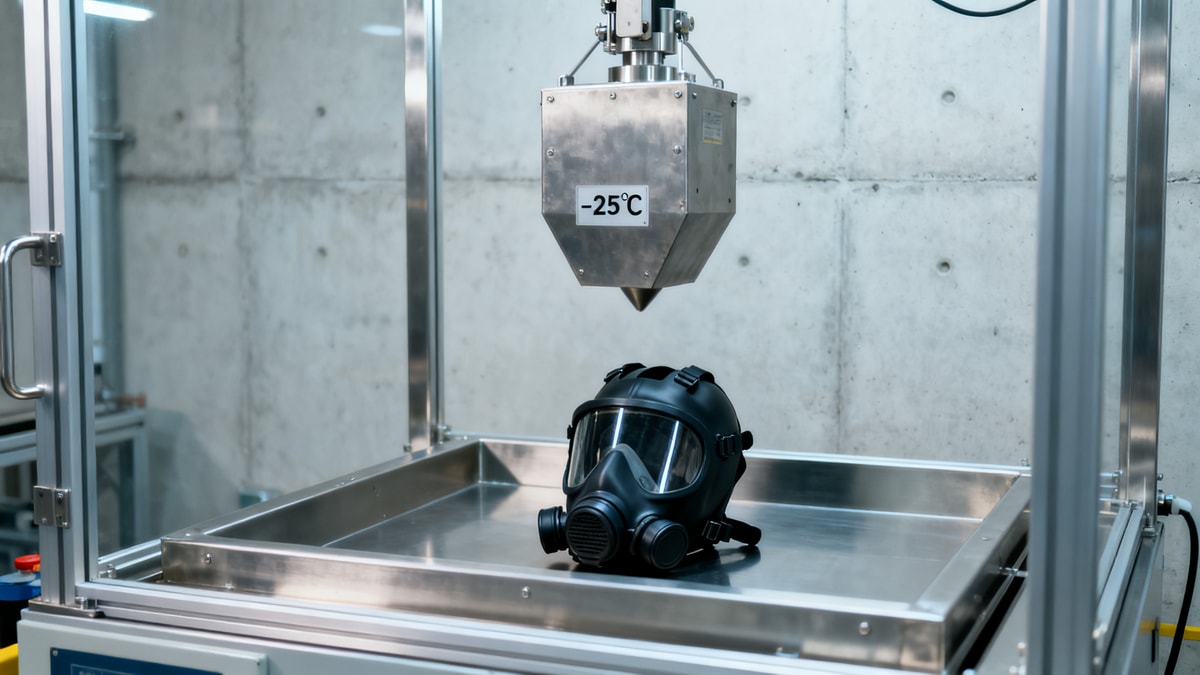
Japan’s Industrial Standard JIS T 8201-2026 was officially published on April 29, 2026, and will take mandatory effect on November 1, 2026. It introduces a new low-temperature impact resistance requirement for fire and rescue respirator face masks—specifically, no cracking after exposure to −25°C and impact energy of 3 joules. Exporters of such equipment from China—and other non-Japanese manufacturing regions—must now retest products using JIS-specified cryogenic impact testers. Certificates issued under the superseded JIS T 8201-2015 standard will expire automatically upon enforcement. This update directly affects fire safety equipment manufacturers, exporters, testing service providers, and supply chain stakeholders serving the Japanese public safety market.
Event Overview
The Japan Industrial Standards Committee (JISC) formally released JIS T 8201-2026 on April 29, 2026. The standard revises test requirements for fire and rescue respirator face masks, mandating that they withstand a 3-joule impact at −25°C without cracking. Enforcement begins November 1, 2026. All existing certifications issued under JIS T 8201-2015 are invalidated upon this date. Compliance requires use of JIS-designated low-temperature impact testing equipment.
Industries Affected by the Update
Direct Exporters (e.g., Chinese manufacturers shipping to Japan)
These enterprises face immediate compliance risk: shipments cleared under JIS T 8201-2015 will no longer meet Japanese market entry requirements post-November 2026. Impact manifests in customs clearance delays, rejection of consignments, and loss of tender eligibility for Japanese fire department procurement contracts.
Testing & Certification Service Providers
Third-party labs and certification bodies must validate their low-temperature impact testing capabilities against JIS T 8201-2026’s exact apparatus and procedure specifications. Labs lacking JIS-compliant cryogenic impact testers—or unaccredited for this specific test—cannot issue valid certificates for the Japanese market.
Raw Material & Component Suppliers
Suppliers of polycarbonate, thermoplastic elastomers, or sealing gaskets used in mask housings may see revised material specifications from OEMs. The −25°C/3 J impact requirement increases demand for低温-resistant formulations—potentially triggering technical data sheet updates and requalification testing.
Domestic Distributors & Import Agents in Japan
Japanese importers and distributors bear legal responsibility for product conformity under Japan’s Act on Product Safety. Post-enforcement, they must verify updated JIS T 8201-2026 certificates for all incoming respirator masks—and retain documentation demonstrating traceability to compliant testing.
Key Points for Enterprises and Practitioners to Monitor and Address
Confirm official interpretation of transition arrangements
Although JIS T 8201-2015 certificates expire automatically on November 1, 2026, analysis shows JISC has not yet clarified whether limited grace periods apply to inventory already shipped but not yet cleared through Japanese customs. Exporters should monitor announcements from Japan’s Ministry of Economy, Trade and Industry (METI) and the Japan Fire Equipment Inspection Institute.
Prioritize retesting for high-volume or high-risk SKUs
Current more practical than full portfolio retesting is to identify models with historically marginal impact performance at sub-zero temperatures—especially those previously tested near the threshold under older protocols. Focus retesting efforts on these SKUs first to minimize time-to-market disruption.
Distinguish between JIS designation and general low-temp testing capability
Observably, many labs advertise “low-temperature impact testing” but do not operate JIS-specified equipment (e.g., pendulum impact tester with calibrated −25°C environmental chamber meeting JIS Z 8741). Enterprises must verify equipment model numbers, calibration records, and JIS-accreditation scope—not just temperature range—before commissioning tests.
Update internal documentation and supplier agreements
Manufacturers should revise technical files, quality manuals, and supplier quality agreements to explicitly reference JIS T 8201-2026. Contracts with raw material vendors should include clauses requiring material-level low-temp impact validation data aligned with the new standard.
Editorial Perspective / Industry Observation
This revision is better understood as a regulatory tightening signal rather than an isolated technical update. From an industry perspective, it reflects Japan’s broader trend toward harmonizing fire equipment standards with operational realism—particularly cold-weather emergency response scenarios. Analysis shows that similar low-temperature durability clauses have recently appeared in revisions of JIS T 8141 (fire helmets) and JIS T 8101 (fire turnout gear), suggesting a coordinated upgrade cycle across personal protective equipment (PPE) categories. While not yet linked to international standards like ISO 16900, its enforcement timeline and test specificity make it a de facto market access gate for Japan’s public safety procurement system.
It is currently more accurate to view JIS T 8201-2026 as an enforcement trigger than a long-term strategic shift—its impact is immediate and procedural, not conceptual. Yet its timing (coinciding with Japan’s national fire service modernization initiatives) indicates sustained attention to PPE resilience metrics over the next 3–5 years.
Conclusion
JIS T 8201-2026 marks a concrete, enforceable step in Japan’s fire equipment regulatory framework—not a preview or proposal. Its significance lies not in novelty, but in mandatory applicability: it converts a previously advisory performance expectation into a hard compliance checkpoint. For affected stakeholders, the most rational interpretation is operational urgency—not strategic uncertainty. Preparedness hinges on verifying test capability alignment, prioritizing SKU-level revalidation, and treating the November 1, 2026 deadline as non-negotiable for market access.
Source Information
Main source: Japan Industrial Standards Committee (JISC), JIS T 8201-2026 publication notice dated April 29, 2026. No additional background documents, implementation guidelines, or METI circulars have been publicly confirmed as of the publication date. Ongoing monitoring of METI and Japan Fire Equipment Inspection Institute communications is advised for any transitional clarifications.
Technical Specifications
- ILAC Recognizes CNAS Bearing Vibration ReportsAuthor :Heavy Industry Strategist
- ESMA Mandates EN 14181 QA/QC Level 3 for Industrial Water Sensors in UAEAuthor :Environmental Engineering Director
- JIS T 8201-2026 Enforces New Low-Temp Impact Test for Fire Respirator MasksAuthor :Safety Compliance Lead
Expert Insights

Chief Security Architect
Dr. Thorne specializes in the intersection of structural engineering and digital resilience. He has advised three G7 governments on industrial infrastructure security.
Related Analysis
- May 01, 2026ILAC Recognizes CNAS Bearing Vibration ReportsAuthor :Heavy Industry Strategist
- May 01, 2026ESMA Mandates EN 14181 QA/QC Level 3 for Industrial Water Sensors in UAEAuthor :Environmental Engineering Director
- May 01, 2026JIS T 8201-2026 Enforces New Low-Temp Impact Test for Fire Respirator MasksAuthor :Safety Compliance Lead
Core Sector // 01
Security & Safety
- JIS T 8201-2026 Enforces New Low-Temp Impact Test for Fire Respirator MasksAuthor :Safety Compliance Lead

- Dry chemical fire extinguishers and clean-up costs after dischargeAuthor :Safety Compliance Lead

- CO2 fire extinguishers wholesale: refill logistics often overlookedAuthor :Safety Compliance Lead

- Fire hydrant valves: signs the material grade is not enoughAuthor :Safety Compliance Lead

- Why fire hose reel cabinets fail early in humid locationsAuthor :Safety Compliance Lead

- Wholesale fire alarm panels: compatibility issues to check firstAuthor :Safety Compliance Lead

- Smoke detectors bulk orders: where false alarm costs add upAuthor :Safety Compliance Lead

- When heat detectors OEM support matters more than unit costAuthor :Safety Compliance Lead