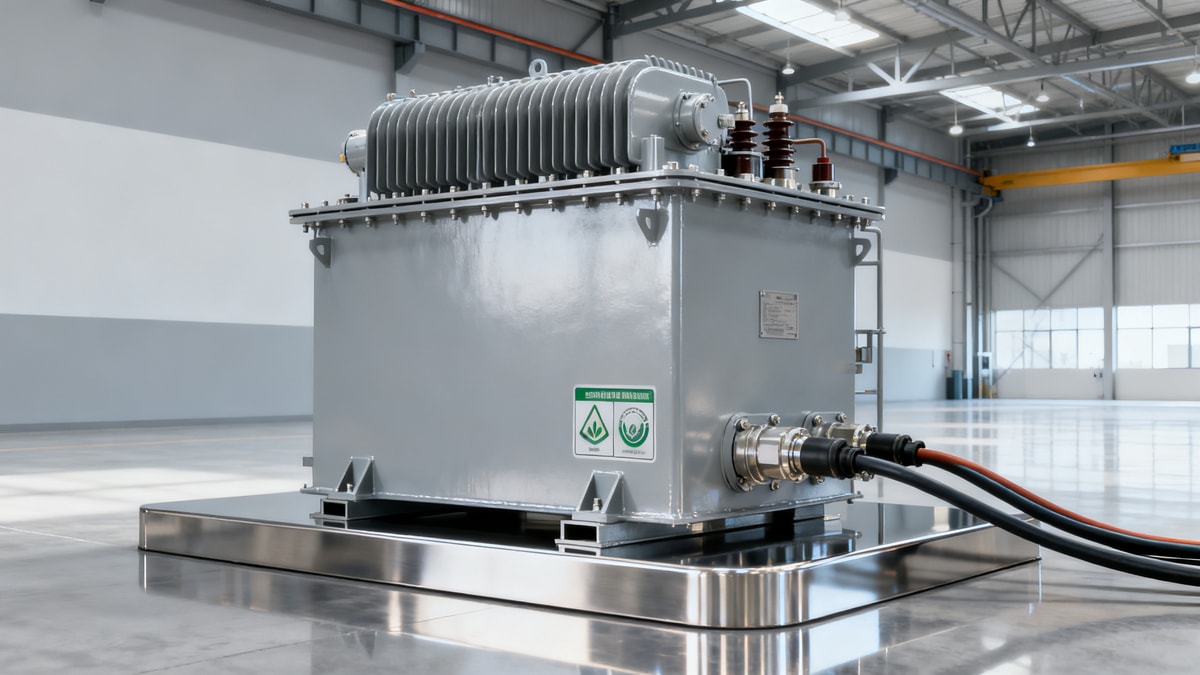
US DOE Level 3 Transformer Efficiency Rule Takes Effect July 1, 2026
Author
Date Published
Reading Time
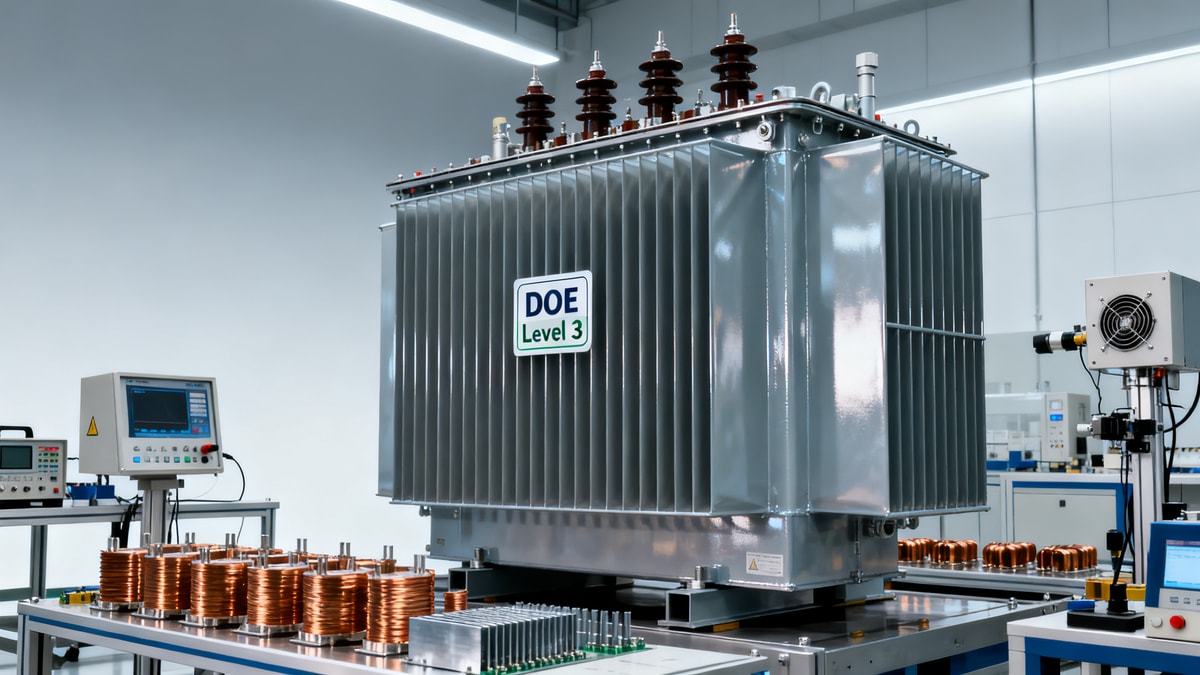
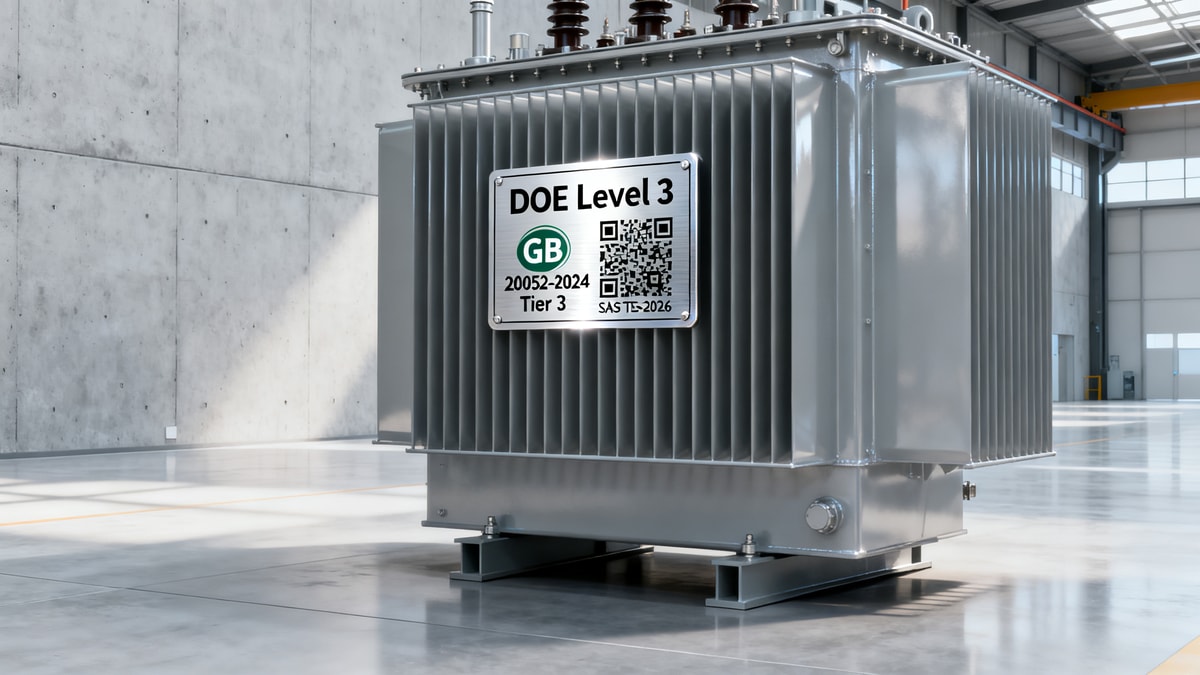
On May 4, 2026, the U.S. Department of Energy (DOE) issued Final Rule FR-2026-05-04, confirming that the DOE Level 3 energy efficiency standards for industrial dry-type and liquid-immersed transformers—codified under 10 CFR Part 431—will become fully mandatory on July 1, 2026. This rule directly affects manufacturers, importers, and suppliers of industrial power transformers serving U.S. federal procurement, state infrastructure projects, and commercial distribution channels.
Event Overview
The U.S. Department of Energy published Final Rule FR-2026-05-04 on May 4, 2026. The rule confirms that compliance with DOE Level 3 efficiency requirements (10 CFR Part 431) is required for all newly manufactured and imported industrial dry-type and liquid-immersed transformers as of July 1, 2026. Non-compliant units will not be eligible for an EISA compliance statement and will be excluded from U.S. federal government procurement and state-level infrastructure bidding processes.
Industries Affected by the Rule
Transformer Manufacturers
Manufacturers producing industrial dry-type or oil-immersed transformers for the U.S. market must ensure all new production lines meet DOE Level 3 minimum efficiency levels by July 1, 2026. Impact includes redesign timelines, material sourcing adjustments (e.g., higher-grade core steel, improved insulation systems), and updated testing and certification protocols.
Importers and Distributors
Entities importing transformers into the United States must verify conformance before customs clearance. Units without valid DOE-compliant certification documentation—including test reports aligned with DOE-specified procedures—will face shipment rejection or regulatory non-acceptance. Inventory planning must account for lead-time shifts and potential stock obsolescence pre-July 2026.
Engineering, Procurement, and Construction (EPC) Firms
EPC contractors engaged in U.S. federal or state-funded infrastructure projects—including data centers, renewable integration substations, and public utility upgrades—must specify DOE Level 3–compliant transformers in all new bids and design packages after July 1, 2026. Failure to do so may result in bid disqualification or contract non-approval.
Utility and Industrial End Users
Utilities and large industrial facilities procuring replacement or expansion transformers for internal use must confirm supplier compliance when issuing purchase orders post-July 2026. Internal procurement policies may require updated technical specifications, vendor qualification checklists, and verification workflows tied to DOE’s compliance database.
Key Actions for Relevant Enterprises and Practitioners
Monitor official DOE compliance guidance and enforcement updates
Analysis shows the DOE may issue supplemental notices—such as interpretation memos or compliance verification templates—between May and June 2026. Stakeholders should track updates via the Federal Register and the DOE’s Building Technologies Office (BTO) website, particularly regarding test method alignment (e.g., IEEE C57.12.90–2023 adoption status).
Identify and prioritize affected transformer models and capacity ranges
Observably, the Level 3 standard applies across defined kVA ranges and voltage classes specified in 10 CFR §431.196. Companies should cross-reference current product portfolios against Table 1 (dry-type) and Table 2 (liquid-immersed) in the Final Rule to flag high-volume or mission-critical models requiring redesign or retesting.
Distinguish between policy effective date and practical implementation timing
From industry perspective, July 1, 2026 marks the legal cutoff for new production/import—but procurement cycles, engineering lead times, and inventory turnover mean operational readiness must be achieved earlier. For example, transformers ordered in Q2 2026 for Q4 2026 installation must already reflect Level 3 compliance at time of order placement.
Prepare supply chain and documentation handoffs ahead of deadline
Current more appropriate action is to initiate internal alignment between R&D, quality assurance, regulatory affairs, and logistics teams by mid-2026. This includes updating bill-of-materials (BOM) records, revising export/import declarations, and validating third-party lab accreditation for DOE-mandated test methods.
Editorial Perspective / Industry Observation
This Final Rule is not a proposal or draft—it is a binding regulatory mandate with fixed enforcement timing. Observably, it signals a hardening of U.S. energy policy toward industrial equipment decarbonization, aligning transformer efficiency with broader EISA 2007 objectives. Analysis shows the Level 3 thresholds represent a measurable step up from prior DOE Level 2 (2016) requirements—particularly for medium-voltage dry-type units—implying non-trivial cost and performance trade-offs. It is better understood as a finalized compliance threshold than a transitional signal: the timeline leaves no statutory grace period for non-compliant production. Continued attention is warranted—not for possible delay, but for enforcement consistency, test-method harmonization, and potential ripple effects on regional procurement standards (e.g., California Title 20 alignment).
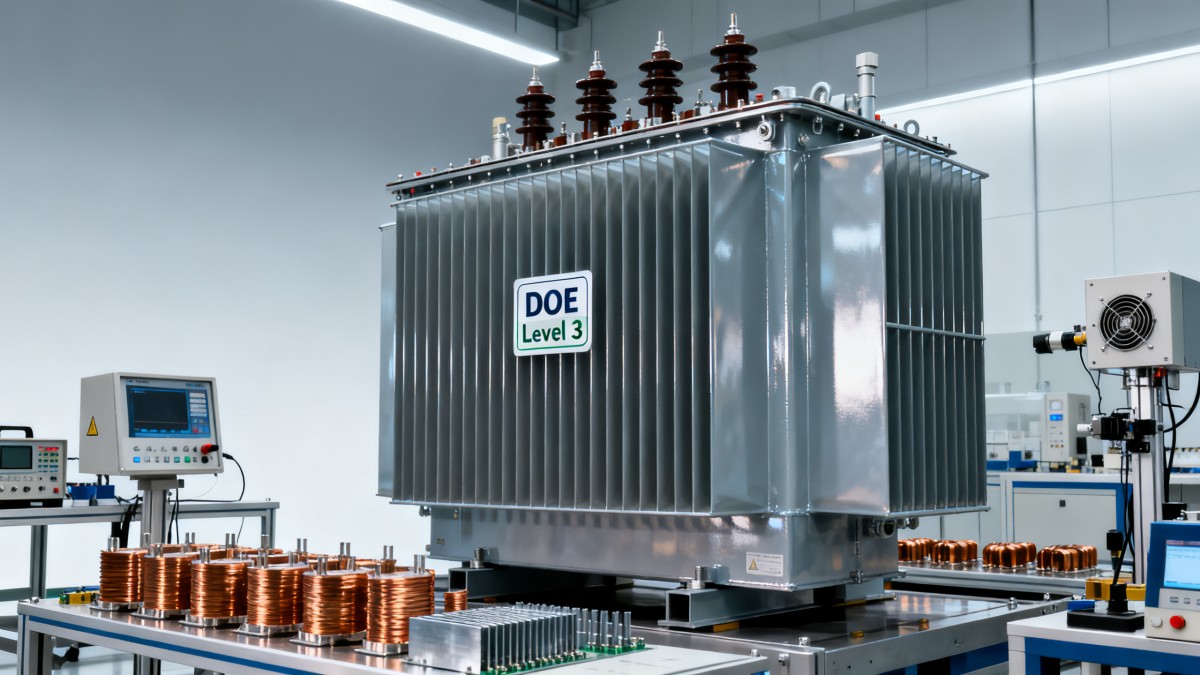
Conclusion: The DOE Level 3 transformer rule establishes a definitive, enforceable benchmark for energy efficiency in U.S.-bound industrial transformers. Its significance lies not in novelty—Level 3 was anticipated since the 2022 proposed rule—but in its irrevocable activation date and direct linkage to market access. At present, this rule is best interpreted as an operational deadline requiring concrete, verifiable compliance—not a strategic option or future consideration.
Source: U.S. Department of Energy, Final Rule FR-2026-05-04, published May 4, 2026, codified in 10 CFR Part 431. Compliance enforcement begins July 1, 2026. Ongoing monitoring recommended for DOE BTO guidance documents and Federal Register notices related to implementation support.
Technical Specifications
- US DOE Level 3 Transformer Efficiency Rule Takes Effect July 1, 2026Author :Grid Infrastructure Analyst
- INMETRO Proposes EMP Immunity Requirement for Industrial Laser Distance Meters in BrazilAuthor :Precision Metrology Expert
- Indonesia BPOM Fast-Tracks Chinese Industrial Air PurifiersAuthor :Environmental Engineering Director
Expert Insights

Chief Security Architect
Dr. Thorne specializes in the intersection of structural engineering and digital resilience. He has advised three G7 governments on industrial infrastructure security.
Related Analysis
- May 05, 2026US DOE Level 3 Transformer Efficiency Rule Takes Effect July 1, 2026Author :Grid Infrastructure Analyst
- May 05, 2026INMETRO Proposes EMP Immunity Requirement for Industrial Laser Distance Meters in BrazilAuthor :Precision Metrology Expert
- May 05, 2026Indonesia BPOM Fast-Tracks Chinese Industrial Air PurifiersAuthor :Environmental Engineering Director
Core Sector // 01
Security & Safety
- US DOE Level 3 Transformer Efficiency Rule Takes Effect July 1, 2026Author :Grid Infrastructure Analyst

- SASO Updates Industrial Transformer Labeling: Dual DOE Level 3 + SASO TES-2026 Required from May 2026Author :Grid Infrastructure Analyst

- Power Distribution Standards That Shape Upgrade Costs in 2026Author :Grid Infrastructure Analyst

- Electrical & Power Standards That Impact Retrofit Project SafetyAuthor :Grid Infrastructure Analyst

- Why Electrical & Power Manufacturers Lose Orders on Lead TimeAuthor :Grid Infrastructure Analyst

- How to Compare a Power Distribution Manufacturer Beyond PriceAuthor :Grid Infrastructure Analyst

- US DOE Industrial Transformer Efficiency Rule Effective Oct 2026Author :Grid Infrastructure Analyst

- Power distribution solutions that reduce overload complaintsAuthor :Grid Infrastructure Analyst