Fire hydrant valves: signs the material grade is not enough
Author
Date Published
Reading Time
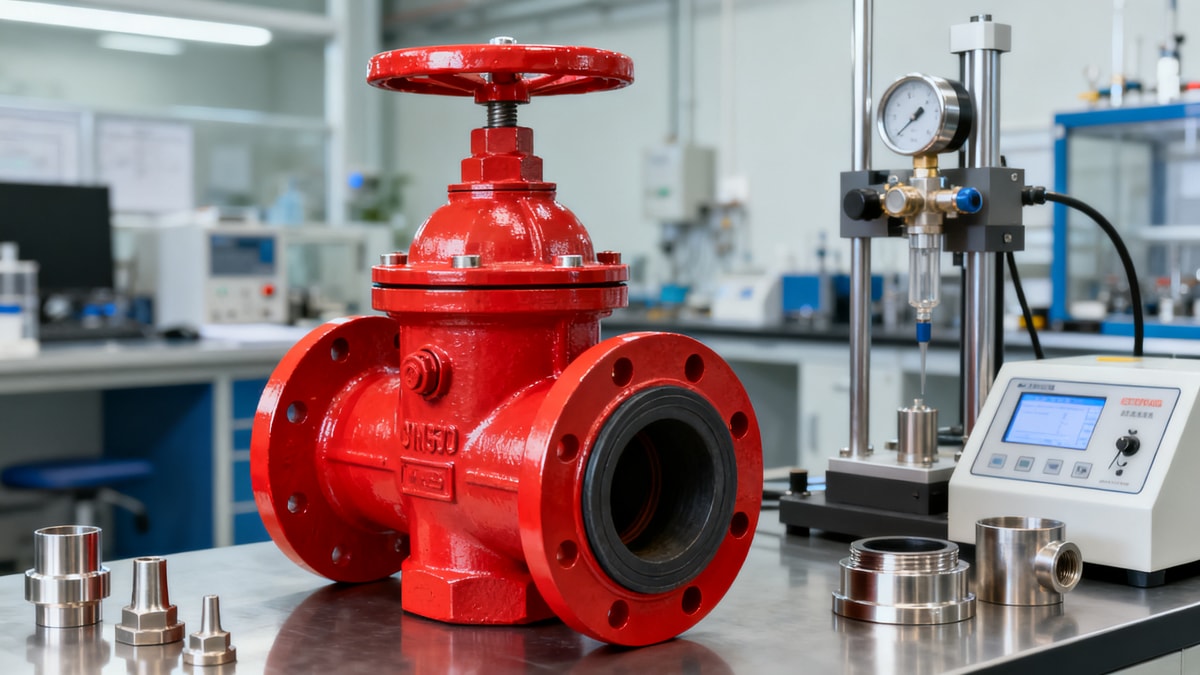
When fire hydrant valves are made from a material grade that falls below service demands, the result is often hidden risk rather than visible failure. For quality control and safety managers, early signs such as corrosion, cracking, leakage, or poor pressure performance can signal deeper compliance and reliability issues. Understanding these warning indicators is essential to preventing system failure, safety incidents, and costly replacement in critical infrastructure.
Why do material grade issues in fire hydrant valves matter so much?
For quality and safety teams, the concern is not simply whether fire hydrant valves can open and close during inspection. The real question is whether the valve body, stem, seat, bonnet, and sealing surfaces can survive the combined effects of pressure cycling, stagnant water, outdoor exposure, mechanical abuse, and emergency use over many years. A valve made from an inadequate material grade may pass an initial acceptance check yet fail prematurely when corrosion, dezincification, stress cracking, or erosion begins to progress inside the assembly.
This matters because fire protection assets are low-frequency but high-consequence components. Unlike general process valves that are cycled often and monitored closely, fire hydrant valves may sit idle for long periods. That makes hidden material weakness more dangerous. The absence of immediate failure can create false confidence, while internal damage continues unnoticed until flow demand is highest. In an industrial park, logistics hub, refinery utility area, commercial complex, or municipal support network, that delay can translate into pressure loss, leakage, frozen operation, or total inoperability during an incident.
For organizations working under EPC specifications, insurance requirements, and codes such as UL, FM, CE, ISO-related quality systems, and local fire standards, material grade is also a compliance issue. If the installed fire hydrant valves do not match the required metallurgy for the service environment, the risk extends beyond maintenance cost. It affects audit readiness, legal defensibility, and operational resilience.
What are the earliest signs that the material grade of fire hydrant valves is not enough?
The earliest warning signs are rarely dramatic. In most cases, underperforming fire hydrant valves show subtle symptoms before visible failure occurs. Quality control personnel should treat these symptoms as evidence to investigate material traceability, test history, and environmental compatibility rather than as isolated maintenance defects.
Common early signs include:
- Surface corrosion appearing too quickly for the installation age, especially on body joints, outlet threads, flange faces, and operating nuts
- Red rust, white deposits, pitting, or blistered coating that suggests poor substrate quality rather than cosmetic coating damage alone
- Stem stiffness, rough torque response, or seizure during operation, often caused by inferior metal hardness, corrosion products, or poor galvanic compatibility
- Persistent leakage after closure, indicating seat wear, distortion, or dimensional instability under pressure
- Hairline cracks near high-stress transitions such as bonnet connections, lugs, elbows, or cast corners
- Unexpected wall thinning or local erosion in systems with poor water quality, suspended solids, or fluctuating flow demand
- Repeated need for replacement parts unusually early in the lifecycle
If these issues appear across multiple units from the same batch or supplier, the probability of inadequate material grade rises sharply. In that situation, it is better to escalate to batch-level review than to keep treating each valve as a standalone defect.
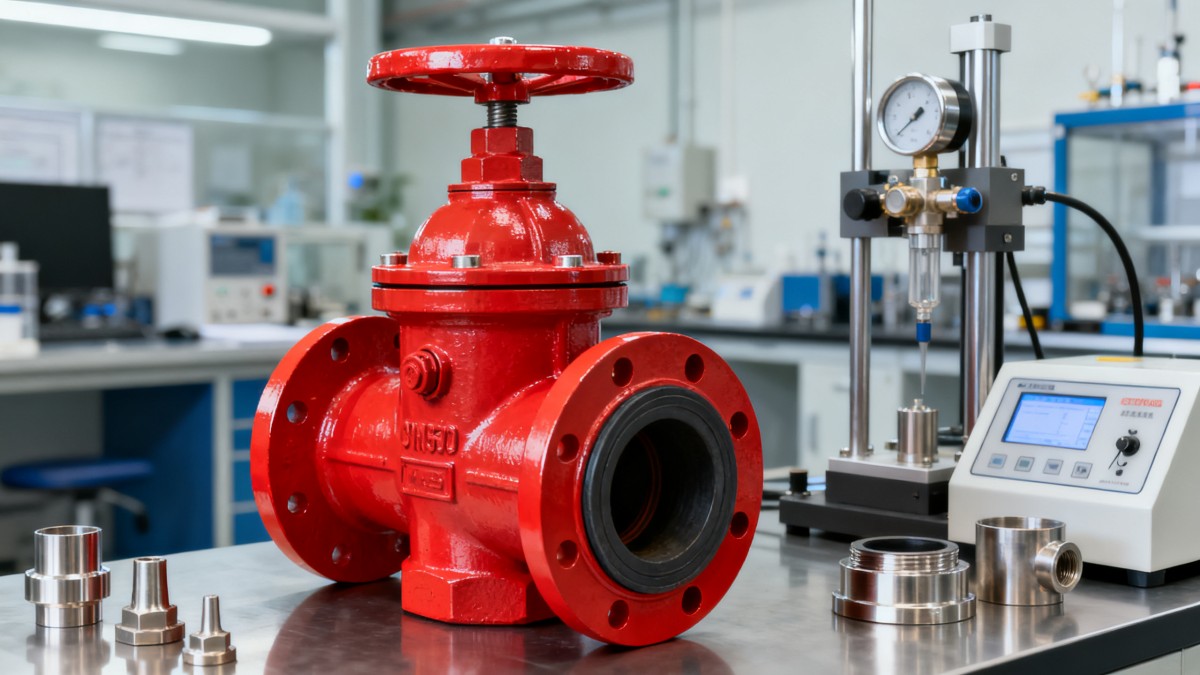
How can safety managers distinguish normal wear from material-grade failure in fire hydrant valves?
This is one of the most practical questions in the field. Not every leak or operating problem means the material grade is wrong. Some faults come from installation damage, water hammer, improper burial, contamination, freezing, or neglected maintenance. The task is to identify whether the degradation pattern is consistent with the specified service life and service conditions.
A useful distinction is that normal wear tends to be gradual, predictable, and distributed according to usage. Material-grade failure tends to be early, disproportionate, and concentrated in metallurgically vulnerable areas. For example, if a hydrant in a mildly corrosive environment shows severe pitting after a short service period, the issue may be poor casting quality, low alloy resistance, or unsuitable brass composition rather than ordinary weathering. If several fire hydrant valves from one procurement lot exhibit similar stem seizure or cracking, the pattern points even more strongly toward a material problem.
Safety managers should compare four things: actual age, environmental severity, maintenance frequency, and failure mode. If the failure mode appears too aggressive for the age and environment, request supporting records such as mill certificates, pressure test reports, coating specifications, and third-party approvals. The mismatch between claimed grade and actual field performance is often where the real issue becomes visible.
Quick field judgment table for fire hydrant valves
Which environments expose weak fire hydrant valves the fastest?
Some sites are far more demanding than others, and that is where inadequate material grade in fire hydrant valves tends to reveal itself first. Coastal zones are a classic example. Salt-laden air accelerates corrosion on exposed metal surfaces and can quickly expose weak coating systems or low-grade base materials. Chemical plants, wastewater facilities, mining sites, and heavy logistics yards also create aggressive conditions through pollutants, acidic or alkaline residues, standing moisture, and abrasive particulates.
Cold climates create a different stress mechanism. Freeze-thaw cycles can magnify small defects in cast structures and seals. If the material lacks sufficient toughness or dimensional stability, microcracks may propagate over time. In hot regions, UV exposure and temperature swings can degrade coatings and elastomer interfaces, indirectly exposing poor substrate resistance. Underground or semi-buried assemblies face soil-side corrosion, galvanic interactions, and moisture retention, which can be severe if the valve material and protective system were selected mainly for cost instead of service reality.
For procurement and quality teams, the lesson is simple: a compliant drawing is not enough if the environmental profile was oversimplified. Fire hydrant valves for municipal streets, petrochemical terminals, warehouse parks, and marine-adjacent infrastructure should not all be treated as interchangeable.
What documents and tests should you check before accepting fire hydrant valves?
Pre-acceptance control is usually where the biggest downstream savings are made. If your team wants to avoid hidden material problems, do not rely only on appearance inspection or a basic pressure test. A robust acceptance process for fire hydrant valves should verify traceability, metallurgy, certification status, and manufacturing consistency.
Start with the material test certificate and confirm that the body, bonnet, stem, and critical wetted parts match the approved specification. Review whether the declared grade is suitable for the installation environment, not just whether it exists on paper. Check hydrostatic and seat leakage test records, coating or lining specifications, dimensional reports, and any relevant approval marks such as UL or FM where required. If the project specification calls for corrosion-resistant alloys, ductile iron grades, or dezincification-resistant copper alloys, those details must be verifiable at part level or batch level.
For higher-risk projects, additional controls may be justified. These can include positive material identification for selected metallic parts, hardness checks, coating thickness verification, salt spray performance evidence for exposed components, and non-destructive examination of cast sections prone to porosity or shrinkage defects. While not every project needs the same depth of testing, critical infrastructure should not treat fire hydrant valves as commodity hardware.
Priority acceptance checklist
- Material certificates linked to valve batch numbers
- Pressure and leakage test reports
- Coating, lining, or plating specifications
- Applicable compliance approvals and standards
- Evidence of dimensional consistency and casting quality
- Supplier corrective action history and field performance references
What are the most common purchasing mistakes that lead to low-grade fire hydrant valves?
The first mistake is treating fire hydrant valves as a lowest-price item. In industrial procurement, a low upfront price often hides weaker metallurgy, inconsistent foundry control, thinner coatings, or reduced traceability. These shortcuts may not be obvious in a catalog comparison, but they become visible over time through leaks, corrosion, frozen operation, and replacement cost.
The second mistake is specifying performance too broadly. A purchase order that only states size, connection type, and nominal pressure leaves too much room for substitution. The supplier may provide a technically functional valve, but not one built from the right material grade for your site. This is especially risky where water chemistry, soil condition, coastal exposure, or freeze risk are significant.
The third mistake is assuming that approval labels alone guarantee fitness for every use case. Certifications are important, but they do not replace project-specific engineering judgment. A listed product can still be a poor choice if the selected material combination does not match the actual environmental and maintenance conditions.
Finally, many teams underweight lifecycle evidence. Ask how similar fire hydrant valves have performed after three, five, or ten years in comparable installations. Suppliers that can provide traceable field references, failure statistics, and corrective action transparency generally present lower long-term risk than those offering only generic compliance statements.
If you already suspect inadequate material grade, what should you do next?
Once suspicion exists, avoid the common trap of replacing only the visibly worst unit and moving on. For safety managers, the smarter response is a structured risk review. First, identify whether the issue is isolated or batch-related. Map installed locations, service dates, supplier lots, and recurring failure modes. If several fire hydrant valves share the same source and symptoms, consider temporary inspection intensification across the installed population.
Second, collect evidence before removal whenever possible. Photos, torque readings, leakage data, pressure anomalies, corrosion mapping, and maintenance history are valuable for root cause analysis. Third, involve both procurement and engineering stakeholders. Material-grade failures are rarely just a maintenance issue; they usually reflect specification gaps, supplier control issues, or insufficient incoming inspection.
If the valves protect critical assets or occupied facilities, evaluate whether interim mitigation is needed. This may include increased testing frequency, standby water supply planning, localized replacement, or temporary operational restrictions until the risk is resolved. The objective is not only to replace a defective component but to prevent recurrence through better specification and supplier qualification.
How should quality control and safety teams talk to suppliers about fire hydrant valves?
The most productive supplier conversations are specific, evidence-based, and tied to service reality. Instead of asking only whether the fire hydrant valves meet standard requirements, ask which exact material grades are used for each critical component, how those grades were selected for the intended environment, and what verification records are available by lot. Request details on foundry controls, coating preparation, failure history, and any design changes made after field feedback.
It is also helpful to ask what the supplier excludes. For example, are there environments where their standard fire hydrant valves are not recommended without upgraded metallurgy or protective systems? Suppliers with strong technical maturity usually answer these questions clearly. Vague answers often indicate a commercial rather than engineering-driven offering.
If you need to confirm a specific procurement strategy, parameter set, lead time, quotation path, or cooperation model, begin by clarifying six points with the supplier: installation environment, required approvals, expected service life, maintenance capability, traceability depth, and warranty scope tied to actual operating conditions. Those questions will reveal very quickly whether the proposed fire hydrant valves are engineered for resilience or merely priced to win the order.
Technical Specifications
Expert Insights

Chief Security Architect
Dr. Thorne specializes in the intersection of structural engineering and digital resilience. He has advised three G7 governments on industrial infrastructure security.
Related Analysis
- May 01, 2026PTZ dome camera placement mistakes that waste zoom performanceAuthor :Safety Compliance Lead
- May 01, 2026Biometric access control systems: where integration gets expensiveAuthor :Safety Compliance Lead
- May 01, 2026Facial recognition door lock accuracy drops in these common settingsAuthor :Safety Compliance Lead
Core Sector // 01
Security & Safety
- Dry chemical fire extinguishers and clean-up costs after dischargeAuthor :Safety Compliance Lead

- CO2 fire extinguishers wholesale: refill logistics often overlookedAuthor :Safety Compliance Lead

- Fire hydrant valves: signs the material grade is not enoughAuthor :Safety Compliance Lead

- Why fire hose reel cabinets fail early in humid locationsAuthor :Safety Compliance Lead

- Wholesale fire alarm panels: compatibility issues to check firstAuthor :Safety Compliance Lead

- Smoke detectors bulk orders: where false alarm costs add upAuthor :Safety Compliance Lead

- When heat detectors OEM support matters more than unit costAuthor :Safety Compliance Lead

- Emergency exit lights LED: battery backup mistakes to avoidAuthor :Safety Compliance Lead