Safety standards for oil and gas industry that are often missed
Author
Date Published
Reading Time
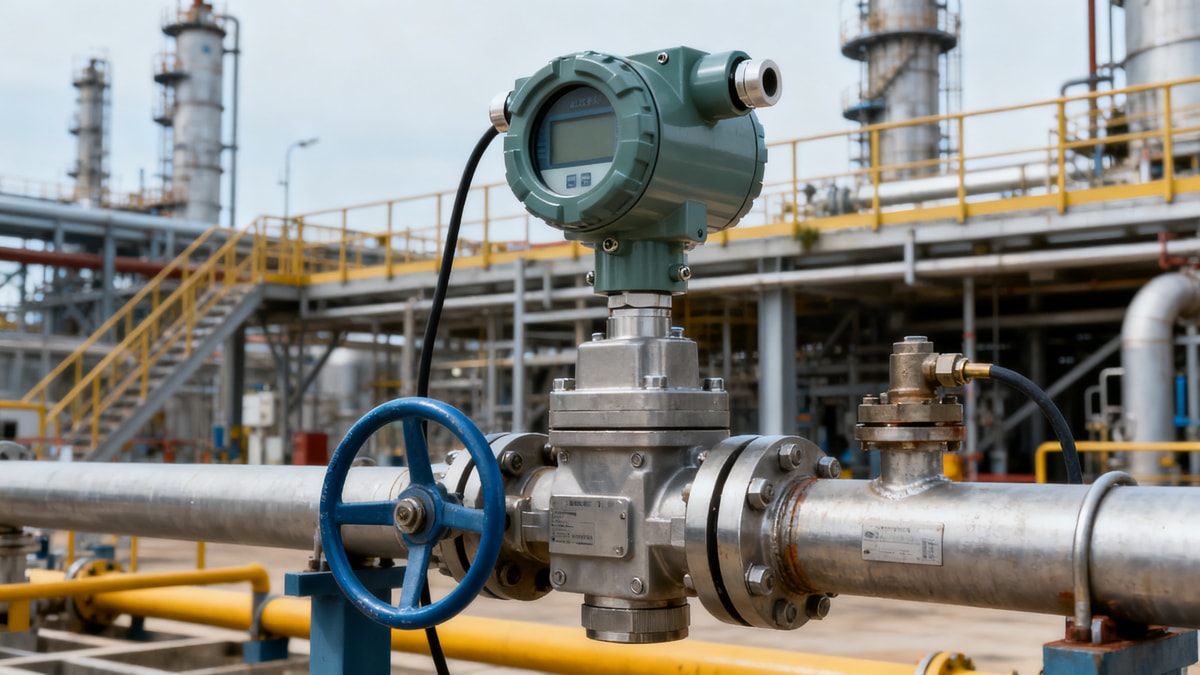
In high-risk operations, even robust compliance programs can overlook critical gaps. This article explores the safety standards for oil and gas industry that are often missed, helping quality control and safety managers identify hidden compliance risks, strengthen operational resilience, and prevent costly incidents before they escalate.
Why do critical safety standards for oil and gas industry still get missed?
Most gaps do not come from a total lack of awareness. They appear because oil and gas operators often focus on headline requirements such as major process safety rules, fire protection, pressure equipment certification, and worker PPE compliance, while underestimating how smaller technical obligations interact across the asset lifecycle. Quality control teams may verify material certificates, while safety managers track permit-to-work systems, yet the connection between inspection data, instrument reliability, hazardous area classification, and contractor practices may remain weak.
Another reason is that the safety standards for oil and gas industry are not governed by one single framework. Operators may need to align with OSHA, API, IEC, ISO, NFPA, ASME, ATEX, IECEx, and local regulatory requirements at the same time. In practice, missed compliance often happens at the boundaries: during equipment substitution, maintenance shutdowns, brownfield upgrades, temporary installations, calibration intervals, or vendor onboarding. These are exactly the moments when documentation, design intent, and field reality drift apart.
For safety managers, this means the real question is not whether a site has standards, but whether those standards are translated into field-verifiable controls. For quality personnel, it means looking beyond certificates and asking whether the equipment, procedures, and inspection records still reflect the operating environment, process changes, and current risk profile.
Which overlooked areas create the highest hidden risk in oil and gas facilities?
The most dangerous omissions are usually the ones that seem minor until a failure chain begins. In many facilities, five areas deserve extra scrutiny when reviewing safety standards for oil and gas industry compliance.
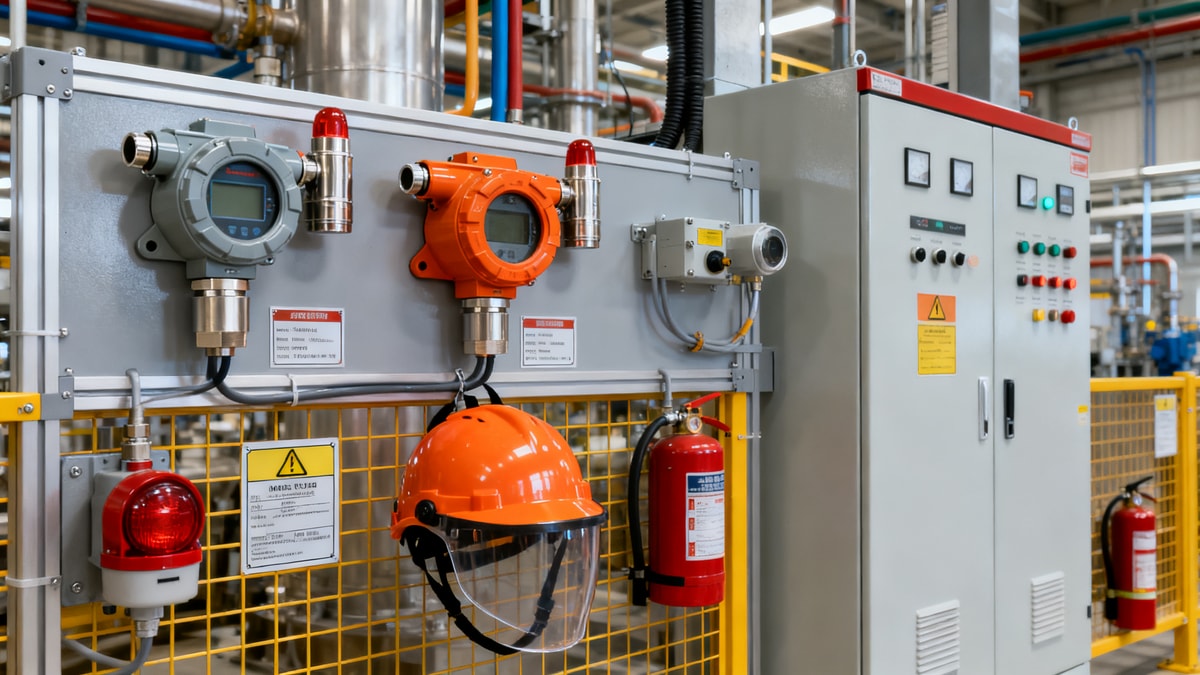
First, hazardous area integrity. Teams may classify zones correctly during design, but later miss changes caused by ventilation modifications, enclosure damage, cable gland replacement, or the use of non-certified accessories. Even a compliant instrument can become non-compliant if installed with the wrong fittings or exposed to conditions outside its certification basis.
Second, safety instrumented function performance. Many sites document SIL targets, yet proof testing intervals, bypass management, sensor drift, and final element response times are not always controlled with enough rigor. A shutdown system that exists on paper but is not tested according to design assumptions is a major blind spot.
Third, mechanical integrity of small-bore connections and auxiliary components. Major vessels and pipelines usually receive attention, but impulse lines, tubing, valves, supports, and fittings often fail first under vibration, corrosion, or thermal cycling. These smaller components can trigger leaks, instrumentation errors, and ignition risks.
Fourth, contractor control during non-routine work. A facility may have excellent internal procedures, yet temporary workers, specialty maintenance crews, or shutdown contractors may not fully understand site-specific gas testing, isolation, confined space, or hot work expectations. Many incidents occur during tasks that fall outside steady-state operations.
Fifth, calibration and traceability discipline. In oil and gas operations, inaccurate pressure, temperature, flow, or gas detection readings can distort both quality and safety decisions. If calibration traceability, environmental conditions, or acceptance criteria are weak, false confidence can enter the system.
How can quality control and safety managers tell whether compliance is real or only documented?
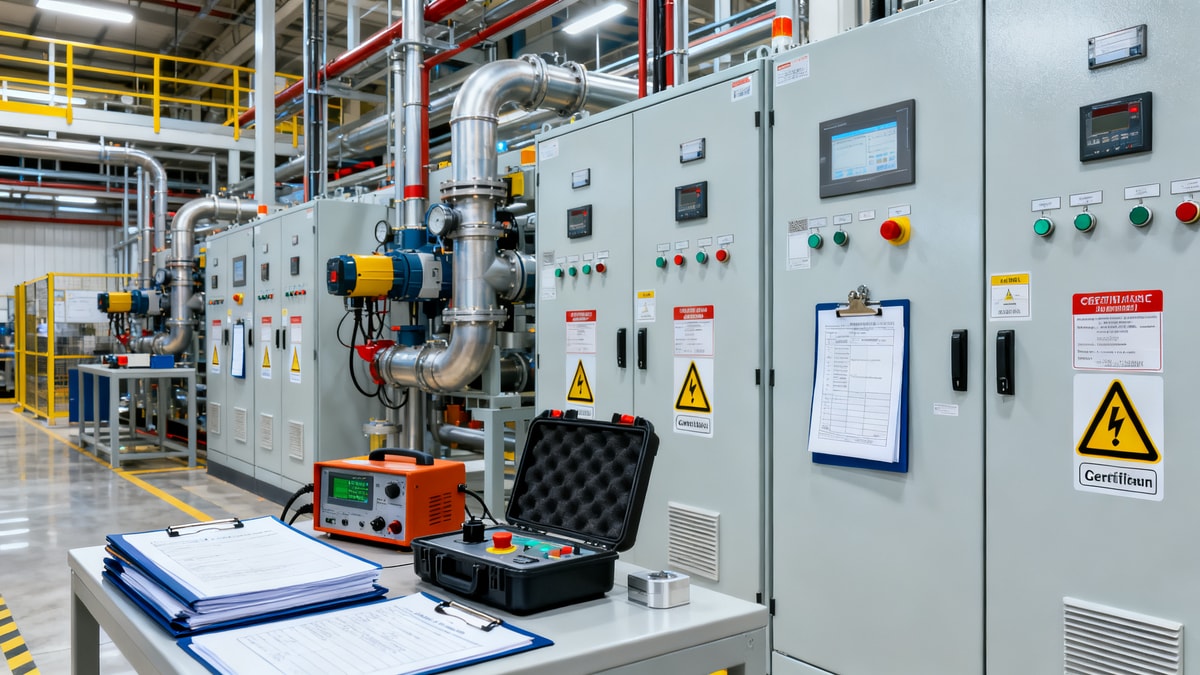
A practical test is to compare three layers: design intent, current documentation, and field condition. Real compliance exists only when all three align. For example, if the engineering file specifies explosion-proof equipment, the maintenance record should show approved replacements, and the field installation should confirm correct glands, seals, labeling, and enclosure integrity. If one layer is missing, the site may have a paper-compliant but operationally weak system.
Another strong indicator is whether the site can explain the rationale behind a control. Teams that truly understand the safety standards for oil and gas industry can answer why a proof test interval exists, why a material grade was selected, why a detector is placed in a specific location, or why a permit boundary is defined the way it is. Superficial compliance often collapses when staff are asked to justify requirements beyond “because the procedure says so.”
Managers should also track leading indicators rather than relying only on incident-free days. Repeated temporary bypasses, calibration deferrals, overdue inspections, unclosed management-of-change items, and frequent material substitutions are early signals that compliance depth is eroding. When those indicators are reviewed together, they reveal system stress before a major event occurs.
What standards and technical domains are most often underestimated during audits?
During formal audits, obvious items are usually well prepared. The underestimated domains are often those that require cross-functional interpretation. For example, sites may comply with general ISO management systems while failing to maintain strong alignment with IEC 61511 for safety instrumented systems, API 570 and API 653 for inspection-based integrity programs, NFPA rules for fire and combustible hazards, or IECEx and ATEX expectations for hazardous locations and certified assemblies.
Material compatibility is another overlooked area. Equipment may have valid manufacturing certificates, but elastomers, coatings, seals, and alloys can still be unsuitable for sour service, chemical exposure, sand erosion, or temperature extremes. In the oil and gas sector, quality assurance must verify service suitability, not just product authenticity.
Cyber-physical safety is also rising in importance. As remote monitoring, smart instrumentation, and connected shutdown systems expand, safety standards for oil and gas industry increasingly intersect with industrial cybersecurity. If a site upgrades controls without reviewing access management, alarm rationalization, or fail-safe behavior during communication loss, it creates a modern compliance gap that traditional audits may miss.
Quick compliance check table for frequently missed issues
What are the most common misconceptions about safety standards for oil and gas industry?
One common misconception is that certification equals long-term compliance. In reality, CE, UL, ISO, or product test marks only confirm a defined condition at a defined point. If installation quality is poor, maintenance is deferred, or operating conditions change, certified equipment can still become unsafe in service.
Another misconception is that audits alone guarantee control. Audits are valuable, but they sample evidence. They do not replace day-to-day discipline in inspection, verification, competency management, and change control. Facilities with excellent audit presentations may still carry unresolved field deviations.
A third misconception is that safety and quality are separate systems. In oil and gas, they are deeply linked. Wrong torque values, incorrect metallurgy, mislabeled instruments, poor welding records, or missing calibration history are quality issues that can quickly become safety failures. For this reason, quality control personnel should be active participants in process safety, not only in product conformity reviews.
There is also a tendency to focus on catastrophic scenarios while overlooking chronic degradation. Slow corrosion, vibration fatigue, detector poisoning, software configuration drift, and repeated alarm suppression may seem less urgent than a major fire event, but they often prepare the conditions for one. Strong compliance means managing degradation before it becomes visible in incident statistics.
How should managers prioritize improvements when time, budget, and shutdown windows are limited?
The best approach is risk-based prioritization supported by evidence. Start with functions whose failure could lead to loss of containment, ignition, toxic exposure, or emergency shutdown failure. Then rank issues using a combination of consequence severity, likelihood of undetected failure, regulatory exposure, and repair complexity. This prevents resources from being consumed by visible but lower-impact housekeeping items while critical vulnerabilities remain open.
Next, separate short-term corrective actions from structural fixes. A temporary compensating measure, such as increased gas testing or manual verification, may reduce immediate risk, but it should not be mistaken for permanent compliance. Structural fixes usually involve design review, approved parts sourcing, updated procedures, competency refreshers, and revised inspection frequencies.
For procurement and sourcing decisions, managers should confirm whether vendors can provide more than datasheets. In a high-consequence industry, supplier value includes traceable material documentation, hazardous-area certification packages, calibration records, test reports, maintenance guidance, and evidence of performance in extreme environments. This is where a technical intelligence partner such as Global Industrial Core can support better sourcing and evaluation by connecting compliance, engineering practicality, and long-term reliability.
What questions should teams ask before selecting equipment, vendors, or corrective actions?
Before approving equipment or a remediation plan, quality control and safety leaders should ask a focused set of questions:
- Does the item meet the applicable safety standards for oil and gas industry use in this exact service condition, not just in general industrial use?
- Are all certificates, test reports, and material records current, traceable, and matched to the actual delivered configuration?
- Will installation, maintenance, and calibration requirements be realistic for the site’s operating environment and workforce capability?
- Has the management-of-change process captured any impact on hazardous area classification, shutdown logic, alarm settings, or inspection intervals?
- If the solution fails, what is the likely consequence, and what independent protective layers remain available?
These questions help teams move beyond price and delivery time toward a more resilient decision framework. In complex industrial environments, the cheapest option often becomes the most expensive once downtime, rework, incident exposure, and regulatory consequences are considered.
What should be included in an internal FAQ checklist for ongoing compliance reviews?
An effective internal FAQ for safety standards for oil and gas industry reviews should be simple enough to use regularly but detailed enough to reveal hidden weaknesses. It should include questions such as: Have any temporary repairs exceeded their approved duration? Are proof tests and calibrations overdue? Have any instrument ranges, trip points, or alarm settings changed without formal review? Are replacement parts identical in certification and material performance to the originals? Have contractors been assessed for task-specific competence? Are inspection findings trending toward repeat failures in the same system or location?
When these questions are reviewed monthly or before major maintenance campaigns, they create an early-warning mechanism. More importantly, they build a shared language between EHS, QA, maintenance, operations, and procurement teams. That alignment is often the difference between a compliance program that exists on paper and one that actively protects people, assets, and production continuity.
How should this topic guide next steps for quality and safety leaders?
The main lesson is clear: the safety standards for oil and gas industry are rarely missed because organizations ignore risk completely. They are missed because details at the interface of engineering, sourcing, maintenance, and field execution are allowed to drift. For quality control and safety managers, the priority is to verify not only whether standards are referenced, but whether they remain technically valid in real operating conditions.
If you need to confirm a specific compliance path, supplier capability, certification package, inspection strategy, implementation timeline, or upgrade direction, the best starting point is a structured discussion around service conditions, applicable standards, failure consequences, documentation traceability, and long-term maintainability. Those questions will lead to better purchasing decisions, stronger audits, and safer industrial operations.
Technical Specifications
- SASO Mandates Dual Energy Label for Industrial Transformers in Saudi Arabia from May 2026Author :Grid Infrastructure Analyst
- EN 61000-4-30:2026 Enforced: Class A Harmonic Traceability Mandatory for EU PQ AnalyzersAuthor :Precision Metrology Expert
- US DOE Level 3 Transformer Efficiency Standard Effective July 1, 2026Author :Grid Infrastructure Analyst
Expert Insights

Chief Security Architect
Dr. Thorne specializes in the intersection of structural engineering and digital resilience. He has advised three G7 governments on industrial infrastructure security.
Related Analysis
- May 06, 2026SASO Mandates Dual Energy Label for Industrial Transformers in Saudi Arabia from May 2026Author :Grid Infrastructure Analyst
- May 06, 2026EN 61000-4-30:2026 Enforced: Class A Harmonic Traceability Mandatory for EU PQ AnalyzersAuthor :Precision Metrology Expert
- May 06, 2026US DOE Level 3 Transformer Efficiency Standard Effective July 1, 2026Author :Grid Infrastructure Analyst
Core Sector // 01
Security & Safety
- Industrial safety standards compliance problems that show up lateAuthor :Safety Compliance Lead

- Safety standards for oil and gas industry that are often missedAuthor :Safety Compliance Lead

- What separates a Security & Safety manufacturer from an assemblerAuthor :Safety Compliance Lead

- What to Check Before Adopting New Safety Equipment SolutionsAuthor :Safety Compliance Lead

- INMETRO Updates Fire Pump Set Certification: IEC 60034-30-2 Enforcement Effective May 2026Author :Safety Compliance Lead

- Marine Oil Spill Boom Choices That Backfire in Rough WaterAuthor :Safety Compliance Lead

- Flood Control Sandbags: When Size Choice Affects Deployment SpeedAuthor :Safety Compliance Lead

- JIS T 8201-2026 Enforces New Low-Temp Impact Test for Fire Respirator MasksAuthor :Safety Compliance Lead