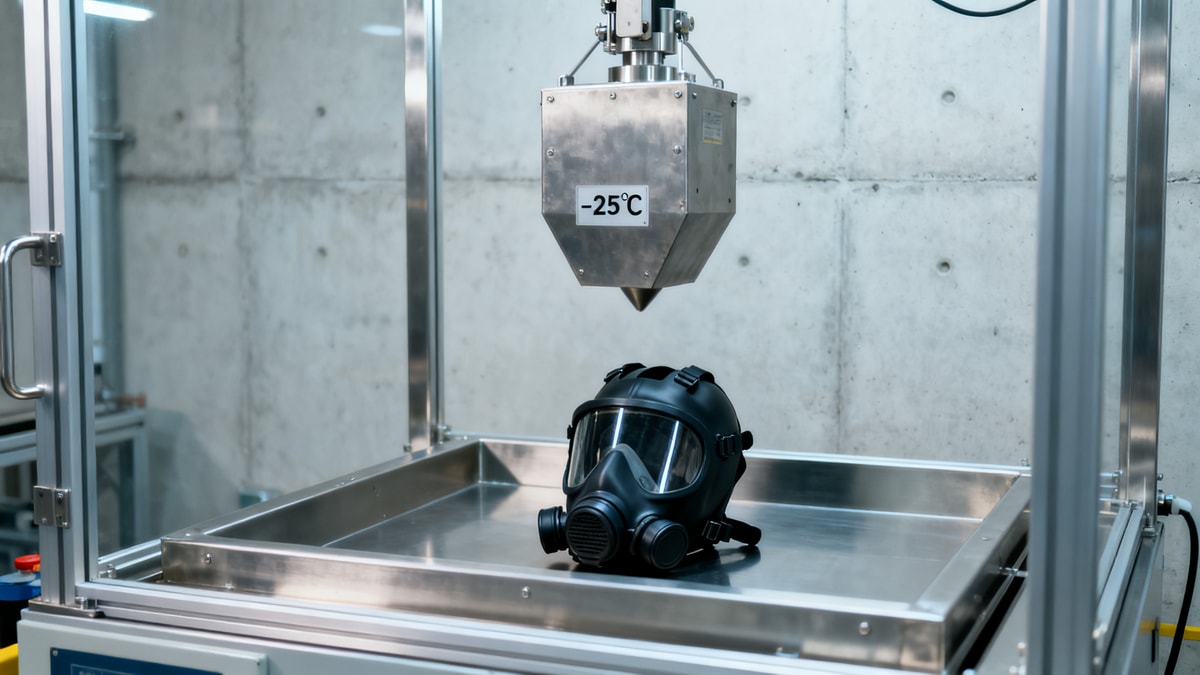
Industrial safety standards compliance problems that show up late
Author
Date Published
Reading Time
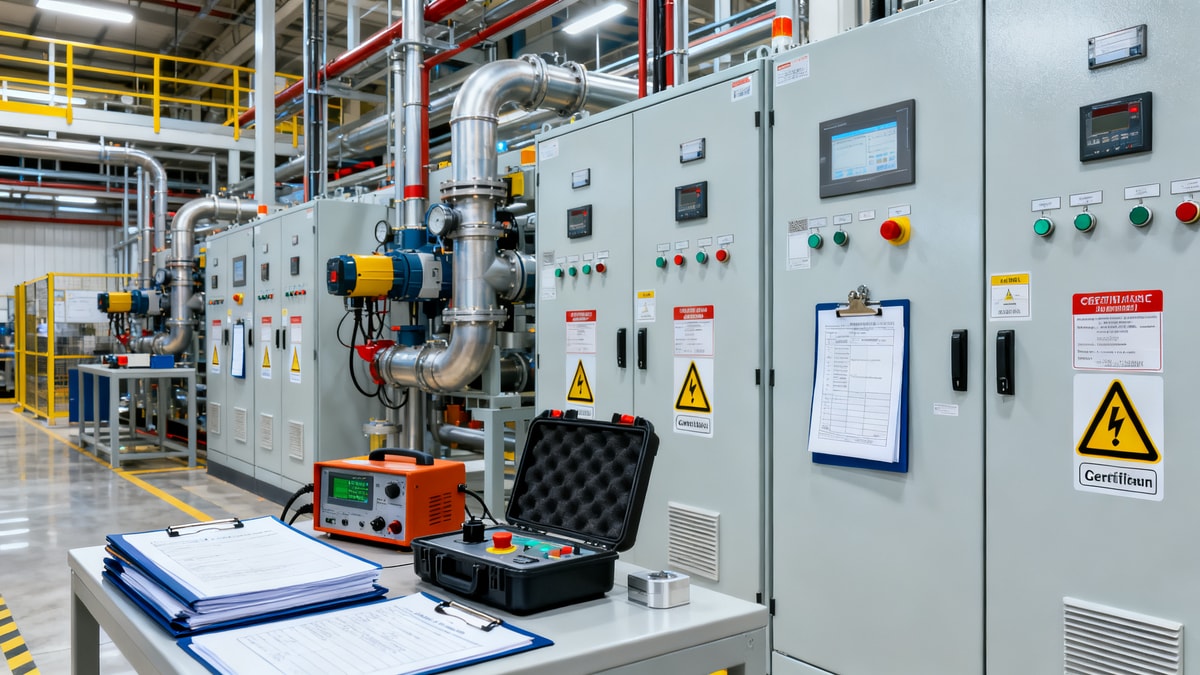
Industrial safety standards compliance issues rarely fail loudly at the start—they surface late, during audits, commissioning, incident reviews, or cross-border delivery. For project managers and engineering leads, these delayed gaps can trigger rework, budget overruns, and operational risk. This article explores why hidden compliance problems emerge so late and how to detect them before they compromise project timelines, safety performance, and stakeholder confidence.
Why do industrial safety standards compliance problems often appear late instead of early?
The short answer is that many compliance gaps are not design failures in the obvious sense. They are traceability failures, documentation failures, interpretation failures, or integration failures that remain invisible while the project is still moving fast. Early project stages tend to focus on scope, cost, lead time, and technical functionality. If a pump runs, a panel energizes, a guarding system fits, or a monitoring device communicates correctly, teams may assume compliance is also in place. In reality, industrial safety standards compliance is rarely confirmed by function alone.
Delayed issues usually emerge when the project reaches a control point with stricter evidence requirements: factory acceptance tests, site acceptance tests, insurer reviews, customer audits, final handover, or import clearance. At that point, stakeholders stop asking, “Does it work?” and start asking, “Can you prove it meets the relevant safety requirements under the intended operating conditions?” That shift exposes missing declarations, incomplete test records, outdated certificates, incorrect component substitutions, or a mismatch between local codes and the standard originally referenced.
For project leaders in complex industrial environments, the challenge is amplified by multi-vendor supply chains. A system can be compliant at component level yet non-compliant at assembly level. A machine can satisfy one market’s expectations and still fail entry into another due to different marking, labeling, documentation, or hazard-control expectations. This is why industrial safety standards compliance should be treated as a program discipline, not a final paperwork exercise.
Which late-stage compliance failures are most common in industrial projects?
Late-stage failures tend to cluster around a few repeating patterns. Understanding them helps project managers build earlier checkpoints and reduce expensive surprises.
These failures are common because industrial safety standards compliance often lives at the intersection of engineering, procurement, QA, site execution, and regulatory interpretation. No single team sees the whole chain unless governance is deliberate. In many projects, the compliance problem is not that people ignored safety, but that each function assumed another function owned the evidence.
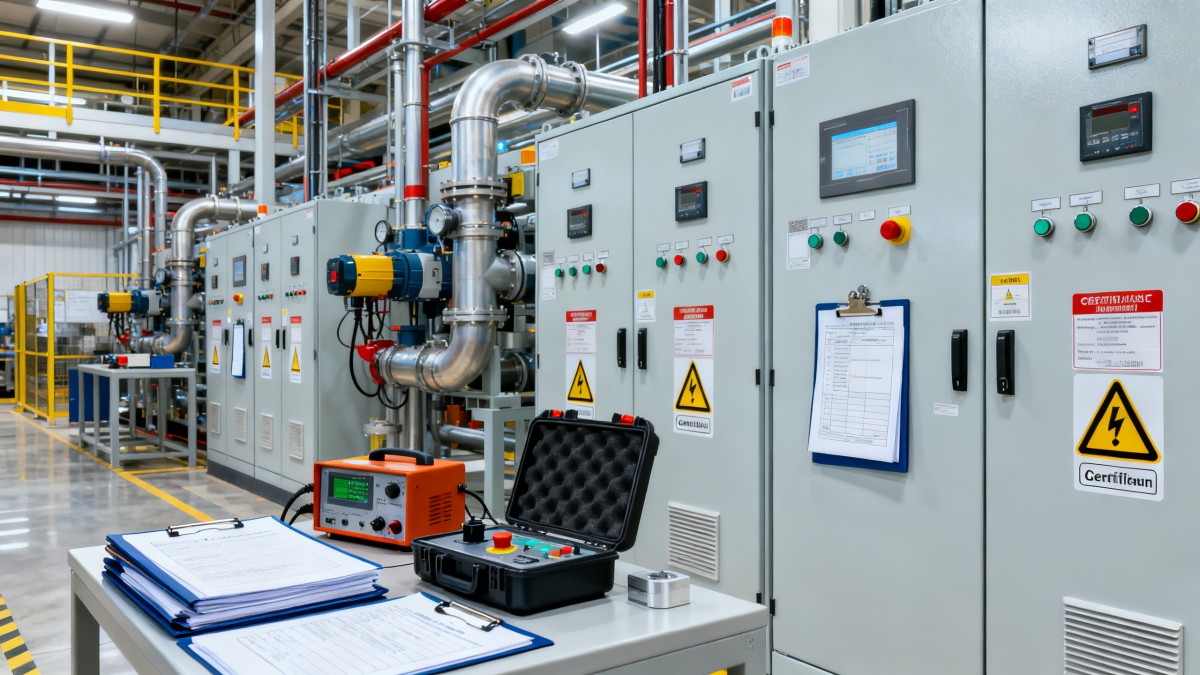
How can project managers tell whether a compliance risk is hidden in the current plan?
A practical way to detect hidden risk is to look for “false confidence signals.” These are project conditions that feel controlled but often conceal industrial safety standards compliance gaps.
One signal is reliance on supplier statements without document validation. If a vendor says a product is CE, UL, ISO, or otherwise compliant, but the project team has not checked the certificate scope, issue date, model applicability, test basis, and installation conditions, then the project does not yet have compliance assurance. Another signal is late involvement of HSE, quality, or legal review. When those teams are brought in only near handover, they tend to discover unresolved assumptions embedded much earlier in the design and sourcing decisions.
A third signal is uncontrolled design change. Every engineering change notice, alternate material approval, enclosure modification, firmware update, or cable-routing workaround can affect industrial safety standards compliance. The technical impact may appear minor while the certification impact is major. For example, changing an enclosure penetration method or replacing a safety relay with a “similar” model may alter the original test basis. Projects that treat compliance as static often miss the fact that compliance status can degrade with every unreviewed change.
Project managers should ask a simple set of control questions at every gate:
- What exact standards apply to this asset, system, or market?
- What proof exists beyond vendor marketing claims?
- Have all substitutions been reviewed for certification impact?
- Does site installation match the approved design basis?
- Who owns the final technical file, and is it audit-ready?
If the answer to any of these is vague, industrial safety standards compliance risk is likely already present.
What are the biggest misconceptions that cause late compliance trouble?
One major misconception is that compliance equals certification. Certification is evidence, but compliance is broader. It includes correct application, proper installation, documented risk controls, operator information, maintenance assumptions, and configuration integrity. A certified component installed in the wrong environment can still create a non-compliant system.
Another misconception is that standards are universal in application. Many project teams assume that if equipment passed in one geography, it can ship anywhere. Cross-border projects regularly prove otherwise. Labeling language, wiring conventions, hazardous area requirements, machine safeguarding expectations, environmental limits, and documentation rules can differ enough to trigger late redesign.
A third misconception is that compliance can be recovered quickly near the end. Sometimes it can, if the issue is documentary. But if the gap affects architecture, clearance distances, protective devices, emergency stop logic, or material selection, remediation can be costly and slow. This is especially true when equipment is already fabricated, shipped, or installed. In those cases, industrial safety standards compliance becomes a schedule risk with direct commercial consequences.
Finally, many teams underestimate how often procurement decisions introduce compliance drift. A lower-cost part may be technically equivalent for performance yet not acceptable for the documented safety design basis. That is why compliance review must be integrated into sourcing, not bolted on afterward.
How should teams build an earlier warning system for industrial safety standards compliance?
An effective warning system starts by mapping compliance obligations from the beginning of the project. Instead of maintaining standards references only in technical specifications, teams should create a live compliance matrix tied to equipment tags, suppliers, applicable regulations, required evidence, and review milestones. This turns industrial safety standards compliance into a visible management object rather than hidden background work.
Second, make compliance evidence a procurement deliverable, not just a post-delivery request. Purchase orders and vendor data requirements should clearly define which declarations, test reports, manuals, certificates, risk assessments, and installation conditions must be submitted and when. Suppliers should not only declare conformity; they should demonstrate scope and limitations.
Third, add change-control triggers specifically for safety and certification impact. Too many projects use engineering change workflows that focus on cost and performance but do not ask whether a change affects regulatory status. A robust process requires a mandatory compliance review before substitution approval, fabrication release, or field modification closure.
Fourth, conduct focused pre-audit reviews before FAT, SAT, and shipment. These should be evidence-driven, not presentation-driven. Reviewers should sample documents against actual equipment names, ratings, serial references, and installation scenarios. Many late issues are found only because someone finally cross-checks paper claims against the physical build.
Lastly, involve domain experts early when the project spans high-risk categories such as electrical safety, process safety interfaces, hazardous environments, pressure systems, lifting systems, or environmental controls. The cost of early expert interpretation is usually far lower than the cost of post-installation correction.
How can managers balance compliance, schedule, and budget without slowing the project down?
The key is not to create more approval layers everywhere, but to place the right checks at high-leverage points. Project leaders do not need to audit every fastener. They need to identify where industrial safety standards compliance failures are most likely to cascade: during standards selection, bid evaluation, approved vendor onboarding, design freeze, substitution review, pre-shipment verification, and commissioning readiness.
A useful management approach is to rank items by compliance criticality. Safety control systems, electrical panels, guarding arrangements, pressure-containing parts, metrology-related devices, and environmental control interfaces usually deserve deeper review than low-risk commodity items. This prioritization keeps the process efficient while protecting the project from high-consequence surprises.
It also helps to define clear acceptance criteria for “compliance complete.” Without that definition, teams keep moving the issue downstream. Compliance complete should mean that the applicable standards are identified, technical assumptions are documented, required evidence is in hand, any deviations are approved, installation conditions are understood, and the handover file can withstand an external audit. When this definition is explicit, schedule pressure is less likely to override invisible risk.
What should project teams ask suppliers and internal stakeholders before problems surface late?
The most effective questions are specific enough to expose ambiguity. Broad questions such as “Is this compliant?” usually produce broad answers. Better questions reveal whether the supplier and the internal team actually understand the compliance basis.
These questions improve accountability and also strengthen project decision-making. They help separate true industrial safety standards compliance from assumptions, legacy habits, or sales language.
What is the practical takeaway for engineering leads and project managers?
Late compliance issues are rarely random. They are usually the result of missing visibility across design intent, procurement execution, supplier evidence, and installation reality. For leaders responsible for delivery, the lesson is clear: industrial safety standards compliance must be managed as a threaded requirement from concept through commissioning, not revisited only when an auditor arrives or a shipment is blocked.
A stronger process does not require bureaucracy for its own sake. It requires earlier questions, tighter evidence control, disciplined change management, and a sharper understanding of where compliance risk hides in complex industrial programs. Organizations that do this well reduce rework, protect schedules, and strengthen trust with operators, clients, regulators, and insurers.
If you need to confirm a specific plan, sourcing path, certification basis, implementation timeline, or cross-border delivery risk, start by clarifying five points: which standards apply, which documents prove conformity, which design assumptions are safety-critical, which changes have occurred since design freeze, and who owns final audit-ready accountability. Those conversations should happen before procurement is locked and long before commissioning begins.
Technical Specifications
- SASO Mandates Dual Energy Label for Industrial Transformers in Saudi Arabia from May 2026Author :Grid Infrastructure Analyst
- EN 61000-4-30:2026 Enforced: Class A Harmonic Traceability Mandatory for EU PQ AnalyzersAuthor :Precision Metrology Expert
- US DOE Level 3 Transformer Efficiency Standard Effective July 1, 2026Author :Grid Infrastructure Analyst
Expert Insights

Chief Security Architect
Dr. Thorne specializes in the intersection of structural engineering and digital resilience. He has advised three G7 governments on industrial infrastructure security.
Related Analysis
- May 06, 2026SASO Mandates Dual Energy Label for Industrial Transformers in Saudi Arabia from May 2026Author :Grid Infrastructure Analyst
- May 06, 2026EN 61000-4-30:2026 Enforced: Class A Harmonic Traceability Mandatory for EU PQ AnalyzersAuthor :Precision Metrology Expert
- May 06, 2026US DOE Level 3 Transformer Efficiency Standard Effective July 1, 2026Author :Grid Infrastructure Analyst
Core Sector // 01
Security & Safety
- Industrial safety standards compliance problems that show up lateAuthor :Safety Compliance Lead

- Safety standards for oil and gas industry that are often missedAuthor :Safety Compliance Lead

- What separates a Security & Safety manufacturer from an assemblerAuthor :Safety Compliance Lead

- What to Check Before Adopting New Safety Equipment SolutionsAuthor :Safety Compliance Lead

- INMETRO Updates Fire Pump Set Certification: IEC 60034-30-2 Enforcement Effective May 2026Author :Safety Compliance Lead

- Marine Oil Spill Boom Choices That Backfire in Rough WaterAuthor :Safety Compliance Lead

- Flood Control Sandbags: When Size Choice Affects Deployment SpeedAuthor :Safety Compliance Lead

- JIS T 8201-2026 Enforces New Low-Temp Impact Test for Fire Respirator MasksAuthor :Safety Compliance Lead