Why fire hose reel cabinets fail early in humid locations
Author
Date Published
Reading Time
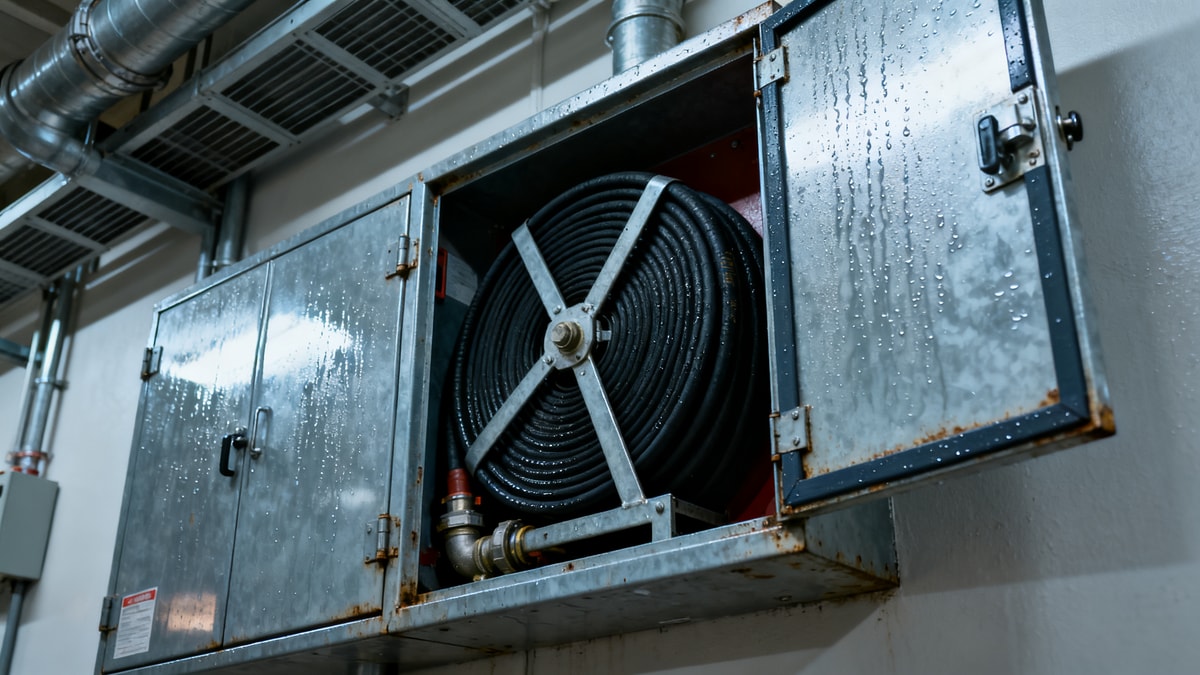
In humid facilities, fire hose reel cabinets often fail long before their expected service life, creating hidden safety risks for maintenance teams. From corrosion and seal breakdown to poor ventilation and coating defects, these issues can quietly compromise performance. Understanding why fire hose reel cabinets deteriorate early is the first step toward preventing costly repairs, failed inspections, and emergency response failures.
For after-sales maintenance personnel, early cabinet failure is rarely caused by a single defect. It is usually the result of 4 to 6 interacting factors: moisture retention, poor material selection, inadequate surface treatment, installation errors, and inconsistent inspection routines. In industrial sites such as pump rooms, coastal plants, food processing facilities, underground parking areas, and washdown zones, relative humidity can remain above 70% for long periods, accelerating degradation inside and outside the enclosure.
Because fire hose reel cabinets are part of a life safety system, even small signs of deterioration matter. A swollen seal, rust around hinges, a warped door, or a sticking latch can delay access by 10 to 30 seconds during an emergency. In practical maintenance terms, that is not a cosmetic issue. It is an operational risk that can affect inspection outcomes, asset life cycle cost, and response readiness.
Why humid environments shorten cabinet life faster than expected
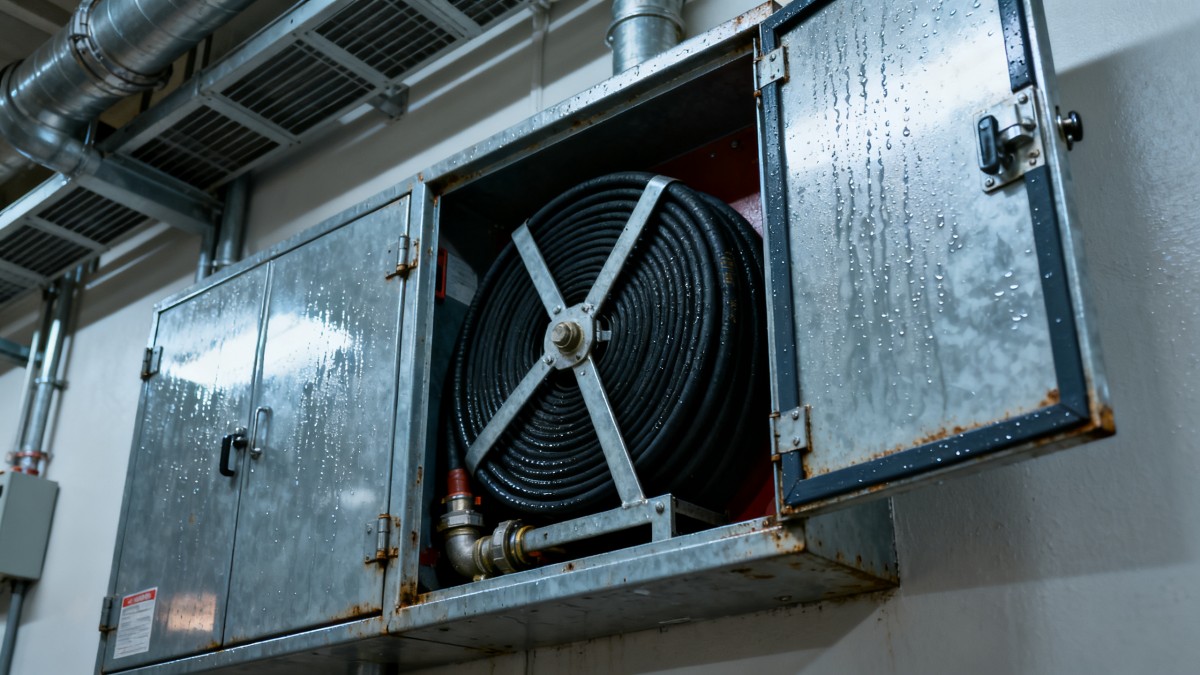
Humidity affects more than exposed metal. It changes how coatings cure, how seals age, how condensation forms behind doors, and how fast galvanic corrosion develops at fastener points. In many facilities, fire hose reel cabinets are specified for indoor use, but the actual environment behaves more like a semi-corrosive zone due to steam, washdown cycles, chemical vapor, or poor air exchange.
Maintenance teams often see the first visible failure after 12 to 24 months, even when the nominal service expectation is 5 to 10 years. The reason is that moisture does not need direct water spray to cause damage. Repeated condensation cycles are enough. When cabinet skin temperature drops below the dew point, water forms on internal surfaces, especially around corners, folded seams, latch recesses, and hose support brackets.
The most common deterioration mechanisms
The following mechanisms explain why fire hose reel cabinets fail early in humid locations and why visual inspection alone may miss the root cause during the first stage of damage.
- Surface corrosion beginning at cut edges, welds, and unsealed joints
- Blistering or underfilm corrosion caused by poor coating adhesion
- Seal hardening, swelling, or microbial degradation in warm wet air
- Hinge seizure due to rust, dirt accumulation, or incompatible lubrication
- Door distortion from moisture imbalance or thin-gauge construction
- Latch misalignment after repeated expansion and contraction cycles
Condensation is often the hidden trigger
In enclosed utility spaces, the temperature difference between day and night can be only 3°C to 6°C, yet that is sufficient to create daily condensation if ventilation is poor. Cabinets mounted on exterior walls, near chilled process lines, or in basements are especially exposed. Over 30 to 90 days, recurring moisture films can undermine coatings at micro-defects that are invisible during acceptance checks.
Material mismatch multiplies the problem
A painted mild steel cabinet may perform adequately in a dry corridor, but not in a plant room with constant humidity above 75%. Once the coating is scratched during maintenance or hose access, the corrosion cell begins. Mixed metals also matter. If stainless screws are used on inadequately isolated carbon steel panels, local galvanic attack may start around the fixing points within the first 6 to 18 months.
The table below summarizes how typical humid-site conditions affect cabinet components and what maintenance staff should watch during routine checks.
The key takeaway is that early failure rarely starts at the largest surface area. It usually begins at 3 high-risk zones: edges, joints, and moving hardware. Maintenance teams that target these points during monthly or quarterly checks detect problems earlier and reduce unplanned cabinet replacement.
Design and manufacturing issues that make fire hose reel cabinets vulnerable
Not all failures in humid sites are environmental. Some are built into the product from the start. Thin sheet thickness, incomplete edge finishing, low-grade powder coating, poor drainage design, and unprotected weld zones can cut real service life by more than 50% in demanding facilities. For after-sales maintenance personnel, recognizing design-related weaknesses helps separate usage damage from specification errors.
Where cabinet construction often falls short
A cabinet can look compliant during delivery and still fail early in operation. The issue is often hidden in details that are easy to overlook during basic visual inspection.
- Unsealed cut edges under the folded return
- Coating applied over insufficiently cleaned steel
- Drainage not considered in base design
- Door seals selected for dry indoor service only
- Hardware sourced without corrosion compatibility review
Coating quality matters more than color or finish
In humid locations, the protective system should be evaluated as a sequence, not a paint layer. Surface preparation, pretreatment, primer compatibility, topcoat thickness, and cure consistency all influence how long fire hose reel cabinets can resist blistering or underfilm rust. A coating that performs for 36 months in a dry commercial corridor may show failure in less than 12 months in a mechanical room with constant moisture loading.
Ventilation without water ingress control can backfire
Some cabinets include vents to reduce condensation, but poor vent placement can allow humid air or splashed water to enter directly. In service areas with intermittent washdown, the better approach is controlled airflow combined with splash protection and sealed hardware penetrations. Too much openness increases exposure; too much sealing traps moisture. The practical goal is balance.
The table below highlights specification choices that strongly influence durability in humid environments.
For maintenance staff, this means repeated failure in the same zone is often a specification issue, not simply poor upkeep. If the same cabinet type shows rust at the lower corners in 3 different buildings under similar humidity conditions, the root cause likely sits in the design, coating process, or drainage path.
Installation and maintenance mistakes that accelerate failure
Even well-built fire hose reel cabinets can deteriorate early if installation and service routines are not adapted to humid conditions. Many failures begin after commissioning because the cabinet is mounted too close to a condensation source, fasteners are not isolated, wall penetrations are left unsealed, or cleaning chemicals are used without checking compatibility.
Common installation errors in damp facilities
- Mounting within 1 meter of steam vents, cooling lines, or washdown discharge
- Leaving a moisture trap between cabinet back panel and wall surface
- Failing to seal anchor penetrations and conduit entries
- Installing on uneven substrates that twist the frame and stress the door
- Using incompatible sealants that shrink or crack within 6 to 12 months
Cleaning routines can damage protective layers
After-sales teams often focus on functional checks but overlook cleaning chemistry. Chloride-containing cleaners, aggressive degreasers, or hard abrasive pads can weaken surface protection and expose the cabinet to rapid corrosion. In food, marine-adjacent, and wastewater environments, cleaning frequency may be weekly or even daily, so the cumulative effect is significant.
Inspection frequency should match humidity severity
A generic annual inspection is not enough for humid sites. A more reliable practice is a 3-tier routine: quick monthly visual checks, quarterly hardware and seal checks, and a full annual condition review. If the area experiences persistent humidity above 80%, visible condensation, or washdown exposure, some sites move to 6-week intervals for moving parts and corrosion points.
The matrix below can help maintenance teams align service intervals with environmental severity and asset condition.
This approach reduces reactive repairs. Instead of waiting for visible rust spread, teams can intervene at the first sign of coating breach, seal distortion, or hardware drag. In many plants, replacing a gasket or touching up a defect at month 3 is far cheaper than replacing the full cabinet at month 18.
How to select, retrofit, and maintain fire hose reel cabinets for humid service
For facilities already facing early failures, the practical question is not just why damage happens, but what to do next. The answer usually involves a mix of better specification, targeted retrofit, and disciplined maintenance. For procurement teams and after-sales personnel working together, the goal is to improve total service life without overcomplicating routine access or inspection.
Selection criteria for replacement or new installations
When choosing fire hose reel cabinets for humid environments, evaluate 5 areas before approval: material resistance, coating system, seal durability, hardware compatibility, and drainage or ventilation design. A lower purchase price can become expensive if the unit requires repainting within 12 months or complete replacement within 2 to 3 years.
- Confirm the actual site condition, not only the nominal indoor classification
- Review all edge treatments, corners, seams, and mounting details
- Check whether hardware and cabinet body are corrosion compatible
- Ask for maintenance recommendations for humid or washdown zones
- Standardize inspection documentation across similar assets
Retrofit options that often work
Not every cabinet needs immediate replacement. If the structure is sound and access function is intact, a retrofit can extend useful life by 1 to 3 years. Common measures include seal replacement, hardware upgrade, localized corrosion treatment, controlled vent modification, drainage improvement, and protective recoating of damaged zones. However, if the door no longer aligns, the panel has deep rust penetration, or emergency opening is impaired, replacement is safer than patchwork repair.
A practical maintenance checklist
A disciplined checklist improves consistency across shifts and sites. For humid-service fire hose reel cabinets, maintenance personnel should verify at least 6 items during each detailed review: door opening force, latch engagement, seal elasticity, visible corrosion points, internal moisture marks, and wall interface condition. Recording trend changes over 3 consecutive inspections is often more useful than a single pass-fail note.
Early failure of fire hose reel cabinets in humid locations is usually preventable when maintenance teams combine environmental awareness with smarter specification and inspection. The most effective strategy is to treat humidity as a design and service variable, not an incidental condition. If your facility is seeing repeat corrosion, sticking doors, or premature cabinet replacement, now is the time to review the asset standard, service intervals, and installation details. Contact us to discuss application-specific cabinet selection, refurbishment priorities, or a tailored maintenance approach for demanding industrial environments.
Technical Specifications
Expert Insights

Chief Security Architect
Dr. Thorne specializes in the intersection of structural engineering and digital resilience. He has advised three G7 governments on industrial infrastructure security.
Related Analysis
- May 01, 2026PTZ dome camera placement mistakes that waste zoom performanceAuthor :Safety Compliance Lead
- May 01, 2026Biometric access control systems: where integration gets expensiveAuthor :Safety Compliance Lead
- May 01, 2026Facial recognition door lock accuracy drops in these common settingsAuthor :Safety Compliance Lead
Core Sector // 01
Security & Safety
- Dry chemical fire extinguishers and clean-up costs after dischargeAuthor :Safety Compliance Lead

- CO2 fire extinguishers wholesale: refill logistics often overlookedAuthor :Safety Compliance Lead

- Fire hydrant valves: signs the material grade is not enoughAuthor :Safety Compliance Lead

- Why fire hose reel cabinets fail early in humid locationsAuthor :Safety Compliance Lead

- Wholesale fire alarm panels: compatibility issues to check firstAuthor :Safety Compliance Lead

- Smoke detectors bulk orders: where false alarm costs add upAuthor :Safety Compliance Lead

- When heat detectors OEM support matters more than unit costAuthor :Safety Compliance Lead

- Emergency exit lights LED: battery backup mistakes to avoidAuthor :Safety Compliance Lead