JIS T 8201:2026 Enforces New -25°C Impact Test for Firefighter Respirator Facepieces
Author
Date Published
Reading Time
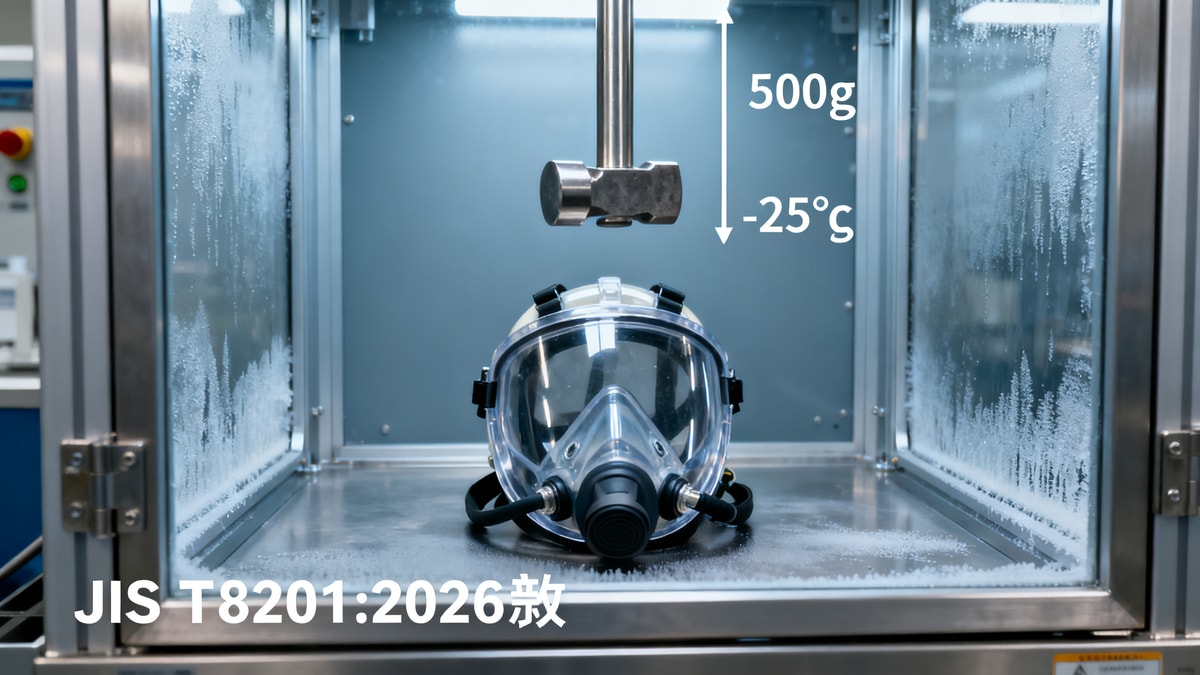
Japan’s JIS T 8201:2026 standard for firefighter respirators entered into force on October 1, 2026, mandating a new low-temperature impact test for facepieces. This update directly affects manufacturers and exporters of fire protection equipment—particularly those supplying to or certified for the Japanese market—and signals a tightening of performance requirements under extreme cold conditions.
Event Overview
The Japanese Industrial Standards Committee (JISC) approved and published JIS T 8201:2026, titled Firefighter Respirators, on April 29, 2026. The revised standard introduces a mandatory drop-weight impact test at −25°C: a 500 g steel hammer dropped from 1 m height onto the facepiece, with pass criteria defined as no cracking or penetration. Enforcement begins October 1, 2026. Exporters from China—and other non-Japanese jurisdictions—must complete product adaptation and obtain JIS certification within six months of enforcement.
Industries Affected by the Update
Direct Exporters (China-based Fire Equipment Manufacturers)
These companies supply respirator facepieces or complete respirator systems to Japanese distributors, fire departments, or certification bodies. They are directly subject to compliance deadlines: failure to meet the new test requirement by March 31, 2027, risks market access suspension in Japan.
Material Suppliers & Component Manufacturers
Suppliers of polycarbonate, thermoplastic elastomers, or sealing gaskets used in facepiece construction may see revised material specifications. The −25°C impact requirement places stricter demands on low-temperature ductility and fracture resistance—potentially triggering requalification of existing materials or sourcing of alternative grades.
Contract Manufacturers & Assembly Facilities
Firms performing final assembly, bonding, or thermoforming of facepieces must verify that process parameters (e.g., annealing cycles, adhesive cure profiles, mold temperatures) do not compromise low-temperature toughness. Post-assembly aging or environmental conditioning steps may require validation under the new test condition.
Certification & Compliance Service Providers
Third-party testing labs and JIS certification consultants will see increased demand for −25°C impact verification. Capacity constraints may arise, especially for facilities lacking climate-controlled impact test chambers meeting JIS-specified tolerances (e.g., temperature stability ±2°C during test).
Key Focus Areas and Recommended Actions for Affected Entities
Monitor official JISC and METI guidance on transitional arrangements
While enforcement begins October 1, 2026, JISC or Japan’s Ministry of Economy, Trade and Industry (METI) may issue clarifications on sample submission timelines, grandfathering of pre-certified stock, or acceptable test report formats. Stakeholders should subscribe to JISC’s public notifications and engage accredited Japanese certification bodies (e.g., JQA, SAI Global Japan) for updates.
Prioritize facepiece models with highest export volume to Japan
Given the six-month adaptation window, companies should triage products by revenue impact and technical complexity. High-volume models warrant immediate material retesting and prototype impact validation; lower-volume or legacy designs may be phased out rather than re-engineered.
Distinguish between regulatory signal and operational readiness
The publication of JIS T 8201:2026 is a formal regulatory milestone—not a provisional recommendation. However, actual market enforcement depends on customs inspections and procurement audits by Japanese fire authorities. Early engagement with Japanese importers on documentation (e.g., test reports referencing JIS Z 8701:2023 for impact testing methodology) helps align expectations before clearance delays occur.
Initiate supplier alignment and internal test capability assessment now
Confirm whether current facepiece suppliers can provide −25°C impact data per JIS T 8201:2026 Annex B. Simultaneously, assess internal or lab-based capacity to conduct compliant tests—including chamber calibration records, hammer mass verification, and drop-height repeatability. Delays in test setup are a common bottleneck.
Editorial Perspective / Industry Observation
Observably, this revision reflects a broader global trend toward performance-based validation under realistic operational extremes—not just ambient conditions. While JIS standards historically emphasized dimensional and functional conformity, the explicit inclusion of −25°C impact resistance signals heightened attention to structural integrity during cold-weather firefighting (e.g., winter warehouse fires, mountain rescue). Analysis shows this is less a sudden shift than an incremental hardening of existing safety thresholds: earlier versions referenced ‘low-temperature performance’ qualitatively, whereas JIS T 8201:2026 codifies it quantitatively and testably. From an industry standpoint, it functions more as a near-term compliance trigger than a long-term strategic pivot—but its timing coincides with tightening EU PPE Regulation (EU 2016/425) surveillance, suggesting coordinated pressure on global respiratory PPE quality baselines.
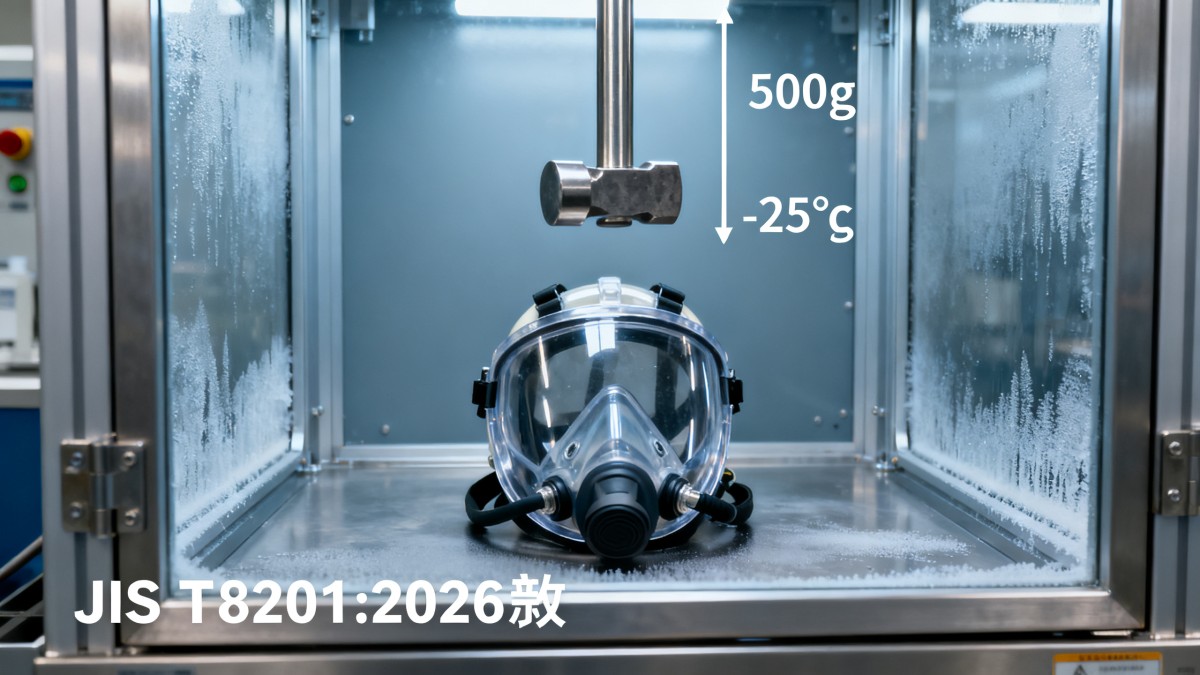
Conclusion: JIS T 8201:2026 does not redefine respirator functionality, but it elevates evidentiary requirements for facepiece durability under thermal stress. For affected enterprises, it is best understood not as an isolated regulatory change, but as a concrete indicator of tightening technical gatekeeping in mature fire safety markets—where certification validity increasingly hinges on reproducible, environment-specific test outcomes rather than generic material declarations.
Source: Japanese Industrial Standards Committee (JISC), JIS T 8201:2026 Firefighter Respirators, approved April 29, 2026; effective October 1, 2026. Note: Transitional implementation details (e.g., grace period allowances, test lab accreditation status) remain subject to official JISC or METI announcements and require ongoing monitoring.
Technical Specifications
Expert Insights

Chief Security Architect
Dr. Thorne specializes in the intersection of structural engineering and digital resilience. He has advised three G7 governments on industrial infrastructure security.
Related Analysis
- Apr 30, 2026Egypt SMIIC Mandates Arabic Energy Labels for Industrial PumpsAuthor :Heavy Industry Strategist
- Apr 30, 2026TÜV SÜD Launches China Industrial Optics Fast TrackAuthor :Precision Metrology Expert
- Apr 30, 2026LME Nickel Surges 5.2% on April 29, 2026: Impact on Stainless Bearings & SealsAuthor :Heavy Industry Strategist
Core Sector // 01
Security & Safety
- JIS T 8201:2026 Enforces New -25°C Impact Test for Firefighter Respirator FacepiecesAuthor :Safety Compliance Lead

- First Aid Kits Bulk: What Should Be InsideAuthor :Safety Compliance Lead

- Wholesale Emergency Blankets: Cheap but ReliableAuthor :Safety Compliance Lead

- Hidden fire risks in electrical safety panelsAuthor :Safety Compliance Lead

- Defibrillator AED wholesale: battery dates matter more than priceAuthor :Safety Compliance Lead

- What makes one stretcher bed manufacturer easier to trustAuthor :Safety Compliance Lead

- Wholesale rescue tripods: aluminum or steel for field use?Author :Safety Compliance Lead

- Confined space equipment mistakes that raise rescue timeAuthor :Safety Compliance Lead