What makes one stretcher bed manufacturer easier to trust
Author
Date Published
Reading Time

Choosing a stretcher beds manufacturer is not just about price—it is about proven safety, compliance, and long-term reliability. For buyers comparing suppliers across critical equipment such as defibrillator AED wholesale, confined space equipment, portable gas monitors, and lockout tagout stations, trust comes from verified standards, transparent capabilities, and consistent product performance. This guide explains the signals that make one manufacturer easier to trust than another.
What trust really means when evaluating a stretcher bed manufacturer

In industrial and medical-support procurement, trust is not a soft concept. It is a practical judgment about whether a stretcher bed manufacturer can deliver safe products, stable documentation, and predictable service over a full equipment life cycle. For procurement teams, operators, and decision-makers, the issue becomes even more important when purchases sit alongside other safety-critical categories such as portable gas monitors, confined space equipment, and emergency response systems.
A trustworthy manufacturer reduces risk in at least 4 ways: product failure risk, compliance risk, delivery risk, and after-sales support risk. In real buying situations, the lowest quotation often hides gaps in test records, unclear load ratings, weak packaging control, or limited spare-parts support. These gaps may not appear on day 1, but they usually surface within 6–18 months of daily use, fleet deployment, or cross-border sourcing.
For information researchers, trust starts with evidence. For users and operators, it starts with safe handling and predictable performance. For procurement managers, it starts with supplier transparency, lead-time realism, and document completeness. For executives, it starts with whether the supplier can support a resilient operating environment instead of becoming a future liability.
This is where a structured sourcing approach matters. Global Industrial Core focuses on foundational industrial systems where operational failure is costly, and that same sourcing discipline applies to stretcher bed manufacturer evaluation. The more critical the application, the more buyers should move from brochure claims to verifiable proof points.
The 5 trust signals buyers should verify first
- Clear technical specifications, including safe working load, wheel configuration, frame material, rail design, and mattress platform dimensions.
- Traceable compliance documents, such as declarations, test references, and factory quality process records relevant to the destination market.
- Manufacturing transparency, including photos or videos of assembly, inspection steps, packaging, and labeling practices.
- Service readiness, especially spare-parts availability, response times, and support for mixed orders or repeat purchase cycles.
- Consistency across product families, which shows whether the manufacturer can support broader procurement programs instead of a one-off shipment.
When these 5 trust signals are visible early, buyers can filter out weak suppliers faster. That shortens evaluation cycles from several weeks of back-and-forth to a more efficient shortlist review, often within 7–15 working days depending on documentation quality and sample requirements.
Which manufacturer details reveal genuine reliability instead of sales language?
Many suppliers can produce a polished catalog. Fewer can explain how their stretcher beds perform under repeated loading, uneven transport surfaces, cleaning routines, and long storage intervals. A reliable stretcher bed manufacturer is usually easier to trust because it can answer operational questions without delay and without hiding behind generic wording.
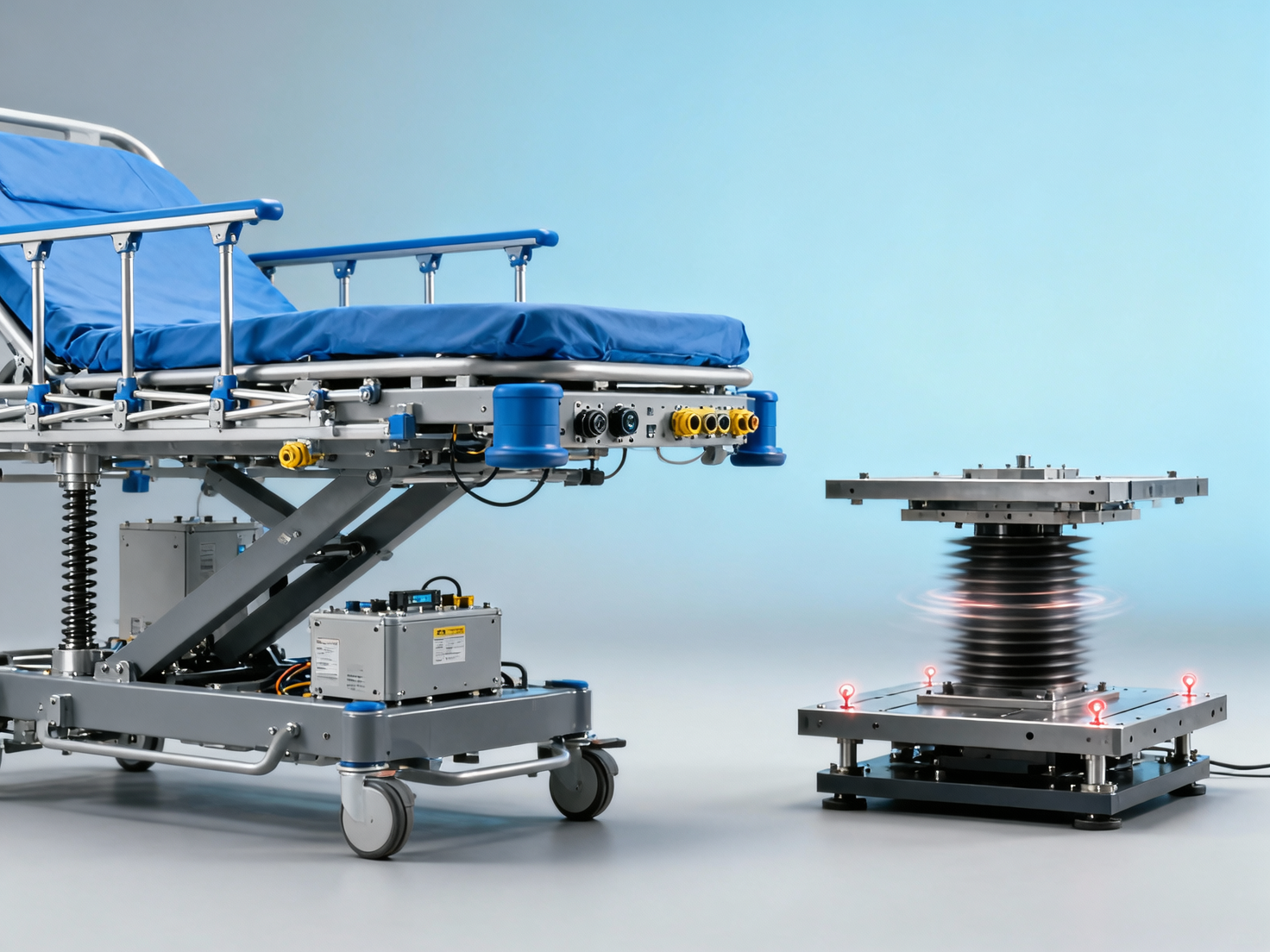
Start with construction details. Buyers should ask about frame materials, weld consistency, caster size, brake configuration, side-rail locking, and common load ranges. In many applications, users expect safe working loads in a clearly defined range rather than an unclear “heavy-duty” claim. If the manufacturer cannot define load conditions, dynamic use limits, or recommended inspection intervals, that is a warning sign.
Next, check process control. A dependable manufacturer should describe at least 3 stages of control: incoming material inspection, in-process assembly checks, and pre-shipment verification. It should also clarify packaging methods for export handling, because damage during a 2–4 week shipping cycle can turn a technically acceptable product into an operational problem on arrival.
Finally, evaluate documentation discipline. Reliable suppliers usually provide dimensional drawings, instruction manuals, maintenance guidance, and parts references in a clean and repeatable format. In B2B sourcing, documentation quality often predicts service quality. If files arrive incomplete, inconsistent, or frequently revised, the same inconsistency may appear in production or post-sale support.
A practical comparison checklist for supplier review
The table below helps procurement teams compare a stretcher bed manufacturer beyond unit price. It focuses on operational trust signals that matter during tender review, supplier onboarding, and repeat ordering.
This type of comparison helps buyers rank suppliers on trustworthiness, not just quotation speed. In many sourcing projects, the supplier that answers 80%–90% of technical and document questions clearly during the first review round is more dependable than one that offers a lower quote but creates delays across every approval step.
Questions operators and end users should raise early
- How easy is the stretcher bed to maneuver in narrow corridors, lift areas, or mixed-surface transfer zones?
- What cleaning agents and routine maintenance intervals are recommended for 3-month, 6-month, or annual inspection cycles?
- Can the manufacturer supply replacement casters, rails, hydraulic or mechanical parts without forcing a full-unit replacement?
These questions matter because trust is built at the use point, not only in the quotation file. A stretcher bed manufacturer that understands transport conditions, cleaning exposure, and operator fatigue usually provides better long-term value.
How do standards, testing, and compliance make a manufacturer easier to trust?
In safety-related procurement, compliance is one of the fastest ways to separate serious manufacturers from risky ones. Buyers do not need inflated claims. They need accurate declarations, product labeling consistency, and documentation that matches the destination market. This applies whether the purchase includes stretcher beds, lockout tagout stations, or monitoring devices used in controlled industrial environments.
A trustworthy stretcher bed manufacturer should be able to explain which standards or management systems relate to its factory and which apply to the product itself. Those are not the same thing. Buyers should also verify that manuals, labels, and packaging marks align with the documents sent during the quotation stage. Mismatches here often cause customs issues, distributor disputes, or internal approval delays.
For many B2B teams, the practical goal is simple: reduce approval friction. If compliance documents are complete before sampling or pre-shipment review, internal procurement can move faster. If they are incomplete, one missing declaration can add 1–3 weeks to the process, especially when multiple departments must review technical files, legal language, and import requirements.
Global Industrial Core approaches this issue from a sourcing intelligence perspective. In categories where reliability and regulatory alignment matter, buyers benefit from suppliers that can support evidence-based evaluation rather than forcing the customer to guess what is genuine.
Compliance areas that buyers should confirm
The table below outlines common compliance review points for a stretcher bed manufacturer and explains why each point matters during international sourcing and facility-level approval.
A manufacturer becomes easier to trust when compliance conversations are precise. Instead of saying “we have all certificates,” a stronger supplier explains what documents are available, what they cover, and how they apply to the ordered model. That level of clarity is especially useful when procurement teams are balancing several regulated product categories in one sourcing program.
Three common compliance mistakes in cross-border buying
- Assuming a factory management certificate automatically proves product conformity for every model and every destination market.
- Reviewing declarations too late, after production has already started or shipment has been booked.
- Ignoring labeling and manual consistency, which can create avoidable approval and customs delays.
Correcting these 3 mistakes early can save both time and rework costs. It also helps procurement teams build a stronger preferred-supplier list for future projects.
What should procurement teams compare before shortlisting a stretcher bed manufacturer?
A good shortlist is built on fit, not volume of claims. Procurement teams should compare at least 5 dimensions before moving to sample approval or contract negotiation: product fit, documentation fit, lead-time fit, service fit, and total sourcing risk. This approach is especially useful in organizations that buy across mixed categories, from patient transport hardware to industrial safety equipment.
Product fit means the stretcher bed matches the actual use case. A model suitable for low-frequency indoor transfer may not be ideal for high-turnover emergency movement or rugged logistics routes. Documentation fit means the supplier can meet approval, import, and internal file requirements without repeated correction cycles. Lead-time fit means the promised delivery is realistic for production, inspection, and transit.
Service fit matters just as much. A manufacturer may offer acceptable pricing but weak support for parts, replacement units, or technical follow-up. In a 12-month procurement horizon, that weakness can outweigh an initial cost saving. Total sourcing risk is the combined result of these factors plus supplier communication quality and willingness to support pre-shipment checks.
In practice, stronger suppliers usually make decisions easier because they reduce uncertainty. Their quotations are more complete, their exceptions are stated early, and their lead times are less likely to change after deposit payment.
A supplier scorecard that supports faster decisions
The following scorecard can help teams compare a stretcher bed manufacturer during RFQ review, supplier meetings, and internal recommendation stages.
A scorecard like this improves internal alignment. It helps information researchers prepare better summaries, gives users a voice in specification review, allows buyers to compare suppliers fairly, and gives executives a stronger basis for approving commercial terms.
Four procurement habits that improve supplier trust assessment
- Request the same document set from every supplier so comparisons remain consistent and objective.
- Involve end users before final approval, especially when maneuverability, cleaning, and maintenance matter.
- Separate unit price from total landed and lifecycle cost during analysis.
- Use a 2-round review process: preliminary qualification first, then technical-commercial clarification.
These 4 habits are simple, but they help identify which stretcher bed manufacturer is easier to trust before a purchase order is issued.
Common mistakes, realistic expectations, and buyer questions
Even experienced teams make avoidable mistakes when evaluating a stretcher bed manufacturer. The most common one is treating all stretcher beds as interchangeable. In reality, differences in frame design, caster quality, braking, side rails, packaging, and support documentation can change both operational performance and procurement efficiency.
Another mistake is assuming a sample unit guarantees full-order consistency. Samples are useful, but buyers should still verify production control, packaging standards, and inspection steps for batch orders. The gap between sample approval and volume shipment is often where sourcing risk appears, especially if the supplier has weak process discipline.
Buyers should also set realistic expectations. Standard models may move faster, but customized configurations, revised labels, or export packaging adjustments often extend timelines. A normal review process may involve 3 steps: technical confirmation, document check, and order execution planning. Skipping any of these steps usually creates more delay later.
The questions below reflect real search intent and help close common information gaps during supplier evaluation.
How do I know whether a stretcher bed manufacturer is really experienced?
Look for process fluency, not just years claimed. An experienced manufacturer answers quickly on load limits, dimensions, accessories, packaging, maintenance, and document preparation. It can usually explain standard lead times, often in a range such as 2–4 weeks for standard orders and longer for project customization, without sounding uncertain or evasive.
What matters more: price or after-sales support?
For short-term buying, price may dominate. For 12-month to 36-month operational planning, after-sales support often matters more. If spare parts, response procedures, and warranty scope are unclear, the real cost of downtime and replacement can exceed the original saving. Trust grows when pricing is transparent and support terms are equally clear.
Should procurement teams ask for samples before deciding?
In many cases, yes—especially for first orders, distributor onboarding, or applications where handling comfort and maneuverability affect user acceptance. But samples should be one part of a wider review. Combine sample checks with documentation review, packaging confirmation, and a list of 5–6 acceptance points so the decision is based on both physical product quality and process reliability.
What if the supplier offers many product categories beyond stretcher beds?
That can be helpful if the supplier or sourcing partner manages documentation and quality consistently across categories. Buyers sourcing stretcher beds alongside AED accessories, lockout tagout stations, or gas detection equipment often value fewer supplier interfaces. However, breadth only adds value when technical files, compliance support, and delivery execution stay consistent across all categories.
Why informed buyers work with a sourcing intelligence partner before committing
For many organizations, the hardest part is not finding a stretcher bed manufacturer. It is knowing which one deserves confidence before budget, compliance, and operational risk are locked in. That is why structured sourcing intelligence matters. It converts scattered supplier claims into a decision framework based on technical clarity, document readiness, service realism, and use-case fit.
Global Industrial Core supports buyers working in environments where failure is expensive and compliance cannot be treated casually. When teams source across safety, measurement, power, environmental, and mechanical product lines, they need a method that respects technical detail and procurement practicality at the same time. That is the same discipline required when assessing a stretcher bed manufacturer for long-term trust.
If your team is comparing suppliers, preparing a tender shortlist, or reviewing a repeat-order strategy, it helps to discuss the specifics before issuing the final purchase decision. Typical consultation topics include 6 core areas: parameter confirmation, model selection, documentation review, delivery lead time, customization scope, and quotation alignment. These points often determine whether a project moves smoothly or gets delayed by preventable supplier gaps.
You can also use this evaluation approach when sourcing adjacent categories such as defibrillator AED wholesale products, confined space equipment, portable gas monitors, and lockout tagout stations. The principle remains the same: trust the supplier that can prove capability, communicate clearly, and support the full procurement path from review to delivery.
Why choose us for supplier evaluation support
- We help clarify key product parameters so your team can compare stretcher bed manufacturer options on the same technical basis.
- We support sourcing decisions with a structured review of compliance documents, labeling needs, and export-readiness questions.
- We assist with lead-time evaluation, customization feasibility, and practical RFQ comparison for multi-category industrial procurement.
- We can help you identify what to ask about samples, spare parts, maintenance references, and quotation details before final approval.
If you need support with product selection, specification review, delivery planning, certification questions, sample coordination, or quotation comparison, reach out with your target application, expected order scale, and destination market. A better sourcing decision starts with asking the right questions before trust is assumed.
Technical Specifications
Expert Insights

Chief Security Architect
Dr. Thorne specializes in the intersection of structural engineering and digital resilience. He has advised three G7 governments on industrial infrastructure security.
Related Analysis
- Apr 14, 2026How accurate is a true RMS multimeter on VFD signals?Author :Precision Metrology Expert
- Apr 14, 2026When a digital oscilloscope wholesale quote looks cheap at firstAuthor :Precision Metrology Expert
- Apr 14, 2026What changes when an ozone generator goes commercial gradeAuthor :Environmental Engineering Director
Core Sector // 01
Security & Safety
- Defibrillator AED wholesale: battery dates matter more than priceAuthor :Safety Compliance Lead

- What makes one stretcher bed manufacturer easier to trustAuthor :Safety Compliance Lead

- Wholesale rescue tripods: aluminum or steel for field use?Author :Safety Compliance Lead

- Confined space equipment mistakes that raise rescue timeAuthor :Safety Compliance Lead

- AED defibrillators wholesale often ship without verified battery charge cycles—why ‘fresh’ units may already be two years oldAuthor :Safety Compliance Lead

- Stretcher beds from manufacturers skip dynamic load testing—how static weight ratings misrepresent real patient transport stressAuthor :Safety Compliance Lead

- Rescue tripods ordered wholesale rarely include anchor point verification—why ground conditions override tripod class ratingsAuthor :Safety Compliance Lead

- Confined space equipment certifications don’t require real-time gas response logging—what happens during transient exposure spikesAuthor :Safety Compliance Lead