LME Nickel Surges 5.2% on April 29, 2026: Impact on Stainless Bearings & Seals
Author
Date Published
Reading Time
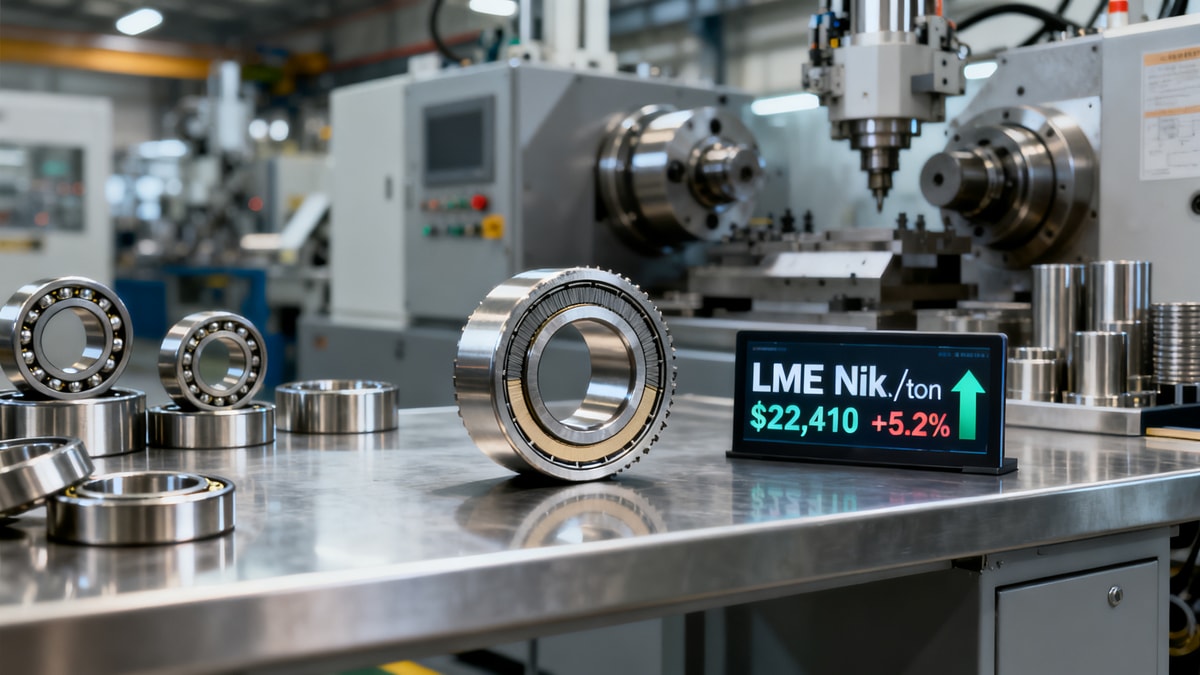
Global nickel prices rose sharply on April 29, 2026, with LME nickel futures closing at $22,410/ton — a 5.2% single-day increase, the largest in 2026. This movement directly affects cost structures for stainless steel bearings, mechanical seals, and related precision components, prompting price renegotiation among Chinese suppliers ahead of Q2 2026 close.
Event Overview
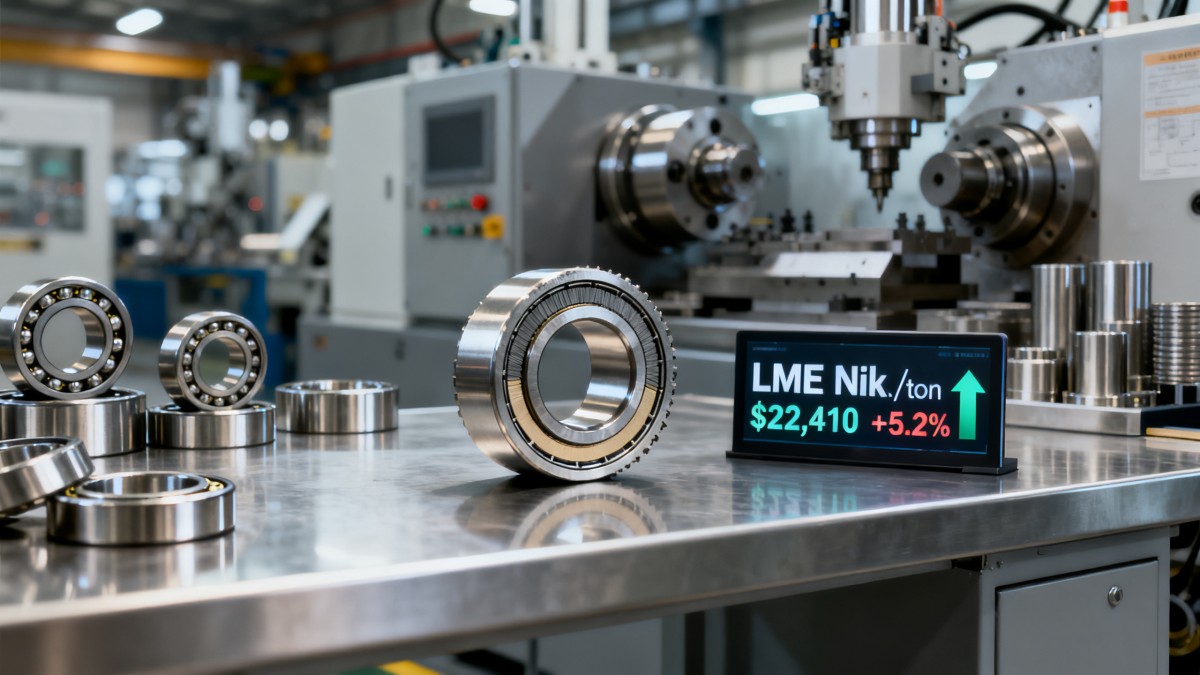
On April 29, 2026, London Metal Exchange (LME) nickel futures settled at $22,410 per metric ton, marking a 5.2% daily gain — the highest single-day rise recorded in 2026. The surge was driven by two confirmed factors: tightened nickel ore export quotas from the Philippines and restocking demand from stainless steel producers in Europe. As of publication, no further official policy updates or market interventions have been announced.
Industries Affected
Stainless Steel Component Manufacturers
Manufacturers of stainless steel bearings and mechanical seals face immediate BOM (Bill of Materials) pressure, as nickel constitutes a critical alloying element (typically 8–12% in common austenitic grades like 304 and 316). The reported 8.3% raw material cost increase directly compresses gross margins unless pricing adjustments are implemented.
Downstream OEMs and Industrial Equipment Assemblers
OEMs integrating stainless bearings or seals into pumps, compressors, or food-grade machinery may encounter delayed delivery timelines or revised quotation terms from Tier-1 suppliers. Contracted procurement cycles with fixed-price clauses could expose them to short-term cost overruns if renegotiation is deferred beyond Q2.
Raw Material Procurement Teams (Especially in China)
Chinese suppliers cited in the notice have activated Q2-end price review mechanisms. This signals that procurement teams managing long-term supply agreements — particularly those tied to LME-based indexation or quarterly reset clauses — must now assess exposure under current contract language.
Distribution and Channel Partners
Wholesalers and regional distributors handling standardized stainless bearing and seal SKUs may see reduced order intake ahead of anticipated list-price revisions. Inventory valuation risk also rises if existing stock was procured pre-surge and priced below near-term replacement cost.
What Stakeholders Should Monitor and Do Now
Track Philippine Export Policy Updates
Current tightening stems from announced quota reductions; however, formal implementation timelines, exemptions for existing contracts, and potential extensions remain unconfirmed. Stakeholders should monitor official releases from the Philippine Department of Environment and Natural Resources (DENR) and the Mines and Geosciences Bureau (MGB).
Review Contract Indexation Clauses and Q2 Pricing Windows
Many stainless component supply agreements reference LME nickel or regional nickel premiums. Teams should verify whether their contracts trigger automatic adjustments, require mutual consent, or allow unilateral revision upon threshold price movements — especially given the 5.2% one-day jump exceeds typical 3–5% quarterly volatility bands.
Assess Inventory Turnover and Hedge Exposure Strategically
For firms holding significant nickel-intensive inventory, accelerated usage or sale may mitigate mark-to-market losses. Conversely, buyers with low stock levels and imminent replenishment needs may consider limited forward purchases or LME-linked hedges — though liquidity and counterparty risk in nickel options markets should be evaluated first.
Engage Suppliers Early on Q2 Price Finalization
With Chinese suppliers initiating price re-negotiation before quarter-end, procurement teams should initiate dialogue now — not after June 30 — to clarify timing, scope (e.g., base material vs. finished goods), and supporting documentation requirements (e.g., mill certificates, LME settlement proof).
Editorial Perspective / Industry Observation
Observably, this event functions more as a near-term cost signal than an entrenched structural shift. The 5.2% spike reflects acute supply-side constraints rather than sustained demand acceleration or long-term resource scarcity. Analysis shows that nickel’s price elasticity remains high in the short term due to concentrated upstream control (Philippines accounts for ~35% of global laterite supply) and thin physical trading volumes relative to financial positions. From an industry standpoint, this underscores how regional policy shifts — even without global production changes — can rapidly propagate through multi-tier manufacturing supply chains. Current volatility is better understood as a stress test of procurement agility and contract design, not a fundamental inflection point in stainless alloy economics.
Conclusion
This nickel price movement highlights the vulnerability of precision engineered components — particularly stainless steel bearings and mechanical seals — to upstream commodity policy shocks. It does not indicate a broad-based metals shortage, nor does it forecast permanent cost inflation. Rather, it reveals how tightly coupled global raw material regulation, European industrial activity, and Asian manufacturing pricing cycles have become. For stakeholders, the appropriate response is not reactive panic but disciplined contract governance, proactive supplier alignment, and calibrated inventory management — all anchored to verified data, not speculation.
Information Sources
Main source: Publicly reported LME settlement data and associated market commentary dated April 29, 2026. Additional context drawn from supplier announcements regarding Q2 price review activation (no named entities disclosed). Ongoing monitoring is recommended for Philippine export quota implementation details and European stainless steel inventory reports — both remain subject to official confirmation.
Technical Specifications
Expert Insights

Chief Security Architect
Dr. Thorne specializes in the intersection of structural engineering and digital resilience. He has advised three G7 governments on industrial infrastructure security.
Related Analysis
- Apr 30, 2026Egypt SMIIC Mandates Arabic Energy Labels for Industrial PumpsAuthor :Heavy Industry Strategist
- Apr 30, 2026TÜV SÜD Launches China Industrial Optics Fast TrackAuthor :Precision Metrology Expert
- Apr 30, 2026LME Nickel Surges 5.2% on April 29, 2026: Impact on Stainless Bearings & SealsAuthor :Heavy Industry Strategist
Core Sector // 01
Security & Safety
- LME Nickel Surges 5.2% on April 29, 2026: Impact on Stainless Bearings & SealsAuthor :Heavy Industry Strategist

- ILAC Recognizes CNAS Bearing Vibration ReportsAuthor :Heavy Industry Strategist

- Indonesia Opens Bearings & Seals Sector to 100% Foreign OwnershipAuthor :Heavy Industry Strategist

- Vietnam MOIT Mandates VILAS-Certified Heat Treatment Reports for Bearing ImportsAuthor :Heavy Industry Strategist

- Vietnam Requires VILAS-Certified Reports for Industrial Bearing ImportsAuthor :Heavy Industry Strategist

- Vietnam Requires VILAS Reports for Imported Industrial BearingsAuthor :Heavy Industry Strategist
![]()
- 2026 Shanghai International Bearing Expo ConfirmedAuthor :Heavy Industry Strategist
![]()
- Fastener Expo Shanghai 2026: 1400+ Suppliers, B2B Matching for Int'l BuyersAuthor :Heavy Industry Strategist
![]()