Egypt SMIIC Mandates Arabic Energy Labels for Industrial Pumps
Author
Date Published
Reading Time
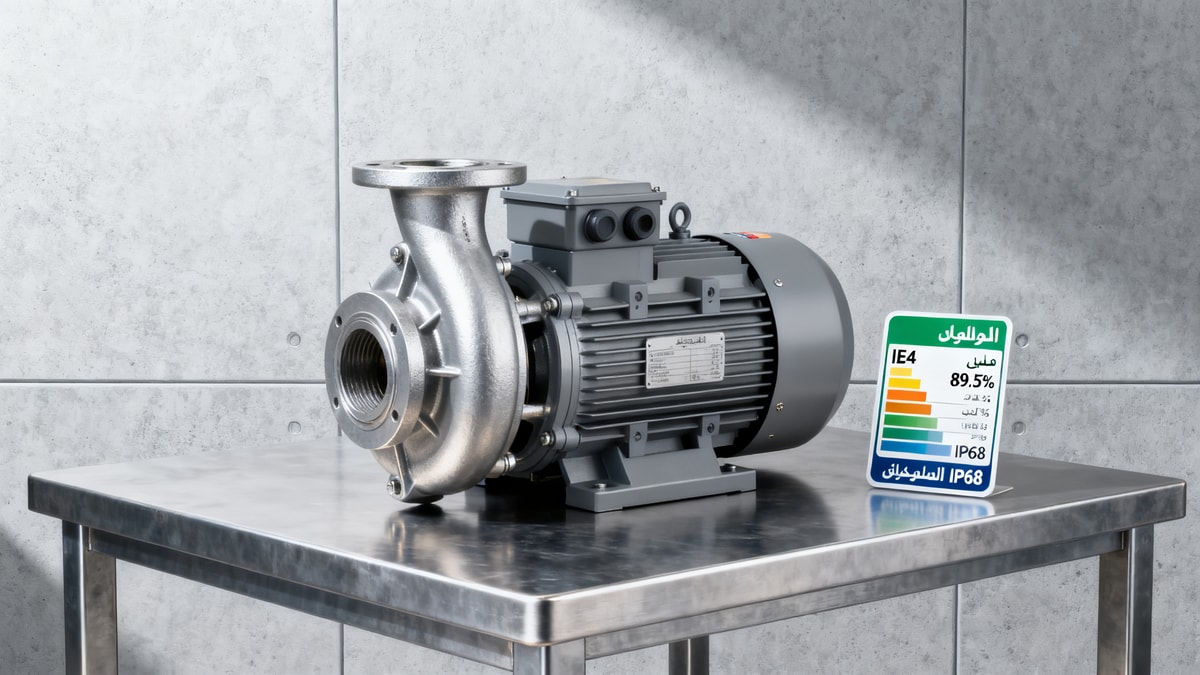
Effective 1 July 2026, Egypt’s Standardization and Metrology Institute (SMIIC) has introduced a mandatory Arabic-language energy efficiency labeling requirement for imported industrial centrifugal and submersible pumps — impacting exporters, importers, and manufacturers serving the Egyptian industrial equipment market.
Event Overview
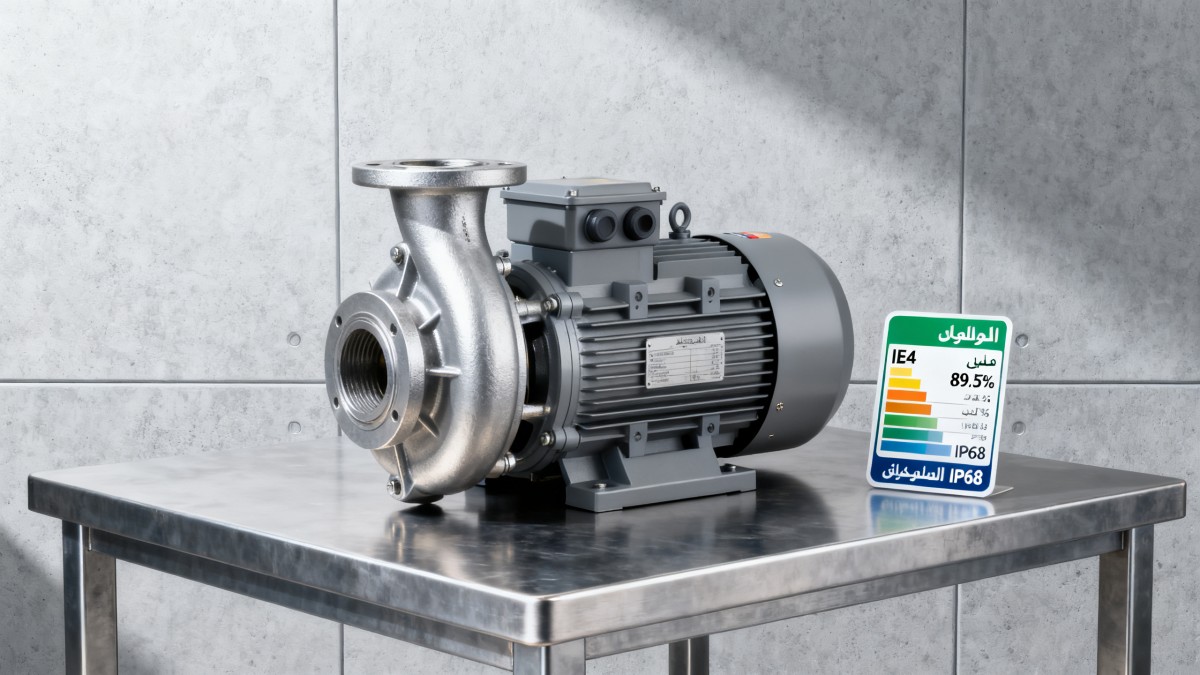
On 29 April 2026, SMIIC issued Technical Circular No. 2026/07, stipulating that all imported industrial centrifugal and submersible pumps must bear an Arabic-language energy label affixed adjacent to the nameplate. The label must include: motor efficiency class (IE3 or IE4), flow rate, head, efficiency value, and IP protection rating. Enforcement begins 1 July 2026; non-compliant products will be denied customs clearance.
Industries Affected by Segment
Direct Exporters & Importers
Exporters shipping industrial pumps into Egypt — particularly from China, India, Turkey, and the EU — face immediate compliance obligations. Labeling must be applied prior to shipment or at port, with no provision for post-arrival relabeling. Non-compliance results in clearance refusal, causing delays, storage costs, and potential re-export or destruction.
Manufacturers of Pump Assemblies & Motors
Manufacturers supplying complete pump units (including integrated IE3/IE4 motors) must verify that both motor efficiency classification and IP rating are accurately declared and verifiable per Egyptian test standards. Misalignment between motor certification (e.g., IEC 60034-30-1) and label claims may trigger verification requests or rejection.
Distribution & Aftermarket Channel Operators
Local distributors and authorized service partners handling inventory shipments after 1 July 2026 must ensure all incoming stock carries compliant labels. Pre-2026 stock without Arabic labels cannot be cleared anew if re-entering customs (e.g., via re-importation or transshipment), limiting flexibility in inventory management.
Supply Chain & Compliance Service Providers
Third-party labeling, translation, and conformity assessment providers face increased demand for Arabic-language technical labeling services validated against SMIIC requirements. However, SMIIC has not published a certified translation template or approved third-party label verification scheme — leaving implementation details to importer responsibility.
What Enterprises Should Focus On — Practical Steps
Monitor official SMIIC guidance on label format and validation
Technical Circular No. 2026/07 does not specify font size, layout, durability, or bilingual options. Analysis shows SMIIC may issue supplementary instructions before 1 July 2026 — importers should track SMIIC’s official portal and local customs bulletins for updates.
Prioritize labeling for high-volume pump categories and key ports
Centrifugal pumps for irrigation, desalination, and HVAC represent the largest import volumes into Egypt. Observably, Alexandria and Port Said customs offices are primary entry points; early coordination with local agents on label placement and documentation alignment is advisable.
Distinguish between regulatory signal and operational readiness
The circular is enforceable as written, but SMIIC has not announced transitional allowances or grace periods. From industry perspective, this signals full enforcement intent — not a consultative phase. Companies should treat compliance as mandatory from day one, not conditional on further clarification.
Prepare labeling workflows and supplier communications now
Manufacturers must confirm Arabic label production capability with nameplate suppliers; exporters should update commercial invoices and packing lists to reference label compliance. Current more appropriate action is internal cross-functional alignment (sales, logistics, QA) — not waiting for external certification bodies to formalize processes.
Editorial Observation / Industry Perspective
This measure is better understood as a formalized market access barrier than a standalone energy policy initiative. Analysis shows it aligns with Egypt’s broader push toward import regulation harmonization under Law No. 17/2019 and its National Strategy for Energy Efficiency (2023–2030). It also reflects growing administrative emphasis on local-language technical transparency — a trend observed in other MENA markets including Saudi Arabia and Morocco. However, unlike Gulf Cooperation Council (GCC) schemes, SMIIC has not linked this label to minimum energy performance standards (MEPS) beyond IE3/IE4 referencing — meaning compliance is procedural (labeling) first, performance-based second. Industry should therefore monitor whether future amendments tie label validity to verified test reports or local laboratory accreditation.
Conclusion: This requirement establishes a new, non-negotiable condition for market access — not a voluntary best practice or pilot program. Its significance lies less in technical novelty and more in its strict enforcement mechanism: customs denial. For affected enterprises, the most accurate interpretation is operational immediacy — not strategic anticipation. Preparedness hinges on execution discipline, not regulatory forecasting.
Source: Egyptian Standardization and Metrology Institute (SMIIC), Technical Circular No. 2026/07, issued 29 April 2026. Note: SMIIC’s official English-language version of the circular remains pending publication; Arabic original is authoritative. Implementation details — including label template, verification protocol, and exceptions — are still under observation.
Technical Specifications
Expert Insights

Chief Security Architect
Dr. Thorne specializes in the intersection of structural engineering and digital resilience. He has advised three G7 governments on industrial infrastructure security.
Related Analysis
- Apr 30, 2026Egypt SMIIC Mandates Arabic Energy Labels for Industrial PumpsAuthor :Heavy Industry Strategist
- Apr 30, 2026TÜV SÜD Launches China Industrial Optics Fast TrackAuthor :Precision Metrology Expert
- Apr 30, 2026LME Nickel Surges 5.2% on April 29, 2026: Impact on Stainless Bearings & SealsAuthor :Heavy Industry Strategist
Core Sector // 01
Security & Safety
- Egypt SMIIC Mandates Arabic Energy Labels for Industrial PumpsAuthor :Heavy Industry Strategist

- How to Select Overhead Line FittingsAuthor :Heavy Industry Strategist

- Cross Arms and Hardware: Steel or CompositeAuthor :Heavy Industry Strategist

- Composite Polymer Insulators: Pros and LimitsAuthor :Heavy Industry Strategist

- Porcelain Insulators Wholesale: Avoid These IssuesAuthor :Heavy Industry Strategist

- Power Factor Correction Capacitor: Is It NeededAuthor :Heavy Industry Strategist

- How to Pick an Industrial Battery ChargerAuthor :Heavy Industry Strategist

- UPS Buying Mistakes to Avoid in 2026Author :Heavy Industry Strategist